Table of Contents >> Show >> Hide
- What Was a World War I Military Literacy Test?
- Why the U.S. Army Tested Literacy During World War I
- The Army Alpha Test: The Exam for English-Literate Recruits
- The Army Beta Test: A Visual Exam for Nonreaders and Non-English Speakers
- Could You Pass the Army Alpha Today?
- What Made the Test Difficult?
- Literacy, Immigration, and the Army’s Training Problem
- What the Test Revealed About America
- Try a Mini World War I Military Literacy Challenge
- How the Test Influenced Modern Standardized Testing
- Would the Test Be Fair by Today’s Standards?
- Why This Topic Still Matters
- Experiences Related to Taking a World War I Military Literacy Test
- Conclusion: Could You Pass?
Imagine walking into a military camp in 1918. You are tired, probably wearing shoes that have already betrayed you, and someone hands you a pencil, a paper test, and a set of instructions delivered with the speed and warmth of a railway timetable. Congratulations: before anyone worries about whether you can march, shoot straight, or fold a blanket into something square enough to please a sergeant, the U.S. Army wants to know something else. Can you read, reason, follow directions, and think under pressure?
That is the surprisingly modern question behind the World War I military literacy test. During the Great War, the United States faced a huge challenge: how do you quickly evaluate millions of recruits from different regions, education levels, languages, and backgrounds? The answer was not one simple “can you read?” quiz. It was a mix of literacy screening, intelligence testing, practical problem-solving, arithmetic, vocabulary, pattern recognition, and basic military classification.
So, would you be able to pass a World War I military literacy test? Maybe. But before you confidently say, “Of course, I passed English class,” remember that these tests were timed, unfamiliar, culturally biased, and often administered in crowded rooms to men under military discipline. In other words, it was less like a calm classroom exam and more like taking the SAT while someone yells “hurry up” and your future job depends on it. Fun? Not exactly. Fascinating? Absolutely.
What Was a World War I Military Literacy Test?
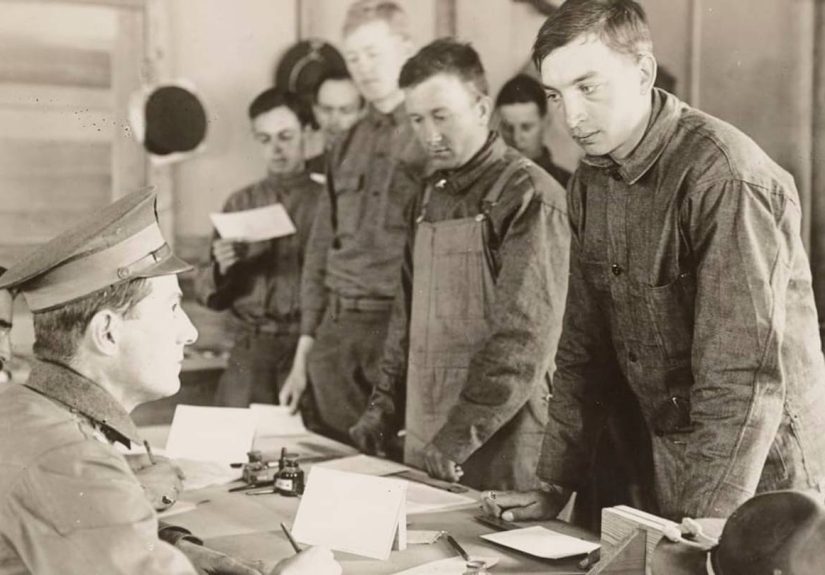
The phrase “World War I military literacy test” can refer to several related screening tools used by the U.S. Army during the war. The best-known were the Army Alpha and Army Beta examinations. These tests were developed after the United States entered World War I in 1917, when the Army suddenly had to process enormous numbers of recruits and draftees.
The Army Alpha was designed for recruits who could read and write English. It included written questions that measured things like following directions, arithmetic, vocabulary, general information, sentence completion, analogies, and practical judgment. The Army Beta was created for men who could not read English, had limited schooling, or spoke another language. It used visual tasks, pictures, symbols, and demonstrations instead of heavy written instructions.
That difference matters. The Army was not simply asking, “Are you smart?” It was also asking, “Can you understand English instructions quickly enough to function in military training?” In World War I, literacy was not just a school achievement. It could affect a soldier’s assignment, training path, leadership potential, and whether he needed additional instruction before being placed into service.
Why the U.S. Army Tested Literacy During World War I
When the United States mobilized for World War I, the military expanded at an astonishing pace. The Selective Service Act helped bring millions of men into the system, and more than 70 percent of American Army troops ultimately came through conscription. That created a practical problem: the Army needed to classify recruits quickly.
Military leaders needed to know who could handle technical training, who might be suited for clerical work, who could become an officer candidate, and who might struggle with written orders or classroom instruction. In a modern army, reading was not optional. Soldiers had to understand signs, schedules, manuals, forms, maps, supply labels, written commands, and basic arithmetic related to pay, distance, time, and equipment.
There was also a language issue. The U.S. Army included many foreign-born soldiers and sons of immigrants. Some spoke little English. Others could speak English but struggled to read it. The military had to turn this diverse population into a functioning force, and fast. The result was a system that combined testing, classification, language instruction, and military training.
The Army Alpha Test: The Exam for English-Literate Recruits
The Army Alpha was the written test for men who could read English. It was administered to large groups, sometimes hundreds of recruits at once. The exam was designed to be scored quickly, which made it useful for military bureaucracy. Yes, even in 1918, paperwork had already enlisted.
The Army Alpha included several types of questions. A recruit might have to follow oral instructions, solve simple arithmetic problems, identify word relationships, complete sentences, answer general knowledge questions, or show common-sense reasoning. The goal was not literary elegance. Nobody was asked to write a poem about trench mud. The test measured whether a soldier could process information efficiently under time pressure.
Examples of Army Alpha-Style Skills
While exact questions varied by form, the Army Alpha tested skills such as:
- Understanding spoken and written directions
- Solving basic arithmetic problems
- Recognizing vocabulary meanings
- Completing sentences logically
- Identifying analogies and relationships
- Using practical judgment in everyday situations
- Interpreting number patterns or simple sequences
A modern person might look at some sample items and think, “That does not seem too difficult.” But context changes everything. Many recruits had limited formal education. Some came from rural communities where school attendance was seasonal or interrupted by work. Others were fluent in daily conversation but not in written test language. Add a ticking clock, military pressure, and unfamiliar question formats, and suddenly the test becomes less cozy.
The Army Beta Test: A Visual Exam for Nonreaders and Non-English Speakers
The Army Beta was one of the most interesting parts of the World War I testing program. It was created for recruits who could not take the Alpha fairly because they could not read English well enough. Instead of written language-heavy questions, the Beta used visual reasoning tasks. Instructions could be demonstrated through gestures, examples, or pantomime.
One common type of task involved pictures with missing parts. A recruit might look at an image and draw or mark what was missing. Other tasks involved matching shapes, completing patterns, navigating mazes, or arranging visual symbols. The idea was to reduce the disadvantage faced by men who were illiterate or unfamiliar with English.
Of course, “reduce” does not mean “eliminate.” Even visual tests can contain cultural assumptions. A picture-based question may seem obvious to someone familiar with certain tools, household items, or American customs, but confusing to someone from another background. That is one reason historians discuss the Army Alpha and Beta not only as testing tools, but also as examples of how institutions triedand sometimes failedto measure human ability fairly.
Could You Pass the Army Alpha Today?
If you are a fluent English reader with a basic education, you would probably pass many parts of the Army Alpha. You can read instructions, recognize common words, solve simple math problems, and complete basic logic questions. Your phone may have destroyed your attention span, but at least it taught you to skim text at Olympic speed.
However, passing easily is not guaranteed. The Army Alpha was timed. It used early twentieth-century language and assumptions. Some general knowledge questions reflected the world of 1917 and 1918, not the world of search engines, streaming apps, and ordering tacos through a screen. You might understand algebra but stumble over an old-fashioned vocabulary word. You might know how to update software but not how to answer a question written for a farm boy, factory worker, or clerk from the Wilson era.
In other words, passing the test would depend on more than intelligence. It would depend on reading speed, cultural familiarity, calm under pressure, and whether the instructions made sense the first time. That is still true of many standardized tests today. The test measures something real, but not everything real.
What Made the Test Difficult?
The difficulty of a World War I military literacy test was not just the content. It was the environment. A recruit might be tested soon after arriving at camp, surrounded by strangers, under strict supervision, and unsure what the results would mean. He might be exhausted from travel, nervous about military life, or embarrassed about limited schooling.
1. The Test Was Timed
Time pressure changes performance. A person who can solve a problem in a quiet room may freeze when told to move quickly. The Army needed fast classification, so the tests were designed for speed. That helped administrators process huge numbers of men, but it also rewarded quick test-taking habits that not every recruit had learned.
2. The Language Was Formal
Even literate recruits could struggle with formal written English. The language of tests is not the same as the language of conversation. A man might read letters from home just fine but still have trouble with vocabulary questions, abstract analogies, or oddly phrased instructions.
3. Education Was Uneven
Schooling in the early twentieth-century United States varied widely. Some recruits had high school or college experience. Others had only a few years of formal education. Many had left school early to work on farms, in mines, in factories, or in family businesses. The test could reflect opportunity as much as ability.
4. Cultural Bias Was Built In
The Army Alpha and Beta were products of their time. Some questions assumed knowledge of American culture, common objects, idioms, or social norms. That could disadvantage immigrants, rural recruits, and men from communities whose experiences did not match the test designers’ expectations.
Literacy, Immigration, and the Army’s Training Problem
World War I turned the U.S. Army into a giant classroom as well as a military organization. Many foreign-born soldiers needed English instruction. At places such as Camp Gordon in Georgia, programs were developed to train immigrant soldiers more effectively by grouping men by language, using bilingual officers or instructors when possible, and teaching practical English for military life.
This was not English class with apple stickers and quiet reading time. Soldiers needed words for commands, equipment, directions, hygiene, ranks, safety, and daily camp routines. They needed enough functional literacy to understand military life quickly. Some programs focused on practical phrases and essential vocabulary rather than academic grammar.
That makes the World War I military literacy test more than an exam. It was part of a larger effort to transform civilians from many backgrounds into soldiers who could cooperate, follow orders, and survive training. The Army was discovering that literacy was a military resource.
What the Test Revealed About America
The testing program revealed uncomfortable truths about the United States in the early 1900s. Many recruits had limited schooling. Many were not fluent in English. Many had never taken a standardized test before. The results exposed differences in education, region, class, language, and opportunity.
But the interpretation of those results was often flawed. Some psychologists and officials treated test scores as if they measured fixed intelligence. Today, historians and psychologists are more cautious. A low score might reflect limited schooling, poor English, anxiety, unfamiliar test formats, cultural mismatch, or bad testing conditions. Intelligence is not the same thing as knowing how to take a particular test on a particular day.
That is one of the most important lessons from the Army Alpha and Beta. Tests can be useful, but they are not magic mirrors. They show performance within a system. They do not reveal the full worth, courage, creativity, or potential of a person.
Try a Mini World War I Military Literacy Challenge
Ready to test yourself? These sample-style questions are inspired by the kinds of skills used in World War I military literacy testing. They are not exact official questions, but they capture the flavor of the exam.
Direction-Following Question
Instruction: Cross out the word that does not belong: rifle, helmet, apple, boot.
Answer: Apple. Unless your apple has enlisted, it is not military gear.
Arithmetic Question
Question: If a company marches 3 miles per hour for 4 hours, how far has it marched?
Answer: 12 miles. Also, everyone’s feet would like to file a complaint.
Vocabulary Question
Question: Which word is closest in meaning to “rapid”?
Options: slow, quick, silent, heavy
Answer: Quick.
Practical Judgment Question
Question: If a soldier receives an order he does not understand, what should he do?
Best answer: Ask for clarification from the proper authority. Guessing wildly is a poor military strategy and an even worse life strategy.
Pattern Question
Question: What number comes next? 2, 4, 8, 16, ___
Answer: 32.
If you answered these correctly, congratulationsyou survived the friendly, modern, no-sergeant version. The real test would have been longer, faster, stranger, and much less forgiving.
How the Test Influenced Modern Standardized Testing
The World War I Army testing program became one of the largest early examples of mass psychological testing in American history. More than 1.6 million soldiers took the Army Alpha, Army Beta, or related examinations. That scale gave psychologists, educators, and government officials a new sense of what standardized testing could do.
After the war, ideas from military testing influenced education, employment screening, civil service testing, and later aptitude exams. The concept of testing large groups quickly became deeply embedded in American institutions. Whether you have taken a school placement test, college entrance exam, career assessment, or job aptitude test, you have encountered a world partly shaped by these early experiments.
That legacy is complicated. Standardized tests can help identify skills, place people in suitable programs, and reveal educational gaps. They can also reinforce inequality when results are treated without context. World War I military literacy testing reminds us that every exam has a history, a purpose, and a set of assumptions hiding behind the answer sheet.
Would the Test Be Fair by Today’s Standards?
By modern standards, the Army Alpha and Beta would raise many concerns. Test developers today pay closer attention to language access, disability accommodations, cultural bias, validation, scoring fairness, and the appropriate use of results. A test that sorts people into life-changing categories must be carefully designed and constantly reviewed.
The Army tests were innovative for their time, especially in trying to create a nonverbal Beta exam for men who could not read English. But they were still limited by the assumptions of early twentieth-century psychology. Some officials overestimated what the scores could prove. Others used results in ways that reflected the prejudices of the era.
So, would the test be considered fair today? Not entirely. Would it still be historically important? Absolutely. It shows how the military tried to solve a massive administrative problem and how testing became a powerful tool in American life.
Why This Topic Still Matters
A World War I military literacy test may sound like dusty history, but the questions behind it are still alive. How do we measure ability? How do we separate knowledge from opportunity? How do we test people who speak different languages? How do we avoid confusing unfamiliarity with inability?
These questions matter in schools, workplaces, immigration systems, military recruitment, and public policy. A test score can open doors or close them. That is why the story of the Army Alpha and Beta is more than a strange historical quiz. It is a reminder to be humble about measurement.
Literacy is powerful. It helps people navigate instructions, laws, health information, technology, money, and civic life. But literacy is also shaped by access. A person who struggles with a test may not lack intelligence. They may lack schooling, language support, confidence, or a fair chance.
Experiences Related to Taking a World War I Military Literacy Test
Picture the experience from the recruit’s side. You arrive at a training camp after a long trip, perhaps your first time far from home. The camp is loud, crowded, and confusing. Officers and enlisted staff move men from station to station. Someone checks your papers. Someone tells you where to stand. Someone else points you toward a room where rows of men sit with pencils and test sheets. You may not know whether this exam will decide your military job, your reputation, or your future.
If you are a confident English reader, the test may feel annoying but manageable. You listen to directions, mark answers, solve arithmetic, and try not to overthink the odd questions. You may even enjoy parts of it. Pattern recognition can feel like a puzzle, and vocabulary questions are friendly enough if the words are familiar. Still, the pressure is real. Nobody wants to look foolish in a room full of strangers wearing the same uniform.
If you have limited schooling, the experience is different. The page itself can feel like an enemy formation. You may understand practical work, tools, animals, machines, weather, money, and people perfectly well, but written questions can make that knowledge hard to show. A timed test rewards the man who has practiced test-taking, not always the man who can repair a wagon wheel, manage a farm, or stay calm when a plan falls apart.
If English is not your first language, the test becomes even more complicated. You may be smart, disciplined, and eager to serve, yet still struggle to understand fast oral instructions. The Army Beta was supposed to help with that by using pictures and demonstrations, but even a picture test has hidden rules. You must understand what the examiner wants, how to mark the answer, when to stop, and how to move from one section to another. That is a lot to decode before you even begin solving the problem.
There is also the emotional experience. Tests can make people feel exposed. A recruit who has hidden his weak reading skills might fear embarrassment. A foreign-born soldier might worry that poor English will be mistaken for poor ability. A rural recruit might recognize every practical problem life has ever thrown at him but still feel trapped by unfamiliar test language. Meanwhile, the Army needs quick answers. The machine keeps moving.
From a modern viewpoint, this experience should make us cautious and compassionate. It is easy to laugh at old test questions or assume we would sail through them. But the real challenge was not just choosing answers. It was performing under pressure inside an institution that had little time to understand individual stories. The World War I military literacy test was a doorway. Some men walked through easily. Others had to push through language barriers, educational gaps, and nerves just to prove what they could do.
That is why the question “Would you be able to pass?” is more interesting than it first appears. It is not only a quiz about reading. It is a quiz about history, fairness, opportunity, and how people respond when a system tries to measure them quickly. And if that sounds familiar, it should. We still live in a world full of forms, exams, screenings, and timed assessments. The pencils have changed. The pressure has not completely gone away.
Conclusion: Could You Pass?
So, would you be able to pass a World War I military literacy test? If you read English fluently, handle basic math, and stay calm under timed conditions, probably yes. But would you pass with style, confidence, and zero confusion? That is less certain. The Army Alpha and Beta were built for a specific time, a specific military need, and a nation full of uneven educational opportunities.
The real lesson is not that people in 1918 were less capable than people today. It is that tests measure performance in context. The World War I military literacy test tells us about the Army, immigration, education, language, psychology, and America’s rush to build a modern fighting force. It also reminds us that a test score is never the whole person. Sometimes it is just a snapshot taken in bad lighting.
Note: This article synthesizes historical information from reputable U.S. educational, museum, government, military history, and archival sources. It is written as original web content and does not include source links in the body copy.