Table of Contents >> Show >> Hide
- Why MADtv Still Matters
- 1. Stuart
- 2. Ms. Swan
- 3. Lorraine at the All-You-Can-Eat Buffet
- 4. Kenny Rogers’ Jackass
- 5. Coach Hines
- 6. Lowered Expectations
- 7. The Vancome Lady
- 8. Bunifa Latifah Halifah Sharifa Jackson
- 9. Dot
- 10. The iRack
- What These MADtv Sketches Have in Common
- Experiences Around the Topic: Why Watching These Sketches Felt Like Joining a Secret Comedy Club
- Conclusion
For years, MADtv lived in a weirdly glorious corner of late-night comedy. It was the scrappy alternative, the loud cousin, the sketch show that looked at polished network comedy and said, “That’s cute. Now watch this person fall into a buffet sneeze guard.” It never had the same prestige aura as Saturday Night Live, but prestige and laugh volume are not the same thing. In the world of sketch comedy, MADtv built its own kingdom out of recurring weirdos, savage parodies, fake commercials, celebrity impressions, and the kind of gleeful chaos that made you feel like the writers had consumed three energy drinks and a dare.
That is exactly why a “Comedy Hall of Fame” conversation should include MADtv sketches. During its original run, the series became a factory for unforgettable comic personas and launched or elevated a long list of performers who later became major names. But more importantly, it knew how to land a joke with a frying pan instead of a feather. The best MADtv sketches were broad, specific, shameless, and weirdly precise about human behavior. They were often silly on the surface and quietly brilliant underneath. So no, this is not a list of the “most respectable” sketches. Respectable comedy is often just comedy in a cardigan. This is a list of the 10 MADtv sketches that deserve a velvet rope and their own bust in the comedy hall of fame.
Why MADtv Still Matters
The genius of MADtv was never that it tried to beat anyone at their own game. It played a different game entirely. Its sweet spot was younger, louder, stranger, and often more shamelessly character-driven. The show loved fake trailers, fake products, pop-culture demolition jobs, and recurring characters who felt one bad day away from a restraining order. It also embraced the fact that sketch comedy does not always need to be elegant. Sometimes it should be messy, quotable, and just specific enough to make you wonder whether a writer was taking revenge on someone they met at a mall kiosk.
That approach helped create a comedy identity that still feels distinct. Even when a sketch was rough around the edges, it was rarely timid. At its best, MADtv found humor in vanity, social awkwardness, empty showbiz confidence, and the little absurdities of everyday life. It could go from a fake dating commercial to a deranged celebrity parody to a recurring family nightmare in the span of ten minutes. That tonal whiplash was not a bug. It was the feature.
1. Stuart
The giant child who became a comedy institution
If there were an official Mount Rushmore of MADtv sketches, Stuart would already be carved into the rock, probably while asking for a snack and wearing tiny white briefs. Michael McDonald’s Stuart is one of the show’s defining creations: a grown man with the emotional wiring of a needy child, a whispery voice, and a talent for turning ordinary family situations into deeply uncomfortable masterpieces.
What makes Stuart hall-of-fame material is not just the catchphrase factor. Yes, “Look what I can do!” is eternal. But the real brilliance is the total commitment to physicality, rhythm, and escalating discomfort. Stuart sketches work because every element is dialed in: the body language, the controlling mom, the dead-serious reactions from everyone around him, and the way the sketch keeps stretching a ridiculous premise without snapping it. It is absurd character comedy built with the discipline of a Swiss watch and the soul of a loose shopping cart.
2. Ms. Swan
A master class in confusion as comic engine
Ms. Swan became iconic because the sketch formula was deceptively simple: someone asks a reasonable question, and Ms. Swan answers with a cyclone of details that somehow explain absolutely nothing. Alex Borstein played the character with such confidence that the joke was never just misunderstanding. It was the collision between certainty and chaos.
At its peak, Ms. Swan sketches showed how repetition can become art when the performer knows exactly how to vary the rhythm. Every answer got more specific and less helpful. Every observer got more desperate. Every sketch felt like logic itself had left the building. It is also fair to say the character sits in a more complicated place today than it once did, which is part of discussing MADtv honestly. But in terms of pure sketch mechanics, Ms. Swan remains one of the show’s most recognizable comic inventions.
3. Lorraine at the All-You-Can-Eat Buffet
One buffet, one accent, endless destruction
Mo Collins’ Lorraine was already a fantastic recurring character, but the buffet sketch is the one that feels like it should be sealed in a museum-grade comedy display case. Lorraine is all appetite, entitlement, social obliviousness, and Midwestern force. Put that energy in an all-you-can-eat environment and you do not get a scene. You get an event.
This sketch works because it is built on a painfully recognizable truth: everyone has met someone who treats public spaces as their personal kingdom. Lorraine just turns that instinct up to nuclear. Collins plays her with magnificent lack of self-awareness, milking every pause, every glare, every territorial move. The buffet setting gives the sketch endless little opportunities for escalation, and Lorraine grabs every one of them with both hands, probably while wrapping dinner rolls in a napkin for later. It is vulgar, detailed, and incredibly well observed.
4. Kenny Rogers’ Jackass
Maybe the dumbest great sketch in MADtv history
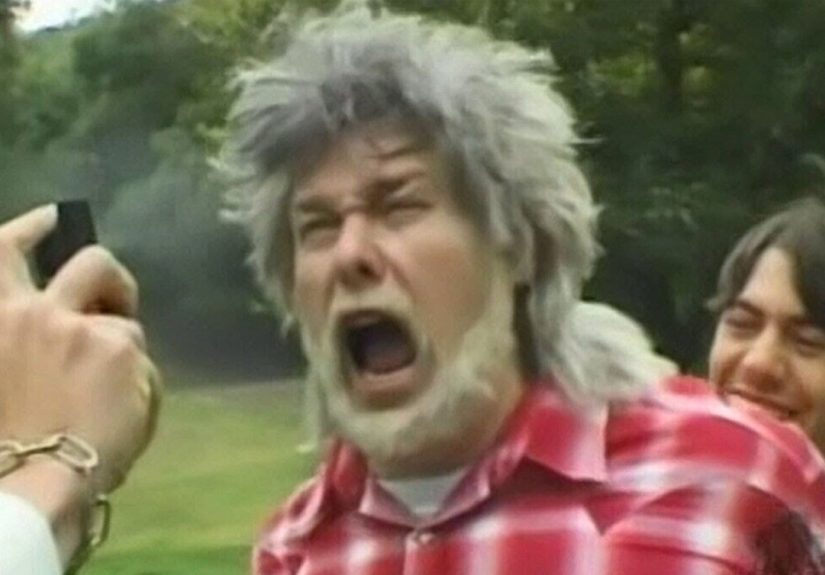
Will Sasso’s Kenny Rogers parody is what happens when an already funny impression gets strapped to a rocket made of terrible decisions. The premise is absurd on arrival: a feral, unhinged version of Kenny Rogers hosting his own Jackass-style stunt series. The execution somehow becomes even more ridiculous, which is exactly why it is unforgettable.
Hall-of-fame sketches often have one special ingredient: they sound impossible to defend on paper and unstoppable on screen. This is one of those. Sasso’s physical commitment is unreal. He turns chaos into choreography, moving through every bit with the confidence of a man who thinks pain is just applause wearing boots. The sketch is juvenile in the best possible way, but it is not lazy. Every choice is specific, every beat builds, and the character’s total madness gives the nonsense a strange internal logic. It is sketch comedy as a runaway carnival ride.
5. Coach Hines
Pure rage, short shorts, and elite comic timing
Keegan-Michael Key created many memorable things after MADtv, but Coach Hines remains one of the clearest examples of how locked-in he already was as a performer. The character is a combustible school coach whose motivational style is ninety percent threats, ten percent whistle, and zero percent therapy-approved behavior.
What makes Coach Hines so effective is the contrast between the setting and the intensity. Schools are supposed to be structured environments. Coach Hines behaves like every hallway is the final act of an action movie. That mismatch is the joke, and Key attacks it with machine-level precision. He knows exactly when to shout, when to lean into silence, when to let a facial expression do the damage, and when to make the whole scene feel like it is one insult away from complete collapse. It is aggressive character comedy, but it is also beautifully controlled.
6. Lowered Expectations
The fake dating ad that became a sketch-comedy philosophy
Lowered Expectations may be one of the smartest recurring premises MADtv ever had. Framed like a dating-service commercial for the romantically resigned, it worked because it pushed truth farther than politeness usually allows. This was not a fantasy ad about finding “the one.” It was about finding someone who might do, provided everyone involved agreed to stop dreaming immediately.
The brilliance here is tonal. The sketches mimic the style of optimistic dating ads, but every line undercuts that hope with painful realism. That contrast makes the joke sharper every time. It is not just funny because the standards are low. It is funny because the format pretends those standards are inspiring. That is top-tier satire. Even now, the phrase itself has outlived the sketch because it captured a social truth in two words. When a show creates a joke that becomes everyday vocabulary, that is hall-of-fame territory.
7. The Vancome Lady
Retail hostility, turned into performance art
Nicole Sullivan’s Vancome Lady is one of the meanest and funniest customer-service parodies the show ever produced. The character is rude, flashy, wildly unprofessional, and somehow still completely convinced she is the sophisticated one in the room. That combination gives the sketches a deliciously ugly energy.
What sends this bit into the comedy hall of fame is how sharply it skewers status performance. The Vancome Lady is always selling more than cosmetics. She is selling attitude, snobbery, and the illusion of exclusivity, even when she is clearly one complaint away from getting escorted out by security. Like some other MADtv staples, the character is very much of its era, and not every edge lands the same way now. But as a comic portrait of retail arrogance and social posing, it is still hilariously pointed.
8. Bunifa Latifah Halifah Sharifa Jackson
Debra Wilson turned volume into an art form
Bunifa Latifah sketches are pure character-force comedy. Debra Wilson plays her with enormous verbal swagger, relentless attitude, and the kind of confidence that can bully a room before the room realizes it has been bullied. Whether Bunifa is chasing status, clashing with people, or just existing at max volume, the character never enters a scene quietly. She arrives like a parade with opinions.
The reason Bunifa belongs here is that the sketches demonstrate one of MADtv’s greatest strengths: letting a powerhouse performer drive the bit through sheer command. Wilson was one of the show’s most versatile talents, and Bunifa gave her the perfect vehicle for timing, exaggeration, and social comedy. The character feels oversized, but the behavior underneath is familiar. Bunifa is the person who treats every minor inconvenience like a federal case, and that universal human truth is what keeps the sketch funny.
9. Dot
The world’s most gloriously underqualified little menace
Dot is one of those MADtv characters who proves that innocence and menace are not opposites. Stephnie Weir plays her as a child with a tiny voice, a confused moral compass, and a spectacular ability to say the wrong thing with complete sincerity. The setup often puts Dot next to more competent children or adults, which only makes her weird little worldview funnier.
The sketch’s secret weapon is scale. Dot’s problems are small. Her confidence is not. The tiny gloves, the misplaced pride, the strange logic, the desperate attempt to seem capable when she is very obviously notthose details make the character feel absurdly specific. In the hall of fame, Dot represents MADtv at its best when it turns small behavioral oddities into huge comedic architecture. She is ridiculous, but never vague. That precision matters.
10. The iRack
A fake Apple launch that aged like prophecy with punchlines
Among all the recurring characters and catchphrase machines, The iRack stands out because it shows how smart MADtv could be when it aimed its chaos at corporate culture and tech-world self-importance. The sketch imagines a Steve Jobs-style product reveal for a bra-inspired Apple product, and the joke lands because it perfectly captures the theater of gadget worship.
The best satire does not just parody a product. It parodies the tone around the product: the breathless presentation style, the brand mystique, the audience’s willingness to applaud anything if it is unveiled with enough confidence and a giant screen behind it. That is why The iRack still feels sharp. It is silly, yes, but it is also a precise takedown of marketing spectacle. This is the sort of sketch people reference years later because it was not only funny in the moment. It understood the moment.
What These MADtv Sketches Have in Common
The common thread across these picks is not subtlety. It is commitment. MADtv knew that a good sketch often lives or dies by whether the performer, the writing, and the tone are all charging in the same direction. These sketches commit to a comic premise so hard that backing out is no longer an option. That is why they stick. They are not tentative. They do not apologize for being broad. They understand that sketch comedy often rewards extreme specificity more than elegance.
They also reveal the show’s whole creative personality. MADtv loved recurring characters because repetition gave its performers room to sharpen details. It loved parody because pop culture was one of its favorite punching bags. And it loved social discomfort because awkwardness, vanity, and low-level human selfishness are renewable comic resources. If a hall of fame is supposed to honor sketches that still feel alive long after their original airtime, these ten absolutely qualify.
Experiences Around the Topic: Why Watching These Sketches Felt Like Joining a Secret Comedy Club
Part of the magic of the best MADtv sketches is not just what happens on screen. It is the experience of discovering them. For a lot of viewers, MADtv was not the shiny main event. It was the thing you found late at night, half by accident, and then started quoting like you had joined an underground society of weird little comedy goblins. One person would say, “Look what I can do,” another person would lose it, and suddenly a perfectly normal afternoon had been derailed by a sketch that aired years earlier. That kind of long-tail audience experience matters. It means the material escaped the TV and entered actual life.
These sketches also produced a very specific viewing rhythm. You were not always sitting there thinking, “Ah yes, now comes prestige satire.” Sometimes you were just bracing for the next disaster. The fun came from anticipation. You knew Lorraine was not going to behave correctly at the buffet. You knew Coach Hines would not handle conflict like a licensed educator. You knew Lowered Expectations would somehow become sadder and funnier at the exact same time. The pleasure was in watching the inevitable arrive in an even stupider outfit than expected.
There is also something deeply memorable about how these sketches lived in conversation afterward. Great sketch comedy turns viewers into amateur reenactors. People do the voice. They repeat the rhythm. They butcher the line delivery and somehow that makes it funnier. MADtv was built for that kind of afterlife. Its best characters were not just funny because of the writing. They were funny because the performances were so physically and vocally distinct that fans could carry pieces of them around for years.
Rewatching these sketches now creates a second kind of experience too: the experience of seeing what still hits, what hits differently, and what reveals the era that produced it. That is part of the fun of revisiting a show like MADtv. Some sketches feel timeless because the behavior is timeless. Ego, awkwardness, fake sophistication, bad customer service, weird family dynamics, impossible dating standards, and overhyped tech launches have not exactly left the building. Other sketches feel like time capsules, which is valuable in its own way. Comedy is always a record of what a culture found ridiculous, and MADtv recorded a lot.
In that sense, watching these ten sketches now is more than a nostalgia trip. It is a reminder that comedy does not need to be polished to be enduring. Sometimes it needs to be loud, specific, a little feral, and completely certain of its own nonsense. That was the experience MADtv gave viewers at its best. It made the ridiculous feel communal. It made the catchphrase feel like a handshake. And it made you feel, at least for a few minutes, like the funniest people on television had decided to turn every social annoyance, every pop-culture fad, and every strange human behavior into a sketch worth remembering.
Conclusion
If the comedy hall of fame were a real building, these ten MADtv sketches would deserve their own wing, or at least a highly questionable food court nearby. They represent everything the show did best: huge performances, sharply observed behavior, recurring characters with genuine staying power, and satire that could switch from goofy to cutting in one clean turn. MADtv may never have had the smoothest reputation, but its greatest sketches proved that messy, fearless, character-first comedy can leave a lasting mark. And in the end, that is what hall-of-fame comedy does. It lasts, it gets quoted, it gets revisited, and it still makes people laugh long after the original joke should have packed up and gone home.