Table of Contents >> Show >> Hide
If you are naming characters for a historical novel, a cozy mystery, a gothic romance, a fantasy with gaslight energy, or anything involving lace, fog, inheritance disputes, and at least one judgmental aunt, Victorian last names are pure gold. They sound grounded, vivid, and deliciously specific. A good Victorian surname can tell readers whether your character belongs in a candlelit drawing room, behind a bakery counter, or standing on a rain-slick platform waiting for a train and a scandal.
The fun part is that truly useful Victorian last names are not all fancy and aristocratic. Many of the surnames that feel most “Victorian” today were practical names tied to jobs, places, parents, physical traits, and local history. That is exactly why they work so well in fiction. They come with built-in texture. Cartwright sounds industrious. Bellamy sounds polished. Whitlock sounds like a solicitor with a locked desk drawer. Fairchild sounds as if somebody owns at least one excellent silver tea service and opinions about everyone else’s curtains.
This guide rounds up more than 120 Victorian last names for fictional characters, explains what gives them that unmistakable 19th-century feel, and helps you choose surnames that sound right for your story rather than merely old. Because nothing ruins the mood faster than a heroine named “Brittany RavenMoon Pembroke-Sky.” That is not Victorian. That is a scented candle from a parallel universe.
What Makes a Last Name Feel Victorian?
Here is the first useful truth: most Victorian surnames were already old by the time Queen Victoria came along. The era inherited many family names from medieval and early modern Britain, then carried them into the booming, class-conscious, highly literate 19th century. So when writers look for Victorian last names, they are usually looking for names that would have felt plausible in England, Wales, Scotland, or Ireland during the 1800s and that still sound evocative to modern readers.
Most of these surnames fall into a few big groups. Occupational names came from work: Baker, Cooper, Fletcher, Wainwright. Patronymic names came from a parent’s given name: Wilson, Harrison, Matthews, Macrae. Locational and topographic names came from where someone lived: Atwood, Shaw, Townsend, Underwood. Descriptive or nickname-based surnames came from personal features or social impressions: Whitlock, Fairchild, Little, Armstrong.
For fiction, that matters because the category affects the emotional color of the name. Occupational surnames feel grounded and social. Patronymic surnames feel inherited and stable. Locational names feel atmospheric. Descriptive surnames can feel slightly literary, which is excellent if you are building a memorable cast. You do not need every reader to know the etymology, either. Readers often respond to the sound before they respond to the meaning.
The second useful truth is that Victorian fiction loves contrast. A very ordinary surname can make a dramatic first name shine, while a grand surname can instantly elevate a plain first name. Jane Blackwood has instant novel energy. Edgar Bellamy sounds respectable with a hidden mess. Martha Turner feels practical, competent, and likely to survive chapter twelve.
How to Choose the Right Victorian Surname for Your Character
Match the Name to Class, Region, and Occupation
Victorian society was not subtle about class, and names can help you suggest it without announcing it with a brass band. Surnames like Cavendish, Pembroke, and Wentworth lean upper-class. Names like Cooper, Baker, and Wheeler feel more trade-based and practical. A Welsh-sounding surname such as Davies, Rees, or Griffiths can add regional flavor. A Scottish surname like Maclean or Stewart changes the temperature of the page instantly.
Use Meaning as a Quiet Bonus, Not a Sledgehammer
A little etymology can be useful. Bellamy carries the sense of “fair friend.” Cartwright points to a maker of carts. Corbett has the flavor of “little raven.” Orme has a striking old Norse connection to “serpent.” These are lovely details, but they work best when they are subtle. If your villain is named Mr. Graves, that can be fun. If every villain is named Graves, Crowe, and Blackwood, the effect starts to feel less “gothic masterpiece” and more “Halloween costume aisle.”
Think About Sound, Rhythm, and Readability
Victorian novels often juggle large casts, and readable names matter. Pair long first names with shorter surnames, or the reverse. Evangeline Marsh flows. Tom Bellamy has balance. Arabella Wainwright is longer but still crisp because the sounds are distinct. Read your names out loud. If they sound like marbles rolling down a staircase, keep editing.
Let the Surname Do Character Work
One of the best tricks in fiction is choosing a surname that does quiet narrative labor. Fairchild sounds polished. Whitlock sounds sharp and chilly. Turner feels active. Halliwell feels settled and old. Blackwell sounds dramatic before the character even enters the room. That is free characterization, and writers should never refuse free characterization.
Common Names Are Not Boring
Writers sometimes chase unusual names too hard, but common Victorian surnames can be a huge advantage. Smith, Jones, Brown, and Roberts instantly feel plausible. They also make your world feel lived-in. Not every character should sound like they own a ruined abbey and one meaningful raven.
120+ Victorian Last Names for Fictional Characters
The list below mixes historically common Victorian surnames with more atmospheric picks that still feel believable for the period. Use them as-is or pair them with first names from the same era for an even stronger effect.
Classic Victorian Staples
- Smith sturdy, universal, and impossible to over-explain
- Jones brisk, common, and very Welsh-friendly
- Williams warm, familiar, and quietly substantial
- Taylor neat, practical, and widely useful
- Davies instantly Victorian and distinctly Welsh
- Brown grounded, ordinary, and believable in any class tier
- Thomas respectable and solid
- Evans compact, classic, and regionally rich
- Roberts dependable and gently formal
- Johnson straightforward and sturdy
- Robinson friendly, familiar, and versatile
- Wilson steady and northern-sounding
- Wright practical and skill-based
- Hall simple but faintly stately
- Walker active, practical, and brisk
- Hughes compact and memorable
- Green earthy, approachable, and common
- Lewis polished without being precious
- Edwards respectable and balanced
- Thompson broad, dependable, and easy to pair
- White crisp and visually clean
- Jackson lively and energetic
- Turner artistic, trade-minded, and flexible
- Harris reliable and socially believable
Polished Gentry and Upper-Crust Options
- Ashbourne all manor-house elegance
- Bellamy polished, charming, and a little literary
- Beaumont graceful and aristocratic
- Cavendish old-money confidence in surname form
- Fairfax proper, clipped, and authoritative
- Fairchild refined with a faintly ironic shine
- Fenwick crisp, expensive, and clever
- Fitzroy unmistakably grand
- Harcourt serious, well-bred, and slightly cold
- Hathaway elegant but still usable
- Hawthorne literary, romantic, and atmospheric
- Kingsley educated and confident
- Langley smooth, tailored, and quietly wealthy
- Montague drama, lineage, and excellent cheekbones
- Pemberton polished and club-chair friendly
- Pembroke old-estate energy
- Radcliffe sharp and dark around the edges
- Sinclair sleek and distinguished
- Somerville graceful and socially elevated
- Thackeray literary and unmistakably period-friendly
- Wentworth one of the best surnames in historical fiction
- Wyndham elegant, restrained, and quietly dramatic
Occupational Surnames with Strong Victorian Flavor
- Baker warm, familiar, and useful for every class
- Barber crisp and practical
- Baxter sturdy and slightly sharper than Baker
- Brewer hearty and workmanlike
- Butcher blunt, memorable, and excellent for tough characters
- Carpenter reliable and grounded
- Chapman merchant energy with a gentle polish
- Cooper one of the friendliest trade surnames
- Fletcher elegant for an occupational name
- Fuller practical with an old textile-history feel
- Gardiner neat, respectable, and quietly charming
- Mercer a merchant surname with class mobility baked in
- Miller universal and sturdy
- Palmer softer, older, and slightly pilgrim-like
- Porter brisk, efficient, and highly usable
- Saddler practical and strongly period-coded
- Sawyer rougher around the edges in a good way
- Shepherd gentle, pastoral, and steady
- Skinner sharp, practical, and memorable
- Slater cool, plain, and useful for tougher characters
- Tanner energetic and trade-rooted
- Weaver excellent for textile towns and quiet households
- Wheeler useful, active, and grounded
- Wainwright one of the best long occupational surnames on the page
Locational and Topographic Names
- Ashby compact and English to the core
- Atwood immediate woodland atmosphere
- Beckett polished but still rooted in place
- Brooks easy, natural, and very readable
- Dale simple, pastoral, and direct
- Fielding literary and gently rural
- Ford clean and strong
- Greenwood lush, familiar, and storybook-friendly
- Halliwell old village charm with a hint of class
- Hartley warm, romantic, and easy to remember
- Hill plain, plausible, and useful
- Marsh moody in the best way
- Moorcroft excellent for gloomier settings
- Prescott brisk, polished, and rooted
- Ridley sharp and quietly modern-looking while still historic
- Shaw short, dry, and effective
- Sutton polished with broad social range
- Townsend practical and faintly clerical
- Underwood atmospheric and instantly visual
- Westbrook fluid, pleasant, and polished
- Whitfield bright and tidy
- Woodward practical with a touch of authority
- Yardley gentle, polished, and very usable
Welsh, Scottish, and Irish-Inflected Victorian Surnames
- Boyd crisp and sturdy
- Brodie lively and memorable
- Callaway warm, lyrical, and easy to pair
- Campbell strong and socially flexible
- Carmichael elegant and unmistakably Scottish
- Douglas noble, broad-shouldered energy
- Fitzpatrick old, noble, and richly Irish
- Graham polished and deeply usable
- Griffiths excellent Welsh flavor
- Kerr short, cool, and stern
- Llewellyn musical and instantly regional
- Maclean formal and strongly Scottish
- Macrae compact, rugged, and memorable
- Morgan common, flexible, and beautifully Victorian
- Murray smooth and highly adaptable
- Owens gentle and familiar
- Price crisp, practical, and Welsh-friendly
- Rees short and distinct
- Stewart official, balanced, and classic
- Vaughan elegant and slightly poetic
- Wallace dignified and broad
- Walsh compact and believable in crowded city settings
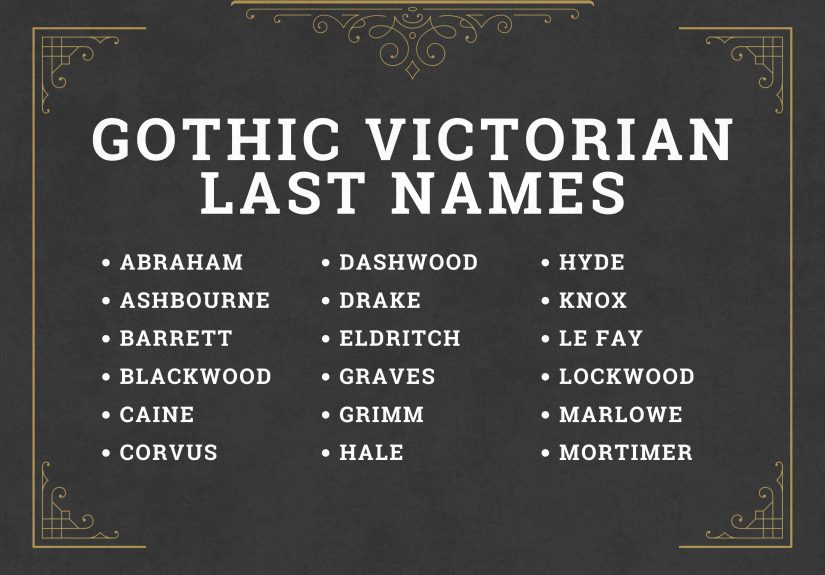
Gothic, Moody, and Deliciously Dramatic Choices
- Blackwell dark, polished, and novel-ready
- Blackwood one candle away from a family secret
- Corbett compact with a raven-dark edge
- Crowe sharp and memorable
- Crowther darker and more old-fashioned than Crowe
- Drake strong, clipped, and faintly dangerous
- Drayton cool and aristocratic in shadow
- Graves obvious, yes, but gloriously effective
- Grimshaw almost unfairly good for gothic fiction
- Harker immediate Victorian-novel vibes
- Lockwood one of the best surnames for mystery and atmosphere
- Marwood tense, elegant, and quietly threatening
- Mordaunt dramatic without becoming silly
- Nightingale lyrical, elegant, and a little haunted
- Orme unusual, sharp, and unforgettable
- Rooke quick, dark, and stylish
- Scarborough grand, coastal, and brooding
- Sharpe clipped and dangerous
- Sloane cool, polished, and emotionally unavailable in a chic way
- Vane aristocratic, strange, and excellent for antagonists
- Whitlock crisp, pale, and faintly eerie
- Winter spare, cold, and effective
- Winterbourne dramatic and beautifully atmospheric
- Wren short, elegant, and unexpectedly sharp
How to Mix and Match These Victorian Surnames
If you want your names to feel especially convincing, pair the surname with a first name that belongs in the same broad historical neighborhood. Clara Bellamy, Edwin Fletcher, Mabel Underwood, Arthur Grimshaw, Eleanor Wentworth, and Thomas Rees all sound plausible without trying too hard. That is the sweet spot.
You can also use naming contrast for character development. Give a practical person a glamorous surname. Give a socially ambitious character a sturdier one. Let siblings share a surname but have different first-name styles depending on who named them. A family called Pemberton might include a traditional eldest son, a rebellious daughter with a brisk nickname, and an aunt called Augusta who speaks as if she invented disappointment.
And yes, you may absolutely use an aptronym now and then, meaning a name that suits the character a little too perfectly. That trick works best with restraint. One Mr. Graves can delight readers. Five of them starts to feel like you are naming people with a thunderclap button.
Writerly Experiences with Victorian Last Names
One of the most interesting experiences writers have with Victorian last names is discovering how quickly a surname changes a character before the plot even starts. You can write the exact same woman as “Eliza Turner” and then as “Eliza Cavendish,” and the room around her changes. In the first version, readers may imagine capability, practicality, and a household where lists get made and followed. In the second, they may imagine polished manners, inherited furniture, and family expectations heavy enough to need their own luggage. The surname becomes a tiny costume designer, set decorator, and social historian all at once.
Another common experience is realizing that the “best” surname is not always the prettiest one. Writers often fall hard for names like Blackwood, Montague, or Winterbourne because they are dramatic and delicious. Then, halfway through drafting, they notice every other character also sounds like a moonlit estate. That is when the plain workhorses start to shine. A surname like Brown, Evans, or Cooper gives the story breathing room. It makes the unusual names feel more unusual. It also helps a fictional world feel populated by actual people, not just beautifully troubled wallpaper models.
There is also a practical experience every novelist meets sooner or later: rhythm. Some Victorian last names look fantastic on a list but become awkward once they meet dialogue, chapter headings, or an audiobook narrator. Arabella Winterbourne is lovely, but it carries a different weight from Nell Marsh. Long names can bring grandeur, while short names can bring speed, wit, and memorability. Many writers end up testing names aloud while making coffee, walking the dog, or staring into space like a person receiving coded transmissions from 1894. This is normal. Or at least it is normal enough for writers.
Victorian surnames also create a special kind of pleasure when they quietly reinforce theme. A social climber named Mercer feels different from one named Pembroke. A governess named Fairchild carries one kind of irony, while a governess named Turner carries another. The name can echo ambition, secrecy, class tension, region, religion, and even tone. In lighter fiction, the surname may add charm. In darker fiction, it may add foreboding. In both cases, the writer gets to smuggle atmosphere into the sentence before anything “happens.” That is an excellent bargain.
Perhaps the most satisfying experience, though, is when a Victorian surname suddenly feels inevitable. After trying ten wrong options, one name lands and the character finally stands up straight. Not Clara Hawthorne, Clara Bellamy. Not Mr. Finch, Mr. Grimshaw. Once the right surname arrives, dialogue often sharpens, relationships click into place, and the story gains confidence. That is why writers obsess over names in the first place. We are not just labeling people; we are tuning the emotional frequency of the entire novel. And Victorian last names, with all their history, texture, and glorious overcoats, happen to be exceptionally good instruments.
Conclusion
The best Victorian last names for fictional characters do more than sound old-fashioned. They suggest class, geography, occupation, family history, and mood in a single stroke. Some names are common and invisible in the best possible way. Others arrive wearing velvet and unresolved trauma. Both are useful. Whether you need a humble clerk, a suspicious widow, a factory owner, a schoolteacher, a vicar, a governess, or a brooding heir with a locked conservatory and absolutely no communication skills, the right surname can do a shocking amount of storytelling.
So choose with care, trust your ear, and remember: sometimes the perfect Victorian surname is grand and gothic, and sometimes it is simply Smith. Fiction, like history, has room for both.