Table of Contents >> Show >> Hide
- What Is the 1960s Dansk Kobenstyle Jens Quistgaard Fondu Pot?
- The Designer: Jens Quistgaard and the Dansk Story
- Why Kobenstyle Became a Mid-Century Classic
- Key Features of a Vintage Dansk Kobenstyle Fondue Pot
- How to Identify an Authentic 1960s Dansk Kobenstyle Fondue Pot
- Why Collectors Love the Dansk Kobenstyle Fondue Pot
- How Much Is a 1960s Dansk Kobenstyle Fondue Pot Worth?
- Care Tips for Vintage Dansk Kobenstyle Enamelware
- Decorating with a 1960s Dansk Kobenstyle Fondue Pot
- Using It Today: Fondue, Serving, and Display
- Experiences with a 1960s Dansk Kobenstyle Jens Quistgaard Fondu Pot
- Conclusion
The 1960s Dansk Kobenstyle Jens Quistgaard Fondu Pot is one of those vintage kitchen pieces that makes people stop mid-scroll, squint at the screen, and whisper, “Wait… is that cookware or sculpture?” The honest answer is yes. It is cookware, it is sculpture, and if it has survived six decades without someone storing loose screws in it, it may also be a small miracle.
Designed under the creative direction of Danish designer Jens Harald Quistgaard for Dansk, Kobenstyle cookware became a mid-century icon because it understood something many modern pans still forget: dinner starts before the food reaches the plate. A pot can be practical, colorful, clever, and charming enough to sit proudly on the table. The fondue pot, sometimes listed online as a “fondu pot,” fits perfectly into that philosophy. It belongs to the golden age of social dining, when people gathered around bubbling cheese, long forks, teak handles, and the quiet thrill of not dropping bread into the pot.
Today, collectors hunt for Dansk Kobenstyle fondue pots because they combine several irresistible ingredients: Scandinavian design, American mid-century taste, enamel-coated metal, warm wood details, and the unmistakable name of Jens Quistgaard. It is a pot with pedigree, personality, and just enough retro drama to make a modern kitchen look like it has better stories to tell.
What Is the 1960s Dansk Kobenstyle Jens Quistgaard Fondu Pot?
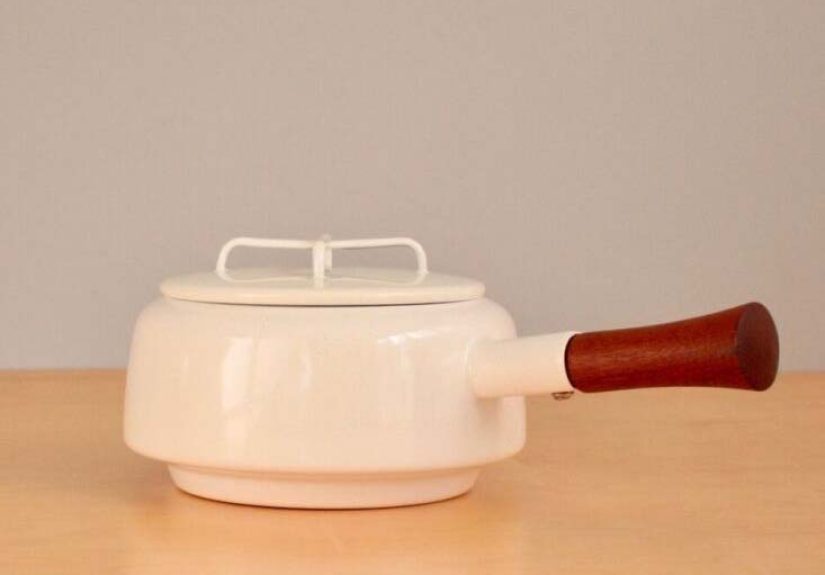
The 1960s Dansk Kobenstyle Jens Quistgaard Fondu Pot is a vintage enamelware fondue vessel associated with Dansk’s Kobenstyle line, a collection of cookware designed to move beautifully from stovetop to table. Kobenstyle pieces are known for their bright enamel colors, sculptural silhouettes, lightweight steel construction, black rim detailing, and handles that feel more like furniture design than ordinary kitchen hardware.
While the most famous Kobenstyle pieces are casseroles, saucepans, pitchers, and buffet servers, the fondue pot captures a particularly fun corner of the collection. Fondue itself became a fashionable American entertaining trend in the 1960s and 1970s, and a Dansk version gave the ritual a polished Scandinavian twist. Instead of a clunky pot that looked like it had escaped from a camping supply catalog, the Kobenstyle fondue pot looked modern, refined, and ready for a cocktail party where everyone knew what “Danish Modern” meantor pretended confidently.
The Designer: Jens Quistgaard and the Dansk Story
Jens Quistgaard was not merely a cookware designer. He was a sculptor, craftsman, and industrial designer whose work helped define the approachable elegance of mid-century Scandinavian style in American homes. Dansk was founded in the 1950s by American entrepreneur Ted Nierenberg, who recognized the appeal of Danish design and worked with Quistgaard to bring that aesthetic to a broad U.S. audience.
Quistgaard’s genius was his ability to make everyday objects feel special without making them fussy. A pepper mill became architectural. A casserole became tableware. A pot handle became a design statement. In the Kobenstyle line, this thinking is everywhere. The shapes are clean but not cold. The colors are cheerful but not cartoonish. The materials are practical but still visually warm.
That balance is exactly why vintage Dansk remains so collectible. The pieces do not look trapped in the past. They look like they wandered out of 1963, saw a modern open kitchen, and said, “Finally, people are ready for me again.”
Why Kobenstyle Became a Mid-Century Classic
It Was Designed for Stove-to-Table Living
Kobenstyle cookware was made for people who wanted fewer barriers between cooking, serving, and gathering. Instead of hiding the pot after cooking, the design encouraged hosts to bring it directly to the table. The cookware became part of the meal’s presentation, which was a practical idea dressed in a very good suit.
This mattered in mid-century entertaining. American homes were changing. Kitchens were becoming more open, casual dining was gaining ground, and hosts wanted pieces that looked stylish without requiring a staff of twelve and a silver-polishing schedule. Kobenstyle fit the moment beautifully.
It Used Color Like a Design Tool
Vintage Kobenstyle pieces appeared in memorable colors such as red, yellow, turquoise, white, and blue, depending on period and production. These were not shy colors. They were confident, optimistic, and very much aligned with the mid-century belief that even a saucepan deserved a little charisma.
A 1960s Dansk Kobenstyle fondue pot in white can feel crisp and architectural. In red, it becomes the life of the party. In blue or turquoise, it has a cool Scandinavian calm, as if it might serve cheese fondue and then recommend a well-designed chair.
It Was Lightweight Compared with Cast Iron
Many Kobenstyle pieces were made from enamel-coated steel rather than heavy cast iron. That gave them a lighter feel while still offering the easy-clean appeal of enamel. For fondue service, this was especially useful. A pot that can sit neatly on a stand, move to the table, and not require a weightlifting warm-up is always welcome.
Key Features of a Vintage Dansk Kobenstyle Fondue Pot
Collectors often look for several features when identifying a 1960s Dansk Kobenstyle Jens Quistgaard fondue pot. Exact details can vary by production period, but the following elements are commonly associated with desirable examples:
- Enamel-coated metal body: Smooth, glossy, and colorful, with a finish that gives the piece its signature shine.
- Teak or wood handle details: Many vintage Dansk pieces use wood accents that soften the industrial look of enamel and metal.
- Black rim edging: A common Kobenstyle visual detail that frames the enamel color and adds graphic contrast.
- Marked base: Collectors often look for marks such as “Dansk Designs Denmark” or “IHQ,” the initials associated with Jens Harald Quistgaard.
- Fondue stand or burner components: Complete sets are usually more attractive to collectors than orphaned pots.
- Clean interior enamel: Staining, chips, cracks, or heavy wear can affect both value and usability.
A quick collector tip: spelling varies in listings. Search both fondue pot and fondu pot. Vintage sellers are human, keyboards are mischievous, and sometimes the best finds are hiding behind a typo.
How to Identify an Authentic 1960s Dansk Kobenstyle Fondue Pot
Check the Markings
The underside of a vintage Dansk piece is often the best place to start. Look for stamped or printed markings that mention Dansk, Denmark, France, or IHQ. The IHQ mark is particularly meaningful because it refers to Jens Harald Quistgaard. However, markings changed over time, and not every authentic piece has identical branding.
If you are evaluating a pot online, ask for a clear photo of the base. A listing with ten glamorous side shots and no underside photo is like a dating profile with only sunglasses pictures. Interesting, but proceed carefully.
Study the Shape and Hardware
Kobenstyle design has a certain visual rhythm: sculptural but simple, functional but elegant. The handles and proportions should feel intentional. A fondue pot may include a stand, burner holder, or long handle depending on the model. Compare the piece with documented vintage examples from reputable dealers, museum-related references, and collector communities.
Look Closely at the Enamel
Some wear is normal on a piece from the 1960s. Small rim nicks, light utensil marks, or minor staining may be expected. Major enamel loss, interior cracking, rust exposure, or damage near heat-contact areas deserves caution. Enamel is beautiful, but once it chips badly, it does not heal itself no matter how nicely you speak to it.
Why Collectors Love the Dansk Kobenstyle Fondue Pot
The appeal goes beyond nostalgia. A 1960s Dansk Kobenstyle Jens Quistgaard fondue pot sits at the intersection of several collecting categories: mid-century modern design, Scandinavian cookware, vintage enamelware, Dansk tableware, and fondue-era entertaining. That gives it a wider audience than many single-purpose vintage kitchen items.
For design collectors, it represents Quistgaard’s belief that utility and beauty should share the same chair at dinner. For vintage kitchenware fans, it offers color, charm, and practical display value. For people who actually host fondue nights, it brings a sense of occasion to the table. And for anyone who simply loves objects with history, it carries the glow of an era when dinner parties involved conversation, cheese, and a small but real risk of someone losing a bread cube.
How Much Is a 1960s Dansk Kobenstyle Fondue Pot Worth?
Value depends on condition, color, completeness, provenance, and current demand. A complete fondue set with its stand, burner, original finish, strong markings, and minimal enamel damage will usually be more desirable than a pot alone. Rare colors or especially clean examples can also command more attention.
Online marketplaces such as vintage furniture sites, auction platforms, and curated design shops often show a wide range of prices. This is normal. Vintage pricing is part research, part timing, and part emotional weather forecast. One buyer may see a fondue pot; another sees the missing jewel of their Danish Modern breakfast nook.
If you are buying, compare sold prices rather than only asking prices. If you are selling, photograph the pot clearly, including the base mark, interior, rim, handle, stand, and any flaws. Honest condition notes build trust and reduce the chance of dramatic post-sale messages written in all caps.
Care Tips for Vintage Dansk Kobenstyle Enamelware
Vintage Kobenstyle should be treated with respect, especially if you want to use it rather than simply admire it on a shelf. Hand washing is usually the safest choice. Avoid harsh abrasives, steel wool, metal utensils, and sudden temperature changes. Enamel can chip from impact or thermal shock, so do not take a cold pot and blast it with high heat like it owes you money.
For fondue use, inspect the interior carefully before serving food. If there are deep chips, exposed metal, rust, or unstable enamel, consider using the piece for display only. A beautiful vintage object does not have to perform every old job to remain valuable. Sometimes retirement looks like sitting on a walnut sideboard looking gorgeous.
Decorating with a 1960s Dansk Kobenstyle Fondue Pot
One reason collectors love Dansk is that it displays beautifully. A Kobenstyle fondue pot can work as a centerpiece, shelf accent, bar-cart conversation piece, or colorful kitchen object. Pair it with teak cutting boards, white stoneware, vintage glassware, or simple linen napkins. The pot brings enough character on its own; it does not need twelve backup dancers.
In a modern kitchen, a white or black-accented Kobenstyle piece adds crisp contrast. In a retro-inspired room, a red, yellow, or turquoise pot can become the color anchor. In a minimalist space, it adds warmth and history without clutter. That is the secret power of good design: it can be decorative without becoming decoration-only.
Using It Today: Fondue, Serving, and Display
If the pot is in safe usable condition, it can still bring joy to the table. Cheese fondue, chocolate fondue, warm dips, or small shared appetizers all fit the social spirit of the piece. The key is gentle handling and thoughtful setup. Use appropriate heat, protect surfaces, and follow modern safety practices, especially around open flames or hot liquids.
But even if you never melt a single cube of cheese in it, the pot still earns its keep. It tells a story about postwar design, American entertaining, Danish craftsmanship, and the belief that ordinary household objects should make daily life more graceful. That is a pretty impressive résumé for something that can also hold snacks.
Experiences with a 1960s Dansk Kobenstyle Jens Quistgaard Fondu Pot
The first experience many people have with a 1960s Dansk Kobenstyle Jens Quistgaard fondu pot is not in a design museum. It is usually in a thrift store, estate sale, flea market, or late-night vintage search where one listing photo is slightly blurry and the seller has described it as “old red pot with stand.” That is where the fun begins. You zoom in. You tilt your head. You spot the black rim, the enamel shine, maybe a bit of teak, and suddenly you are not browsing anymore. You are investigating.
Handling one in person is even better. The pot feels lighter than expected if you are used to cast iron. The enamel has a cool smoothness. The proportions feel deliberate, not accidental. Even the stand, when present, has that mid-century confidence: simple lines, clear purpose, no unnecessary drama. It is the kind of object that makes you wonder why so many modern kitchen tools look as if they were designed by committees trapped in beige conference rooms.
Using one for a small gathering gives the piece its personality back. A fondue pot is not a lonely object. It wants people around it. It wants bread cubes, fruit, vegetables, laughter, and at least one guest who says, “My grandparents had one of these.” Put it in the center of the table and the mood changes. People lean in. They share. They talk. The pot becomes a tiny social engine, powered by melted cheese and design history.
Of course, vintage ownership also teaches patience. You learn to inspect enamel carefully. You learn that “minor wear” can mean anything from a charming rim nick to a crater that looks like it survived a meteor shower. You learn to ask for underside photos. You learn that original parts matter, but so does your own purpose. A collector may want a complete set in excellent condition. A decorator may be happy with a beautiful pot missing its burner. A host may care most about clean, safe usability.
There is also a quiet pleasure in cleaning and caring for a piece like this. Hand washing becomes less of a chore and more of a small ritual. You dry it carefully. You avoid stacking heavy pans on top. You give it a proper place on the shelf because it has clearly earned one. Unlike disposable kitchen trends, the Dansk Kobenstyle fondue pot rewards attention. It has already lasted decades. Treat it well, and it may outlive your current toaster, your next toaster, and possibly your relationship with minimalist gray cabinets.
Most of all, living with a 1960s Dansk Kobenstyle Jens Quistgaard fondu pot reminds you that design does not have to shout to be memorable. It can sit calmly on a table, hold something warm, invite people closer, and make the whole room feel a little more intentional. That is why collectors keep looking for these pots, why decorators keep displaying them, and why a once-fashionable fondue vessel still feels surprisingly fresh today.
Conclusion
The 1960s Dansk Kobenstyle Jens Quistgaard Fondu Pot is more than a vintage fondue accessory. It is a compact lesson in mid-century design: practical, beautiful, social, and wonderfully confident. With its enamel finish, sculptural form, possible teak details, and connection to Jens Quistgaard’s influential work for Dansk, it remains a favorite among collectors and design lovers.
Whether you plan to use it for fondue, display it as part of a Danish Modern collection, or simply admire it as a piece of kitchen history, this pot proves that great design can make even melted cheese feel sophisticated. And honestly, that may be one of civilization’s finer achievements.