Table of Contents >> Show >> Hide
- Why These Vintage Superhero Photos Are So Funny
- The Pop-Culture Boom Behind the Photos
- What Made Character Costumes So Awkward Back Then?
- 30 Funny And Awkward Photo Moments That Define the Era
- 1. The “Superman Forgot Leg Day” pose
- 2. The Batman with a department-store mystery
- 3. The Spider-Man mask that saw too much
- 4. The Darth Vader who cannot bend
- 5. The Wonder Woman power stance
- 6. The Hulk who is mostly paint
- 7. The confused sibling lineup
- 8. The hero with limp mascot hands
- 9. The tiny fan in giant glasses
- 10. The character who is just slightly off-model
- 11. The forced handshake
- 12. The “don’t make eye contact” child
- 13. The mall backdrop of destiny
- 14. The cape that refuses drama
- 15. The character surrounded by shopping bags
- 16. The uncomfortable side hug
- 17. The kid who believes completely
- 18. The parent just outside the frame
- 19. The hero who seems exhausted
- 20. The villain who is too friendly
- 21. The awkward height difference
- 22. The homemade costume charm
- 23. The child dressed as a hero meeting a hero
- 24. The pose with no clear plan
- 25. The masked character with intense eyes
- 26. The too-serious hero
- 27. The cartoon character with giant proportions
- 28. The “after the flash” blink
- 29. The suspicious toddler
- 30. The perfect imperfect memory
- Why We Still Love These Awkward Vintage Photos
- The Experience of Growing Up With Awkward Superhero Magic
- Conclusion
Note: This is an original, research-informed nostalgia article written for web publication. It discusses the real pop-culture background behind vintage mall superhero photos without copying captions or text from the original gallery.
Before superhero meet-and-greets became slick, scheduled, and guarded by branded backdrops, there was the glorious chaos of the 1970s and 1980s mall appearance. A kid in tube socks would stand next to a man in a homemade-looking Spider-Man suit, a camera flash would explode, and history would gain one more deeply awkward masterpiece.
The photo collections often described as “kids posing with superheroes and popular characters in the ’70s and ’80s” are funny because they sit at the exact intersection of childhood wonder and adult improvisation. The children are usually thrilled, frozen, confused, terrified, or all four. The superheroes, meanwhile, look as if they were assembled from nylon, hope, and whatever was left in the department store’s storage closet after Easter Bunny season.
Yet these pictures are more than just internet comedy. They capture a specific era of American childhood: Saturday morning cartoons, department-store promotions, shopping malls as social hubs, Polaroid and Instamatic snapshots, Star Wars mania, superhero lunchboxes, and a time when “character accuracy” was sometimes defined as “the cape is red, close enough.”
Why These Vintage Superhero Photos Are So Funny
The humor comes from contrast. In a child’s imagination, Superman is noble, Batman is mysterious, Darth Vader is terrifying, and Spider-Man is agile enough to swing between skyscrapers. In a mall photo from 1979, Superman may have a crooked belt, Batman may be standing under fluorescent lights beside a potted fern, and Spider-Man may be wearing a mask that looks like it has seen three birthday parties and a minor plumbing incident.
Modern fans are used to movie-grade costumes. Today, even a local comic convention can produce cosplayers with armor, LED effects, custom fabric, and screen-accurate stitching. In the ’70s and ’80s, many appearances were closer to traveling promotions. Costumes had to survive car trunks, gymnasiums, mall stages, county fairs, and children who believed hugging meant full-body tackling.
The result was magical in the moment and hilarious in hindsight. A child might have believed they were meeting the real Batman. Decades later, the grown-up child looks at the picture and realizes Batman’s cowl had the emotional energy of a melted trash bag. Nostalgia is powerful, but photo paper is honest.
The Pop-Culture Boom Behind the Photos
These awkward portraits did not appear out of nowhere. The 1970s and 1980s were packed with character-driven entertainment. Super Friends introduced many children to DC heroes on Saturday mornings. Lynda Carter’s Wonder Woman made the character a live-action icon. The Incredible Hulk turned Lou Ferrigno’s green body paint into prime-time drama. Shazam! brought superhero adventure to younger viewers. Then Superman: The Movie arrived in 1978 and convinced a generation that a man could fly.
At the same time, Star Wars changed the business of toys and character marketing. Kenner’s small action figures became must-have objects, and children began expecting movies, TV shows, comics, toys, lunchboxes, bedsheets, and mall appearances to exist in one big universe of play. By the early 1980s, characters such as He-Man, Skeletor, Transformers, Smurfs, Care Bears, and countless cartoon icons were no longer confined to screens. They were everywhere.
Shopping malls were the perfect stage. Families were already there. Department stores needed foot traffic. Kids wanted to see their heroes. Parents wanted a keepsake. A costumed character plus a photographer equaled a promotional event, a childhood memory, and, decades later, a comedy artifact.
What Made Character Costumes So Awkward Back Then?
1. Costume technology was still evolving
Today’s professional mascot and character costumes are designed around visibility, cooling, movement, brand standards, safety, and photography. Earlier costumes often looked bulkier, stranger, and less expressive. Some heads were oversized. Some masks sat oddly on the face. Some superheroes had muscles that appeared to be made from couch cushions with ambition.
2. Lighting was brutally honest
Fluorescent mall lighting did nobody any favors. A costume that looked decent from 20 feet away could become a textile crime scene under a direct camera flash. Shiny fabric reflected light. Masks revealed wrinkles. Foam padding created strange shadows. Even the bravest hero could be defeated by a Sears portrait lamp.
3. Kids reacted like real kids
Children are not tiny public relations professionals. They cry, stare, lean away, clutch their siblings, refuse to smile, or look at the camera as if they have just learned how taxes work. That honesty makes the photos irresistible. The adults may be trying to create a magical moment, but the child’s face often says, “I requested Batman, not this complicated situation.”
4. The poses were wonderfully unnatural
Superheroes are supposed to leap, fly, swing, punch, and save planets. In these photos, they are often standing stiffly beside a folding chair. A costumed Spider-Man may put one hand on a child’s shoulder. A child may stand with arms pinned to their sides. Everyone looks like they received separate instructions from different adults.
30 Funny And Awkward Photo Moments That Define the Era
Even without seeing every individual image, the familiar patterns of these vintage superhero and character photos are easy to recognize. They are part comedy, part history, and part family-album treasure.
1. The “Superman Forgot Leg Day” pose
Many vintage Superman appearances had the cape, the shield, and the confident stance. The trouble began when the suit fit like borrowed pajamas. Children still looked impressed, because Superman is Superman, even when his boots appear to be losing an argument with gravity.
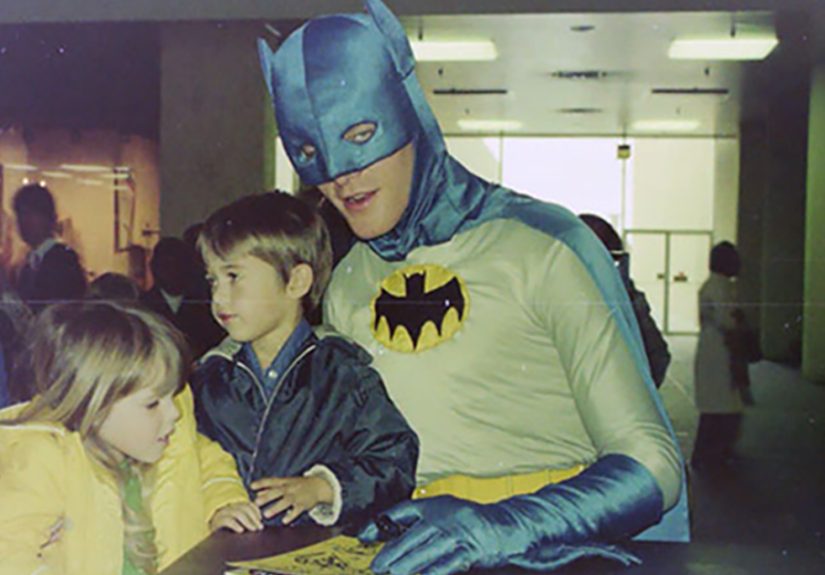
2. The Batman with a department-store mystery
Batman in a mall is already funny. Batman in a mall under bright lighting beside a child wearing striped pants is art. The Dark Knight was never meant to be evaluated next to a sale sign.
3. The Spider-Man mask that saw too much
A slightly sagging Spider-Man mask can turn the friendly neighborhood hero into the tired neighborhood substitute teacher. The kids often look delighted anyway, proving that imagination does most of the heavy lifting.
4. The Darth Vader who cannot bend
When Star Wars characters entered the mall-photo universe, the awkwardness reached galactic levels. Darth Vader is supposed to command fear. In a shopping center, he mostly commands people to wait in line near the pretzel stand.
5. The Wonder Woman power stance
Wonder Woman photos from the era often carry real charm. The costume might not always be perfect, but the symbolism mattered. For many girls, seeing a powerful female hero in person was unforgettable.
6. The Hulk who is mostly paint
Some Hulk appearances leaned heavily on green skin and facial intensity. The child’s expression often determined the success of the photo. A smiling kid made it cute. A nervous kid made it look like a warning poster.
7. The confused sibling lineup
Nothing says “vintage family memory” like three children reacting differently to the same character. One beams. One panics. One studies the costume seams like a future forensic scientist.
8. The hero with limp mascot hands
Older character costumes sometimes had hands that hung awkwardly, making even the strongest champion look mildly unsure about what to do next. A heroic wave could become a fabric-based cry for help.
9. The tiny fan in giant glasses
Oversized children’s glasses were a major supporting character of the period. Add a superhero, a bowl haircut, and a nervous grin, and the photograph becomes a museum-quality slice of childhood.
10. The character who is just slightly off-model
Some costumes were recognizable but not exactly accurate. A logo might be too large, a mask too round, or a cape too short. These tiny differences are what make the pictures funny rather than forgettable.
11. The forced handshake
Adults loved making kids shake hands with characters. The child often looks proud, confused, or suspicious. It is the same expression adults make when accepting a free sample they did not want.
12. The “don’t make eye contact” child
Some kids avoided looking at the character entirely. They stood beside the hero, faced the camera, and silently negotiated with the universe to make the moment end quickly.
13. The mall backdrop of destiny
Behind many of these photos is not a cinematic skyline but a curtain, a plant, a tile floor, or a department-store display. Nothing grounds fantasy like beige carpeting.
14. The cape that refuses drama
A superhero cape should flow. In many old photos, it simply hangs there like a towel with legal responsibilities.
15. The character surrounded by shopping bags
Seeing a superhero beside families carrying purchases is a perfect summary of the era: myth, merchandise, and mall culture all in one frame.
16. The uncomfortable side hug
Character hugs were often limited by costume design. The result was a stiff side embrace that looked less like superhero warmth and more like a pose from a workplace safety brochure.
17. The kid who believes completely
The sweetest photos are the ones where the child is fully convinced. The costume may look odd now, but the child’s face shows real awe. That sincerity is the secret ingredient.
18. The parent just outside the frame
You can almost feel the parent saying, “Smile! We paid for this.” That invisible parental pressure gives many photos their beautifully awkward energy.
19. The hero who seems exhausted
After hours of posing with children, even Superman might look ready for a sandwich and a quiet room. Some costumes carry the posture of a person who has explained the same pose 200 times.
20. The villain who is too friendly
Villains are tricky at kid events. They need to be recognizable without causing a full meltdown. A smiling Darth Vader or Joker-style character creates an odd but memorable contradiction.
21. The awkward height difference
A very tall character beside a very small child can look impressive, terrifying, or like a school photo taken during a fever dream.
22. The homemade costume charm
Not every outfit had a professional finish, but that is part of the appeal. The visible handmade quality makes these images feel more human, more local, and much funnier than polished marketing shots.
23. The child dressed as a hero meeting a hero
When kids wore superhero pajamas, Underoos, or Halloween costumes to meet the “real” character, the photo became a mirror of imagination. It was fandom before social media had a name for it.
24. The pose with no clear plan
Some pictures look as if the photographer counted down before anyone decided where to put their arms. The result is authentic, chaotic, and perfect.
25. The masked character with intense eyes
Many older masks had eye openings that created a slightly alarming stare. A hero could accidentally look like he had just remembered he left the oven on.
26. The too-serious hero
Some performers committed fully to the role, even when standing next to a shy six-year-old. That intensity makes the picture funnier. The child wants a photo; the hero appears ready to defend Earth.
27. The cartoon character with giant proportions
Popular non-superhero characters could be just as awkward. Oversized heads, padded bodies, and fixed smiles made them adorable from a distance and slightly surreal up close.
28. The “after the flash” blink
Old cameras and bright flashes created plenty of half-blinks and startled faces. The imperfect timing adds to the charm. Nobody was checking a screen and requesting a redo.
29. The suspicious toddler
Toddlers are the toughest critics. They know when something is off. Many of these photos become funny because the toddler is clearly evaluating the hero’s credentials.
30. The perfect imperfect memory
The best vintage character photo is not technically good. It is emotionally good. It is blurry, strange, funny, and full of life. It reminds us that childhood magic rarely arrives in perfect packaging.
Why We Still Love These Awkward Vintage Photos
Part of the appeal is simple nostalgia. People who grew up in the ’70s and ’80s remember a world with fewer screens, fewer previews, and fewer chances to verify whether a costume was accurate. If a character showed up at the mall, that was an event. You did not compare it to a high-definition movie still. You stood in line, hoped the hero noticed you, and took the picture.
Another reason is that the photos feel unfiltered. Today, people retake pictures until everyone looks perfect. In the era of film, the photo was the photo. If Batman blinked, if the child frowned, if Spider-Man’s glove was twisted, that was the memory. The imperfection is exactly what makes it valuable now.
These pictures also show how fandom worked before the internet. Kids did not need online communities to love superheroes. They had comics, cartoons, toys, trading cards, birthday cakes, lunchboxes, and local appearances. The excitement was physical. You held the action figure. You watched the cartoon on Saturday morning. You saw the hero at the mall. Then the photo went into a family album, where it waited patiently to become hilarious.
The Experience of Growing Up With Awkward Superhero Magic
Imagine being a kid in 1982. Your Saturday starts with cereal that is roughly 40 percent sugar and a cartoon lineup that makes the living room feel like mission control. Superman, Batman, Spider-Man, He-Man, the Smurfs, and other characters are not “content.” They are part of your mental furniture. They live on your pajamas, your school folder, your plastic cup, and possibly your wall if your parents allowed tape.
Then one day your parents say, “Spider-Man is going to be at the mall.” That sentence has weight. It is not a casual errand. It is a pilgrimage with escalators. You ride in the back seat without a phone, without a tablet, and without any ability to investigate whether this Spider-Man is officially licensed. You simply believe.
At the mall, the smell is a mixture of pretzels, perfume counters, vinyl, new shoes, and indoor fountain water. There may be a small stage near the center court. There may be a banner. There may be a line of children wearing corduroy, striped shirts, or jackets in colors no modern designer would approve without a long meeting. Then you see him: the character. Maybe he looks amazing. Maybe he looks strange. Maybe the mask has wrinkles. Maybe the boots are suspicious. It does not matter. Your brain fills in the gaps.
The photo moment happens quickly. A parent nudges you forward. The hero places a hand on your shoulder. The hand feels padded, rubbery, or oddly warm. The photographer tells you to smile. You forget how. For three seconds, you are both thrilled and deeply aware that this is not like television. The camera flashes. You step away holding a memory you cannot fully understand yet.
Years later, the picture resurfaces. Maybe it is in a shoebox. Maybe someone scans it. Maybe it appears in a nostalgia gallery online. Now you notice everything you missed: the drooping cape, the awkward stance, the fake muscles, the mall tile, your own haircut, your sibling’s expression of total emotional collapse. You laugh because the picture is ridiculous. Then you feel something softer underneath the laughter.
That is the real experience these photos preserve. They are funny, yes, but they are also evidence of how powerful imagination can be. A costume did not need Hollywood precision to make a child believe. A mall did not need a cinematic set to become a superhero headquarters. A blurry photograph did not need perfection to become priceless.
For parents, these events were often small acts of love. They waited in line, paid for the picture, managed the crying child, carried the shopping bags, and probably said, “Come on, just one nice smile.” For kids, the experience became a strange little emotional time capsule. Maybe the character was scary. Maybe the photo was awkward. Maybe the whole thing lasted less than a minute. But decades later, it still has power.
That is why people keep sharing these vintage superhero photos. They are not just laughing at bad costumes. They are laughing with recognition. They remember wanting to believe. They remember family outings, plastic toys, TV theme songs, scratchy costumes, and the wild seriousness of childhood fandom. The awkwardness is not a flaw. It is the proof that the moment was real.
Conclusion
The funny and awkward pics of kids posing with superheroes and popular characters in the ’70s and ’80s remain irresistible because they combine comedy, nostalgia, and cultural history in one flash-lit frame. They remind us of a time when shopping malls were community theaters, superheroes traveled by station wagon, and a child could meet a legend between the department store and the food court.
The costumes may look strange now, but the emotions are timeless. Kids wanted wonder. Parents wanted memories. Performers did their best inside hot, bulky suits. And somehow, through crooked masks and stiff poses, the magic worked. These photos are funny because they are imperfect, and they are beloved because childhood was imperfect too.