Table of Contents >> Show >> Hide
Note: HTML body only, ready to paste into a webpage. SEO tags are included in JSON format at the end.
A small kitchen has one rude little habit: it shows everything. One extra appliance on the counter? Chaos. One awkward light fixture? Suddenly the whole room looks grumpy. But the good news is that compact kitchens also reward smart decorating faster than big ones do. A few thoughtful changes can make a tiny cooking space feel brighter, calmer, more useful, and a whole lot more stylish.
The secret is not stuffing the room with more “cute” things until it resembles a home goods store with a caffeine problem. The real magic comes from choosing decor that works hard: pieces that add personality, improve storage, bounce light, or make the room feel visually taller and wider. That is where small kitchen decor ideas earn their keep.
Below, you will find 47 practical, stylish, and realistic ways to decorate a small kitchen without making it feel cramped. Some are budget-friendly. Some are renter-friendly. Some are just gloriously clever. All of them are designed to help your small kitchen look big on style, even when the square footage says otherwise.
Why Small Kitchens Can Look So Good
Small kitchens force you to edit. And edited spaces almost always look more polished than rooms trying to do seventeen things at once. In a compact kitchen, every shelf, stool, sconce, and spoon crock matters. That sounds dramatic, but kitchens are dramatic. They contain knives, heat, and the emotional stakes of dinner.
When you decorate a small kitchen well, you create a room that feels intentional. Light reflects better. clutter hides better. Storage works harder. Even everyday objects like plates, glassware, and cutting boards can double as decor. The goal is not to fake a giant kitchen. The goal is to make your actual kitchen feel airy, layered, and inviting.
47 Small Kitchen Decor Ideas for Big Style
Color, Light, and Visual Space
- Choose a soft, cohesive color palette. Warm white, light greige, pale putty, soft sage, and muted blue keep a small kitchen from feeling visually choppy.
- Use one dominant color and one accent. Too many competing tones can make a compact room look busy instead of charming.
- Paint cabinets instead of replacing them. A fresh cabinet color can transform the whole kitchen faster than most decor changes.
- Try glossy finishes in small doses. High-gloss cabinets, lacquered paint, or reflective tile help bounce light around the room.
- Carry the backsplash higher. Running tile to the ceiling draws the eye up and makes the kitchen feel taller and more finished.
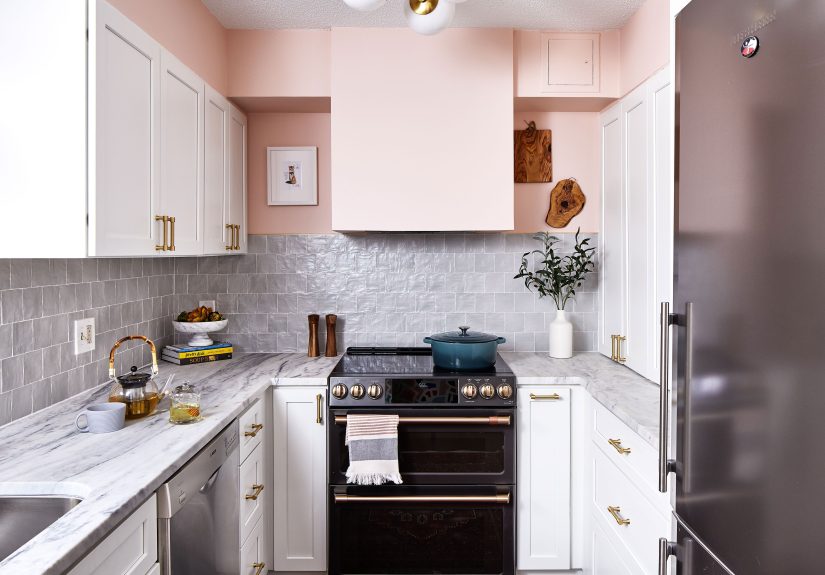
- Use a reflective backsplash. Shiny tile, glazed zellige, or lightly reflective stone adds brightness without screaming for attention.
- Keep countertop materials visually calm. Surfaces with gentle movement and less visual noise make the room feel more relaxed.
- Match the backsplash to the countertop for continuity. Fewer visual breaks can make a small kitchen feel more open.
- Let natural light do its thing. Avoid heavy window coverings and use airy shades or simple café curtains if privacy matters.
- Add under-cabinet lighting. It is practical, flattering, and much kinder to your onions at 7 p.m.
Cabinets, Shelving, and Smart Storage
- Take cabinets to the ceiling. Full-height cabinetry makes the room feel taller and gives you extra storage without eating floor space.
- Skip decorating random dead space above cabinets. If the gap exists, finish it cleanly instead of letting it become a dust museum.
- Use glass-front cabinets sparingly. They lighten the look of upper storage and help a small kitchen feel less boxed in.
- Try well-styled open shelves. They work best when the items are edited, useful, and not trying to audition as clutter.
- Display everyday dishes as decor. Pretty plates, mugs, and bowls can earn shelf space and save cabinet room at the same time.
- Install a slim plate rack. It adds character and turns dinnerware into wall art with actual purpose.
- Use a pot rail or brass rod. Hanging utensils, pans, and cutting boards frees drawers and adds that hardworking kitchen look.
- Create a pegboard wall. A pegboard brings flexible storage and an easy dose of texture to a small kitchen.
- Add hooks under shelves or cabinets. This is a great spot for mugs, measuring cups, or small tools.
- Use the side of cabinets. The cabinet end panel can hold rails, narrow shelves, or a mounted paper towel holder.
- Style a narrow shelf with pantry jars. Decanted staples like pasta, oats, or coffee beans can look neat and useful.
- Bring in baskets where they actually help. Baskets work best when they hide rarely used items rather than multiply visual clutter.
- Use a vintage or antique shelf for charm. One older piece can warm up a compact kitchen that feels too plain or sterile.
- Turn a rolling cart into a coffee station. It adds storage, function, and personality without requiring a built-in nook.
- Choose a slim inset nook if possible. Recessed cabinetry or a shallow display ledge can add function without stealing walking space.
Countertops, Furniture, and Layout-Friendly Decor
- Decorate counters with restraint. A bowl of fruit, a small vase, or a beautiful appliance is enough. The counter is not a showroom.
- Corral essentials on a tray. A tray makes soap, oil, salt, or coffee supplies look curated instead of scattered.
- Use a rolling island if space allows. It adds prep room and storage, then moves aside when the kitchen needs breathing room.
- Downsize the island. In some kitchens, a narrow island or small worktable is smarter than a bulky centerpiece.
- Choose stools with visual lightness. Open-back or slim-profile seating keeps sight lines clearer than chunky chairs.
- Reupholster a breakfast stool or chair. A durable patterned fabric adds softness and gives the room a custom touch.
- Use a small bench or banquette in a nook. It can make a compact eat-in area feel cozy instead of cramped.
- Skip upper cabinets on one wall. Replacing them with shelving or leaving the wall more open can dramatically improve airiness.
- Let one hardworking table do double duty. In a tiny kitchen, a dining table can also be prep space, laptop zone, and social hub.
- Consider built-in appliances when possible. Integrated or streamlined appliances help the room feel less interrupted.
Walls, Decor, and Personality
- Add small pieces of art. A little framed print on a shelf, windowsill, or wall over the sink adds personality without crowding the room.
- Create a mini gallery wall. A tight cluster of food art, vintage prints, or black-and-white photos can give the kitchen soul.
- Hang cutting boards like artwork. Wood boards add warmth, texture, and that quietly stylish “I definitely cook here” energy.
- Use a kitchen rug or runner. It softens hard surfaces, brings in pattern, and helps define the room.
- Try statement tile on one surface. A bold backsplash, checkerboard floor, or patterned niche can carry the whole design.
- Bring in a pop of color. A green stool, blue shade, coral tea kettle, or painted island can wake up a neutral kitchen.
- Decorate with plants or herbs. A windowsill herb garden or a tiny trailing plant adds life faster than almost anything.
- Use fruit as decor. A bowl of lemons, limes, or apples is classic because it works, and because it looks like you have your life together.
- Display cookbooks in small stacks. A few beautiful spines can add color and character, especially on open shelves.
- Mix old and new. Vintage lighting, an antique shelf, or collected ceramics keep a small kitchen from feeling flat or generic.
- Style with matching metal finishes. Consistent hardware and fixtures help the room feel calmer and more intentional.
- Use tableware as part of the decor story. A sculptural pitcher, stacked bowls, or colored glassware can decorate while staying useful.
Finishing Touches That Make a Big Difference
- Choose statement lighting with a light footprint. A pendant or compact fixture can add drama without overpowering the room.
- Keep the fixture scale honest. Tiny kitchens do not need chandeliers that enter the room before you do.
- Repeat one material for rhythm. Wood, brass, black iron, or woven texture repeated in a few places helps the kitchen feel tied together.
- Lean into cozy details. Soft towels, warm woods, ceramic crocks, and woven accents can make a hard-working kitchen feel welcoming.
- Use simple cabinet fronts when possible. Cleaner silhouettes prevent the room from looking too fussy.
- Add one memorable focal point. That could be a patterned floor, a bold light fixture, or a glossy backsplash. One star is enough.
- Leave breathing room. Empty space is not wasted space in a small kitchen. It is design therapy.
How to Choose the Right Decor Ideas for Your Kitchen
You do not need all 47 ideas. Unless your favorite hobby is making perfectly good decisions much harder than necessary, pick three to five upgrades that solve real problems first. Start with what annoys you most. Is the kitchen too dark? Focus on lighting, reflective surfaces, and lighter finishes. Too cluttered? Prioritize rails, pegboards, ceiling-height cabinets, trays, and edited shelving. Too bland? Bring in a rug, art, plants, or a small hit of color.
Also consider how you actually use the room. If you cook daily, countertop decor should be minimal and storage should be practical. If your kitchen opens into a living space, it needs to look polished from every angle, so cohesive finishes and styled shelves matter more. If you rent, lean into peel-and-stick backsplash tile, art, lighting swaps, removable hooks, and mobile pieces like carts and islands.
The most stylish small kitchens rarely feel stuffed. They feel thoughtful. Everything seems to belong. That is the goal.
Real-Life Experiences With Small Kitchen Decor Ideas
One of the most common experiences people have with a small kitchen is realizing that the room never feels “done” when it is approached like a large one. In a bigger kitchen, you can get away with an oversized fruit bowl, three countertop appliances, a decorative sign, a stack of cookbooks, and a random candle that smells like cinnamon ambition. In a small kitchen, those same items can make the space feel crowded by lunchtime. That is why the best small kitchen decorating usually starts with subtraction, not addition.
Many people also discover that function and beauty are not opponents in a compact kitchen. In fact, they become best friends. A pot rail is attractive because it clears drawers. A pretty tray is stylish because it organizes visual clutter. Open shelves look charming only when they hold things you use and love. This is one of the most satisfying parts of decorating a small kitchen: practical solutions often become the prettiest ones.
Another real-world lesson is that lighting changes everything. A kitchen that feels dull at night can become inviting with under-cabinet lighting, a warmer bulb temperature, and one attractive overhead fixture. The same goes for finish choices. People are often surprised by how much lighter cabinets, cohesive hardware, or a reflective backsplash can change the mood of the room. Small kitchens react quickly. That is good news for decorators and bad news for bad design decisions.
There is also the emotional side of the experience. A small kitchen can feel frustrating when it is disorganized, especially if it is the place where mornings begin and busy evenings collide. But once the room is edited, cleaned up, and given a little personality, it often starts feeling cozy rather than limiting. That shift matters. A compact kitchen can become one of the most welcoming spots in the home, especially when it includes warm woods, soft color, a few personal touches, and smart storage that keeps surfaces open.
People who live with small kitchens for years often learn to decorate more intentionally everywhere else too. They get better at noticing scale, clutter, and visual weight. They understand that not every blank wall needs filling and not every surface needs styling. They learn that one beautiful object can do more than ten average ones. That mindset is part of what gives well-designed small kitchens their charm. They are edited, yes, but they are also deeply personal.
And perhaps the biggest experience of all is this: once a small kitchen works, it feels incredibly efficient. Everything is within reach. Cleanup is faster. The room becomes easier to maintain. Instead of fighting the space, you begin to work with it. You stop wishing it were a giant chef’s kitchen with twelve-foot ceilings and an island the size of a studio apartment. You start appreciating the fact that your little kitchen has character, rhythm, and just enough room for what really matters. Plus, fewer steps between the fridge and the coffee maker is not exactly a tragedy.
Conclusion
The best small kitchen decor ideas do more than make a room look pretty. They make it feel easier to use, calmer to live with, and far more personal. Whether you start with a new paint color, a shiny backsplash, a pot rail, a vintage shelf, or a single excellent rug, the biggest transformation usually comes from choosing decor that adds both function and style.
A small kitchen does not need to be stripped of personality to feel spacious. It just needs smart choices, clear surfaces, a little visual breathing room, and details that pull their weight. In other words, your kitchen can absolutely be small and fabulous. A tiny room with main-character energy is still main-character energy.