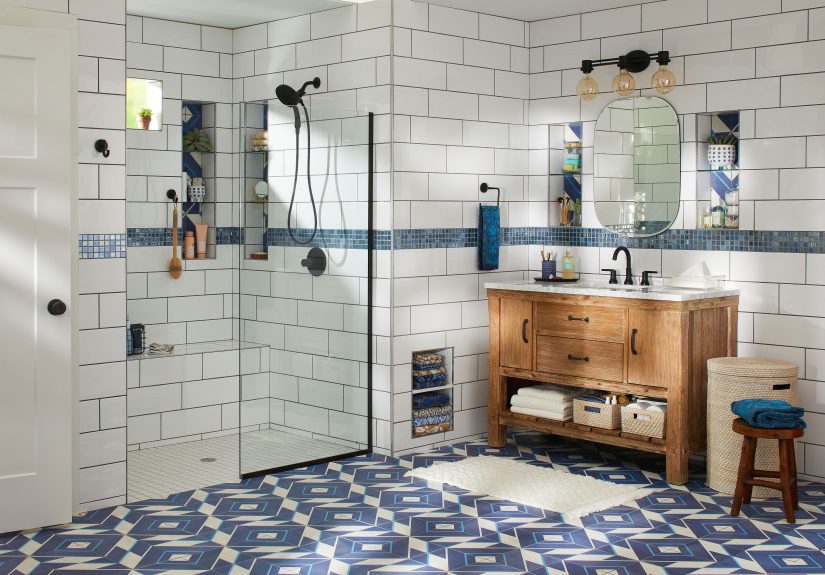
Table of Contents >> Show >> Hide
- Before You Pick a Layout: The “Please Don’t Make It Awkward” Rules
- Layout #1: The One-Wall Wonder (All Fixtures on One Wall)
- Layout #2: The Galley Bathroom (Two-Wall Corridor Layout)
- Layout #3: The L-Shape Layout (Corner-Friendly and Surprisingly Smooth)
- Layout #4: The Compartmentalized Layout (Separate Toilet Room)
- Layout #5: The Zoned Primary Bath (Spa Feel, Real-World Function)
- Layout Matchmaker: Pick the One That Fits Your Life
- Common Bathroom Layout Mistakes (So You Don’t Learn the Hard Way)
- A Quick Bathroom Planning Checklist
- Final Thoughts: Your Dream Bathroom Is Mostly a Good Plan
- Experience Notes: Real-Life Lessons That Make Bathroom Layouts Actually Work (Extra)
Bathrooms are funny little rooms. They’re where you start your day like a responsible adult (even if your hair says “nope”),
and where guests judge your taste in tile while pretending they’re not judging your taste in tile.
The good news: you don’t need a mansion-sized footprint to build a bathroom that feels calm, functional, anddare I saydreamy.
You need the right bathroom layout.
In this guide, we’ll break down five tried-and-true bathroom floor plan options used in real American homes,
plus the clearance rules and design tricks that keep your remodel from turning into a daily obstacle course.
Whether you’re planning a small bathroom layout, upgrading a guest bath, or mapping out a spa-worthy primary suite,
you’ll leave with a clear directionand a few laughs.
Before You Pick a Layout: The “Please Don’t Make It Awkward” Rules
A bathroom can look gorgeous and still function like a poorly organized backpack. Layout is the difference between “ahhh” and “ouch.”
Here are the practical rules designers and building pros obsess over (because they’ve seen what happens when people don’t).
1) Start with clearances (your knees will thank you)
- Front clearance: Aim for roomy space in front of fixtures so you’re not brushing your teeth in a corner like a time-out.
- Toilet spacing: Toilets need breathing room on both sides; crowding is how you end up doing the “sideways shuffle.”
- Door swing: If the door hits the toilet, that’s not “cozy,” it’s “comedy.” Consider a pocket door if space is tight.
2) Keep plumbing close when you can
Moving fixtures far from the main drain stack can increase cost and sometimes create slower drainage issues later.
If you’re remodeling, keeping hookups in roughly the same zone can protect your budget for the fun stufflike heated floors or a vanity you actually love.
3) Group wet stuff together
Designers often talk about a “wet zone” (shower/tub) and a “dry zone” (vanity/toilet/storage).
Even in a small bath, zoning helps keep towels dry, floors safer, and mornings less chaotic.
4) Decide your “non-negotiables” early
Pick your priorities before you place anything: double vanity vs. linen storage, tub vs. oversized shower, separate toilet room vs. open feel.
Your layout should serve your household, not your fantasy version of yourself who always folds towels into perfect spa rolls.
5) Design for real life (and future you)
Think about slip resistance, lighting, and at least one easy-to-reach storage zone for daily essentials.
If this could be a forever home, consider a curbless shower entry or wider pathways so the bathroom stays comfortable long-term.
Layout #1: The One-Wall Wonder (All Fixtures on One Wall)
If your bathroom is small, narrow, or you’re trying to keep remodel costs sane, the one-wall bathroom layout is a classic.
It places the vanity, toilet, and tub/shower in a straight line along a single plumbing wallaka the “please don’t make my plumber cry” plan.
Best for
- Small full baths, tight condos, and hallway bathrooms
- Budget-friendly remodels (minimal plumbing relocation)
- Homes where you want simple maintenance access
How it works
Imagine walking in and seeing: vanity first, toilet next, and a tub/shower combo or shower at the end.
Keeping everything in one line leaves more open floor areahuge for a small bathroom layout.
Design moves that make it feel bigger
- Floating vanity: Shows more floor, feels lighter, and gives you toe space (a tiny luxury that’s oddly satisfying).
- Frameless glass: If you have a shower, clear glass reduces visual “stops.”
- Wall storage: Medicine cabinets, recessed niches, and shelves keep counters from becoming a clutter museum.
Example: In a 5′ x 8′ full bath, a compact vanity (24–30″), a standard toilet, and a tub/shower combo can fit comfortably
when clearances are respected and the door swing is handled intelligently (pocket or out-swing doors are often lifesavers).
Layout #2: The Galley Bathroom (Two-Wall Corridor Layout)
The galley bathroom layout uses two parallel wallsfixtures on both sideswith a walkway down the middle.
It’s basically the kitchen galley’s clean, well-hydrated cousin.
Best for
- Narrow bathrooms with enough length to create a comfortable center aisle
- Shared bathrooms where you want zones (someone can shower while someone else uses the vanity)
- Renovations where you can place a shower at one end for a strong focal point
How it works
One common setup: vanity on one side, toilet on the other, and a shower at the far end.
Another: vanity + toilet on one side, shower/tub on the opposite wall (helpful if you’re keeping plumbing grouped).
Galley layout upgrades that feel “designer”
- End-wall statement: Tile the shower wall in a bolder pattern so the room looks longer and more intentional.
- Long mirror + layered light: A stretched mirror visually widens the corridor, especially with sconces.
- Half-wall or panel: A partial divider can add privacy while keeping light flowing.
Example: In a 5′ x 10′ layout, a 36″ vanity and toilet can sit opposite each other while leaving a workable center lane,
with a shower at the end acting like a “destination.”
Layout #3: The L-Shape Layout (Corner-Friendly and Surprisingly Smooth)
The L-shaped bathroom layout uses two adjoining walls in a way that creates a natural turn.
It’s perfect for awkward footprintslike when a closet nibbles a corner or the entry lands in a weird spot.
Instead of fighting the architecture, you make it your co-pilot.
Best for
- Bathrooms with an offset entry or a bump-out
- Rooms where you want to hide the toilet from immediate view
- Designs that benefit from a wet/dry split without building a separate room
How it works
Place the vanity near the entrance (easy access), tuck the toilet around the corner (privacy win),
and position the shower or tub on the adjacent wall to form a tidy wet zone.
Corner tricks that add function
- Corner shower: A neo-angle or curved shower can open up the pathway.
- Caddy-corner sink: In a powder room, a corner sink can free up precious knee and elbow room.
- Storage spine: Use the “inside corner” for a tall linen cabinet or built-in shelves.
Example: In a 7′ x 7′ bath with an off-center door, an L-shape can prevent the door from opening directly into a fixture,
while giving you a logical flow: vanity → toilet → shower.
Layout #4: The Compartmentalized Layout (Separate Toilet Room)
If you’ve ever lived with more than one human, you know the bathroom can become an unofficial scheduling department.
The compartmentalized bathroom layout adds a separate toilet room (often called a “water closet”),
so one person can use the toilet while another uses the vanity or shower.
It’s not glamorous, but it is deeply satisfying.
Best for
- Busy households, kids’ baths, and shared primary bathrooms
- People who value privacy (or just value not making eye contact while someone flosses)
- Layouts where you can fit a small enclosed zone without wrecking circulation
How it works
The toilet gets its own little roomoften with a pocket door or an out-swing doorwhile the vanity and bathing fixtures remain accessible.
Bonus points if you include a tiny handwashing sink inside the toilet room (not always possible, but very nice when it is).
Make the toilet room feel intentional
- Ventilation matters: A separate space needs its own effective airflow plan.
- Lighting: Treat it like a mini powder roomsconce, art, or bold paint can make it feel deliberate.
- Sound and privacy: Solid-core doors and a little white-noise ventilation can be your best friends.
Example: In a primary bath, a 30″ x 60″ minimum toilet compartment can work,
while a slightly larger footprint feels dramatically more comfortable day-to-day.
Layout #5: The Zoned Primary Bath (Spa Feel, Real-World Function)
This is the “I want a hotel bathroom, but I also want it to work on Monday morning” layout.
A zoned master/primary bathroom layout separates functions:
a dry grooming zone (vanity + storage), a wet bathing zone (shower and/or tub),
and sometimes a private toilet room as well.
Best for
- Primary suites and larger footprints
- Couples who use the bathroom at the same time (peace treaties have been signed over double vanities)
- Homes prioritizing aging-in-place accessibility (curbless showers can fit beautifully here)
Two popular zoning approaches
Option A: The “wet room” zone
A wet room places the tub and shower in one waterproofed zoneoften behind glassso water stays contained.
Done right, it looks sleek and can save space while boosting accessibility.
Option B: The “wet zone / dry zone” split
You don’t have to waterproof the entire room to get the benefits.
A glass panel, half wall, or enclosed shower can create a wet zone,
while the vanity stays clean, dry, and guest-friendly.
What makes this layout feel luxurious (without being annoying)
- Clear path: No weaving around doors or corners to reach the shower.
- Smart storage: Linen storage near the shower, daily items near the vanity, backups elsewhere.
- Lighting layers: Task lighting at the mirror, ambient lighting overall, and optional “spa mode” dimming.
Example: In a 10′ x 12′ primary bath, you can zone a double vanity on one wall,
a wet area (shower + freestanding tub) behind glass on the other side,
and a toilet room tucked away for privacy. The result feels calm because everything has a “home.”
Layout Matchmaker: Pick the One That Fits Your Life
| What you need most | Best layout choice | Why it works |
|---|---|---|
| Lowest remodel cost | One-Wall Wonder | Keeps plumbing concentrated and simplifies construction |
| Better traffic flow in a long room | Galley Bathroom | Uses two walls efficiently while maintaining a central walkway |
| Privacy + smart use of awkward corners | L-Shape Layout | Hides the toilet and creates natural zones without new walls |
| Two people using the bathroom at once | Compartmentalized Bath | Separate toilet room reduces morning bottlenecks |
| Spa vibe with real functionality | Zoned Primary Bath | Wet/dry zoning supports comfort, storage, and a cleaner look |
Common Bathroom Layout Mistakes (So You Don’t Learn the Hard Way)
Putting the toilet on display
If the first thing you see from the doorway is the toilet, the room instantly feels less “dream space” and more “pit stop.”
Layout #3 and #4 solve this naturally, but even in a one-wall bath, you can use a partial wall, cabinetry, or door alignment to soften the view.
Ignoring fixture clearances
A bathroom that looks good on paper can feel cramped in real life if clearances aren’t respected.
Make sure your plan includes comfortable space in front of fixtures, and don’t forget towel bars, robe hooks, and outlet locations.
Long plumbing runs just because “it looks symmetrical”
Symmetry is greatuntil it adds cost and creates plumbing headaches.
Keep fixtures sensibly grouped unless there’s a strong reason not to.
Spend the saved money on a better fan, better lighting, or tile you won’t regret in six months.
Forgetting storage until the end
If you don’t plan storage, your counters become storage. And then your counters become stress.
Build in a linen tower, add recessed niches, or choose a vanity with smart drawers (drawers beat cabinets for everyday usability).
A Quick Bathroom Planning Checklist
- Measure the room (including window locations, door swing, and any soffits).
- Find the plumbing “anchor” (main drain stack and vent routes).
- Pick one layout from the five above that fits your footprint and priorities.
- Draw it to scale and confirm clearances before you buy anything.
- Plan lighting, ventilation, outlets, and storage zones early.
- Choose finishes lastbecause layout mistakes don’t disappear under expensive tile.
Final Thoughts: Your Dream Bathroom Is Mostly a Good Plan
You don’t need endless square footage to build a bathroom that feels like a retreat.
You need a layout that respects human movement, plumbing reality, and daily routines.
Pick the floor plan that matches your life, then add personality with materials, lighting, and storage that make the space feel effortless.
That’s how you go from “it’s fine” to “wow, I actually like being in here.”
Experience Notes: Real-Life Lessons That Make Bathroom Layouts Actually Work (Extra)
Let’s talk about the part nobody puts on the mood board: the lived experience.
Layout decisions don’t just shape how a bathroom looksthey shape how it behaves at 7:42 a.m. on a weekday when everyone suddenly
remembers they need the bathroom at the exact same time. Over and over, the happiest remodel stories tend to have one thing in common:
the homeowners designed for habits, not hopes.
One of the biggest “aha” moments people report is realizing that traffic flow beats square footage.
A modest 5′ x 8′ bath can feel surprisingly comfortable if you’re not dodging a door swing or squeezing past a vanity corner.
Conversely, a larger bathroom can feel clumsy if the toilet is placed in a pinch point or if the shower door fights the entry door
like two toddlers arguing over the same toy. The fix is almost always boringand therefore effective: adjust the swing, swap to a pocket door,
or re-center the vanity so the path is clear.
Another real-world discovery: your storage wants are not your storage needs.
People often plan a beautiful vanity and assume the rest will “figure itself out.”
Then the bathroom opens, and suddenly there’s nowhere for hair tools, backup toiletries, extra toilet paper, cleaning spray,
and the mysterious pile of cotton swabs that multiplies like gremlins after midnight. Layout-wise, the most practical move is to assign
storage by “distance to use.” Daily items go within arm’s reach of the vanity. Towels belong near the shower or tub.
Backups should live in a tall cabinet or linen closet zone. When storage is placed intentionally, counters stay calmer and the bathroom stays cleaner.
The third lesson is the one people usually learn after a few months: keep the wet zone contained.
It’s not just about aestheticsit’s about maintenance and safety.
Even if you don’t build a full wet room, a simple glass panel, a properly sized shower enclosure,
or a half wall can dramatically reduce splash and soggy bath mats. Homeowners who prioritize this often say the bathroom feels “newer” longer
because moisture damage and mildew don’t get as many chances to move in and start paying rent.
And then there’s the relationship-saving discovery: two-people usability is a layout feature.
If more than one person uses the bathroom at the same time, a separate toilet room (or even just strategic toilet placement)
reduces friction fast. Many people are surprised at how small that toilet room can be while still being functional,
but they’re even more surprised by how much smoother mornings become when someone can brush teeth while someone else has privacy.
It’s not glamorous, but it’s the kind of “luxury” you feel every day.
Finally, the most satisfying remodel experiences tend to come from embracing a simple truth:
your dream bathroom is built on invisible choices.
Clearances you don’t noticebecause they work. A fan you don’t think aboutbecause it prevents problems.
Lighting you don’t curse atbecause it’s layered and flattering. When those “boring” layout decisions are handled well,
the fun design choices (tile, paint, hardware) get to shine without having to distract from functional headaches.
So if you’re standing in your current bathroom, staring at the tub like it personally offended you, take heart:
the dream version of this space probably isn’t about one magic fixture. It’s about picking the right layout,
respecting the way people move, and setting the room up to behave beautifullyon the messy, normal days, not just the Instagram ones.