Table of Contents >> Show >> Hide
- 1. The Bermuda Triangle Has No Official Boundaries
- 2. The Triangle’s Reputation Grew From Real Disappearances
- 3. Flight 19 Was More Complicated Than the Legend Suggests
- 4. The Bermuda Triangle Is One of the Busiest Travel Zones in the Atlantic
- 5. Weather in the Region Can Change Fast
- 6. Bermuda’s Reefs Help Explain Many Shipwrecks
- 7. The Sargasso Sea Adds Another Layer of Mystery
- 8. Many “Mystery” Explanations Are Less Magical Than They Sound
- 9. The Bermuda Triangle Is a Masterclass in How Legends Are Built
- Why the Bermuda Triangle Still Captivates Us
- Experience Notes: What Exploring the Bermuda Triangle Story Feels Like
- Conclusion
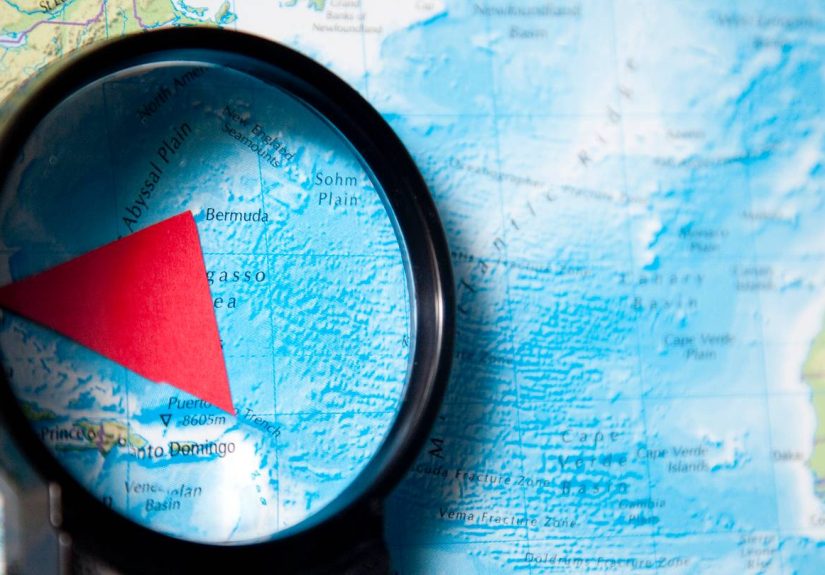
The Bermuda Triangle is one of those topics that refuses to retire. Like a dramatic uncle at Thanksgiving, it keeps returning with new stories, old rumors, and just enough mystery to make everyone lean forward. Stretching across a loosely defined area of the western North Atlantic Ocean, the Bermuda Triangle is usually described as the region between Miami, Bermuda, and Puerto Rico. For decades, it has been blamed for missing ships, vanished aircraft, strange compass readings, sudden storms, and more conspiracy theories than a late-night internet rabbit hole can responsibly hold.
But here is the delicious twist: the real story of the Bermuda Triangle may be even more fascinating than the spooky version. Yes, ships and planes have disappeared there. Yes, some cases remain unsolved. But the Triangle is also a busy marine highway, a hurricane-prone ocean zone, a place shaped by powerful currents, shallow reefs, wartime history, human error, and the mighty imagination of popular culture. In other words, the Bermuda Triangle is less like a magic trapdoor and more like a dramatic meeting room where weather, navigation, geography, and storytelling all argue at once.
Below are nine fascinating facts about the Bermuda Triangle that separate the foggy legend from the saltwater realitywithout draining the fun from the mystery.
1. The Bermuda Triangle Has No Official Boundaries
One of the strangest facts about the Bermuda Triangle is that no one can agree exactly where it begins or ends. Most descriptions place its three corners around Miami, Bermuda, and Puerto Rico, forming a rough triangle across the western North Atlantic. That sounds neat and map-friendly, but the actual boundaries shift depending on who is telling the story.
Some writers stretch the area farther north or east. Others include more of the Caribbean or nearby Atlantic waters. Officially, however, the Bermuda Triangle is not recognized as a formal geographic region by U.S. naming authorities. That means you will not find a government-approved “Bermuda Triangle border checkpoint” where a sea monster stamps your passport and asks if you packed snacks.
This lack of fixed boundaries matters because it changes how people count disappearances. If the area is flexible, almost any nearby maritime or aviation accident can be pulled into the legend. A missing boat near the Bahamas? Triangle. A plane lost in rough Atlantic weather? Triangle. A mysterious story that needs a spooky headline? Definitely Triangle.
That does not mean the region is unimportant. It sits in a very active part of the Atlantic, with heavy traffic from cargo ships, cruise lines, private boats, military aircraft, and commercial aviation. But the “triangle” itself is more of a cultural idea than a precise scientific zone.
2. The Triangle’s Reputation Grew From Real Disappearances
The Bermuda Triangle legend did not appear out of thin air like a ghost ship in a fogbank. Its reputation grew around real incidentssome tragic, some poorly documented, and some still puzzling.
One of the most famous cases is the disappearance of the USS Cyclops in March 1918. The massive U.S. Navy cargo ship was traveling from Brazil toward Baltimore with more than 300 people aboard when it vanished. No distress call was received, and the wreck has never been found. The ship was carrying manganese ore, and theories about its disappearance have ranged from structural failure to bad weather to wartime sabotage. The lack of wreckage helped turn the case into prime fuel for mystery lovers.
Another legendary case is Flight 19, a group of five U.S. Navy TBM Avenger torpedo bombers that disappeared during a training mission on December 5, 1945. The aircraft took off from Naval Air Station Fort Lauderdale and never returned. A search plane sent to find them also disappeared. That double tragedy became one of the central stories behind the Bermuda Triangle myth.
These cases are serious historical events, not campfire inventions. But over time, retellings often dropped inconvenient details, such as bad weather, navigation confusion, mechanical limitations, wartime conditions, or incomplete records. The result was a more thrilling but less accurate version of history.
3. Flight 19 Was More Complicated Than the Legend Suggests
If the Bermuda Triangle had a celebrity mystery, Flight 19 would be wearing sunglasses and dodging paparazzi. The story has everything: military aircraft, radio confusion, vanishing planes, a rescue mission that also went wrong, and decades of speculation.
The popular version says five experienced pilots disappeared in perfect conditions, which sounds deeply eerie. The fuller version is messier and more human. The flight leader reportedly became disoriented, and radio transmissions suggested uncertainty about location and direction. Overwater navigation in 1945 was far less forgiving than modern GPS-guided flight. If aircraft drifted off course, burned fuel, and encountered worsening weather, the situation could become deadly quickly.
The search aircraft, a PBM Mariner, is also important to the story. This type of aircraft had a known vulnerability to fuel vapor issues. Reports of an explosion and oil slick in the search area have led many researchers to believe the rescue plane may have exploded rather than vanished into some cosmic elevator.
Flight 19 remains tragic and mysterious in the sense that the wreckage has not been conclusively recovered. But “unexplained” does not automatically mean “impossible.” Sometimes it means the ocean is huge, the weather is rude, and 1940s navigation technology did not come with a cheerful blue dot saying, “You are here.”
4. The Bermuda Triangle Is One of the Busiest Travel Zones in the Atlantic
When people hear about disappearances in the Bermuda Triangle, they often imagine a cursed corner of the sea where vessels enter at their own risk. The reality is less cinematic but more useful: the region is heavily traveled.
Ships and aircraft move through these waters constantly. Cargo vessels cross Atlantic routes. Cruise ships sail to Caribbean destinations. Private boats travel through the Bahamas and Florida waters. Commercial airliners fly over or near the region every day without incident. If the Bermuda Triangle were genuinely gobbling up transportation at a bizarre rate, insurance companies, shipping firms, airlines, and governments would notice very quickly. They are not exactly known for ignoring costly risk.
This high traffic volume helps explain why accidents have happened there. More boats and planes mean more opportunities for mechanical trouble, navigation mistakes, storms, fuel problems, and human misjudgment. The same logic applies to busy highways: more crashes happen where more vehicles travel, but that does not mean the asphalt is haunted.
One reason the legend survives is that people remember dramatic missing-ship stories more vividly than the millions of ordinary crossings. Nobody writes a bestselling mystery titled “Cargo Ship Arrives Safely and Everyone Has Soup.”
5. Weather in the Region Can Change Fast
The Bermuda Triangle sits in a part of the Atlantic where weather can turn from postcard to panic attack with impressive speed. Tropical storms, hurricanes, squalls, waterspouts, and sudden wind shifts can all occur in or near the region. Before modern satellites, radar, and forecasting systems, sailors and pilots had far less warning when dangerous conditions developed.
The Gulf Stream also plays a major role. This powerful ocean current moves warm water northward along the eastern coast of North America and into the Atlantic. It can influence weather patterns, sea conditions, and drifting debris. A disabled boat or wreckage from a crash may be carried far from its last known location, making searches extremely difficult.
For older ships and aircraft, the combination of rough seas, limited communication, and imprecise navigation could be brutal. A small mistake could snowball into a major emergency. Add darkness, storm clouds, fuel concerns, and radio confusion, and suddenly the Bermuda Triangle does not need aliens. It already has nature doing a very convincing villain impression.
Modern technology has made travel safer, but the ocean remains the ocean. It does not care how many followers your travel blog has.
6. Bermuda’s Reefs Help Explain Many Shipwrecks
Bermuda is famous for pink-sand beaches, clear blue water, and gorgeous coral reefs. It is also surrounded by shallow, tricky reef systems that have challenged sailors for centuries. Beautiful? Absolutely. Forgiving to careless navigation? Not even slightly.
Many shipwrecks around Bermuda are linked to reefs rather than mysterious forces. Before modern charts, sonar, GPS, and engine power, sailing near reefs was risky business. A vessel could be pushed by currents, caught in bad visibility, or blown off course by weather. One wrong approach could turn a proud ship into an accidental underwater museum.
This is one reason Bermuda has so many wreck sites. The same reefs that make the area attractive for divers today were serious hazards for earlier mariners. In a way, the region’s beauty helped build its danger. The water can look calm and inviting while hiding hard coral just below the surface, which is basically the ocean’s version of smiling while holding a frying pan behind its back.
Reefs do not explain every Triangle story, especially aviation incidents far offshore. But they are a practical and historically grounded part of the region’s maritime record.
7. The Sargasso Sea Adds Another Layer of Mystery
The Bermuda Triangle overlaps with the broader world of the Sargasso Sea, one of the most unusual regions in the Atlantic. Unlike most seas, the Sargasso Sea has no land boundaries. Instead, it is shaped by surrounding ocean currents, forming a vast floating ecosystem known for mats of brown Sargassum seaweed.
For centuries, sailors told stories about calm waters, tangled weeds, and ships that seemed trapped or delayed. Some of those older tales helped create the atmosphere of mystery later attached to the Bermuda Triangle. A sea without shores already sounds like something invented by a poet with a dramatic hat.
Scientifically, the Sargasso Sea is not a monster’s waiting room. It is an important marine habitat, supporting fish, turtles, birds, and other wildlife. But its unusual naturefloating seaweed, deep blue water, remote location, and historical sailor folkloregave storytellers plenty of raw material.
The Bermuda Triangle legend did not grow only from accidents. It also grew from mood. The open Atlantic can feel endless. Distances are hard to judge. Weather changes quickly. Radio contact can fail. In that setting, even ordinary problems can seem supernatural when retold on land.
8. Many “Mystery” Explanations Are Less Magical Than They Sound
The Bermuda Triangle has attracted a buffet of theories: methane bubbles, rogue waves, magnetic anomalies, time warps, Atlantis technology, UFOs, and probably at least one person blaming a very determined octopus. Some theories are fun; some are scientifically interesting; some should be placed gently in the “nice try” drawer.
Methane hydrate theories suggest that gas released from the seafloor could reduce water density and cause ships to sink. Methane hydrates are real, but applying that idea broadly to Bermuda Triangle disappearances remains speculative. Rogue waves are also real and can be extremely dangerous. Large, sudden waves have damaged vessels in many oceans, and they may explain some historical maritime disasters. But they do not prove a unique Bermuda Triangle phenomenon.
Magnetic variation is another commonly repeated idea. The story often claims compasses behave strangely in the Triangle. In reality, compass variation is a normal navigational issue in many parts of the world. Mariners and pilots account for it. It is not a supernatural prank from the planet’s core.
The most convincing explanations are usually less glamorous: storms, navigation errors, mechanical failures, structural problems, limited communication, heavy traffic, and incomplete records. That may not sell as many spooky documentaries, but it has one major advantage: it fits the evidence.
9. The Bermuda Triangle Is a Masterclass in How Legends Are Built
The Bermuda Triangle is not just a place. It is a storytelling machine. Its legend grew because it combines real tragedy, incomplete information, dramatic geography, and human love for mystery.
People are naturally drawn to patterns. If several ships or planes vanish in a broad area, the brain wants to connect them. Add a catchy name, a triangle shape, a few famous cases, and decades of books, television shows, and articles, and suddenly a region becomes a global mystery brand. The Bermuda Triangle may be the only ocean area with better marketing than some tech startups.
Another factor is selective memory. Safe journeys are boring. Missing ships are unforgettable. When people hear only about the accidents and not the thousands of normal trips, the region feels far more dangerous than it statistically appears to be.
This does not mean every case is solved. Some wrecks are still missing. Some records are incomplete. The Atlantic is vast, deep, and difficult to search. But mystery does not have to mean magic. Sometimes the most fascinating answer is that the world is complicated enough without adding portals.
Why the Bermuda Triangle Still Captivates Us
The Bermuda Triangle endures because it sits at the perfect intersection of fear and curiosity. The ocean already represents the unknown. It is deep, powerful, and mostly hidden from view. When something disappears at sea, the lack of evidence creates room for imagination. Humans dislike blank spaces, so we fill themwith theories, stories, monsters, machines, and occasionally aliens with suspiciously busy travel schedules.
There is also something emotionally satisfying about a mystery that feels ancient but remains accessible. The Bermuda Triangle is not locked in a museum or buried in a dead language. It is on modern maps, near popular travel routes, and close to places people actually visit. That makes it feel real in a personal way. You can fly near it, cruise through it, read about it, or stare at it on a map while pretending you are a serious investigator and not just avoiding laundry.
Its staying power also comes from balance. Skeptics can explain much of it with science, while believers can point to missing wreckage and unanswered questions. Both sides find something to chew on. The Triangle is mysterious enough to entertain but grounded enough to investigate.
Experience Notes: What Exploring the Bermuda Triangle Story Feels Like
Reading about the Bermuda Triangle is a bit like walking through a museum where half the exhibits are historical records and the other half are fog machines. At first, the legend pulls you in with the big, dramatic questions: Where did the ships go? Why did the planes vanish? What happened to Flight 19? Then, as you look closer, the experience changes. You begin to notice that the real fascination is not only in the disappearances, but in the way people explain them.
Imagine standing on the deck of a boat near Bermuda on a clear morning. The water is bright, the sky looks friendly, and the horizon seems endless. It is easy to understand why travelers fall in love with this region. But it is also easy to understand why earlier sailors feared it. The same open water that looks peaceful can become confusing when weather shifts. A reef that dazzles divers can threaten a ship. A strong current can move debris miles away from where searchers expect to find it. In that setting, the boundary between ordinary danger and mystery can feel surprisingly thin.
The Bermuda Triangle also teaches an important lesson about how stories grow. A single disappearance is sad. Several disappearances become a pattern. Add a memorable name, repeat the most mysterious details, leave out the boring explanations, and suddenly you have a legend. It is not necessarily dishonest; it is human. We remember suspense better than paperwork. We prefer a chilling radio message to a maintenance report. We want the ocean to whisper secrets, not simply file an incident summary.
For anyone researching the topic, the best experience comes from holding two ideas at once. First, respect the real people involved. The famous cases were not just spooky anecdotes; they involved sailors, pilots, families, search crews, and communities. Second, enjoy the mystery without letting it overpower the evidence. The Bermuda Triangle is most interesting when treated as a puzzle made of history, weather, geography, psychology, and media culture.
That balanced approach makes the topic richer. You can admire the legend while still asking smart questions. You can enjoy the goosebumps while recognizing that storms, currents, reefs, and human error are powerful enough on their own. In the end, the Bermuda Triangle does not need to be supernatural to be fascinating. The real Atlantic is already dramatic, beautiful, unpredictable, and slightly overqualified for the role of mystery machine.
Conclusion
The Bermuda Triangle remains one of the world’s most famous mysteries because it blends fact with folklore so smoothly that the seam is hard to see. Real ships vanished. Real aircraft were lost. Real families waited for answers that never fully came. Yet the broader legend often grows larger than the evidence, turning a busy and sometimes dangerous ocean region into a symbol of the unknown.
The nine facts above show that the truth is not boring. The region has no official boundaries, but it has a huge cultural footprint. Its weather can be fierce, its currents powerful, its reefs hazardous, and its history full of dramatic incidents. At the same time, official investigations and scientific explanations point toward natural forces, human error, and the challenges of navigation rather than supernatural causes.
So, is the Bermuda Triangle a cursed zone? Probably not. Is it still fascinating? Absolutely. Like the best mysteries, it invites us to look closernot just at the ocean, but at the way humans turn uncertainty into legend.