Table of Contents >> Show >> Hide
- The Discovery in Brittany Wasn’t One Find, but Many
- Why the Bronze Age Evidence Matters Just as Much
- The Medieval Hamlet Turns the Site Into a Long-Term Human Story
- Why Archaeologists Call This a “Treasure Trove”
- What This Site Says About How History Actually Works
- The Real Treasure Isn’t Just Gold. It’s Time.
- Experience and Reflection: Why Finds Like This Hit So Hard
- SEO Tags
If you hear the phrase treasure trove, your brain probably jumps to a chest stuffed with gold, a pirate map, and at least one dramatic gasp. Archaeology, as usual, has a more interesting plot twist. The newly reported discovery in Pacé, Brittany, in northwestern France was not one flashy jackpot buried in a single moment. It was a layered, time-stacked archive of human life: Bronze Age metalworking clues, traces of Iron Age activity, a Roman road, a remarkably well-preserved gold ring, Carolingian coins, and the remains of an early medieval hamlet. In other words, this was not one story. It was a whole box set.
That is exactly why archaeologists are so excited. Finds like this do more than produce pretty museum labels. They reveal how a landscape changes across centuries, how people reuse the same ground for different purposes, and how history rarely arrives in neat little chapters. At Pacé, the soil preserved evidence stretching from the Late Bronze Age to the Middle Ages, turning one development-led excavation into a rare long-view portrait of settlement, travel, craft production, status, farming, and survival.
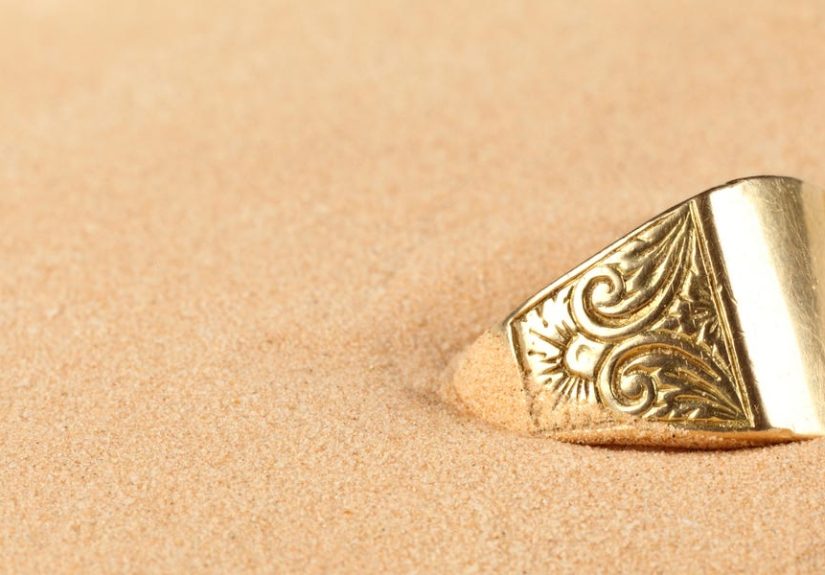
For readers, the shiny headline item is easy to spot: an approximately 1,800-year-old Roman gold ring engraved with what appears to be Venus Victrix, a version of the Roman goddess Venus associated with victory. But the deeper story is even better. The real treasure is not just the ring. It is the fact that one place can hold the fingerprints of many eras at once, showing how people kept returning to the same patch of land because it remained useful, connected, and worth living on.
The Discovery in Brittany Wasn’t One Find, but Many
The excavation took place ahead of planned development, which means it belongs to the world of preventive or rescue archaeology. That kind of work may sound bureaucratic, but it is one of the reasons so many important discoveries still happen today. Before roads, homes, or commercial zones go up, archaeologists sometimes get the chance to investigate what lies below. And every now and then, the ground says, “You’re going to want to sit down for this.”
At Pacé, archaeologists examined a large area divided into two sectors. What they found shows that the site was not occupied during only one dramatic historical moment. Instead, it was used and reused over an immense span of time. In the northern sector, they uncovered pits containing fragments of pottery and terracotta mold pieces used in bronzeworking. Some of those molds appear to have been involved in producing bronze objects including swords, which hints at skilled craft activity during the Late Bronze Age.
Elsewhere on the site, archaeologists identified curving enclosures from later prehistory, including one circular feature that may have served as an Iron Age funerary enclosure. That alone would make the site noteworthy. But then the Roman layer arrives and says, “Hold my amphora.”
A Roman Road With a Surprise in the Dust
One of the most striking elements of the excavation is an ancient road dating to the Roman period. It was roughly eight meters wide, bordered by ditches, and surfaced largely with quartz pebbles laid directly on the natural ground. Even better, the archaeologists could still see ruts left by wheeled vehicles. Those grooves are the ancient version of traffic wear: small physical reminders that this was not some ceremonial showpiece, but a working route used by people, animals, wagons, supplies, and probably plenty of complaints about road conditions.
Roman roads mattered because they did not simply connect places on a map. They structured power. Across the empire, roads moved troops, messages, goods, and ideas. They linked settlements to trade networks and made provincial life more tightly woven into imperial systems. When archaeologists find a road like this one, they are not just finding infrastructure. They are finding the bones of an entire economic and social system.
And on this road, someone lost something extraordinary: a gold ring dating to the second or third century C.E. The ring’s engraved gemstone appears to depict Venus Victrix. The intaglio is made of nicolo, a layered onyx agate known for its pale bluish upper layer over a darker base. That material gave Roman gem engravers a dramatic visual effect, and it is exactly the sort of detail that makes museum curators lean in a little closer and say, “Okay, now we’re talking.”
The ring almost certainly belonged to someone of status. In the Roman world, engraved gemstone rings were more than decorative accessories. They could function as personal seals, markers of identity, and portable symbols of taste, literacy, wealth, or power. A ring like this did not just say, “I have jewelry.” It said, “I have jewelry and a social position worth advertising.” Finding it on a road adds a note of irresistible human drama. Was it dropped by a traveler? Lost in transit? Slipped off during some very inconvenient moment? Archaeology cannot answer that yet, and honestly, the mystery is part of the fun.
Why the Bronze Age Evidence Matters Just as Much
It would be easy for the gold ring to steal the whole show, because gold has always had a gifted publicist. But the Bronze Age evidence may prove just as important scientifically. The terracotta mold fragments suggest local metallurgical activity, including the production of bronze weapons. Even though archaeologists have not yet identified the workshop itself, those fragments can still reveal a great deal about manufacturing techniques, object types, and the technological skill of the people who worked there.
That matters because ancient craft production is one of the clearest windows into how societies were organized. Metalworking is never just about making objects. It involves knowledge, fuel, raw materials, exchange networks, and skilled labor. A mold fragment can point to all of that. It suggests training, tradition, and a wider web of connections. Put simply, a broken piece of workshop equipment can tell us that a place was not just inhabited. It was productive.
That is one reason archaeologists love multi-period sites. A single glamorous object can tell you something about one moment. A layered site can reveal how a landscape evolves from workshop zone to route corridor to farming settlement. It is the difference between finding one message and recovering an entire conversation.
The Medieval Hamlet Turns the Site Into a Long-Term Human Story
The early medieval remains at Pacé push the site beyond “interesting Roman discovery” territory and into something much richer. Archaeologists identified an important settlement that appears to have developed between the fifth and tenth centuries, with its strongest phase in the seventh and eighth centuries. The site included quadrangular plots defined by ditches, linked by pathways, and used for housing, cultivation, pasture, and specialized activities.
That layout matters because it gives archaeologists a real sense of how rural life was organized. This was not random scatter. It was a structured settlement landscape. Some plots contained houses. Others were used for agriculture or livestock. Buildings were made with earth and wood, with plant-based roofing materials. Archaeologists also found underground silos for grain storage, water pits, and numerous combustion features such as hearths and ovens associated with food preparation and crop processing.
In plain English, this was a living, working community. People cooked here, stored grain here, managed land here, raised animals here, and built their lives here. The glamour of a Roman ring is easy to appreciate. The importance of a medieval silo takes a little more imagination. But if you want to understand how most people actually lived in the past, the silo may be the bigger star.
The Carolingian Coins Add a Flash of Historical Tension
Among the most compelling medieval finds was a group of Carolingian silver coins dating to the ninth or tenth century. They were found together and in unusually good condition. That alone is notable. Coins are built for circulation, so when they survive in a clustered deposit, archaeologists naturally ask whether they were hidden, stored, or intentionally buried during a moment of instability.
That question becomes especially intriguing in the context of the Viking Age. The Carolingian world faced repeated Viking pressure, and parts of what is now France experienced raids, disruption, tribute payments, and defensive responses. Archaeologists have been careful not to overstate the case here, and that restraint is important. The evidence does not prove that Viking attacks directly caused the coins to be deposited or the settlement to be abandoned. But the historical backdrop makes the possibility hard to ignore.
That is the sweet spot of good archaeology writing: not pretending to know more than the evidence allows, while still explaining why a find matters. The Pacé coins do not hand us a complete thriller script. They do, however, place a rural settlement inside a broader period of political stress and shifting power. That is plenty dramatic already.
Why Archaeologists Call This a “Treasure Trove”
The phrase works here, but not for the reason people usually think. This is not a treasure trove because it includes one gold ring and some handsome coins. It is a treasure trove because the site preserves continuity and change across many eras. It captures how one landscape could serve craft production in later prehistory, circulation in the Roman period, and organized rural settlement in the early medieval world.
That kind of time depth is invaluable. Archaeologists are often forced to work with fragments: one cemetery here, one workshop there, one abandoned road somewhere else. Pacé offers overlapping evidence in a single place. It helps connect broad historical themes that are usually studied separately: Bronze Age metallurgy, Roman infrastructure, post-Roman settlement, Carolingian circulation, and the uncertain pressures of the Viking Age.
It also reminds us that the most important discoveries are not always the most cinematic. A road rut, a ditch line, reused tile, a grain silo, or a terracotta mold fragment might not go viral on social media the way gold does. But those features reveal behavior, and behavior is what turns the past into history. Gold dazzles. Settlement patterns explain.
What This Site Says About How History Actually Works
We tend to imagine history as a parade of giant labels: Bronze Age, Iron Age, Roman Empire, Middle Ages. Nice, tidy, textbook-friendly. Real landscapes are messier. They accumulate. People return to useful places. Roads persist. Materials get reused. Boundaries shift. Buildings vanish. Communities reorganize. A field in one century becomes a route in another and a farmstead in the next.
That is why Pacé feels so compelling. It demonstrates that history is less like a stack of sealed boxes and more like a palimpsest, where each generation writes over the last without erasing it completely. The Bronze Age did not vanish just because Rome arrived later. The Roman road did not erase the local terrain. The medieval hamlet did not begin in a vacuum. Every phase inherited something, responded to something, or unknowingly built on something older.
That layered reality also gives the find a modern resonance. Many of the world’s most important archaeological discoveries emerge because construction, expansion, and development force a closer look at the ground below. Preventive archaeology can feel like an administrative step in a planning process, but it often becomes a final chance to record buried history before the modern world builds over it again. In that sense, discoveries like Pacé are not just about the past. They are about how the present decides whether the past gets one last chance to speak.
The Real Treasure Isn’t Just Gold. It’s Time.
If there is a lesson in this discovery, it is that archaeology’s best finds are often those that complicate the story. The Pacé excavation produced an object that could easily anchor a headline, but the site’s real value lies in its span. It tracks human presence across roughly two millennia and possibly more. It shows movement, craft, status, farming, storage, reuse, and adaptation. It gives historians a better map of how one corner of Brittany changed with the centuries.
And yes, the ring is fantastic. Let us not pretend otherwise. A gold Roman ring with a carved image of Venus Victrix found on an ancient road is the kind of discovery that makes both scholars and non-scholars stop scrolling. But the deeper win is that this glittering object sits inside a much larger archive of ordinary and extraordinary lives. That combination is what makes the site special. It gives us both the sparkle and the structure.
So no, archaeologists did not find a pirate chest. They found something better: evidence that one patch of earth could hold centuries of human ambition, movement, labor, belief, and routine. That may be less Hollywood. It is also far more interesting.
Experience and Reflection: Why Finds Like This Hit So Hard
There is a particular feeling that comes with reading about a site like Pacé, and it is part wonder, part vertigo. The wonder is easy to explain. A Roman ring survives in the ground for nearly two thousand years and comes back into daylight with its carved image still legible. That alone feels almost unfairly cinematic. But the vertigo comes from something bigger: the realization that whole lifetimes can disappear into the same field and remain there, layered quietly one above another, until a trench opens and history starts speaking in overlapping voices.
That is what makes era-spanning sites so emotionally powerful. They do not just show us one lost object. They show us repetition. People kept coming back here. Someone worked metal here. Someone traveled this road. Someone built a house here. Someone stored grain here. Someone dropped a ring here and definitely did not enjoy the next five minutes. Once you start thinking that way, archaeology stops feeling abstract and starts feeling personal.
Even from a distance, discoveries like this can change the way a reader looks at ordinary landscapes. A plowed field stops being just a field. A construction zone stops being just noise and machinery. Beneath the surface could be roads, ovens, burials, workshops, coins, walls, storage pits, or the traces of a community that never made it into famous books but still shaped the world around it. That is one of archaeology’s greatest gifts: it restores dignity to lives that history often summarizes too quickly.
There is also something deeply humbling about the contrast between what survives and what does not. Gold makes it through. Stone makes it through. Fired clay often makes it through. Wood, textiles, and countless details of everyday life usually do not. So archaeologists become translators of partial evidence, piecing together entire communities from what time happened to spare. A ditch line becomes a property boundary. A silo becomes an economy. A group of coins becomes a clue to fear, savings, or uncertainty. It is detective work, yes, but it is also an act of patience and empathy.
And maybe that is why stories like this travel so well online. People are not just reacting to old objects. They are reacting to recovered continuity. In a world that feels fast, disposable, and constantly updated, archaeology offers the opposite rhythm. It says that places remember. It says that the ground beneath new development is not empty. It says that long before us, other people worried about movement, storage, status, danger, food, and the future. Different tools, same species, similar anxieties.
Pacé is especially moving because it joins the glamorous and the ordinary in one excavation. The ring has beauty. The road has purpose. The molds suggest skill. The silos suggest planning. The coins hint at instability. Together, they create a human scene rather than a simple list of artifacts. That is what readers remember. Not just that archaeologists found treasure, but that they found evidence of people making a life across centuries on the same land.
In the end, experiences tied to discoveries like this are really experiences of perspective. They remind us that history is not sealed off in museums. It is under roads, under housing projects, under parking lots, under fields, and sometimes under the exact places where modern life thinks it is starting fresh. That is the quiet thrill of archaeology. It keeps proving that the world is older, busier, and more crowded with memory than it looks.