Table of Contents >> Show >> Hide
- Why this collaboration works (and why it matters in a townhouse)
- An 1880s townhouse with real historyand real problems
- The “layered” renovation strategy: different floors, different rules
- 1) Garden level: gut renovation for modern living (and better breathing room)
- 2) The rear addition: a hinge between home and garden
- 3) The spiral stair: sculpture that actually earns its keep
- 4) Parlor floor: preserve the layout, restore the character, refine the frame
- 5) Upper floors: selective restoration instead of theatrical overcorrection
- Material choices that keep the house calm (not bland)
- Colony’s interiors: where vintage, contemporary, and “real life” meet
- Remodeling in a historic district: the rules are part of the design
- Design lessons from the Bed-Stuy Townhouse (the kind you can actually use)
- Conclusion: a townhouse that feels like itselfjust better at being lived in
- Experiences From a Bed-Stuy Townhouse Remodel (What It’s Actually Like)
Brooklyn townhouses have a special talent: they look like they’ve got it all together from the sidewalk, then you open the door and discover a “remodel” from 1987 that’s mostly wood paneling, mystery wires, and a shower that feels personally offended by modern plumbing.
So when a historic Bed-Stuy townhouse gets a full refresh, the best results usually come from a two-part mindset: respect the bones and stop pretending the 1990s were a building standard.
That’s what makes the Bed-Stuy Townhouse by Brooklyn-based architecture studio Also Office, in collaboration with Colony for interiors, such a satisfying case study. It’s not a “before-and-after” where the “after” looks like a furniture catalog exploded.
It’s a measured renovation that lets old details stay oldon purposewhile new interventions bring the home calmly into the present.
Why this collaboration works (and why it matters in a townhouse)
Townhouses aren’t blank boxes. They’re stacked experiences: parlor floor drama, stair landings, long sightlines, and those little moments where a pocket door still slides like it’s showing off.
Also Office approached this project with a layered renovation strategydifferent levels of intervention depending on what each floor neededwhile Colony curated furnishings to match that “past meets present” rhythm.
Translation: instead of sanding every historic edge into submission, they let the house keep its memory while giving it better light, cleaner circulation, updated systems, and a more intentional connection to the garden.
It’s the difference between “renovated” and “rewritten.”
An 1880s townhouse with real historyand real problems
The home dates to the late 19th century (built in the 1880s) and sits within Bedford-Stuyvesant’s historic fabric. Like many long-lived New York residences, it had been maintained in pieces over decadesoften not professionallywhich is a polite way of saying:
several generations of “I can do that on Saturday” had left their mark.
Also Office’s solution wasn’t to flatten everything into one uniform aesthetic. Instead, they treated the house almost like a small museum of its own evolutionthen designed new moments that feel crisp, warm, and quiet.
Think: patina where it matters, precision where it counts.
The “layered” renovation strategy: different floors, different rules
1) Garden level: gut renovation for modern living (and better breathing room)
The garden level received the most dramatic intervention: a contemporary re-plan with new bedrooms and bathrooms, plus a rear extension that pushes living space outward and improves the relationship between inside and outside.
In townhouse terms, this is hugebecause the garden level is where daily life tends to get real: laundry, shoes, groceries, guests, and the “where are my keys” ritual.
The material palette here is intentionally restrained: natural surfaces, stone and wood, and a minimalist calm that doesn’t compete with the garden. This kind of understatement isn’t about being cold; it’s about making the space feel breathable, especially in a dense city setting.
2) The rear addition: a hinge between home and garden
The rear extension isn’t just “more square footage.” In this project, it functions like a connectorlinking levels and tying the house to the outdoor space.
A townhouse addition can be a clunky appendage if it’s treated as a simple box. Here, the addition is more like a hinge: it helps the home fold outward into the garden in a way that feels deliberate.
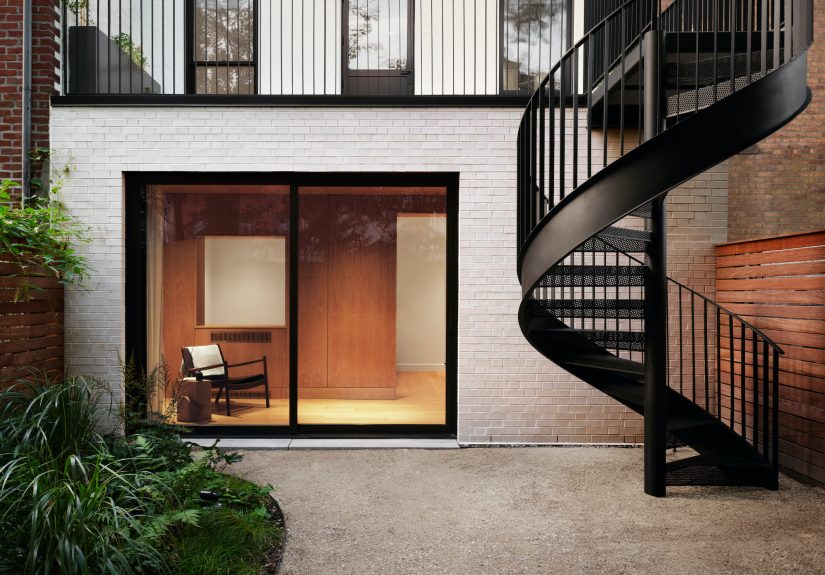
One standout moment is the sunroom: a warm, wood-clad threshold space that feels part interior, part gardenexactly the kind of room you use more than you think you will.
It’s where you drink coffee, pretend you’ll read a book, and then stare at plants while your brain reboots.
3) The spiral stair: sculpture that actually earns its keep
The project uses a custom spiral staircase (in perforated steel) to connect the garden level to a terrace on the parlor floor.
Townhouse circulation is often dominated by the “main stair,” which can become a daily bottleneck. Creating a second, more direct garden connection changes how the home functionssuddenly outdoor space isn’t a special occasion, it’s part of the routine.
And because it’s visually expressive, the stair becomes a piece of architecture you experience from multiple anglesless “utility ladder,” more “urban treehouse energy,” but with better detailing and fewer splinters.
4) Parlor floor: preserve the layout, restore the character, refine the frame
On the parlor level, Also Office maintained the original layout and focused on preserving key historical details.
This is the floor where townhouse identity lives: the long rooms, the proportions, the transition from living to dining, and the architectural woodwork that makes you whisper “they don’t build this anymore” even if you don’t normally whisper.
Original elements like casework and sliding pocket doors were gently restored, keeping their aged patina rather than pretending time never happened.
At the same time, the project introduced fresh plastered surfaces and updated or restored moldings, creating a clean backdrop that allows historic woodwork to read as intentionalnot merely “old.”
5) Upper floors: selective restoration instead of theatrical overcorrection
The upper floors received lighter-touch workmore cosmetic restoration and repair than reinvention.
This is a smart move in many townhouse renovations: if a level still has architectural quality, the best “upgrade” can be restraint.
Over-renovation is real, and it’s expensive. Also, it can erase the very character you’re paying for.
Material choices that keep the house calm (not bland)
Minimalism in a historic townhouse can go wrong fast: it can feel sterile, or like the building is wearing someone else’s outfit.
The key here is material warmth and tactile honestystone, wood, plaster, and surfaces that look like what they are.
Also Office’s approach pairs “taut” contemporary surfaces with the textured reality of existing details: marks, cracks, slight discolorations, and the kind of wear you can’t fake convincingly without a time machine.
That contrastclean vs. lived-increates the project’s quiet tension.
Colony’s interiors: where vintage, contemporary, and “real life” meet
Once the architectural groundwork was set, Colony curated the furnishings and interior layers.
Colony is known for celebrating independent design and for mixing eras in a way that feels collected rather than staged.
Here, that means combining vintage and contemporary piecesmidcentury classics, vintage finds, and modern designagainst a refined architectural backdrop.
A townhouse parlor floor can easily feel like a procession of “rooms you’re not allowed to touch.” The Colony approach keeps it human.
Furnishings don’t scream for attention; they support the house’s narrativeart, music, and daily useso the home feels like a place where people actually sit down, not just pass through holding a drink and fear.
How to steal Colony’s approach without stealing Colony’s furniture
- Start with a quiet backdrop: restored woodwork + clean plaster makes almost any well-chosen piece look intentional.
- Mix eras, not vibes: if you blend vintage and modern, keep a consistent tone (warm, restrained, and tactile works well).
- Let one item do the talking: a standout chair, a sculptural light, or a bold textilethen keep everything else calm.
- Use patina like a color: aged wood, antique brass, worn leatherthese act like “warm neutrals” in a historic shell.
Remodeling in a historic district: the rules are part of the design
A Bed-Stuy townhouse renovation isn’t only about tasteit’s also about process.
In New York City historic districts, exterior changes and additions often require Landmarks Preservation Commission (LPC) review. Rear yard additions, in particular, come with visibility and feature-preservation considerations.
The practical takeaway: your architect isn’t being “picky” when they talk about sightlines and rear façades. They’re protecting your timeline (and your sanity).
In plain English, one core idea shows up repeatedly in preservation logic: additions should minimize visibility from public thoroughfares and avoid damaging significant architectural features.
That doesn’t mean “no change.” It means change that respects the neighborhood’s shared street-facing character while allowing homes to evolve behind the scenes.
A quick reality check before you plan a rear extension
- Design for low visibility: even if the addition is at the rear, visibility rules can still matter depending on block conditions and sightlines.
- Preserve significant features: decorative lintels, sills, and projecting elements may be protectedplan around them instead of discovering that mid-demo.
- Think “cumulative impact”: rooftop additions and rear yard additions can interact in approvalsyour long-term plan matters.
Design lessons from the Bed-Stuy Townhouse (the kind you can actually use)
1) Treat the garden like a room, not a reward
The project’s addition and circulation choices make the garden feel integratedsomething you use daily, not a feature you “go to” only when the weather is perfect and you’ve already cleaned.
If your home has outdoor space, the best upgrade is often improving how easily you reach it, see it, and borrow light from it.
2) Keep historic details honestand let them be imperfect
Restoring everything to flawless “brand-new old” can make a home feel like a theme park.
Preserving patina is more emotionally convincingand often more sustainablebecause it reduces unnecessary replacement while keeping the house’s original voice.
3) Make one new architectural move that’s unmistakably “now”
In this case, that move is the rear addition and the spiral stair: clean, contemporary, and clearly not pretending to be 1881.
When modern interventions are honest, the historic parts don’t have to fight for authenticity. They just are.
4) Don’t underestimate sound
Townhouse life includes neighbors, street noise, and the acoustics of tall rooms.
Designing a “sound-friendly” guest or music space (and thinking about doors, seals, rugs, and soft materials) is a quality-of-life decisionnot a luxury detail.
Conclusion: a townhouse that feels like itselfjust better at being lived in
The best renovations don’t erase a home’s identity; they clarify it.
Also Office’s layered approachgut where necessary, preserve where meaningfulcreates a house that reads as historic without being stuck in the past.
Colony’s interiors amplify that narrative with a collected mix that feels personal, warm, and usable.
The result is a Bed-Stuy townhouse that holds two truths at once: it’s an old Brooklyn home with real history, and it’s also a present-day space designed for art, music, light, and everyday life.
Which, honestly, is what every townhouse wants to be when it grows up.
Experiences From a Bed-Stuy Townhouse Remodel (What It’s Actually Like)
If you’ve never remodeled a townhouse, here’s the emotional arc in four acts: optimism, dust, decision fatigue, and finally joy (with a small side of “why is there still a paint chip in my sock?”).
Projects like the Also Office + Colony collaboration highlight design outcomes, but they also hint at the lived experiences behind themthe choices that feel tiny in a meeting and huge on move-in day.
One of the most common experiences in a historic home is learning the difference between restoration and replacement. Keeping original wood casings or pocket doors sounds romantic until you realize “gentle restoration” can mean tracking down the right person to repair something that hasn’t worked smoothly since your grandparents were born.
But the payoff is real: when you keep patina, the house doesn’t feel newly manufactured. It feels like it has continuity.
Another experience: the weirdly satisfying moment when you stop chasing perfection and start chasing coherence.
Maybe the original wood has nicks and discoloration. Maybe you decide to keep it anywayand suddenly your new plaster walls look even better because they aren’t competing with faux-antique distressing.
In many renovations, the “design breakthrough” is simply deciding what story you’re telling: preserved historic frame + clean contemporary insertions is a powerful (and calming) narrative.
Then there’s the daily-life stuff no glossy photo can show. A rear addition and garden connection aren’t just architectural flexes; they change how you live:
you take coffee in the threshold sunroom; you open the sliders more often because the path is easy; you treat the garden as part of the house instead of a special event that requires sneakers and a motivational speech.
Homeowners often say that the spaces they use most are the ones that reduce frictionrooms that make simple routines feel lighter.
And yes, there’s the “living in a city” experience: permits, approvals, and the constant reminder that your townhouse belongs to a neighborhood ecosystem.
Renovating in or near historic districts can force you to design with constraints (visibility, preserved features, massing rules), but those constraints can also be creative guardrails.
Many teams report that the best solutions happen when you treat rules as part of the design briefnot a last-minute obstacle.
Finally, there’s the experience of curating furniture after the architecture is done. It’s surprisingly easy to overdo itespecially when your walls are freshly plastered and your browser history is 60% “perfect pendant light.”
The most successful interiors often come from slowing down:
bring in a few pieces you truly love, mix eras with intention, and let the house breathe.
Homes like this Bed-Stuy renovation show that “minimal” doesn’t mean empty; it means edited.
And edited, thankfully, is cheaper to dust.