Table of Contents >> Show >> Hide
- What Is a Concrete Toilet Roll Holder?
- Why Concrete Works So Well in Bathroom Accessories
- Popular Types of Concrete Toilet Roll Holders
- DIY Concrete Toilet Roll Holder: Is It Worth Making?
- How to Make a Simple Freestanding Concrete Toilet Roll Holder
- Wall-Mounted Installation Tips
- Design Ideas for a Concrete Toilet Roll Holder
- Maintenance and Cleaning
- Common Mistakes to Avoid
- Is a Concrete Toilet Roll Holder Right for You?
- Real-World Experiences With a Concrete Toilet Roll Holder
- Conclusion
A concrete toilet roll holder sounds like something a minimalist architect would whisper about while drinking black coffee in a windowless studio. But in real life, it is far more practicaland far less dramatic. This small bathroom accessory blends weight, texture, durability, and modern style in a way that plastic and flimsy chrome holders often struggle to match.
Whether you want a freestanding toilet paper holder with a heavy concrete base, a wall-mounted concrete accent piece, or a DIY concrete toilet roll holder made from a simple mold, concrete can turn the most ordinary bathroom item into a design statement. Yes, we are still talking about toilet paper. Design has no shame.
The appeal is easy to understand. Concrete feels solid, looks clean, and pairs beautifully with wood, brass, matte black metal, white tile, terrazzo, stone, and industrial-style decor. It can be smooth and polished, raw and rustic, gray and understated, or tinted for a warmer custom look. A concrete toilet paper holder also has the one feature every bathroom accessory secretly needs: it stays put. No wobbling, no sliding across the floor, no tragic topple during a half-asleep 2 a.m. visit.
What Is a Concrete Toilet Roll Holder?
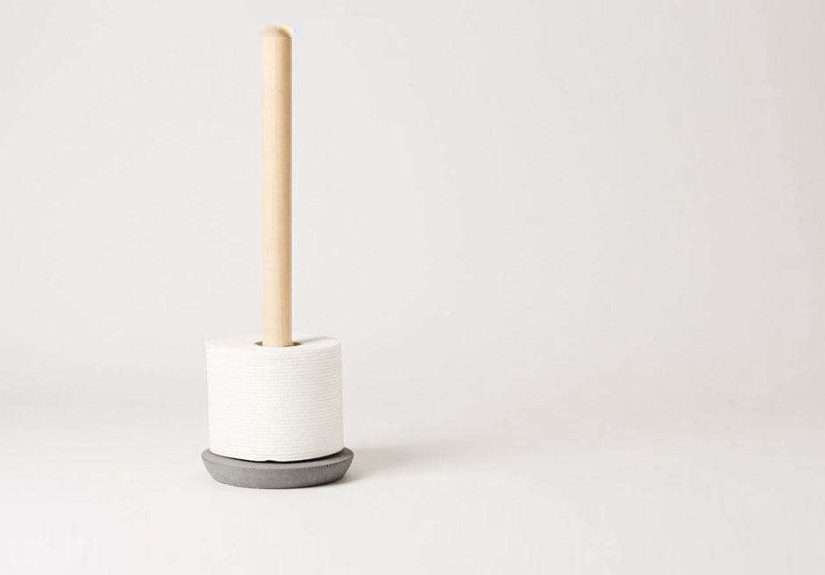
A concrete toilet roll holder is a bathroom fixture or accessory that uses concrete as part of its structure or design. Some versions are fully cast from concrete, while others combine a concrete base with a metal rod, wooden dowel, steel frame, or wall bracket.
The most common styles include freestanding holders, wall-mounted holders, spare-roll storage stands, and sculptural holders designed more like bathroom decor than standard hardware. Freestanding models are especially popular because concrete gives the base enough weight to keep the holder stable without drilling into tile, drywall, or a vanity side panel.
For renters, that can be a big deal. If your lease treats wall holes like crimes against humanity, a freestanding concrete toilet paper holder lets you upgrade the bathroom without reaching for a drill. For homeowners, concrete works well in powder rooms, guest bathrooms, modern primary baths, and small spaces where every visible item should earn its keep.
Why Concrete Works So Well in Bathroom Accessories
Concrete has moved far beyond sidewalks and garage floors. In home design, it now appears in countertops, sinks, planters, trays, candle vessels, soap dishes, and bathroom accessories. The reason is simple: concrete has visual weight. It adds texture without demanding attention, which is exactly what you want from a toilet roll holder. Nobody needs a bathroom accessory that screams, “Look at me!”unless it is hiding a plumbing disaster.
Concrete Is Stable
A freestanding toilet roll holder needs balance. Lightweight holders can tip when you pull the paper too quickly. A concrete base helps prevent that because it lowers the center of gravity. This makes concrete useful for slim designs, vertical storage stands, and holders placed beside pedestal sinks or compact toilets.
Concrete Is Versatile
Concrete can look industrial, Scandinavian, rustic, spa-like, or ultra-modern depending on the finish. Pair it with brushed brass for warmth, black steel for contrast, oak for softness, or polished chrome for a cleaner contemporary look.
Concrete Ages With Character
Unlike glossy plastic, concrete develops subtle character over time. Small variations in tone, tiny pinholes, and hand-finished edges can make each holder feel handmade. For people who like objects with personality, that is a feature, not a flaw.
Popular Types of Concrete Toilet Roll Holders
1. Freestanding Concrete Toilet Roll Holder
This is the easiest style to use and the most renter-friendly option. It usually has a round, square, or rectangular concrete base with a vertical rod attached. Some designs hold one active roll, while others include space for two or three spare rolls stacked underneath.
A freestanding concrete holder is ideal when the toilet is next to glass, tile, a vanity, or an awkward wall where mounting hardware would be inconvenient. It also works well in tiny bathrooms where drilling into the only available wall would put the roll in a position better suited for Olympic stretching.
2. Wall-Mounted Concrete Toilet Paper Holder
A wall-mounted concrete toilet roll holder may use a small concrete block or plate as the decorative backing, with a metal or wooden arm attached. It creates a clean built-in look and keeps floor space open.
Placement matters. A comfortable holder is typically installed slightly in front of the toilet bowl and at an easy seated reach. In many bathroom-planning recommendations, the center of the holder is placed around 26 inches above the floor and about 8 to 12 inches in front of the toilet bowl’s front edge. If the bathroom must meet accessibility requirements, follow applicable local codes and access standards.
3. Concrete Holder With Shelf
A concrete toilet roll holder with a shelf adds a tiny landing pad for a phone, wipes container, air freshener, small plant, or spare roll. This style is useful in powder rooms where storage is limited. It also prevents the classic modern problem of wondering where to put your phone while pretending you are not scrolling in the bathroom.
4. Concrete Spare Roll Storage
Some concrete holders are designed mainly for storage. They may include a weighted concrete base with a tall rod for stacking extra rolls. This keeps backup toilet paper visible and accessible, which guests will silently appreciate more than any scented candle.
DIY Concrete Toilet Roll Holder: Is It Worth Making?
Making a DIY concrete toilet roll holder is absolutely possible, especially if you choose a freestanding design with a simple concrete base. The project does not require advanced masonry skills, but it does require patience, accurate measuring, and respect for the material.
The easiest DIY version uses a small mold, a dowel or metal pipe, a release agent, concrete or cement-based craft mix, and a sealer. You pour the base, insert or later attach the rod, let the concrete cure, then sand and seal the finished piece.
Best Concrete Mix for a Small Bathroom Project
For small decorative objects, a fine cement-based mix often produces a smoother finish than a coarse concrete mix with large aggregate. Standard concrete mixes can work, but visible stones may make small molds harder to fill neatly. Many DIYers prefer rapid-setting repair mixes, sand topping mixes, or specialty cement craft mixes for compact home accessories.
The goal is a pourable mixture that fills the mold without leaving large voids. It should not be soup. If the mix is too watery, the finished piece may be weaker, dusty, or prone to surface defects. Think pancake batter with ambition, not gray milk.
Basic Supplies
- Fine concrete or cement-based craft mix
- Plastic, silicone, or coated mold for the base
- Mold release spray or light oil
- Wooden dowel, brass rod, black steel pipe, or stainless steel rod
- Bucket or disposable mixing container
- Stir stick or margin trowel
- Gloves, safety glasses, long sleeves, and dust mask
- Sandpaper or sanding block
- Concrete sealer
- Felt pads for the bottom
How to Make a Simple Freestanding Concrete Toilet Roll Holder
Step 1: Choose the Shape
Start with the base. A round base looks soft and modern. A square base feels architectural. A rectangular base gives more stability and can support a taller rod for spare roll storage. For one active roll, a base around 5 to 7 inches wide is usually practical. For stacked storage, go heavier and wider.
Step 2: Prepare the Mold
Use a smooth plastic container, silicone mold, or custom-built form. Apply a thin layer of mold release so the cured concrete can come out cleanly. Avoid heavy puddles of oil because they can discolor the surface or create blotchy areas.
Step 3: Mix the Concrete
Add dry mix to your container first, then add water gradually. Stir until the mixture is consistent and free of dry pockets. Wear gloves and eye protection, and avoid breathing dust from the dry mix. Wet cement-based materials can irritate or burn skin, so this is not the moment to test your toughness.
Step 4: Pour and Vibrate
Pour the mix into the mold slowly. Tap the sides or gently vibrate the mold to help air bubbles rise. Tiny bubbles can look charming; giant craters look like the holder survived a meteor shower.
Step 5: Insert the Rod or Create a Hole
There are two common methods. You can insert the rod into the wet concrete and support it so it stays straight while curing. Or you can place a temporary tube in the mold to create a hole, then glue or epoxy the rod later. The second method gives you more control and makes it easier to fix alignment.
Step 6: Let It Cure
Allow the concrete to cure according to the product instructions. Many small castings can be removed after about a day, but stronger curing continues beyond the first 24 hours. Be patient. Concrete rewards patience and punishes “I just want to peek.”
Step 7: Sand, Seal, and Protect
Once demolded, sand sharp edges with fine-grit sandpaper. Wipe away dust, then apply a concrete sealer suitable for indoor decorative use. Sealing helps reduce staining and makes cleaning easier. Add felt pads underneath so the base does not scratch tile, stone, vinyl, or wood flooring.
Wall-Mounted Installation Tips
If you choose a wall-mounted concrete toilet roll holder, install it carefully. Concrete adds weight, and bathroom walls are not always forgiving. Use a stud when possible. If you are mounting into drywall without a stud, choose strong anchors rated for the fixture’s weight and the pulling force of daily use. If drilling into tile, use the correct bit, go slowly, and avoid cracking the surface.
Before drilling, sit on the toilet and test the location with painter’s tape. The holder should be easy to reach without twisting, leaning, or performing a bathroom yoga pose. Also check that the roll spins freely and does not bump into the vanity, toilet tank, wall trim, or grab bar.
Design Ideas for a Concrete Toilet Roll Holder
Minimalist Bathroom
Choose a smooth gray concrete base with a matte black rod. Pair it with white walls, frameless mirrors, simple towels, and clean-lined storage. This look is quiet, polished, and easy to maintain.
Warm Modern Bathroom
Use a concrete base with a wood dowel or brass rod. The wood or brass softens the coolness of the concrete and works beautifully with beige tile, oak vanities, woven baskets, and warm lighting.
Industrial Bathroom
Combine concrete with black iron pipe. This gives the holder a workshop-inspired look that pairs well with subway tile, exposed shelving, dark grout, and metal accents.
Spa-Inspired Bathroom
Try a pale concrete or white cement-style holder with rounded edges. Add eucalyptus, soft cotton towels, stone trays, and warm neutrals. Suddenly your toilet paper holder is participating in self-care. Good for it.
Maintenance and Cleaning
A concrete toilet roll holder is low-maintenance, but it is not completely carefree. Wipe it with a damp cloth and mild soap when needed. Avoid harsh acidic cleaners, bleach-heavy sprays, or abrasive pads, especially on sealed concrete. Acidic products can etch or dull the surface.
If the holder is sealed, check it occasionally for water spots or dull patches. Bathroom humidity is normal, but constant puddles are not ideal. For a freestanding holder, felt pads or rubber feet help keep the base dry and protect the floor. For a wall-mounted piece, make sure mounting screws remain tight and the holder does not wiggle.
Common Mistakes to Avoid
Making the Base Too Light
A freestanding holder needs enough weight to resist tipping. A cute tiny base may look good in photos, but if it falls over every time someone pulls the roll, it has failed its one job.
Skipping the Sealer
Unsealed concrete can absorb moisture, dust, and stains more easily. Sealer gives the piece a better chance at surviving real bathroom life.
Using the Wrong Mold
Rigid molds can trap the finished piece. Silicone, flexible plastic, or forms designed with easy release in mind are better options. If you must cut the mold to free the concrete, make sure it is not your favorite kitchen container. Family drama is not a DIY supply.
Ignoring Placement
A beautiful holder in the wrong spot is just inconvenient sculpture. Test reach, height, roll clearance, and user comfort before committing to a location.
Is a Concrete Toilet Roll Holder Right for You?
A concrete toilet roll holder is a smart choice if you like modern bathroom decor, natural textures, durable accessories, and small details that feel intentional. It is especially useful for renters, compact bathrooms, industrial interiors, and anyone tired of lightweight holders that wobble like they are auditioning for a disaster movie.
It may not be the best choice if you want ultra-light accessories, bright glossy finishes, or a fixture that can be tossed into a drawer without a second thought. Concrete has weight, and that is part of its charm. Treat it like a small piece of functional decor rather than a disposable bathroom item.
Real-World Experiences With a Concrete Toilet Roll Holder
After using and testing concrete bathroom accessories in real homes, one thing becomes clear: the best concrete toilet roll holder is the one that solves an actual bathroom problem. In a small powder room, for example, a freestanding holder can be a lifesaver when the wall beside the toilet is too narrow for standard hardware. Instead of mounting a roll at an awkward angle, a weighted concrete holder can sit neatly beside the bowl and move when needed.
One practical experience involves a guest bathroom with glossy wall tile. Drilling into the tile felt risky because one cracked tile would have turned a simple project into a weekend of regret. A freestanding concrete toilet paper holder solved the issue immediately. The base was heavy enough to stay in place, the black metal rod matched the faucet, and no tile had to suffer for the sake of bathroom convenience.
Another useful lesson comes from DIY casting. Smooth molds make a huge difference. A cheap plastic food container can work, but if the sides are too rigid, demolding becomes a wrestling match. Silicone molds release more easily and usually create a cleaner surface. Tapping the mold after pouring also matters. When you skip that step, air bubbles collect around the edges and the finished base may look rougher than planned. Sometimes that rustic texture looks great. Sometimes it looks like a moon rock with responsibilities.
Weight is another lesson people learn quickly. A concrete base that looks large enough may still be too light if the rod is tall or if it holds multiple spare rolls. The taller the holder, the more stable the base needs to be. A wider base works better than a narrow one, especially in family bathrooms where people pull toilet paper with the energy of someone starting a lawn mower.
Sealing is also worth the effort. In daily use, bathroom accessories face humidity, cleaning sprays, wet hands, dust, and the occasional mystery splash nobody wants to investigate. A sealed concrete holder is easier to wipe clean and less likely to develop uneven dark spots. Matte sealers keep the natural look, while glossier sealers make the surface feel more polished. Testing the sealer on the underside first is a smart move because some products darken concrete more than expected.
The biggest surprise is how much a small concrete piece can change the feeling of a bathroom. A concrete toilet roll holder makes the room feel more designed, even if the rest of the space is simple. It adds texture beside smooth porcelain, softens high-contrast black-and-white bathrooms, and gives builder-grade spaces a custom touch. It is not the loudest upgrade, but it is the kind of detail people notice without knowing why the bathroom feels better.
In the end, the experience is simple: concrete works when it is balanced, sealed, well-placed, and matched to the room. Get those details right, and a humble toilet roll holder becomes a small but satisfying design win. Not bad for an object whose main job is holding paper.
Conclusion
A concrete toilet roll holder is proof that even the smallest bathroom accessory can bring style, stability, and personality to a space. It offers the durability of concrete, the flexibility of modern design, and the everyday usefulness every bathroom needs. Whether you buy one ready-made or make your own DIY concrete toilet paper holder, focus on the right size, smooth finish, safe installation, and proper sealing.
Concrete may be tough, but the best designs are thoughtful. Choose a holder that sits comfortably within reach, matches your bathroom hardware, protects your flooring, and makes the room feel more complete. When done well, this little accessory quietly upgrades the bathroom without begging for applause. And honestly, that is exactly the kind of confidence we want from a toilet paper holder.