Table of Contents >> Show >> Hide
- Why the “Russian Moon Landing” Story Is More Complicated Than It Sounds
- The Soviet Union Reached the Moon First, Just Not With Astronauts
- Why the Soviets Never Landed a Cosmonaut on the Moon
- Modern Russia and the Return of Lunar Ambition
- What a Future Russian Moon Landing Would Actually Mean
- Experiences Related to the Russian Moon Landing Story
- Conclusion
Note: Despite the title, there has never been a successful crewed Russian moon landing. The real story is much more interesting: the Soviet Union scored several major robotic firsts on the Moon, while modern Russia has tried to revive that legacy with mixed results.
If you came here expecting a neat little story about Russia planting boots on the Moon, I regret to inform you that space history refuses to be that tidy. The phrase Russian moon landing is one of those headlines that sounds simple, but once you open the hatch, the whole thing gets wonderfully complicated.
Here is the short version: the Soviet Union was an early powerhouse in lunar exploration. It sent the first human-made object to hit the Moon, captured the first images of the far side, achieved the first soft robotic landing, put the first spacecraft into lunar orbit, operated a robotic rover there, and even brought lunar samples back to Earth. That is an absurdly impressive résumé. But a Soviet cosmonaut never made it to the lunar surface, and modern Russia still has not completed a successful new-era Moon landing.
So why does the idea of a Russian moon landing still fascinate people? Because it sits right at the intersection of Cold War drama, engineering ambition, national pride, and the timeless human habit of looking up at the Moon and thinking, “Yeah, we should probably go there.” This article breaks down what really happened, why the Soviet lunar effort mattered, what went wrong with the dream of a human landing, and why Russia’s modern Moon ambitions still matter in today’s new lunar race.
Why the “Russian Moon Landing” Story Is More Complicated Than It Sounds
First, a terminology check. When people say “Russian moon landing,” they often blend two different eras into one space smoothie. The early lunar breakthroughs came from the Soviet Union, not the Russian Federation as it exists today. Modern Russia inherited much of the Soviet space legacy, the hardware traditions, and the mythology, but it is not historically accurate to call every Soviet lunar success “Russian” without explanation.
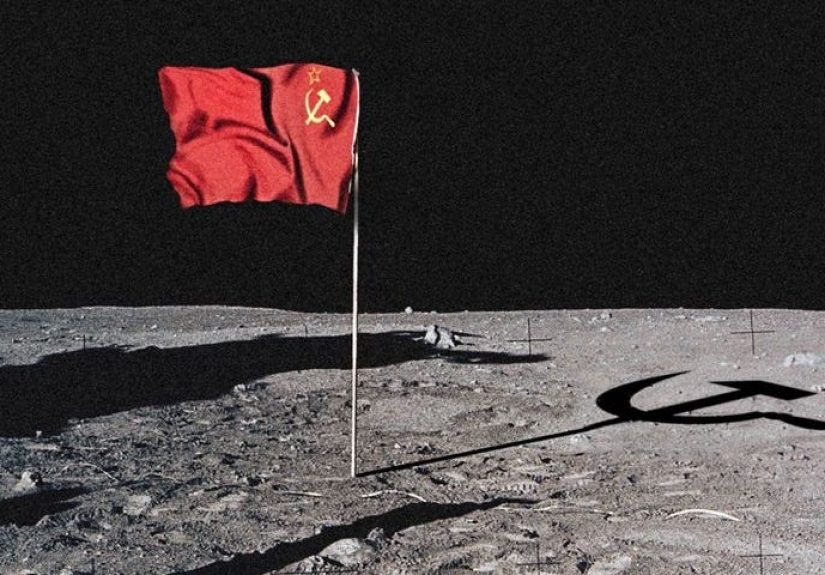
Second, the word landing does a lot of heavy lifting. If by landing you mean a human stepping onto the Moon, then no, the Soviet Union and modern Russia have never done that. If by landing you mean a robotic spacecraft touching down on the lunar surface, then yes: the Soviets got there early and spectacularly.
That distinction matters because it changes the whole conversation. The United States won the race to land people on the Moon in 1969. The Soviet Union, however, dominated several earlier chapters of robotic lunar exploration. In other words, the Soviet lunar story is not a tale of total failure. It is a tale of stunning firsts, painful near-misses, institutional chaos, and a Moon program that was brilliant enough to make history but not stable enough to finish the biggest job.
The Soviet Union Reached the Moon First, Just Not With Astronauts
Luna 1, Luna 2, and Luna 3 Opened the Door
In the late 1950s, the Moon stopped being a poetic object and became a destination. The Soviet Union moved fast. Luna 1, launched in 1959, missed a direct impact but became the first spacecraft to fly past the Moon. That alone was a major milestone. It proved that reaching the Moon was not just science fiction with dramatic lighting.
Then came Luna 2, which became the first human-made object to reach the lunar surface. It did not land gently. It hit the Moon on purpose, which is a very 1950s way of saying, “We made it.” A few weeks later, Luna 3 returned the first images of the Moon’s far side, giving humanity its first look at terrain that can never be seen from Earth. If you are keeping score, that is already a pretty outrageous opening act.
These missions were not glamorous in the modern sense. There were no livestreams, no cinematic drone shots, and certainly no astronauts speaking in calm radio voices. But scientifically and politically, they were huge. They showed that the Soviet lunar program had speed, nerve, and a real ability to turn engineering theory into world-changing missions.
The First Soft Landing Was Soviet, Too
In 1966, Luna 9 pulled off one of the great achievements in space history: the first successful soft landing on the Moon. That was not just a Soviet first. It was a human first. The spacecraft touched down safely and sent back images from the lunar surface, offering people on Earth their first ground-level look at another world. Not bad for a machine that had to survive a trip through space and then set itself down without turning into very expensive confetti.
Later that same year, Luna 10 became the first spacecraft to orbit the Moon. The momentum was real. For a while, the Soviet Union seemed to own lunar innovation the way some people own the thermostat in a family house: confidently, aggressively, and with very little room for argument.
Rovers and Sample Returns Strengthened the Soviet Legacy
The Soviet lunar program did not stop at landings and photography. It expanded into surface operations and sample return missions. Lunokhod 1, delivered by Luna 17 in 1970, became the first successful robotic rover on the Moon. That was a milestone with genuine long-term importance. It showed that remote exploration could move beyond “touch the surface and wave” into something more active and scientific.
The Soviets also succeeded in bringing lunar material back to Earth. Missions such as Luna 16, Luna 20, and Luna 24 returned samples, with Luna 24 in 1976 becoming the last mission for decades to return Moon material to Earth. That achievement is easy to overlook because it lacks the cinematic power of a moonwalk, but scientifically it mattered a great deal. Getting lunar samples home meant the Soviet program was doing precision work, not just headline hunting.
So, if someone says the Soviet Union failed at the Moon, the honest answer is: only if you define success in one extremely specific way. The Soviet Union did not land a person there, but it absolutely changed lunar exploration.
Why the Soviets Never Landed a Cosmonaut on the Moon
This is where the story gets less triumphant and more like a group project where everyone is brilliant, nobody agrees, and the deadline is somehow on fire.
The Soviet human lunar effort was real. It included separate programs for circumlunar flights and a crewed landing. The plan involved the N1 rocket, the Soviet answer to the Saturn V, and complex mission architectures that aimed to put a cosmonaut on the surface. On paper, it was ambitious. In practice, it ran into a wall of problems.
Too Many Programs, Not Enough Unity
One of the biggest problems was fragmentation. The Soviet system did not organize the Moon effort under one clean, unified structure. Instead, multiple design bureaus, political pressures, and competing priorities created a messy development environment. That may sound bureaucratic, and it was, but in spaceflight bureaucracy is not a side issue. It can decide whether a rocket flies or explodes.
The Soviet program also suffered after the death of Sergei Korolev in 1966. He had been a central organizing force in Soviet space successes. Without him, the lunar effort became harder to coordinate at exactly the moment when coordination was everything.
The N1 Rocket Became the Program’s Big Headache
The N1 rocket was supposed to carry the Soviet lunar dream. Instead, it became a symbol of how difficult that dream had become. The rocket suffered multiple failures, including devastating explosions, and never completed a successful mission. That effectively crippled the Soviet plan for a crewed Moon landing.
Meanwhile, NASA’s Apollo program was moving with increasing momentum. By the time Apollo 8 orbited the Moon in 1968, the United States had pulled ahead in the crewed race. Apollo 11’s successful landing in July 1969 did not just beat the Soviets to the finish line. It changed the meaning of the race itself. Once Americans had already walked on the Moon, the Soviet Union’s lunar landing goal lost much of its political payoff.
There was still a dramatic Soviet side story during Apollo 11. Luna 15, a robotic sample-return mission, was in lunar orbit at the same time and represented an attempt to salvage prestige by returning Moon rocks. But the mission crashed during descent. It was a sharp reminder that even a highly capable lunar program can look unstoppable one year and cursed the next.
Eventually, the Soviet Union shifted focus toward space stations and other priorities. The dream of a Soviet cosmonaut standing on the Moon faded into the category of history’s great “what ifs.”
Modern Russia and the Return of Lunar Ambition
Fast-forward to the 21st century, and Russia has repeatedly signaled that it wants back into serious lunar exploration. The most visible example was Luna-25, launched in August 2023. It was Russia’s first lunar mission in 47 years and was meant to revive the old Luna legacy with a landing attempt near the Moon’s south pole, a scientifically valuable region believed to hold water ice.
That target was not random. The lunar south pole is now one of the most important destinations in space exploration. Water ice could support future astronauts, provide drinking water, and potentially be processed into fuel. In other words, modern Moon missions are not just about flags and prestige. They are increasingly about infrastructure, science, and the practical business of building a sustained presence beyond Earth.
Unfortunately for Russia, Luna-25 did not become a comeback story. The mission suffered an orbital maneuver problem and crashed into the Moon before its planned landing. It was a serious setback, both technically and symbolically. Instead of announcing a triumphant return to lunar exploration, Russia was forced into another round of difficult questions about the health of its space program.
Still, Luna-25 mattered. Even failed missions reveal priorities, capabilities, and intent. Russia’s attempt showed that the country still views the Moon as strategically important. The failure also highlighted how hard lunar landings remain. The Moon may look calm in photographs, but it has a long history of humiliating overconfident spacecraft.
What a Future Russian Moon Landing Would Actually Mean
If Russia eventually achieves a successful new lunar landing, robotic or otherwise, it will matter for more than nostalgia. It would signal that the country has rebuilt at least part of the deep-space capability that once made the Soviet Union a lunar pioneer. It would also position Russia more firmly inside the modern competition around the Moon, where the United States, China, India, Japan, private companies, and international partnerships are all shaping the next era of exploration.
It would also reshape public memory. Right now, the phrase Russian moon landing often triggers confusion because it sounds like a thing that already happened in the human sense. A future success would give the term a new, cleaner meaning. Until then, the phrase mostly points backward to Soviet robotic glory and sideways to an unfinished Russian comeback.
Experiences Related to the Russian Moon Landing Story
Part of what makes the Russian Moon story so compelling is the way it feels from the ground, here on Earth, for ordinary people following it. You do not have to be a rocket engineer to feel the emotional swing of it. One minute, you are reading about Luna 2 becoming the first object to reach the Moon and Luna 9 making the first soft landing, and it feels like the Soviet program was writing the opening pages of lunar history with a fountain pen dipped in pure confidence. The next minute, you are reading about the N1 rocket failures, missed chances, and the collapse of the crewed landing dream, and the whole thing feels almost Shakespearean. Space history has a flair for drama that would make streaming services jealous.
There is also a very human experience hidden inside the engineering. For one generation, the Soviet lunar story represented national pride and scientific possibility. For another, especially after Apollo 11, it became a story of the road not taken. For younger readers today, it can feel like discovering an alternate timeline: a world where the first footprints on the Moon might have belonged to a cosmonaut instead of an American astronaut. That “almost” is powerful. It gives the story a strange emotional gravity.
Watching modern Russia return to the Moon with Luna-25 created a similar feeling. Even people with no personal stake in Russian space policy could recognize the drama. A program with legendary roots was trying to reconnect with its past while competing in a much more crowded and technically demanding lunar era. There was suspense, curiosity, skepticism, and, for space fans, a little bit of hope that history might produce a satisfying second act. When Luna-25 crashed, the disappointment felt bigger than the loss of a single spacecraft. It felt like a reminder that legacy does not fly a mission for you. Hardware still has to work. Math still has to win.
There is an experience, too, in how the Russian Moon story changes the way people think about the space race. Schoolbook versions often flatten everything into a simple scoreboard: America won, the Soviet Union lost, end of story. But once you dig deeper, the experience becomes richer and more interesting. You start to see that the Soviet Union did not merely lose; it pioneered, adapted, improvised, and left behind genuine achievements that still deserve attention. That realization makes the history feel less like a cartoon rivalry and more like a real human struggle full of brilliance, ambition, politics, ego, and luck.
Maybe that is why the topic continues to resonate. The Moon is never just about the Moon. It is about what nations dream of, what engineers dare to attempt, and how success and failure both become part of the same long story. The Russian Moon landing story, even without a human landing, carries all of that. It feels ambitious. It feels unfinished. And above all, it feels deeply human, which is ironic for a tale that includes so many robots.
Conclusion
The real story behind the phrase Russian moon landing is not a single event but an entire arc of lunar exploration. The Soviet Union reached the Moon first with robotic probes, achieved historic firsts with Luna 2, Luna 3, Luna 9, Luna 10, Lunokhod, and sample-return missions, and built a legacy that still shapes how we talk about lunar history today. But it never succeeded in landing a human on the lunar surface.
Modern Russia has tried to reconnect with that heritage, most notably through Luna-25, but its 2023 crash showed just how difficult it is to turn old prestige into new success. So the answer to the question is both simple and nuanced. Did Russia ever land on the Moon? Robotically, in the Soviet era, yes. Did Russia ever land people on the Moon? No.
And honestly, that nuance is what makes the story worth reading. It is not just about who got there first. It is about what was achieved, what was missed, and why the Moon still has a talent for exposing both the genius and the fragility of human ambition.