Table of Contents >> Show >> Hide
- Why These Champagne Glasses Stand Out
- Who Is Deborah Ehrlich?
- The Origin Story Behind the Simple Crystal Champagne Glasses
- Materials and Craftsmanship
- Design Details That Matter
- How They Compare to Traditional Champagne Flutes
- Why Design Enthusiasts Love Them
- Are Deborah Ehrlich Simple Crystal Champagne Glasses Worth It?
- Best Uses and Buying Considerations
- The Experience of Using Deborah Ehrlich Simple Crystal Champagne Glasses
- Final Thoughts
If you have ever looked at a champagne flute and thought, “Nice, but why does it feel like it’s trying too hard?” then Deborah Ehrlich’s simple crystal champagne glasses may be your kind of rebellion. They are refined without being fussy, elegant without acting like they need their own security detail, and minimalist in a way that feels warm rather than cold. In other words, they are the rare luxury object that does not arrive shouting. It just quietly makes the table look better.
Deborah Ehrlich’s glassware has earned a devoted following because it turns a basic act, pouring something sparkling into a glass, into a tactile design experience. These are not novelty flutes. They are not oversized goblets for dramatic toasts or trendy, awkward vessels that look better on social media than they feel in your hand. They are simple crystal champagne glasses designed around proportion, touch, clarity, and use. And yes, that sounds serious for something that holds bubbly, but once you understand the design story, the appeal makes perfect sense.
Why These Champagne Glasses Stand Out
The first thing to know is that Deborah Ehrlich’s approach to glassware is rooted in restraint. Her crystal pieces are known for their clean silhouettes, extraordinary delicacy, and almost architectural sense of balance. The point is not decoration. The point is proportion. That is a big reason design lovers, collectors, and people who simply enjoy beautiful objects keep returning to her work.
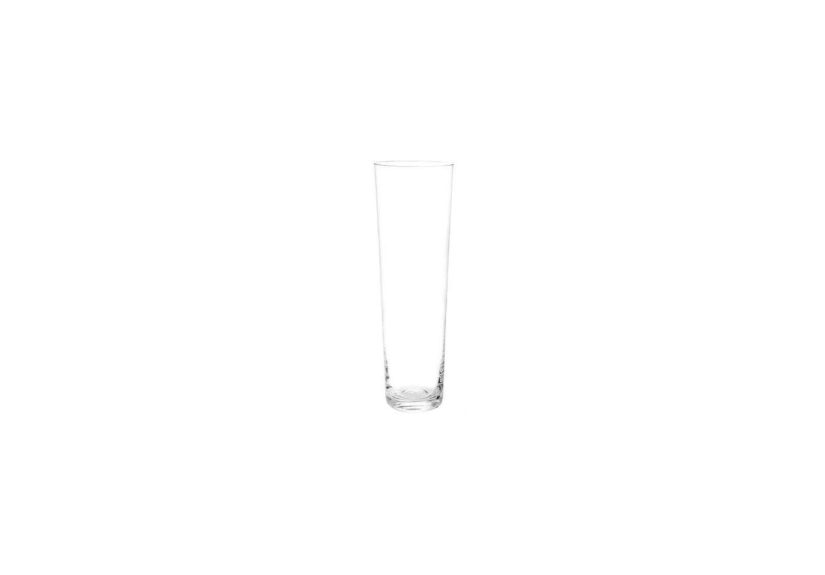
The simple crystal champagne glass is especially interesting because it sidesteps the old assumption that a celebratory glass must be tall, stemmed, and slightly precious. Ehrlich’s champagne design has long been associated with a narrow, stemless form, and that choice says a lot. It gives the glass a more modern, grounded personality while still preserving a sense of lightness and occasion. Think of it as formalwear that somehow also knows how to relax.
Who Is Deborah Ehrlich?
Deborah Ehrlich is a Hudson Valley–based designer whose work is often described as exquisitely simple. She is classically trained as a sculptor, and that background shows in the way her pieces feel less like accessories and more like studied forms. Her work in crystal has been associated with a quiet, disciplined minimalism since the late 1990s, and her designs are sketched in New York before being realized by master craftsmen in Sweden.
That cross-continental design story matters. Ehrlich’s process is not mass-market in spirit or in execution. Her crystal glassware is hand-blown, hand-cut, and hand-polished, which helps explain why these pieces feel so exacting. They may look effortless, but they are definitely not casual in the making. This is the design equivalent of “I woke up like this,” except everybody involved absolutely did not.
The Origin Story Behind the Simple Crystal Champagne Glasses
One of the most compelling details in Deborah Ehrlich’s story is how her first champagne glass came to life. After spending time in France, where everyday wine was often served in simple tumblers, she returned to New York wanting glassware that felt less ornate and more intuitive in the hand. What she created was a narrow, stemless champagne flute, an object that blended everyday ease with ceremony.
That early design helped launch her company around 1999 and became a signature expression of her aesthetic. The concept was refreshingly clear: strip away visual fuss, keep the elegance, and make the object feel good to hold and drink from. In a market crowded with flashy barware, that idea still feels fresh. Sometimes the boldest move is removing everything unnecessary and trusting the proportions to do the talking.
Materials and Craftsmanship
Lead-Free Swedish Crystal
Deborah Ehrlich’s champagne glasses are commonly described as hand-blown from lead-free Swedish crystal. That material choice matters for both beauty and performance. Swedish crystal is prized for clarity and strength, which allows the glass to be blown very thin while still maintaining durability. The result is a vessel that looks almost weightless but does not feel flimsy.
Hand-Blown, Hand-Cut, and Hand-Polished
The making process is part of the allure. Ehrlich’s designs are executed by Swedish artisans who blow the hot crystal into a mold, then cut and polish the cooled piece by hand. That final hand-finishing is important because it contributes to the smooth lip and the refined tactile experience that so many admirers mention. You may not think a lip can be persuasive, but in good crystal, it absolutely can.
Paper-Thin Lip, Real Presence
Retailers and design outlets repeatedly describe Ehrlich’s crystal as light, strong, and paper-thin at the rim. That combination is a big part of the appeal. A thin lip can make a drink feel cleaner and more immediate, while the body of the glass still has enough substance to feel anchored in the hand. It is that balance, delicacy without nervousness, that gives these glasses their cult status.
Design Details That Matter
At a glance, the simple crystal champagne glass seems, well, simple. But that understatement is the trick. Every line appears to have been edited until only the essential remained. The glass usually stands around 5.6 to 5.9 inches high depending on the listing, with a narrow diameter and an approximate 6-ounce capacity. Those proportions keep it slim enough for sparkling wine while avoiding the exaggerated theatricality of many flutes.
Another detail often noted is the signature on the bottom, etched by hand. It is a small touch, but it reinforces the sense that this is a crafted object, not a factory anonymous one. There is also something satisfying about the stemless silhouette. It feels less ceremonial in a stiff way and more ceremonial in a human way. You can imagine using it at a beautifully set dinner, but also during a low-key Friday toast over takeout. That versatility is a strength, not a compromise.
How They Compare to Traditional Champagne Flutes
Traditional flutes have their own logic. They are tall, stemmed, and designed to preserve bubbles while projecting classic celebration energy. Deborah Ehrlich’s simple crystal champagne glasses take a different route. They keep the narrow profile that suits sparkling wine, but the stemless shape changes the mood entirely. The glass feels more intimate and less performative.
That makes these glasses especially appealing to people who prefer modern tableware, minimalist interiors, or a more collected, less matchy home aesthetic. A classic flute says, “We are hosting New Year’s Eve.” An Ehrlich champagne glass says, “We care about design, but we also know how to have a life.” Both are valid. One just has better posture without the attitude.
Why Design Enthusiasts Love Them
People who love Deborah Ehrlich’s crystal tend to talk about it in emotional as well as visual terms. That is not accidental. Her work is often described as elevating awareness, making everyday gestures feel more considered. There is something almost paradoxical about the experience: the glasses are modest, but they sharpen your attention. You notice the clarity. You notice the weight. You notice how your hand changes around the object.
This is also why the glasses work so well in interiors that lean warm-minimalist, Scandinavian, Japanese-influenced, rustic-modern, or quietly luxurious. They do not need pattern or embellishment to feel special. Their beauty comes from precision. In an era where a lot of design mistakes “more” for “better,” Ehrlich’s work is a useful reminder that subtraction is a creative act.
Are Deborah Ehrlich Simple Crystal Champagne Glasses Worth It?
If your metric is pure utility, you can absolutely drink sparkling wine from something cheaper. Much cheaper. A mug will technically work, although your brunch guests may stage an intervention. But utility is not the whole story here. These glasses are worth considering if you value craftsmanship, tactile quality, visual restraint, and objects that improve daily rituals without turning them into pageants.
They also make sense as a buy-once, use-often piece. Because the design is so pared back, it resists trend fatigue. You are not buying into a fad finish or a viral silhouette that may look dated by next holiday season. You are buying a form built around long-term appeal. That is often what justifies the higher price in thoughtful design: not just beauty, but staying power.
Best Uses and Buying Considerations
For Everyday Luxury
These glasses are especially good for people who like the idea of special objects that do not need to live in a cabinet under protective custody. They suit everyday rituals, small dinners, celebrations, and gifting occasions. If you want glassware that can move from a simple kitchen supper to a serious dinner party without changing personality, they fit the brief.
For Design-Forward Gifting
They also make strong wedding, anniversary, host, or housewarming gifts for recipients who care about design. Custom engraving is available through some retailers, which adds another layer of personal value. That said, these are hand-finished crystal glasses, so hand washing is usually recommended. If someone wants something they can toss into a dishwasher with a sports bottle and a baking tray, this is probably not their soulmate glass.
For Collectors of Minimalist Tableware
If you are building a cohesive table with refined, understated pieces, Ehrlich’s broader crystal line, including water, wine, and rocks glasses, makes the champagne glass even more attractive. The simple crystal champagne glasses feel like part of a thoughtful system, not a one-off decorative purchase. They belong to a larger design language built around clarity, restraint, and usability.
The Experience of Using Deborah Ehrlich Simple Crystal Champagne Glasses
Now for the part that product descriptions often skip: what these glasses actually feel like in life. Not in a studio photo. Not in a perfect catalog kitchen with suspiciously photogenic lemons. Real life.
The first experience is almost always tactile surprise. You pick one up expecting fragility, but what you feel is controlled lightness. The glass is thin, yes, but it is not timid. It has presence. That makes the moment of pouring sparkling wine into it oddly satisfying, because the vessel feels precise enough to honor the drink without becoming the entire event. It is the kind of object that improves your manners for five minutes. You stand a little straighter. You pour a little more carefully. You suddenly understand napkins.
The second experience is visual. These glasses do not dominate the table. They refine it. On a crowded holiday setting, they bring order. On a sparse table with linen, wood, and candlelight, they almost disappear until the light catches them. That “nearly invisible until it matters” quality is part of their magic. They are subtle in daylight and quietly dramatic at night. If some glassware is makeup, this is excellent skin.
The third experience is social. Deborah Ehrlich’s simple crystal champagne glasses tend to invite comment, but not in an obnoxious way. Guests ask what they are because they recognize that something is different, even if they cannot immediately say why. The shape feels familiar enough to be usable and unusual enough to be memorable. That is a hard balance to achieve. Plenty of designer objects are memorable because they are difficult. These are memorable because they are calm.
The fourth experience is emotional. Using beautiful, well-made glassware for ordinary moments changes the tone of those moments. A random Tuesday toast becomes a tiny ritual. A quiet dinner feels more intentional. Even sparkling water seems to develop better self-esteem. This is one of the understated luxuries of thoughtful design: it does not just decorate your environment, it edits your behavior. You slow down. You notice more. You stop treating celebration like something that only belongs to major milestones.
The fifth experience is long-term appreciation. With trend-driven tableware, the excitement often fades after the first few uses. With Ehrlich’s glasses, the appreciation tends to deepen. The more familiar they become, the more their proportions make sense. They are not trying to seduce you with gimmicks. They age well in the eye. That may be the strongest argument for them: they do not depend on novelty. They depend on quality, and quality has a much better shelf life than fashion.
So yes, the experience is partly about champagne, sparkling wine, or whatever celebratory pour you love. But it is also about what happens when an everyday object is designed with unusual discipline. Deborah Ehrlich simple crystal champagne glasses do not just hold a drink. They make a small, convincing case for living with fewer, better things. And that is a toast worth making.
Final Thoughts
Deborah Ehrlich simple crystal champagne glasses occupy a very specific sweet spot in modern design. They are luxurious, but not loud. Minimal, but not sterile. Practical enough for regular use, but distinctive enough to feel special every time they appear. Their story, from a stemless design inspired by life in France to hand-blown Swedish crystal refined for modern tables, gives them substance beyond aesthetics.
If you want champagne glasses that perform like timeless design objects rather than seasonal accessories, these are easy to admire and easier to keep admiring. They do not beg for attention. They simply reward it. And honestly, in a world full of overdesigned everything, that may be the most refreshing detail of all.