Table of Contents >> Show >> Hide
- What Maison Légère Actually Is
- Why the House Feels So Balanced
- The French Context: Why This House Makes Sense in France
- Restoration as a Form of Wellness
- How Maison Légère Creates Harmony Without Losing Personality
- What Homeowners and Travelers Can Learn from Maison Légère
- The Experience of Maison Légère: A Longer, Slower Kind of Luxury
- Conclusion
Some travel properties try very hard to impress you. They come armed with infinity pools, dramatic lighting, and enough branded candles to fumigate your stress into submission. Maison Légère goes in the opposite direction. Perched in France’s Perche Sarthois countryside, this restored rural house offers something much rarer than spectacle: quiet. Real quiet. The kind that makes you notice birdsong, the texture of old walls, and the suspiciously healing power of a long lunch.
That is what makes Maison Légère so compelling. It is not simply a beautiful place to sleep. It is a lesson in how design, landscape, and a slower rhythm of life can work together to restore balance. The house sits about 160 kilometers from Paris and is designed for privacy, freedom, and full-house stays. It welcomes up to seven guests and pairs generous common spaces with uninterrupted views of the surrounding countryside. In other words, it is the anti-chaos house, and frankly, many of us could use one.
What makes the property especially interesting is how it reflects several bigger ideas shaping design and travel right now: French country style without the fuss, wellness design without the woo-woo overload, and rural tourism that values long stays, local food, and genuine connection to place. Maison Légère feels timely because it combines all three. It is rustic, but not shabby. Refined, but not uptight. Minimal, but not cold. Think less “museum rope around the antiques” and more “please sit here with coffee and stare at the hills for an hour.”
What Maison Légère Actually Is
Maison Légère is a restored country house in the Perche Sarthois region of France, a rural area known for rolling landscapes, old stone architecture, and the kind of atmosphere that makes city people suddenly start discussing jam, weather, and whether they too should own linen napkins. The home is isolated enough to feel like a full escape, yet close enough to Paris to make a short-country-break fantasy feel realistic.
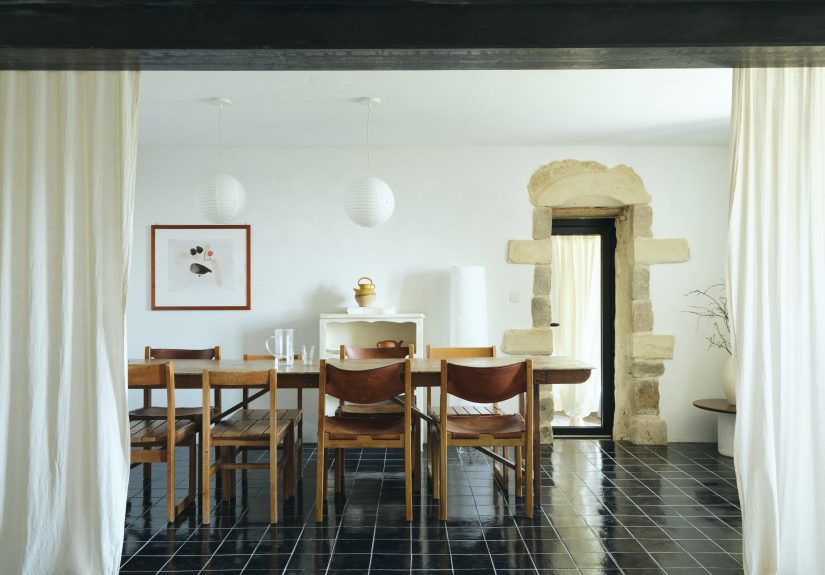
According to property details, the house offers around 200 square meters of living space on two hectares of greenery, with open views over fields and toward Château de Montmirail. Inside are three bedrooms, three bathrooms, a large living room with a fireplace, and an open kitchen meant for actual living rather than decorative posing. Maison Légère’s own materials emphasize a stainless-steel kitchen, an oversized table, found tableware, local products, a kitchen garden, quality bedding, washed cotton linens, and a layout built for eating well, sleeping well, and living well. That trio, by the way, is a pretty solid design brief for life in general.
Why the House Feels So Balanced
1. It uses restraint instead of overdesign
The most striking thing about Maison Légère is that it does not scream for attention. Reporting on the home describes rough-textured walls and concrete floors creating visual harmony, while stone, wood, and steel keep the palette grounded. That material mix matters. Too much polish can make a country house feel fake, like it is cosplaying as itself. Too much roughness can make it feel unfinished. Maison Légère lands in the sweet spot between authenticity and comfort.
This balance echoes what American design publications have identified as the strongest version of modern farmhouse and French country interiors: natural materials, exposed structure, weathered finishes, and contemporary simplicity working together instead of fighting for the spotlight. In plain English, the house looks calm because nothing in it is trying to win a talent show.
2. Light is treated as a material, not an afterthought
Homes that feel restorative usually understand one thing: light changes mood before furniture ever gets a chance. Maison Légère’s hillside setting, open views, and airy interiors all point to a design strategy built around natural light. That choice aligns with broader wellness-focused design guidance, which increasingly treats daylight as essential to emotional comfort, not just aesthetics.
Light colors, reflective surfaces, and uncluttered sightlines help brightness move through a home more freely. Maison Légère appears to use that principle well. Instead of competing with the landscape, the interiors seem to amplify it. The result is a house that feels expansive without becoming sterile. Bright, yes. Blindingly precious, no.
3. The materials reconnect guests to nature
Biophilic design is a fancy term for a very old human preference: we like spaces that remind us we are not robots. Better Homes & Gardens and other U.S. design outlets have pointed to natural textures, light, plants, and tactile finishes as key to making a home feel grounded and wellness-focused. Maison Légère fits that idea beautifully. Stone, wood, greenery, open fields, and a strong indoor-outdoor relationship do not just decorate the experience; they shape it.
That connection to nature matters even more in a restored rural house. The building is not floating in abstraction. It belongs to a working landscape, a climate, and a local history. When a property leans into that context instead of sanding it down into generic luxury, guests feel more oriented and more at ease. The house is not telling you to admire France from behind glass. It is inviting you to inhabit it.
4. The layout supports togetherness and privacy
Many vacation homes claim they are perfect for groups, then punish everyone with one usable bathroom and a kitchen the size of a carry-on suitcase. Maison Légère sounds smarter than that. A generous living room, open kitchen, large dining table, multiple bathrooms, and spacious bedrooms suggest a layout designed for shared time without social exhaustion. That matters because balance is not only visual. It is relational.
A truly harmonious house gives people room to gather, retreat, cook, nap, read, and stare into the middle distance without being asked to join a team-building exercise. Maison Légère seems to understand that the best hospitality often comes from freedom rather than programming.
The French Context: Why This House Makes Sense in France
Maison Légère would be interesting anywhere, but it feels especially right in France. French domestic design has long been strongest when it embraces tension: elegance and wear, beauty and utility, old bones and relaxed living. U.S. publications covering French country style repeatedly return to the same ingredients: stone, wood, linen, patina, fireplaces, neutral tones, botanical references, and rooms that feel lived in instead of staged. Maison Légère clearly works in that lineage, but it edits out the clichés.
There are no obvious signs of themed nostalgia here. The house does not need to shout “French!” with performative flourish. Instead, it captures a more convincing version of French harmony: good materials, strong proportions, respect for age, and confidence in understatement. It is a cleaner, lighter, more contemporary expression of the countryside tradition.
That also fits with broader travel trends in France. American travel coverage has increasingly encouraged visitors to look beyond major-city rushes and crowded postcard itineraries in favor of slower stays in smaller destinations, locally run properties, and rural regions with a strong sense of place. Maison Légère fits that mood almost perfectly. It is not selling a checklist. It is selling a pace.
Restoration as a Form of Wellness
One reason Maison Légère resonates is that it shows how restoration can be restorative for people too. When an old farmhouse or rural structure is updated carefully, the goal is not to erase the past. It is to make the building usable again while keeping the qualities that gave it soul in the first place. That approach has shown up in recent coverage of French renovations across design magazines: preserve the volumes, respect the masonry, use natural materials, and let contemporary interventions stay quiet.
Maison Légère appears to follow that philosophy. Rather than turning the house into a glossy shell, the renovation preserves texture and atmosphere. That is important because spaces that feel too perfected can make guests feel like intruders. Spaces with patina, softness, and honest materials feel more forgiving. They invite exhale rather than performance.
Wellness design experts often talk about calming palettes, layered lighting, improved air quality, spa-like rituals, and intuitive layouts that reduce cognitive overload. Maison Légère seems to accomplish a version of that without becoming clinical or gadget-heavy. The wellness here comes from subtraction: fewer distractions, cleaner forms, tactile materials, countryside views, and the simple luxury of not hearing your upstairs neighbor attempt a furniture-moving marathon at midnight.
How Maison Légère Creates Harmony Without Losing Personality
A lot of minimalist spaces are technically beautiful and emotionally equivalent to a tax form. Maison Légère avoids that trap by keeping character in the mix. Found tableware, textured surfaces, natural materials, and a fireplace all suggest a house meant to be used and remembered. The personality is subtle, but it is there. This is not emptiness for emptiness’s sake. It is editing with a pulse.
That may be the home’s greatest achievement. Harmony is not the absence of life. It is the feeling that everything in a space has agreed to cooperate. The table is big enough for dinner to stretch out. The linens are comfortable enough to make sleep feel like an event. The kitchen encourages local food instead of room-service isolation. The surrounding land gives the eye somewhere to rest. Even the distance from Paris is part of the spell: close enough for convenience, far enough for your brain to stop refreshing itself like a broken browser tab.
What Homeowners and Travelers Can Learn from Maison Légère
You do not need two hectares in rural France to borrow ideas from Maison Légère, although that would certainly not hurt. Its lessons are surprisingly transferable. Start with natural materials that age gracefully. Let light do more work than décor. Choose fewer, better objects. Create one place in the home where people can gather comfortably around food. Leave visual breathing room. Make at least one room feel like an invitation to slow down instead of a command to be productive.
The travel lesson is just as useful. More people are realizing that the most memorable stays are not always the loudest or most luxurious in the obvious sense. Sometimes the best trip is the one that recalibrates your nervous system. A restored countryside house with good sheets, a proper table, local ingredients, and a horizon line may not sound flashy on paper. In real life, it can feel revolutionary.
The Experience of Maison Légère: A Longer, Slower Kind of Luxury
Arriving at Maison Légère likely feels less like checking into a vacation rental and more like stepping out of static. The drive pulls you away from dense schedules, crowded sidewalks, and the low-grade panic produced by too many tabs open in the mind. Then the house appears on its hillside, calm and self-possessed, not begging for attention because it already knows it has the better offer: space, light, and silence.
The first experience is probably visual. You notice the countryside before you notice the furniture. Open fields stretch outward, the landscape rolling gently instead of performing for the camera. The view toward Château de Montmirail gives the setting a touch of storybook drama, but the overall mood is not theatrical. It is composed. The kind of place that makes you put your phone down for a second, then maybe for a whole afternoon if your brain remembers how.
Inside, the experience becomes tactile. The roughness of the walls, the firmness of the floors, the softness of washed cotton linens, the presence of wood and stone: these details work quietly on the body. You do not always realize how overstimulating many spaces are until you enter one that is not. Maison Légère seems designed to remove friction. There is room to move, room to breathe, and room to let simple routines feel satisfying again. Making coffee is not a rushed act between obligations; it becomes the opening scene of the day.
Mornings here would likely be the star of the show. Light entering the rooms, maybe a slight chill in the air, maybe the promise of bread, fruit, butter, and a long breakfast around the oversized table. This is where the house’s harmony becomes practical rather than poetic. A good table changes behavior. People linger. Conversations meander. Plans become flexible. Someone pours more coffee. Someone else announces a walk, then takes forty minutes to put on shoes because nobody is actually in a hurry. In many homes, shared space creates tension. In the right one, it creates ease.
The kitchen seems central to that rhythm. With local products, a kitchen garden, and a well-equipped cooking space, meals do not have to be complicated to feel memorable. A roast chicken, a salad, a wedge of cheese, a bottle of wine, and suddenly everyone is behaving as though they have personally invented civilization. That is the quiet power of a house built around use instead of display. It lets ordinary pleasures become large enough to notice.
Afternoons at Maison Légère would invite a particularly French style of ambition: almost none. Read in the living room by the fireplace if the weather turns cool. Wander outside and look at the changing light over the fields. Stretch out for a nap without apologizing for it. Talk. Cook. Do absolutely nothing with startling professionalism. If luxury often means access to more, this kind of luxury means freedom from more. Fewer decisions. Fewer alerts. Fewer reasons to be elsewhere.
Evenings are where a house like this earns permanent residence in memory. As light drops, textures deepen. The countryside turns quiet in a different register. Dinner lasts longer than planned. The rooms glow rather than glare. Maybe the conversation becomes philosophical, maybe hilariously trivial, maybe both within the same five minutes. That is usually a sign of comfort. The best places make people less performative and more themselves.
And then there is sleep, the underrated headline act of any restorative stay. Spacious bedrooms, quality bedding, and the absence of urban noise can make rest feel almost suspiciously effective. You wake up wondering whether France has secretly outlawed stress, or whether you have simply forgotten what an environment can do when it is arranged with care.
That is the real experience of Maison Légère. It is not just pretty. It is regulating. It reminds guests that harmony is not a decorative concept reserved for magazine captions. It is something physical: the balance between solitude and company, utility and beauty, old structure and new life, retreat and connection. In that sense, Maison Légère offers more than a stay in France. It offers a rehearsal for a better way to live.
Conclusion
Maison Légère succeeds because it understands a truth many homes and hotels miss: balance is built, not bought. Through natural materials, generous light, thoughtful restoration, and a slow-living rhythm rooted in the French countryside, it turns a former rural house into a place that feels both elegant and deeply human. It is the kind of retreat that does not merely photograph well; it changes how a day unfolds. In a noisy world, that may be the most luxurious design feature of all.