Table of Contents >> Show >> Hide
- What Makes a Landscape Feel “Surreal”?
- The Techniques Behind the “Another Dimension” Effect
- Case Studies: Real Artists, Real Landscapes, Real “Wait… What?” Moments
- How to Read a Surreal Landscape Without Overthinking Yourself Into a Pretzel
- How to Create Your Own Surreal Landscape (Without Selling Your Soul to Photoshop)
- Why Surreal Landscape Art Is Booming Right Now
- Experiences: Walking Through a Portal Made of Mountains (An Extra )
- Conclusion: Nature, But Make It Multiverse
- Sources Consulted (No Links)
- SEO Tags
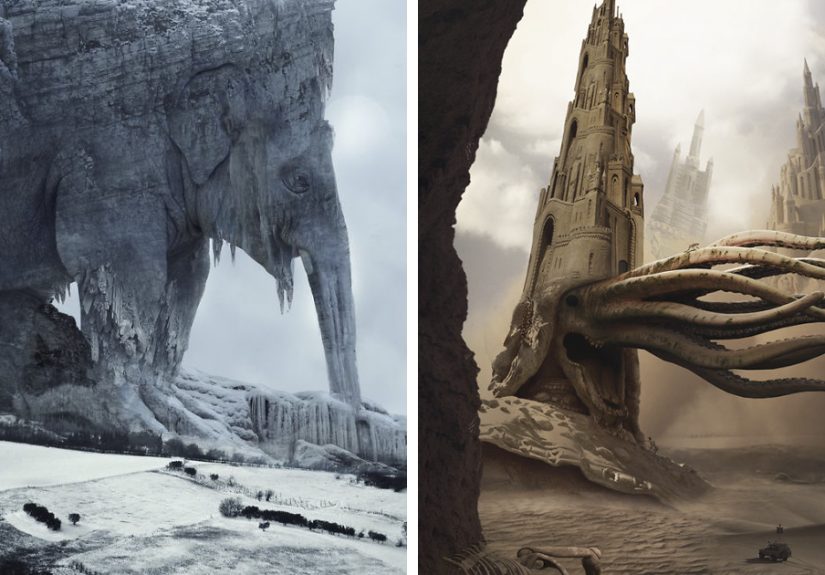
Some landscapes are so beautiful they make you whisper, “Wow.” Surreal landscapes make you whisper, “Wow… and also,
is the mountain okay?”
This genre lives in the sweet spot between the familiar (trees, deserts, oceans, clouds) and the impossible (gravity
calling in sick, horizons folding like origami, light behaving like it read one too many fantasy novels). In other words:
it looks like natureuntil you stare for three seconds and realize you’re basically sightseeing in an alternate dimension.
In this deep dive, we’ll unpack what makes surreal landscape art feel so convincing, the techniques behind the magic,
and real-world examples of artists who bend wilderness into dreamlike scenerywithout losing that crisp “I could almost
step into it” realism.
What Makes a Landscape Feel “Surreal”?
“Surreal” isn’t just “weird.” A surreal landscape still respects the visual language of real placeslight direction,
texture, atmosphere, scalethen quietly breaks one rule that your brain relies on to stay calm.
It starts with believable nature
The most convincing otherworldly landscapes are anchored in real details: the grit of sandstone, the haze over distant
hills, the way shadows soften at dusk. Your eyes think, “Yes, I’ve been here.” Your logic thinks, “No, you haven’t,
because lakes don’t normally float.”
Then it introduces one impossible twist
Surreal landscape art often follows an elegant formula: keep 90% realistic, then make 10% impossibleand make that
10% look like it belongs. That twist could be a horizon that loops back on itself, a canyon that opens like a zipper,
or a forest that contains an “extra” kind of light that nature didn’t get permission to invent.
Finally, it invites interpretation
The best surreal scenes don’t explain themselves. They act like visual riddles. Are you looking at a dream? A memory?
A warning? A joke? (Sometimes it’s all four. Art is allowed to multitask.)
The Techniques Behind the “Another Dimension” Effect
Surreal landscapes can be made in a darkroom, on a computer, or out in the field with a clever lighting setup.
Different toolssame mission: make the impossible feel photographic, tactile, and emotionally real.
1) Darkroom photomontage: the original “Photoshop,” minus the undo button
Before digital editing was a household verb, some photographers built dreamscapes by combining multiple negatives into
a single print. This analog approach creates images that feel strangely timeless: black-and-white, high craftsmanship,
and quietly unsettlinglike a fairy tale told by someone who owns excellent chemistry lab gloves.
The darkroom method works because it keeps the “truthiness” of photography: every element was once real in front of a
lens. The surreal part arrives in the assemblyhow those real fragments are stitched into a new reality.
2) Digital compositing: impossible geology with realistic lighting
Digital compositing (using photography, 3D, or both) is the modern workhorse of surreal landscape creation. The key is
restraint: match perspective, color temperature, grain, and shadow behavior so the final image doesn’t scream “I was
made at 2 a.m. with a laptop and a questionable snack.”
The artists who do this best often shoot their own source images, because custom raw material makes the final scene
feel cohesive. When everything shares the same lens logic and lighting logic, the viewer stops noticing the seamsand
starts believing the portal.
3) Light hacks: ultraviolet glow, infrared shifts, and other science-y magic
Not all surreal landscapes are built from multiple images. Some are captured by revealing parts of nature that the
human eye doesn’t normally see. Ultraviolet-induced fluorescence and infrared photography can turn familiar terrain
into something alienwithout changing the landscape at all. Nature stays the same; our access to it changes.
This approach is especially powerful right now, because it makes “another dimension” feel literal: the world contains
hidden visual information, and the camera becomes a translator.
Case Studies: Real Artists, Real Landscapes, Real “Wait… What?” Moments
The surreal landscape universe is big, but a few standout approaches show how different tools can reach the same
destination: a place that looks like Earth with the settings slightlyand brilliantlymisconfigured.
Jerry Uelsmann: dreamlike landscapes built from multiple negatives
One of the clearest examples of “nature meets another dimension” comes from classic photomontage photography.
Uelsmann’s imagery (often black-and-white) makes reality feel flexible: trees become doorways, bodies become terrain,
and water behaves like it’s practicing for a magic show.
What makes this work endure is the craftsmanship. These are not quick edits; they’re constructed realitiesassembled
with patience, intuition, and an obsession with seamless transitions. The results feel poetic rather than gimmicky,
because the impossible elements aren’t pasted on top of nature; they’re woven into it.
Cody Cobb: deserts that glow under ultraviolet light
If darkroom surrealism feels like a dream, ultraviolet landscape work can feel like a discovery: the same earth you
know, but lit by a secret language. By exploring landscapes with UV light and capturing fluorescence, Cobb transforms
the familiar American West into scenes that read like sci-fiyet remain rooted in real terrain.
The fascination here is emotional as much as visual. The glow suggests hidden systemsminerals, organic traces, and
textures that daylight keeps quiet. It’s nature, but with the “other dimension” layer toggled on.
Petey Ulatan: panoramas folded into geometric worlds
Another path to surreal landscapes is to bend the shape of the scene rather than the content. Ulatan’s digital
approach reimagines oceans, mountains, and cities as if the world could be folded into a cubelike a postcard from an
alternate physics class.
The effect is playful and mind-bending: coastlines drop into infinity, skylines wrap around edges, and perspective
becomes a puzzle you can’t solve because it’s not brokenit’s simply operating on different rules.
How to Read a Surreal Landscape Without Overthinking Yourself Into a Pretzel
Surreal landscapes are designed to be felt first and decoded second. If you try to solve them like math problems, you’ll
miss the pointand also get mad at the clouds for not showing their work.
Look for the “anchor”
Most surreal scenes have one stable element: a road, a tree line, a human figure, a familiar horizon. That anchor is
your entry point. Once you’re in, you notice the rest: the bend in gravity, the impossible scale, the weirdly calm
floating rock that’s pretending it belongs there.
Notice what the landscape is saying
Surreal landscapes often act like metaphors you can walk through. A split horizon can imply division. A glowing desert
can imply hidden life. A folded world can imply perspectivehow one “truth” can change depending on where you stand.
Let ambiguity do its job
If you walk away with a single neat explanation, the artwork may have been too polite. The best surreal landscapes
keep a little mystery in their pockets.
How to Create Your Own Surreal Landscape (Without Selling Your Soul to Photoshop)
You don’t need a Hollywood studio to start experimenting. You do need patience, good taste, and the ability to stop
before your image turns into a visual buffet.
Step 1: Start with a real “base” photo
Pick a landscape with strong composition: leading lines, a clean horizon, and clear lighting. The stronger your base,
the less you’ll need to “decorate” later.
Step 2: Choose one surreal concept
One twist is usually enough. Try:
- Scale swap: make something tiny feel massive (or vice versa).
- Physics nudge: tilt gravity, float water, or bend a shadow in an unexpected direction.
- Portal logic: place a “window” into another environment inside a natural form (rock, tree, cloud).
- Light anomaly: introduce glow, unusual color shifts, or a second “sun” that still obeys lighting rules.
Step 3: Match lighting like your credibility depends on it (because it does)
Most surreal composites fail at the same spot: shadows. If your shadows don’t agree on where the light comes from,
the viewer’s brain taps out instantly.
Step 4: Add texture and atmosphere for cohesion
A little haze, a consistent grain structure, and unified color grading can turn “a collage of good pieces” into “a
place that might exist.” Atmosphere is the glue.
Step 5: Stop earlier than you want to
The final step is called restraint. Over-editing is how a surreal landscape turns into a surreal
screensaver. Leave room for the viewer’s imagination.
Why Surreal Landscape Art Is Booming Right Now
Part of it is technology: tools are more accessible, and artists can build high-quality composites with fewer barriers.
But the bigger reason is emotional. We live in an era where reality often feels… unreasonably written.
Surreal landscapes give that feeling a visual form. They offer escape, yesbut also reflection. They make nature feel
mythic again. They remind us that the world still contains mysteries, even when your phone insists it can map everything.
Experiences: Walking Through a Portal Made of Mountains (An Extra )
There’s a specific experience many people have the first time they encounter a truly convincing surreal landscape: you
feel your body lean forward slightly, as if your balance is trying to help your brain step into the image. It’s not just
“looking.” It’s a tiny rehearsal for entering.
In a gallery setting, that feeling gets stronger. You’re standing still, but your attention is movingwandering along a
shoreline that suddenly drops off into a geometric edge, or following a line of trees that behaves like a hallway. The
most effective surreal landscapes create a calm, almost naturalistic mood first. Then they introduce the impossible so
gently that you accept it before you notice you accepted it. Five seconds later you’re thinking, “Hold onsince when
does water do that?” and the artwork has already won.
For creators, the experience can be just as intenseonly it happens in reverse. It often begins outdoors, on a normal
day, in a normal place, with a normal sky. You’re scouting a location and everything is fine until your imagination
interrupts: that canyon could be a seam; that lake could be a mirror; that flat desert could be a stage for light that
doesn’t exist yet. Many artists describe the landscape as a collaborator. You’re not forcing a fantasy on top of nature;
you’re noticing what nature suggestsshapes that could become portals, textures that could become maps, shadows
that could become story.
Then comes the part nobody posts: the hours. If you’re compositing digitally, there’s a long stretch where your image
looks worse before it looks better. You’re aligning perspective, reworking edges, fixing tiny tonal mismatches, and
learningagainthat shadows are not optional. If you’re experimenting with light-based approaches (like UV fluorescence),
the process can feel like field research. You’re checking surfaces, adjusting exposure, and discovering that the world
contains hidden reactions and colors you can’t predict from daylight alone. It can be exhausting in the moment and
thrilling afterward, like hiking to a viewpoint you can’t properly explain to someone who stayed home.
Viewers bring their own experiences into these scenes, too. A person who grew up near deserts may see a glowing canyon
as nostalgia with a twist. Someone who loves sci-fi might read a floating island as an invitation. Someone who’s anxious
about the future might read a folded world as a warning about fragility. That’s the magic: surreal landscapes are
emotionally interactive. They don’t give everyone the same storythey give everyone the same doorway.
And sometimes the experience is simply joy. Not every surreal landscape has to be heavy. Sometimes it’s allowed to be a
visual prank in the best way: “Here’s a mountain that’s doing something illegal.” The laughter you feel is part of the
suspension of disbelief. Your brain relaxes, your imagination wakes up, and suddenly another dimension doesn’t feel far
away. It feels like it might be hiding inside the next cloud.
Conclusion: Nature, But Make It Multiverse
Surreal landscapes work because they respect reality while refusing to be trapped by it. They borrow nature’s textures,
lighting, and mood, then introduce a single impossible element that changes everythinglike a quiet plot twist in a very
beautiful movie.
Whether the artist is building images in a darkroom, crafting meticulous digital composites, or using unconventional
light to reveal hidden aspects of the environment, the goal stays the same: show us a world that feels true, even when
it can’t possibly exist. And for a moment, we get to stand on the edge of that worldbalanced between nature and another
dimensionwithout needing a passport.
Sources Consulted (No Links)
- Associated Press
- Smithsonian Magazine
- The Metropolitan Museum of Art
- The Museum of Modern Art (MoMA)
- Encyclopaedia Britannica
- My Modern Met
- Architectural Digest
- PetaPixel
- Fstoppers
- Shutterbug
- Harn Museum of Art (University of Florida)
- Indiana Public Media