Table of Contents >> Show >> Hide
- What Pamela Anderson’s Lentil Soup Actually Is
- My First Impression: This Soup Means Business
- How It Tastes: Cozy, Bright, and Weirdly Elegant for Lentils
- Is It Really “Anti-Inflammatory”?
- What I’d Change, What I’d Keep, and What I’d Brag About
- Why This Soup Works for SEO-Era Home Cooks and Real Humans
- Final Verdict: Is Pamela Anderson’s Anti-Inflammatory Lentil Soup Worth It?
- 500 More Words on My Experience With Pamela Anderson’s Anti-Inflammatory Lentil Soup
Some celebrity recipes are all sparkle and no supper. They look gorgeous on the internet, then leave you standing in your kitchen holding an expensive jar of saffron and a mild sense of betrayal. Pamela Anderson’s anti-inflammatory lentil soup is not that kind of recipe. It is, gloriously, unapologetically soup. Real soup. The kind that fogs up your glasses, perfumes your whole kitchen with warm spices, and makes you feel like you accidentally became the sort of person who keeps lemons in a bowl and says things like, “I made a pot for the week.”
This recipe has earned attention for good reason. It comes loaded with two kinds of lentils, a mountain of vegetables, olive oil, coconut milk, tomato paste, spinach, lemon juice, and a spice lineup that reads like your coziest fall fantasy: turmeric, cumin, ginger, smoked paprika, and cinnamon. On paper, it sounds like the culinary equivalent of a cashmere blanket. In practice, it is even better: hearty, deeply aromatic, nourishing without tasting like punishment, and surprisingly flexible for everyday cooking.
After making it, eating it, reheating it, and thinking about it at inappropriate hours, I understand the hype. But I also wanted to answer the more useful question: is Pamela Anderson’s anti-inflammatory lentil soup actually worth making, or is it just another celebrity recipe with a really good publicist? The answer, thankfully, is much less dramatic and far more delicious.
What Pamela Anderson’s Lentil Soup Actually Is
At its core, this is a vegan lentil soup with Moroccan-inspired flavor notes and a lot more personality than the average “healthy soup” recipe. It starts with extra-virgin olive oil, onion, celery, carrots, potatoes, butternut squash, sweet potatoes, and garlic. Then comes the spice bloom: turmeric, cumin, ginger, smoked paprika, cinnamon, salt, and black pepper. French green lentils go in first for body and bite, followed later by red lentils, which soften and melt into the broth for a thicker, creamier texture.
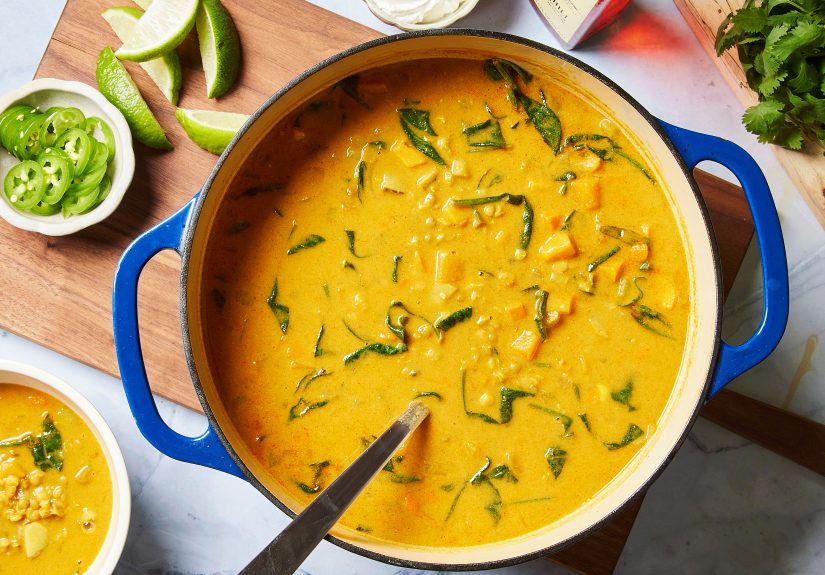
Tomato paste gives the base depth. Vegetable stock brings everything together. Coconut milk softens the edges and adds a gentle richness without making the soup feel heavy. Spinach folds in at the end for color and freshness, while lemon juice wakes up the entire pot like it was hired specifically to keep things from getting too cozy. Optional toppings like cilantro, lime, chile oil, jalapeño, or plant-based sour cream let you steer the soup toward bright, creamy, spicy, or all three at once.
In other words, this is not a sleepy bowl of health food. It is a layered, full-flavored plant-based dinner that just happens to be very good for you.
My First Impression: This Soup Means Business
The Ingredient List Looks Long, But It’s Not Fussy
At first glance, the ingredient list seems ambitious. There are multiple vegetables, two types of lentils, a respectable spice cabinet situation, and enough color to make your cutting board look like it has excellent emotional boundaries. But once you start pulling everything together, the recipe feels more practical than precious. Nothing is bizarre. Nothing requires a specialty store run. And most of the ingredients are exactly the kind of staples that make you feel smug in the produce aisle.
The best part is that the recipe reads like a smart pantry-cooks’ soup. It is generous, not fragile. If your carrots are bigger, it survives. If your squash cubes are imperfect, no one calls the police. If you want to save time with pre-cut vegetables, the soup does not take it personally. This is a very forgiving pot.
The Smell Alone Is Worth Washing the Dutch Oven
The magic moment comes when the spices hit the warm vegetables and oil. Suddenly the kitchen smells earthy, sweet, peppery, and a little smoky. It is the kind of aroma that makes people wander in and ask what’s cooking even if they were not remotely interested five minutes earlier. The coconut milk smooths out the sharper edges, and by the time the lemon goes in at the end, the whole thing smells bright and cozy at once.
That balance is what impressed me most. So many “wellness” recipes come across like they are trying to convince you that restraint is a flavor. This soup is not interested in self-denial. It tastes like dinner, not a lecture.
How It Tastes: Cozy, Bright, and Weirdly Elegant for Lentils
The flavor lands in a sweet spot between comfort food and clean eating. The sweet potato and butternut squash add natural sweetness. The tomato paste and lentils keep it grounded. The cumin and smoked paprika give the broth a savory backbone, while turmeric and ginger bring warmth without overwhelming the bowl. Cinnamon sounds risky until you taste it; then it just feels like the quiet genius in the room.
Texture is where this soup really wins. The green lentils stay firmer, so you get a pleasant chew. The red lentils soften into the broth, adding body and creating that luxurious spoon-coating consistency usually associated with much heavier soups. The spinach keeps it from feeling monotonous, and the lemon cuts through the coconut milk just enough to stop the whole thing from sliding into stew-like excess.
If I had to describe the final result in one sentence, it would be this: it tastes like the kind of soup a person makes when they have their life together, even if they absolutely do not.
Is It Really “Anti-Inflammatory”?
Here is where it helps to lower the marketing fog and keep the bowl. No single soup is a miracle cure, and “anti-inflammatory” is best understood as a style of eating rather than a magic label. That said, this recipe earns the description more honestly than most. It is built around the same kinds of whole, minimally processed foods that show up again and again in anti-inflammatory eating patterns: legumes, vegetables, leafy greens, olive oil, and spices.
Lentils are doing serious work here. They bring plant-based protein and fiber, which help make the soup satisfying rather than flimsy. That matters because the best healthy meals are the ones that actually keep you full long enough to prevent the 9:17 p.m. “accidental snack spiral.” The vegetable mix adds even more fiber, color, and plant compounds, while olive oil contributes the kind of fat commonly associated with Mediterranean-style eating.
Then there are the spices. Turmeric gets the celebrity treatment because of curcumin, its headline compound, but ginger, cinnamon, garlic, and paprika also add useful plant compounds and a lot of flavor. The important nuance is this: turmeric is not pixie dust. It works best as part of a broader eating pattern rich in whole foods. In soup form, that is actually good news, because this recipe already checks a lot of those boxes.
One clever detail is that the soup includes fat from olive oil and coconut milk, plus black pepper. That matters because curcumin is not absorbed especially well on its own, and pairing turmeric with fat and pepper is one of the simplest ways to make it more useful in a real meal. So no, this soup is not medicine in a Dutch oven. But yes, it is a genuinely smart example of a nutrient-dense, anti-inflammatory lentil soup that tastes like something you would want to eat twice in one week.
What I’d Change, What I’d Keep, and What I’d Brag About
What I’d Keep Exactly the Same
I would not mess with the two-lentil strategy. It is the secret weapon of the recipe. Using only green lentils would leave the broth thinner and less plush. Using only red lentils would turn the whole thing softer and less textured. Together, they create the kind of contrast that makes every spoonful feel complete.
I would also keep the lemon juice. It is non-negotiable. Without it, the soup is pleasant. With it, the soup becomes vivid. Citrus is doing the final proofreading here.
What I’d Tweak Next Time
I would go heavier on black pepper and probably finish each bowl with cilantro and lime. A little extra brightness and spice take this from very good to deeply lovable. If you like a bit more heat, chile oil is also a fantastic move. On the practical side, I would absolutely use pre-cut squash again because life is short and butternut squash has never been known for its teamwork.
I might also make a double batch on purpose. This is one of those soups that becomes even better after a night in the fridge, when the flavors settle in and start acting like they have known each other for years.
Why This Soup Works for SEO-Era Home Cooks and Real Humans
There is a reason people keep searching for Pamela Anderson lentil soup, anti-inflammatory soup recipe, vegan lentil soup, and healthy comfort food in the same breath. This recipe sits right at the intersection of those interests. It feels aspirational without being inaccessible. It is plant-based but hearty. It is wellness-friendly without tasting like a compromise. And it has enough texture, color, and topping potential to avoid the usual bean-soup beige tragedy.
For meal prep, it is excellent. For cold nights, even better. For feeding a household that includes both “I want something healthy” people and “I need this to taste like actual dinner” people, it is unusually effective. It is also budget-friendlier than a lot of celebrity food trends, since lentils and root vegetables do not require a trust fund.
Final Verdict: Is Pamela Anderson’s Anti-Inflammatory Lentil Soup Worth It?
Yes, absolutely. Pamela Anderson’s anti-inflammatory lentil soup is worth making because it delivers on the three things that matter most: flavor, comfort, and repeatability. It tastes rich without being heavy, healthy without being grim, and interesting without becoming difficult. It also manages the rare trick of feeling both wholesome and indulgent, which is basically the soup version of having great hair in humid weather.
If you are looking for a cozy vegan lentil soup with anti-inflammatory ingredients, strong meal-prep potential, and enough personality to earn a repeat spot in your rotation, this is a winner. Not because it promises miracles, but because it offers something better: a genuinely satisfying bowl of food that makes everyday cooking feel a little more glamorous and a lot more delicious.
500 More Words on My Experience With Pamela Anderson’s Anti-Inflammatory Lentil Soup
What stayed with me most about this soup was not just the flavor, but the mood of it. Some recipes are transactional. You make them because you need lunch. This one felt more generous than that. From the first chop of onion to the final squeeze of lemon, it had the rhythm of a recipe that expects people to gather around it. Even before I tasted it, I understood why it had become a “welcome” kind of soup. It gives off immediate hospitality. It smells like someone thought ahead.
I also loved that the soup changed as it sat. Fresh off the stove, it was lively and bright, with clearer edges between the sweetness of the vegetables and the warmth of the spices. The next day, it tasted deeper and more settled. The broth thickened slightly, the lentils relaxed into each other, and the lemon seemed woven in rather than perched on top. It became less like a newly made recipe and more like a house specialty.
There was also something satisfying about how visually cheerful it was. Lentil soup does not always win the beauty contest. Let us be honest: some versions look like a beige life choice. This one, however, has color. Orange squash, deep green spinach, golden broth, red lentils, flecks of spice, maybe a little green cilantro or a streak of chile oil on top if you are feeling dramatic. It looks like effort, even when the cooking process itself is straightforward.
As a cooking experience, it hit that sweet spot between mindful and manageable. There is enough chopping to make you feel involved, but not so much that you start reconsidering your values. The simmer time is long enough to build flavor, yet short enough to keep the recipe realistic for a weekday. And because the ingredients are mostly affordable basics, it feels like the kind of dish you can revisit without turning it into a special-occasion project.
Emotionally, this is the kind of soup that makes you want to reset your week. It is impossible to eat a bowl of it while clutching a fast-food receipt and pretending everything is fine. It encourages a different energy. You start thinking maybe you should buy more greens. Maybe you should keep lemons around more often. Maybe meal prep is not a scam invented by people with labeled glass containers. That is a powerful effect for a pot of lentils.
I was especially surprised by how complete the meal felt. Because it is loaded with vegetables, lentils, and coconut milk, it eats like a full dinner rather than a side project. I did not need bread, though a good piece of crusty toast would be welcome. I did not need a salad. I definitely did not need dessert immediately afterward, which is rare in my personal soup history. It satisfied in a calm, steady way instead of in the dramatic “I am stuffed and now I regret my choices” style.
If I made this for guests, I would not apologize for it being vegan. I would simply serve it, set out lime wedges and herbs, and let the soup do the talking. That may be the strongest endorsement I can give. Pamela Anderson’s anti-inflammatory lentil soup is not just good for a healthy soup. It is good, period. And once a recipe clears that bar, it stops being content and starts becoming part of how you actually cook.