Table of Contents >> Show >> Hide
- What Chloe Fineman Said About the Rejected ‘SNL’ Pitch
- Why the ‘Babygirl’ Reference Was So Instantly Understandable
- Why Chalamet Probably Passed Without Turning It Into a Scandal
- The Episode Around the Headline
- Why This Story Worked So Well Online
- The Bigger Lesson: Sometimes the Joke That Dies Tells the Best Story
- Extended Perspective: The Experience Around a Story Like This
- Conclusion
Note: This feature is written in a reported, magazine-style format for web publication and is based on real entertainment coverage available at the time of writing.
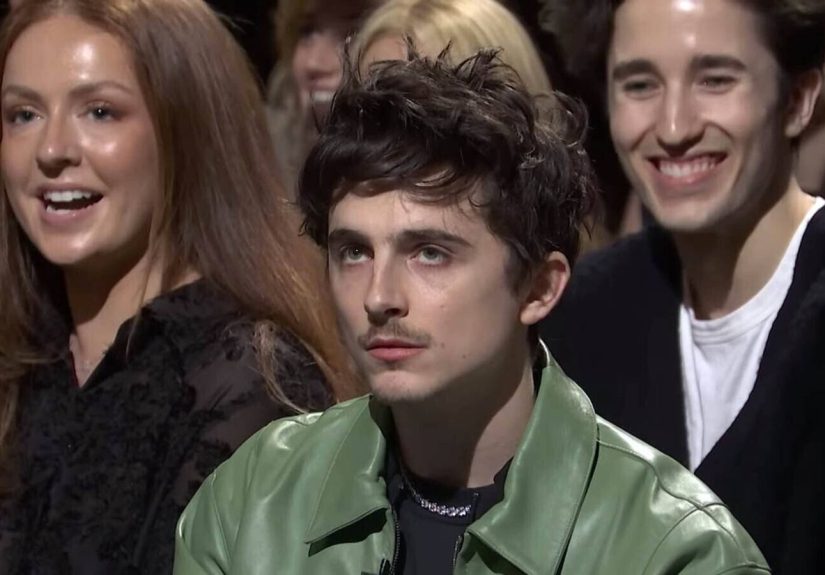
Sometimes the funniest comedy story is not the sketch that made it to air, but the one that died gloriously in the writers’ room. That is exactly why the internet perked up when Chloe Fineman revealed that she once pitched a Babygirl-inspired bit for Timothée Chalamet’s Saturday Night Live episode complete with the now-infamous milk imagery only for Chalamet to politely slam the brakes on it.
It is the kind of behind-the-scenes anecdote pop culture lives for: one part prestige movie reference, one part late-night chaos, and one part “absolutely not, please do not hand me that prop glass.” It also says a lot about where celebrity comedy is right now. Today’s stars are expected to be game, self-aware, meme-literate, and willing to poke fun at themselves but not every joke, even on SNL, clears the final hurdle. Sometimes the funniest move is knowing when a bit would tip from edgy to overcooked.
In this case, Fineman’s story landed because it connected several very online cultural threads at once: Chalamet’s carefully curated but still playful public image, SNL’s constant hunt for topical sketch material, and the oddly towering presence of Babygirl in the awards-season conversation. Add milk to the equation, and suddenly you have the kind of sentence that looks fake until you realize it came from an actual TV star recounting an actual pitch.
What Chloe Fineman Said About the Rejected ‘SNL’ Pitch
The story came from Fineman herself when she discussed Chalamet’s hosting stint and admitted she had floated material that leaned into physical comedy and Babygirl parody territory. Her description was not vague. She said she pitched a version of the two of them “touching,” along with an idea that riffed on Babygirl by having Chalamet “giving” her milk. In other words, she did not pitch subtlety. She pitched chaos in a glass.
According to Fineman, Chalamet was not into what she called that “milk-Babygirl stuff.” That detail matters because it frames the moment not as drama, feud, or diva behavior, but as normal sketch triage. The host heard the idea, weighed the vibe, and passed. In the ecosystem of SNL, that is practically a love language. A lot of ideas get tossed around, some are too weird, some are not weird enough, and some are just weird in the wrong direction for the person standing in the center of the sketch.
Fineman also explained that she did not reprise her now-familiar Timothée Chalamet impression during his episode. That was another juicy little revelation because her impression has been one of her more recognizable celebrity turns. But she suggested that, now that they know each other better, doing it in front of him felt a little awkward. That is a surprisingly human detail in a story that could otherwise be flattened into clickbait. Comedy often looks fearless from the outside, but the mechanics are deeply personal. An impression can feel funny from a distance and suddenly feel weirdly intimate when the real person is ten feet away at Studio 8H.
Why the ‘Babygirl’ Reference Was So Instantly Understandable
Fineman’s pitch was not random. Babygirl, the A24 film starring Nicole Kidman and Harris Dickinson, had already become one of those movies that escapes the theater and enters the cultural group chat. On paper, it is an erotic thriller about power, desire, risk, and a relationship that threatens both personal and professional order. In practice, it also became shorthand for a certain kind of high-gloss, high-tension adult cinema that people could discuss seriously one minute and turn into memes the next.
The milk image in particular took on a life of its own. That is often how pop culture works now: not through full plot summaries, but through one visual, one gesture, one line, one prop that stands in for an entire movie’s mood. For Babygirl, milk became less of a beverage and more of a branded emotional weather system. Mention it, and anyone who had seen the trailer, read a review, or spent five minutes online knew the tone you were aiming for.
That is what made Fineman’s idea so obvious from a comedy standpoint. SNL loves references that do not require a ten-minute explanation. If a movie already has one instantly recognizable, slightly absurd, highly discussable symbol attached to it, then congratulations: it is halfway to becoming sketch bait. A topical comedy writer sees that and thinks, “Yes, this can be a bit.” A host, meanwhile, may look at the same concept and think, “Yes, and maybe no.”
It Was Also an Awards-Season Moment
Timing made the story even better. Chalamet’s January 2025 SNL appearance came while he was in the thick of a major awards-season wave for A Complete Unknown, the Bob Dylan film that helped put him back at the center of the prestige conversation. That meant his episode already had a specific kind of spotlight on it. He was not just another host parachuting in to wear wigs and read cue cards. He was a serious awards contender doing double duty as both host and musical guest.
That context does not mean he was avoiding risk altogether. Quite the opposite. Taking on hosting and musical performances in the same episode is already a flex. But it does help explain why a hyper-specific, sexually charged movie parody involving milk may have felt like a detour from the version of the night he wanted to build. When someone is promoting a Bob Dylan performance arc and sitting in the Oscar conversation, they may not want the weekend headline to become “Actor Accepts Dairy-Based Dominance Bit on Live TV.” Understandable! Very understandable!
Why Chalamet Probably Passed Without Turning It Into a Scandal
There is a temptation in celebrity coverage to treat every rejected idea as evidence of tension. That is probably the least interesting reading here. A better interpretation is that Chalamet simply understood tone. The man has shown up for weird comedy before. He has hosted SNL multiple times, leaned into self-parody, and shown that he is not allergic to looking ridiculous. So the fact that he declined this one specific idea does not suggest he is humorless. It suggests he has a line, or at least a vibe filter, and the milk scene wandered past it.
That is usually how good hosts operate. They are not just asking, “Is this funny?” They are asking, “Is this funny for me, tonight, in this exact episode, with this exact cultural baggage attached?” A joke can be clever and still be wrong for the occasion. In fact, some of the sharpest comedy instincts come from knowing which material will distract from everything else you are trying to do.
There is also something refreshingly old-school about this. For all the internet’s obsession with limitless irony, mainstream live television still depends on calibration. A host can be daring without being chaotic. A sketch can be topical without becoming the only thing anyone remembers. Chalamet’s decision reads less like a refusal and more like editing. And editing, while not sexy, is often what separates a memorable episode from a lopsided one.
The Episode Around the Headline
Chalamet’s January 25, 2025, SNL episode already had plenty going for it without a dairy detour. He returned for his third time as host and took on musical guest duties as well, making the night feel more like an event than a standard promotional stop. That dual-role setup invited a lot of attention because it played directly into his A Complete Unknown momentum and let him bring Bob Dylan material into the show’s musical space.
That matters because one of the reasons this rejected pitch story spread so quickly is that it created a fun contrast. Here was Chalamet, appearing polished, in-demand, and award-adjacent, while the backstage reality was apparently Fineman trying to coax him into a bizarrely sensual Babygirl riff. It is the collision between polish and nonsense that makes SNL lore so delicious. One side is prestige. The other side is, “What if there were milk?”
Fineman, for her part, has long been one of the cast’s most agile celebrity impressionists, and her Chalamet take already had a built-in fan base. That added another layer to the whole story. The audience was not only curious about what got rejected; they were also curious about what did not happen even though it seemed obvious, like seeing her impersonate him while he was right there. Instead, the night became a reminder that live comedy is full of invisible decisions. What viewers get is the polished version. What they do not get is a graveyard of almost-sketches that may be just as entertaining in retrospect.
Why This Story Worked So Well Online
Some celebrity stories go viral because they are shocking. Others take off because they are oddly specific. This one belonged in the second category. “Timothée Chalamet declined a Babygirl milk bit on SNL” sounds like a sentence engineered in a lab to perform well in group chats, on social feeds, and in workplace Slack channels where people are pretending to discuss deliverables but are actually forwarding entertainment links.
It also worked because it let everyone project a different meaning onto it. Fans of Chalamet could read it as proof that he is savvy. Fans of Fineman could read it as proof that she is fearless and funny. SNL devotees could read it as another behind-the-curtain reminder that the writing process is messy and full of dead ends. And movie people could read it as further confirmation that Babygirl had become bigger than the film itself a floating signifier for a whole tone, a whole mood, a whole style of adult prestige weirdness.
In short, the anecdote had range. It was entertainment news, comedy gossip, movie discourse, and internet shorthand all at once. No wonder it stuck.
The Bigger Lesson: Sometimes the Joke That Dies Tells the Best Story
There is a reason backstage stories from shows like SNL tend to live forever. They reveal the almost-version of pop culture the draft hidden behind the final draft. And that almost-version is often irresistible because it gives fans permission to imagine the alternate universe where the sketch did happen, the bit did air, and everyone woke up the next morning wondering why Timothée Chalamet was involved in the most discussed glass of milk on television.
But maybe the better outcome was the one we got. Instead of a sketch that might have been funny for six minutes and forgotten by lunch, we got a compact, weirdly elegant little anecdote about taste, timing, and comic instinct. Fineman came off bold. Chalamet came off selective. Babygirl came off culturally unavoidable. And the rest of us got to enjoy the image of a major movie star hearing a pitch, thinking for one beat, and deciding that maybe this particular dairy journey was not for him.
Extended Perspective: The Experience Around a Story Like This
Stories like this resonate because they tap into a familiar experience that goes way beyond celebrity culture: everyone has watched an idea sound brilliant in the room and then collapse the second it met a real person’s face. That is part of why the Chalamet-Fineman anecdote feels so relatable beneath the glamour. Strip away the famous names, the iconic studio, and the awards-season sparkle, and what you have is a classic creative moment. One person throws out a bold, hilarious, risky concept. Another person says, more or less, “I hear you, and absolutely not.” That rhythm exists in comedy rooms, classrooms, offices, family group chats, and badly organized wedding-planning sessions everywhere.
There is also the audience experience to consider. Modern pop culture fans do not just watch a show anymore; they watch the show, the reaction clips, the interviews after the show, the outtakes, the behind-the-scenes stories, and the social media breakdowns of what almost happened. In many cases, the “afterlife” of a piece of entertainment becomes as important as the thing itself. The rejected milk sketch is a perfect example. It never aired, yet it became its own mini event because people could instantly imagine it. In some ways, imagination is stronger than execution. Once fans hear a premise like that, they create their own version in their heads and those homemade versions are often funnier, stranger, and more chaotic than anything that would have made it through dress rehearsal.
Then there is the experience of watching a meme-ready movie collide with a meme-ready celebrity. Chalamet has spent years occupying a rare lane where prestige acting, internet fascination, and self-aware celebrity all overlap. Babygirl, meanwhile, arrived as exactly the kind of movie that inspires both real criticism and unhinged online discourse. Put those two forces in one sentence, and the public response is almost automatic. People do not just react to the story; they react to the collision of brand identities. Chalamet stands for one flavor of cultural cool. Babygirl stands for another. The idea of combining them on SNL is funny before anyone even writes a punchline.
There is a final layer that makes the story linger: it reminds people that restraint can be funny too. In internet culture, bigger is often treated as better. More shocking, more explicit, more chaotic, more “did they really just do that?” But sometimes the better story is the one where someone exercises judgment. Chalamet passing on the bit did not kill the humor. It created a different kind of humor a negative-space joke, if you will. The audience laughs not because they saw the milk sketch, but because they now know the milk sketch almost existed. That tiny bit of absence becomes the punchline.
And honestly, that is a very SNL kind of experience. The show has always thrived not just on what airs, but on myth. Fans trade stories about bombed dress sketches, celebrity hosts who surprised the cast, jokes that were cut, and moments that almost happened. That mythology keeps the show alive between episodes. In that sense, Fineman’s anecdote did exactly what great SNL lore is supposed to do: it expanded the world of the episode after the credits rolled. Viewers were no longer just remembering what Chalamet did onstage. They were imagining the one thing he refused to do and laughing even harder because they never got to see it.
Conclusion
Timothée Chalamet vetoing Chloe Fineman’s Babygirl-inspired milk scene on SNL is one of those entertainment stories that seems tiny on paper but revealing in practice. It says something about celebrity image management, something about the weird alchemy of live sketch comedy, and a lot about how modern pop culture feeds on the stories that happen just off camera.
More than anything, it is funny because it feels true to everybody involved. Fineman was inventive enough to pitch it. Chalamet was strategic enough to decline it. SNL was chaotic enough for the idea to exist in the first place. And the internet was very online enough to make sure the rejected sketch had a second life anyway.