Table of Contents >> Show >> Hide
- Why Summer Feels Like Heath’s Native Season
- The California Story Baked Into Every Piece
- What Summer Looks Like at Heath Today
- The Summer Palette: Fruit, Sand, Shade, and Field Notes
- Setting the Table, Heath Style
- Tile, Texture, and the Architecture of Summer
- Why Designers and Design Lovers Keep Coming Back
- Sustainability That Actually Means Something
- A Summer Day at Heath, Real or Imagined
- Experiences Related to “Summer at Heath Ceramics”
- Conclusion
- SEO Tags
Some brands feel like seasons. Heath Ceramics feels like summer in California.
Not the loud, inflatable-flamingo version of summer, either. Heath’s version is slower, saltier, and far better dressed. It is the clink of handmade plates at an outdoor dinner as the light turns gold. It is a table that looks relaxed but suspiciously well-composed. It is peaches on a matte-glazed platter, grilled vegetables on a coupe plate, and one very attractive pitcher behaving as if it has always belonged to your family. In a design world that often confuses “new” with “better,” Heath Ceramics continues to make a convincing case for objects that age well, work hard, and never need to shout.
That is what makes “Summer at Heath Ceramics” such a rich idea. It is not just about seasonal products or a warm-weather color palette. It is about a whole atmosphere: California modernism, human-scale manufacturing, outdoor meals, tactile surfaces, and the kind of domestic beauty that feels lived in rather than staged by a stylist who panics at breadcrumbs. Heath has spent decades shaping that atmosphere, and summer may be when it all clicks most clearly.
Why Summer Feels Like Heath’s Native Season
Heath Ceramics has always been tied to the California landscape. From the beginning, the company’s dinnerware and tile drew power from earthy forms, restrained silhouettes, and glazes that seem to borrow directly from coastlines, dry hillsides, fog, stone, and gardens. That connection becomes especially vivid in summer, when the boundaries between indoors and outdoors blur and every meal starts lobbying to be eaten outside.
In summer, Heath’s design language makes immediate sense. The pieces are durable enough for daily use, refined enough for guests, and calm enough to let food, flowers, and conversation do their thing. A Heath table never feels overdressed. It feels ready. That is a surprisingly difficult achievement. Plenty of tableware wants to be admired from a respectful distance. Heath wants to be passed, stacked, washed, and used again tomorrow.
The California Story Baked Into Every Piece
Edith Heath and the art of useful beauty
To understand summer at Heath Ceramics, you have to start with Edith Heath, the pioneering ceramicist who founded the company with her husband Brian Heath in 1948. Edith was not interested in fussy luxury. She was interested in modern living, honest materials, and the beauty of things made well enough to become part of everyday life. That philosophy still anchors the brand today.
Her work helped define a distinctly American, and specifically Californian, approach to ceramics: modern but warm, sculptural but practical, sophisticated without being precious. Long before “quiet luxury” became a phrase people used to justify spending too much on beige, Edith Heath was already making objects that proved restraint could be deeply expressive. The forms were simple. The surfaces carried the poetry.
That legacy still matters because Heath did not become important merely by surviving. It became important by continuing to matter. Museums and design institutions have recognized Edith Heath’s significance, and the company remains one of the clearest links between midcentury American design and contemporary craft-driven manufacturing. That continuity gives Heath a special kind of summer charm: it feels timeless without feeling frozen in amber.
A factory that still feels like a factory
In Sausalito, Heath’s original 1959 factory remains the place where its dinnerware is still made start to finish. That matters more than it may seem. In an era when “crafted” can mean “someone approved the packaging,” Heath still connects design to production in a visible, physical way. Clay is formed, glazed, trimmed, and fired by real people in a real place, and that honesty gives the brand its weight.
Summer only heightens the appeal of that setting. Sausalito already has the ingredients of a cinematic Bay Area day: marine light, artist energy, breezy streets, and the sense that lunch should probably involve good bread. Heath’s factory fits naturally into that world. It does not feel like a lifestyle fantasy built last Tuesday. It feels established, worn in, and quietly confident.
What Summer Looks Like at Heath Today
Sausalito: where the plates begin
If summer at Heath has a spiritual headquarters, it is Sausalito. The original factory is not just a production site; it is a mood board you can walk through. Light-filled spaces, handmade dinnerware, courtyard calm, and a sense of continuity all make the place feel less like a store and more like a design ecosystem. This is where the brand’s values become visible: resourcefulness, clarity, craftsmanship, and a preference for permanence over hype.
That visibility matters because Heath has never sold only objects. It sells a worldview in which everyday routines deserve aesthetic care. Summer happens to be the season when that worldview gets its annual standing ovation. Suddenly everyone wants to set the table nicely, linger over tomatoes, host friends, rearrange the patio, and act as if a ceramic pitcher might fix their life. Heath is very good at encouraging that hope without becoming corny.
San Francisco: the creative heart of the operation
Then there is Heath San Francisco in the Mission District, a campus-like space that expands the idea of what a ceramics company can be. The tile factory sits at the center of a larger creative environment that includes a showroom, the Clay Studio, a newsstand, designer studios, and food-oriented gathering spaces. In other words, it is not just where products are displayed. It is where craft, community, and conversation are allowed to collide in broad daylight.
That makes summer at Heath feel social as well as visual. Factory tours, workshops, studio visits, and the surrounding creative energy all support the idea that design is not a sealed luxury category. It is part of everyday culture. You can see it in a backsplash, in a coffee cup, in a communal table, in a well-fired tile wall that catches afternoon light like it planned ahead.
The Summer Palette: Fruit, Sand, Shade, and Field Notes
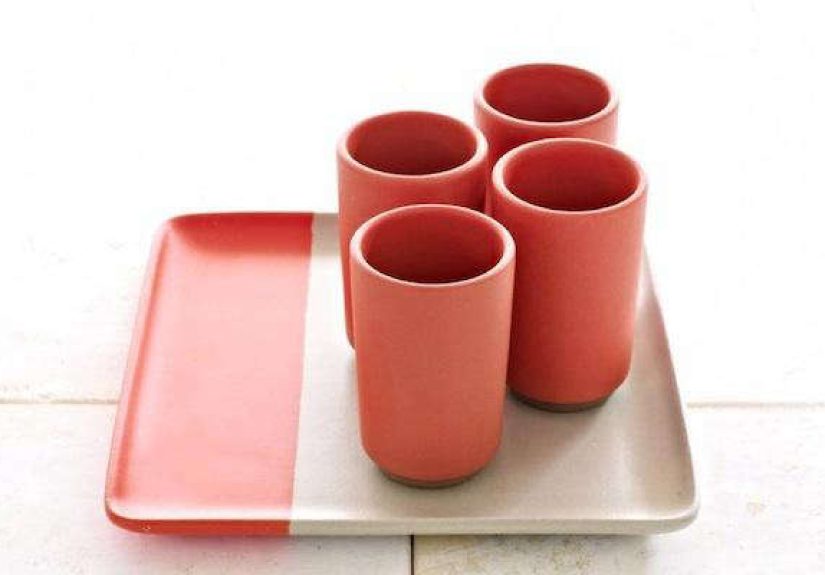
Heath’s seasonal collections help explain why the brand feels so at home in summer. The company has framed recent summer releases around ideas that are sensory rather than merely commercial. One collection leaned into high-summer stone fruit, warm sand, flowers, and emerald greens. Another connected new glazes with archival techniques, linking fresh experimentation to 75 years of design history. More recently, Heath’s summer storytelling has focused on evening meals, gathering, and the small rituals around cooking and hosting.
That approach is smart because it treats a seasonal collection as an atmosphere rather than a trend dump. Heath does not seem interested in making summer look loud or disposable. It makes summer look layered: ripe but calm, bright but grounded, polished but deeply usable. The glazes may shift, but the emotional effect stays consistent. You get pieces that feel seasonal without becoming stranded in one season.
This is also where Heath’s color intelligence really shows off. Summer palettes elsewhere can become exhausting, all citrus and chaos. Heath tends to work more like a landscape painter. It understands that muted tones can still feel alive, and that contrast works better when it is handled with restraint. Put another way, Heath knows when to let a green be a green and when to let a neutral quietly steal the show.
Setting the Table, Heath Style
A summer table at Heath Ceramics is not about perfection. It is about ease with standards. The plates stack beautifully, the bowls feel satisfying in the hand, and the overall effect lands somewhere between “I casually threw this together” and “I absolutely thought about the napkins.” That balance is a large part of the brand’s appeal.
Heath has long been associated with food culture as much as design culture, and that makes perfect sense. Good ceramics change the experience of a meal. A shallow bowl can make pasta or stone fruit feel more abundant. A matte plate can flatter grilled fish better than glossy white ever will. A sturdy mug can turn iced coffee, tea, or morning leftovers into something oddly ceremonial. The point is not that ceramics replace good cooking. The point is that they honor it.
That connection between food and form also explains the lasting appeal of Heath collaborations, including pieces associated with Alice Waters and the Chez Panisse world. Heath understands what many tableware companies miss: food is sensual, seasonal, and social, and the objects around it should support that energy rather than fight for attention like needy dinner guests.
Tile, Texture, and the Architecture of Summer
Heath may be famous for dinnerware, but summer at Heath is also about tile. In fact, tile may be where the brand’s influence becomes most architectural. Designers have praised Heath tile for its hand-applied glazes, dimensional quality, and ability to catch light in a way that feels richly tactile. That quality is especially powerful in summer interiors, when light lingers longer and surfaces work harder.
A Heath tile wall can do something subtle but transformative: it gives a room temperature, rhythm, and depth. In kitchens, baths, patios, bar areas, and fireplaces, the tile turns utility into atmosphere. Remodelista has noted how Heath helped push tile from a mostly functional material into a major design element, and that shift says a lot about the company’s broader cultural role. Heath did not just make attractive surfaces. It helped teach people to notice them.
Summer amplifies that lesson. At this time of year, homes become more porous. Doors open. Meals stretch. Guests drift toward the kitchen and somehow stay there forever. Surfaces become part of the performance. A backsplash, a tiled table, or a glazed wall does more than sit there politely; it becomes part of the season’s visual memory.
Why Designers and Design Lovers Keep Coming Back
Heath Ceramics occupies a rare position in American design. It appeals to serious design institutions, museum curators, architects, chefs, homeowners, collectors, and people who simply want a bowl that makes salad feel more convincing. That range is not accidental. Heath works because it bridges categories that are too often separated: craft and manufacturing, heritage and relevance, utility and beauty.
Even now, the brand’s appeal is not nostalgia alone. Yes, there is reverence for Edith Heath, the original factory, and the midcentury legacy. But there is also ongoing invention, from Clay Studio experimentation to new collections, evolving glazes, public programs, and collaborations. That is the secret sauce. Or glaze. Probably glaze.
Summer at Heath Ceramics, then, is not a retro fantasy. It is the annual reminder that some design values do not expire: make things honestly, let materials speak, build for real life, and trust that people can tell the difference between something meaningful and something merely photogenic.
Sustainability That Actually Means Something
It would be easy to write a generic paragraph here about sustainability and call it a day, but Heath gives you more to work with than the usual buzzwords. The company’s environmental practices are tied to manufacturing decisions, not just marketing language. Heath has highlighted its lower-heat clay body, water-recycling systems, reuse of clay in production, and serious waste-diversion efforts. It has also formalized those values through B Corp certification, reinforcing that the company wants accountability, not just applause.
That matters for summer because the season tends to sharpen our attention to place. We notice what is local, what lasts, what gets wasted, and what belongs in a slower domestic rhythm. Heath’s emphasis on durability, repairable aesthetic value, and responsible production feels particularly resonant in that context. The objects are made to stay in your life. That, frankly, is more romantic than disposable trend culture has ever managed to be.
A Summer Day at Heath, Real or Imagined
Imagine a summer morning starting in Sausalito. The air is mild, the light is soft, and the factory feels both historic and very much alive. You step inside and instantly want to become the sort of person who casually knows glaze terminology. From there, perhaps you drift toward the seconds area, where the thrill of finding slightly imperfect beauty feels strangely triumphant. You tell yourself you are “just looking.” This is adorable.
By lunch, the day has become fully Heath-coded. Maybe it is coffee, bread, or a long meal nearby. Maybe you head into San Francisco, where the Mission space turns the brand into something larger than retail. There is tile, design conversation, studio energy, and the quiet seduction of objects that appear modest until you realize you want to touch every single one. By evening, you are home thinking about outdoor dinners, olive oil, sliced nectarines, and whether your current plates are bringing enough emotional support to the table.
That is the real success of Heath Ceramics in summer. It does not merely sell things. It sharpens desire for a certain kind of life: tactile, generous, unhurried, design-aware, and grounded in the pleasures of daily rituals. It makes ordinary moments feel worth styling, but never sterile. That is a difficult line to walk. Heath walks it in very good shoes.
Experiences Related to “Summer at Heath Ceramics”
Summer at Heath Ceramics is not just a design theme; it is an experience made up of dozens of small sensory moments. You feel it when your hand wraps around a mug that has a little more weight than expected, when a matte plate turns a simple tomato sandwich into a still life, or when a row of tiles catches late-afternoon light and suddenly makes you care more about grout lines than any normal person should. Heath has a talent for making daily life feel ceremonial without becoming stiff, and that talent is especially vivid in warm weather.
One of the most memorable summer experiences tied to Heath is visiting Sausalito, where the original factory makes the whole brand feel real in an age of digital make-believe. A summer trip there can feel almost suspiciously cinematic: blue water nearby, marine air drifting around corners, sunlight bright enough to sharpen edges, and then the calm of the showroom itself. You see stacks of plates and bowls that look simple at first glance, but the longer you linger, the more the details reveal themselves. The rim thickness matters. The glaze depth matters. The curve of a bowl matters. Before long, you are emotionally invested in a cereal bowl, which is either excellent design or a cry for help.
Another distinct summer experience is the Heath San Francisco campus, where ceramics become part of a broader creative landscape. The appeal is not only visual. It is rhythmic. People move through the space with intention. There is the energy of making, browsing, meeting, tasting, and discovering. In summer, that atmosphere feels especially alive because the season encourages wandering. You are more willing to spend an hour looking at tile, another hour debating whether you need a serving platter, and an additional half hour pretending you are not building an entirely new identity around handmade objects.
Then there is the experience of bringing Heath home for summer use, which may be the most important one of all. This is where the brand stops being aspirational and starts becoming intimate. A Heath platter at a backyard dinner does not need to announce itself. It simply makes the peaches look richer, the grilled corn look sunnier, and the burrata look like it finally found its purpose. A stack of coupe plates on an outdoor table can make even takeout feel intentional. That is one of Heath’s quiet superpowers: it improves the texture of daily life without demanding a performance from the people living it.
Summer hosting is another place where Heath shines. The pieces invite mixing rather than matching, layering rather than fussing, and that creates a more relaxed but still beautifully designed table. You can imagine long dinners stretching into dusk, glasses sweating politely in the heat, someone reaching for another spoonful of salad, and the ceramics grounding the whole scene. Not dominating it. Grounding it. That difference matters. The best summer gatherings are not built on perfection; they are built on ease, generosity, and a setting that quietly supports both.
There is also a more reflective summer experience associated with Heath: the pleasure of slowing down enough to notice materials. In colder months, we often think about comfort in terms of textiles and lighting. In summer, surfaces take over. Clay, glaze, stone, linen, wood, and water all become more present. Heath’s objects reward that attention. They encourage you to notice coolness, warmth, texture, finish, and weight. They remind you that a home is not only something you see. It is something you touch all day long.
In the end, the most lasting experience of summer at Heath Ceramics may be this: the brand makes you want to live a little better, not louder. Cook one more meal at home. Invite two more people over. Set the table even when nobody is coming. Buy fewer things, but buy ones you will still want in ten summers. That is a lovely ambition for any season. In summer, it feels exactly right.
Conclusion
Summer at Heath Ceramics is ultimately about more than pretty plates and photogenic tile. It is about a design philosophy that turns everyday routines into meaningful rituals. Through Edith Heath’s legacy, the living factories in Sausalito and San Francisco, thoughtfully seasonal collections, and a commitment to craft that still feels refreshingly sincere, Heath continues to define a very particular kind of American domestic beauty.
It is a beauty built for use. For meals. For gatherings. For kitchens that actually cook and tables that actually host. In summer, those values become impossible to miss. Heath Ceramics looks like California, feels like permanence, and serves as a reminder that the best design does not just decorate life. It deepens it.