Table of Contents >> Show >> Hide
- Who Is Joseph Nowak and Why Are His One-Panel Comics Everywhere?
- Why One-Panel Comics Still Work So Well
- 20 Humorous One-Panel Comic Styles You’ll Notice in Joseph Nowak’s Work
- 1) Everyday Scene, Wild Outcome
- 2) Visual Reversal
- 3) Silly Animal Logic
- 4) Cute Meets Dark
- 5) Pop Culture Remixes
- 6) One Perfect Visual Detail
- 7) Clean Composition, Fast Read
- 8) Caption and Image Working Together
- 9) The “Wait… What?” Beat
- 10) Human Problems in Nonhuman Bodies
- 11) Absurd Escalation
- 12) Friendly Weirdness
- 13) Minimal Setup, Maximum Payoff
- 14) Rewatch Value
- 15) Meme-Friendly but Not Disposable
- 16) “Silly” as a Serious Creative Choice
- 17) Universal Readability
- 18) Tiny Existential Shock
- 19) The “I Wish I’d Thought of That” Effect
- 20) Consistency Without Repetition
- What Joseph Nowak’s Comics Teach Us About Humor and Visual Storytelling
- Reader Experience: Why These 20 One-Panel Comics Stick With You (Extended Reflection)
- Conclusion
If your brain has been running on 47 open tabs and one suspiciously weak cup of coffee, Joseph Nowak’s one-panel comics are exactly the kind of chaos you need. They’re quick, weird, and oddly elegantlike a tiny comedy sketch that somehow fits into a single frame and still leaves room for a punchline. One second you’re looking at a familiar scene, and the next second your mind gets yanked sideways by an absurd twist. It’s the visual equivalent of stepping on a LEGO and then realizing the LEGO was the one wearing shoes.
Nowak’s work has built a strong online following because it does something a lot of humor misses: it surprises you and feels simple. The setup is clean. The image is clear. The joke lands fast. But underneath the silliness, there’s sharp comic timing and a strong grasp of how people read images. That’s why these single-panel comics are so bingeableyou can scroll through twenty and still want “just one more” like it’s a snack and not a cartoon.
In this article, we’ll look at what makes Joseph Nowak’s one-panel comics so funny, why this format still works so well in the internet era, and what readers can learn from the way he builds humor in one frame. We’ll also break down 20 comic styles/themes you’ll notice in his work, so you can appreciate the craft behind the chaosnot just the laugh.
Who Is Joseph Nowak and Why Are His One-Panel Comics Everywhere?
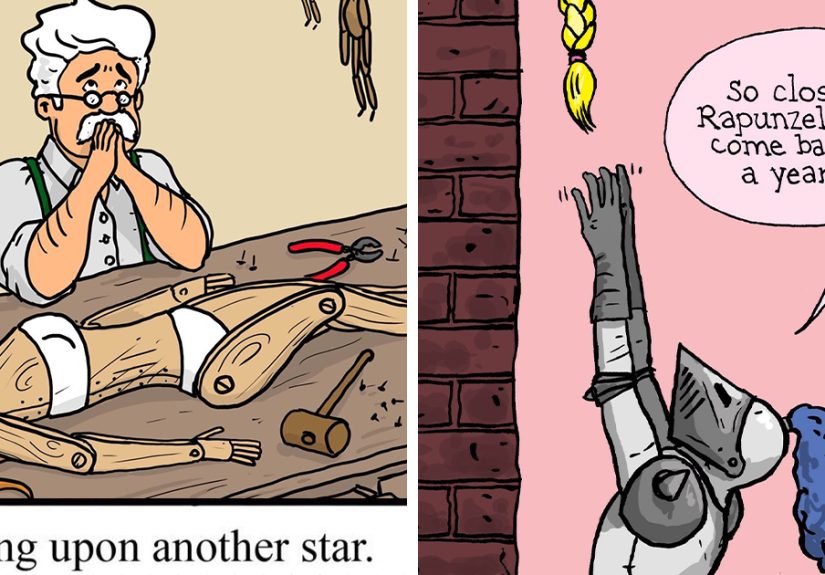
Joseph Nowak is a Canadian illustrator based in Berlin, and his work is widely recognized for absurd, unpredictable single-panel comics. Multiple published profiles describe his cartoons as witty, silly, and twist-heavy, with a strong online audience that keeps coming back for more. In short: he has mastered the art of making a normal scene go gloriously off the rails in one frame.
One reason his style feels so polished is that he has treated cartooning like a long-term practice. In interviews, he explained that he had been drawing since childhood, stepped away from art for several years, then returned to it after working a repetitive job where he started writing down single-panel ideas. He later shared that he posted his first cartoon in 2013 and has treated cartooning as a near-daily exercise since then. That consistency showshis visual language is clean, confident, and built for punchlines.
Nowak has also talked about the kinds of ideas he gravitates toward: animals, death, and generally “silly” scenarios where normal logic is bent just enough to become hilarious. He’s also cited influences like Dan Piraro, Mœbius, and Hergé, which makes sense when you look at the balance in his work: bold concept, readable composition, and a style that stays expressive without getting cluttered.
Why One-Panel Comics Still Work So Well
Single-panel humor is not some random internet trend. It has deep roots. American gag cartoons have long been a major part of print culture, and institutions like the Library of Congress and the National Cartoonists Society treat gag/single-panel cartooning as a serious and influential branch of cartoon art. In other words, the one-panel comic has been making people laugh (and think) for a very long timeand it’s still evolving.
What makes the format so powerful is efficiency. A one-panel comic has no warm-up lap. There’s no scene one, no panel two, no “to be continued.” The image and the idea arrive together. The reader has to process the visual setup and the joke at the same time, which creates that delightful split-second delay where your brain catches up and goes, “Oh no… that’s brilliant.”
Researchers and humor experts often describe comedy through ideas like incongruity (something unexpected) and “benign violation” (something feels wrong, but in a safe/funny way). That framework fits Nowak’s work especially well. He often takes an ordinary momentshopping, relationships, animals, pop cultureand introduces a twist that feels bizarre but harmless. The result is surprise without confusion, and weirdness without losing the joke.
There’s also a social reason these comics travel so well online: they’re easy to share. You don’t need a five-minute setup. You don’t need context from episode one. You can send one to a friend with “this is so you” and instantly start a conversation. That’s the sweet spot for modern humorfast, visual, and socially portable.
20 Humorous One-Panel Comic Styles You’ll Notice in Joseph Nowak’s Work
Instead of just saying “these comics are funny” twenty times in a row (tempting, but lazy), let’s break down the 20 recurring humor moves that make Joseph Nowak’s one-panel comics so addictive.
1) Everyday Scene, Wild Outcome
Nowak loves starting with a normal setupsomething that looks like it belongs in a grocery store, office, sidewalk, or living roomand then flipping it into absurdity. This contrast is the engine of many of his best jokes.
2) Visual Reversal
A classic Nowak trick is reversal: the expected roles get swapped. Humans act like props, animals become the “normal” ones, or objects behave like they’re in charge. Your brain recognizes the pattern first, then laughs at the inversion.
3) Silly Animal Logic
He has openly said animals are a recurring theme, and you can see why. Animal bodies are already weird in the best waylong necks, too many legs, beaks, hooves, tailsso they’re perfect for visual comedy. Nowak pushes that natural weirdness one step further.
4) Cute Meets Dark
Another recurring Nowak ingredient is dark humor, especially through the personification of death. But the tone usually stays playful, not bleak. It’s the kind of joke that makes you laugh and then quietly ask yourself why you laughed so hard.
5) Pop Culture Remixes
From iconic characters to familiar references, Nowak often reimagines pop culture in absurd one-panel situations. These jokes work because the audience already knows the source material, so the comic can get to the punchline faster.
6) One Perfect Visual Detail
Many of his strongest comics hinge on one tiny detail in the image: an expression, a prop, a label, a body position. If you miss it, the joke is still funny. If you catch it, the joke becomes even better.
7) Clean Composition, Fast Read
Nowak’s panels are easy to read quickly. That matters. A crowded one-panel comic dies before the punchline lands. His clean layout lets your eyes find the joke without traffic.
8) Caption and Image Working Together
Even when the visual is doing most of the work, the caption/dialogue usually adds a second layer. It’s not there to explain the jokeit sharpens it. That’s a hallmark of strong gag cartooning.
9) The “Wait… What?” Beat
Great one-panel comics often produce a tiny delay before the laugh. Nowak uses this beat constantly. You scan the image, something seems off, then the logic snaps into place. That split-second recognition is part of the fun.
10) Human Problems in Nonhuman Bodies
Robots, skeletons, animals, objectsNowak gives them recognizably human problems. Relationships, social awkwardness, existential dread, petty drama. It’s funny because it’s relatable, even when the characters are not technically alive.
11) Absurd Escalation
Sometimes the comic starts weird and still escalates. The premise is already silly, then one extra detail pushes it into “I can’t believe this works” territory. That extra push is where a good gag becomes a memorable one.
12) Friendly Weirdness
There’s a big difference between random and intentional. Nowak’s humor is weird, but it’s readable. You can tell he’s not just throwing nonsense at the wallhe’s building comic logic, just in a crooked universe.
13) Minimal Setup, Maximum Payoff
This is the one-panel superpower. With one image and a small amount of text, he gets a full comedic arc: setup, twist, reaction. That’s efficient writing and efficient drawing working together.
14) Rewatch Value
Yes, comics can have replay value. A lot of Nowak’s strips are funnier the second time because you notice background details, visual clues, or a subtle expression that supports the punchline.
15) Meme-Friendly but Not Disposable
His comics share easily like memes, but they don’t feel throwaway. They still read like crafted cartoons. That balance is hard to pull off, and it’s part of why his work stands out in crowded feeds.
16) “Silly” as a Serious Creative Choice
Nowak has described his content as “silly,” and that’s actually a smart artistic discipline. Silly doesn’t mean shallow. It means playful, flexible, and open to surprise. In comedy, that’s often where the best ideas live.
17) Universal Readability
A strong visual joke crosses borders more easily than text-heavy humor. Because Nowak’s comics are highly visual and quick to decode, they work well for international audiences scrolling online.
18) Tiny Existential Shock
Some jokes feel like pure nonsense. Others sneak in a little existential stingabout mortality, awkwardness, identity, or modern life. Nowak often manages both at once, which is a neat trick.
19) The “I Wish I’d Thought of That” Effect
Many great one-panel comics trigger a very specific reaction: admiration disguised as jealousy. The premise feels obvious after you see it. That’s usually a sign the creator found a genuinely strong gag.
20) Consistency Without Repetition
Even across large batches of comics, Nowak’s style stays recognizable without feeling repetitive. The voice is consistent, but the scenarios keep changing. That’s what turns a comic artist into a creator people actively follow.
What Joseph Nowak’s Comics Teach Us About Humor and Visual Storytelling
If you write, draw, design, or create anything online, Joseph Nowak’s one-panel comics are a masterclass in clarity. They prove that humor doesn’t need complexity to feel smart. In fact, the cleaner the setup, the stronger the punchline often becomes.
They also highlight something psychology and humor research keep pointing to: we laugh when expectations are broken in a way that still feels safe and understandable. That’s exactly what these comics do. They create surprise, but they never lose the reader. Even the darkest jokes are framed playfully enough to stay “benign” rather than mean-spirited.
And maybe most importantly, they remind us that absurdity is not the opposite of insight. A weird joke can still say something true about how people think, how we communicate, or how ridiculous daily life already is before a cartoonist even touches it. Sometimes a one-panel comic says more in five seconds than a long think-piece says in 2,000 words. (No offense to long think-pieces. I’m literally writing one.)
Reader Experience: Why These 20 One-Panel Comics Stick With You (Extended Reflection)
There’s a very specific experience that happens when you scroll through a strong set of one-panel comics like Joseph Nowak’s: your laugh changes shape. The first few jokes usually get a quick reactionan immediate grin, a short laugh, maybe a snort if the joke catches you off guard. But as you keep going, you start to recognize the rhythm of the artist’s thinking. You don’t know the exact punchline yet, but you begin to trust that a twist is coming. That trust makes the reading experience more fun, not less, because each new panel becomes a tiny challenge: “Okay, where is he taking this one?”
Another thing readers often experience is the “double laugh.” The first laugh comes from the surprise. The second comes a second later, when the brain fully processes the visual logic. This happens a lot in Nowak’s work because the jokes are image-driven. You’re not just reading a line; you’re decoding a scene. A facial expression, a prop in the corner, or a visual reversal suddenly clicks, and the joke gets funnier on re-read. That layered effect is one reason his comics feel more satisfying than quick throwaway internet humor.
There’s also a social experience to these comics that’s easy to underestimate. One-panel comics are made for sharing, and Nowak’s are especially good at it. You can drop one into a group chat and instantly get reactions from different people for different reasons. One friend laughs at the absurd image. Another laughs at the dark undertone. Someone else sends back “this is exactly my sense of humor” like they’ve been waiting their whole life to be understood by a cartoon skeleton. In that sense, these comics become conversation starters, not just content.
For aspiring creators, the experience is a little differentbut equally valuable. Reading a batch of Nowak’s comics can feel like a mini workshop in comic construction. You start noticing how little he needs to make a joke work. The backgrounds are only as detailed as necessary. The text is short. The composition points you toward the gag without making a big show of it. It’s a useful reminder that “more” is not always better in humor. More words can weaken a punchline. More visual clutter can bury it. Strong cartooning is often about subtraction.
And finally, there’s the emotional experience: these comics are funny, yes, but they’re also weirdly comforting. The world in his panels is absurd, but it has rules. It’s chaotic, but intentional. That makes it a surprisingly good antidote to real-life chaos, which is often the oppositemessy, random, and not particularly well-drawn. Spending time with 20 humorous one-panel comics by Joseph Nowak feels like borrowing a brain that can turn confusion into a joke. And honestly, that’s a pretty great way to spend a few minutes online.
Conclusion
Joseph Nowak’s one-panel comics work because they combine three things that rarely show up together this consistently: sharp visual clarity, genuinely unpredictable ideas, and a playful sense of humor that can go dark without becoming heavy. Whether he’s remixing pop culture, turning animals into chaos agents, or building a joke around one brilliant visual detail, the result is the same: quick laughs that stick around longer than expected.
If you came here looking for a reason these comics keep getting shared, that’s the answer. They’re funny at a glance, but they reward attention. They feel spontaneous, but they’re carefully built. And in a world where content is constantly shouting for your attention, Joseph Nowak’s one-panel comics do something smarterthey make you pause, look closer, and laugh harder.