Table of Contents >> Show >> Hide
- It’s Not About Being Anti-Christian
- What Morgan Actually Meant
- Leanne Morgan’s Comedy Depends on Real Life
- The Difference Between “Christian Comic” and “Comic Who Is Christian”
- Why Her Audience Keeps Growing Anyway
- Her Career Success Proves the Point
- What Christian Audiences Can Still Appreciate About Her
- Why This Story Matters Beyond One Comedian
- Final Thoughts
- Related Experiences: Why This Topic Connects With So Many People
Leanne Morgan is one of those comedians who can make a room laugh just by sounding slightly offended by a casserole. She has the Tennessee drawl, the grandmother energy, the uncanny ability to turn menopause, marriage, and grown children into a full-contact comedy sport. So when Morgan explained that she is not the perfect fit for the Christian comedy circuit, a lot of people probably did a double take.
Wait. Leanne Morgan? The warm, funny, mostly clean comic who talks about family, aging, faith, and everyday life? Not right for Christian audiences?
Well, yes and no. And that is exactly what makes this story interesting.
The short version is that Morgan is not rejecting Christianity. She is talking about expectations. More specifically, she is talking about the difference between being a comedian who happens to be Christian and being a comedian whose act is built for the church-event comedy circuit. Those are not the same thing, and Morgan knows it.
It’s Not About Being Anti-Christian
Let’s get the biggest misunderstanding out of the way first. Leanne Morgan has spoken openly about her faith for years. She has described praying before going onstage, and she has talked about wanting her comedy to be a blessing to people who need a laugh. That does not sound like someone trying to pick a fight with Christian audiences. It sounds like someone who takes faith seriously but refuses to turn her act into a Sunday bulletin with punchlines.
That distinction matters. A lot of public conversation around comedy treats “clean,” “family-friendly,” and “Christian” as if they are interchangeable labels. They are not. Clean comedy usually means avoiding profanity-heavy material or shock tactics. Christian comedy, at least in the formal church-booking world, can come with a different rhythm, a different tone, and sometimes a different mission. It may be designed not just to entertain, but to uplift, reassure, teach, or fit neatly into a church event format.
Morgan’s comedy lives in a messier and funnier neighborhood. It is clean enough for many viewers, but it is also candid. She talks about bodies, marriage, embarrassment, hormonal chaos, family irritation, and the thousand tiny humiliations of everyday life. In other words, she talks like a real person and not like someone who is trying to pass an audition for “Most Likely to Host the Women’s Retreat Icebreaker.”
What Morgan Actually Meant
In discussing the subject, Morgan explained that early church shows simply did not feel right to her. She described that world as a different kind of stand-up with a different pace. That is a revealing comment because it gets to the heart of the issue: she is not saying Christian listeners cannot laugh at her jokes. She is saying the circuit itself has a culture, and her comedy was never built to fit that culture perfectly.
That difference is easy to miss if you only know Morgan from viral clips or her Netflix work. Onscreen, she comes across as approachable, Southern, and broadly relatable. She is not an edgy insult comic. She is not trying to scandalize the room. But relatability is not the same as conformity. Morgan’s act works because she is willing to say the quiet part out loud: getting older is weird, family life is absurd, and marriage can be both holy and hilarious.
That kind of honesty can thrive in mainstream rooms because audiences show up expecting personality, point of view, and a little comic oversharing. In more formal faith-based rooms, however, even mild candor can make event organizers nervous. It is not always about whether the joke is offensive. Sometimes it is about whether the joke feels too earthy, too bodily, too married-adult, too unvarnished, or just too alive in a setting where the guardrails are tighter.
Morgan understands those guardrails, and she also understands herself. That is why her explanation lands less like rebellion and more like self-awareness.
Leanne Morgan’s Comedy Depends on Real Life
One reason Morgan has become such a breakout star is that she never sounds like she is performing a brand strategy. She sounds like she is telling the truth, just with better timing and a stronger hair spray budget.
Her comedy draws heavily from the stuff many polished comics try to avoid: menopause, middle age, grandparent life, domestic chaos, flesh-toned underwear, family vacations that feel more like emotional hostage situations, and the strange indignities of being a woman expected to age “gracefully” while everyone around her loses their minds. None of that is vulgar for the sake of being vulgar. It is observational comedy rooted in everyday life.
And that is precisely why she does not want to flatten her material to meet someone else’s template of acceptable testimony-adjacent humor. Morgan has made it clear that she wants to talk about real things. That does not mean she wants to be explicit. It means she does not want to pretend human life is sanitized, airbrushed, and free of awkwardness. Frankly, if that were her angle, she would not be Leanne Morgan. She would be a motivational mug with bangs.
The Difference Between “Christian Comic” and “Comic Who Is Christian”
This is the real story hiding inside the headline. Leanne Morgan is better understood as a comic who is Christian, not as a “Christian comedian” in the industry-label sense. Those categories overlap sometimes, but they do not always share the same goals.
A Christian comedian working inside church and faith-event spaces often has to think about ministry context, audience sensitivities, sponsor expectations, and the emotional tone of the event. Sometimes the performance is part entertainment, part encouragement, part community-building. Morgan’s style is more rooted in confession, timing, and lived detail. She is more interested in saying, “Here is what life actually feels like,” than in delivering a message wrapped in a carefully approved bow.
That is why her stance is not a contradiction. In fact, it may be the most honest faith-related comment a comedian can make. She is acknowledging that belief does not erase personality, and faith does not automatically turn every creative gift into church programming.
Why Her Audience Keeps Growing Anyway
Ironically, Morgan’s refusal to squeeze herself into a narrower mold may be one reason she connects with so many people, including plenty of Christians. Audiences tend to trust comics who know their lane. Morgan’s lane is warm, specific, and personal. She can sound wholesome without becoming artificial. She can talk about faith without making the set feel like a sermon with better lighting.
Her rise has been especially meaningful because it happened later than the industry usually allows. Morgan spent years building her act while raising a family, selling jewelry, and figuring out where her voice fit. That late-bloomer success story has become a major part of her appeal. She is not selling fantasy. She is selling recognition. Viewers see themselves in her because she talks about life after the tidy movie version has already ended.
That helps explain why her comedy resonates far beyond one demographic bucket. Women over 50 love her. Southern audiences love her. Mainstream streaming audiences love her. Viewers who are tired of comedy that mistakes volume for wit love her. Even many religious viewers love her precisely because she sounds sincere rather than packaged.
In other words, she may not be built for the Christian comedy circuit, but she is absolutely built for a huge audience that includes Christians, former Christians, church ladies, exasperated daughters, sleep-deprived mothers, and husbands who are probably nervous about being turned into a bit before dessert.
Her Career Success Proves the Point
Morgan’s career arc also shows why staying true to her voice was the right move. She broke through nationally with her Netflix special I’m Every Woman, built a major touring following, released her memoir, returned with another Netflix special, and expanded into scripted television with Leanne, a sitcom inspired by her stand-up persona. That is not the résumé of someone who needed to shrink her perspective to be viable. It is the résumé of someone who finally found the audience she had been looking for all along.
And that audience is not looking for a perfectly filtered version of life. It is looking for honesty with hospitality. Morgan gives them that. She does not sneer at marriage, faith, or family. She simply refuses to act as if those things are never awkward, physical, irritating, emotional, or funny. That balance is hard to pull off. She makes it look easy, which is usually a sign that it took decades.
What Christian Audiences Can Still Appreciate About Her
There is another layer here that often gets ignored. Saying Morgan is not right for the Christian comedy circuit does not mean Christian audiences cannot appreciate her work. In fact, many clearly already do. Her material has long lived near the clean-comedy world, and her fan base includes a lot of churchgoing women who see their own lives in her stories.
The difference is that appreciation is not the same as institutional fit. A churchgoing woman may love Leanne Morgan on Netflix and still recognize that a tightly structured church event might want a different style of performer. That is not hypocrisy. That is context. The same joke can feel charming in a theater, risky in a fellowship hall, and slightly terrifying in front of the committee member who controls the dessert table.
Morgan seems to know that, and she is smart enough not to force a mismatch. In a culture that constantly pushes entertainers to be more “brand-safe,” her answer is refreshingly adult: this format is not my lane, and that is okay.
Why This Story Matters Beyond One Comedian
The bigger takeaway is not just about Leanne Morgan. It is about how audiences label artists. People often want performers to fit simple categories: clean or edgy, secular or Christian, safe or risky, churchy or mainstream. But most good comedians do not live comfortably inside those boxes. The whole point of comedy is that it notices the mess people would rather tidy up.
Morgan’s explanation reminds us that authenticity matters more than category. She can love the Lord and still want to joke about the weirdness of ordinary human life. She can be more restrained than many mainstream comics and still be the wrong fit for a faith-branded circuit. She can be embraced by many Christian fans while politely declining the expectations of a Christian entertainment niche.
That is not inconsistency. That is maturity. And in comedy, maturity is surprisingly rare. Usually somebody is still trying to prove they can say the forbidden thing. Morgan’s gift is different. She proves that the truest thing is usually funny enough.
Final Thoughts
So why is Leanne Morgan not right for Christian audiences? The best answer is that she is not right for a specific kind of Christian audience expectation, especially the curated, faith-event version of comedy that asks performers to work within a narrower set of rhythms and boundaries.
But for Christians who enjoy honest humor, for women who want to laugh at the absurdity of aging, for families who recognize themselves in her stories, and for viewers who appreciate comedy with heart but without fake polish, Leanne Morgan is probably more than right. She is a relief.
She is proof that you can be faithful without being sanitized, funny without being cruel, and relatable without sanding all the edges off real life. And honestly, that may be why audiences keep showing up for her. She does not perform a prefab version of goodness. She performs recognition. She says what many people are already thinking, then adds a punchline and a Southern sigh.
That is not church-circuit comedy. That is Leanne Morgan comedy. And apparently, that is working just fine.
Related Experiences: Why This Topic Connects With So Many People
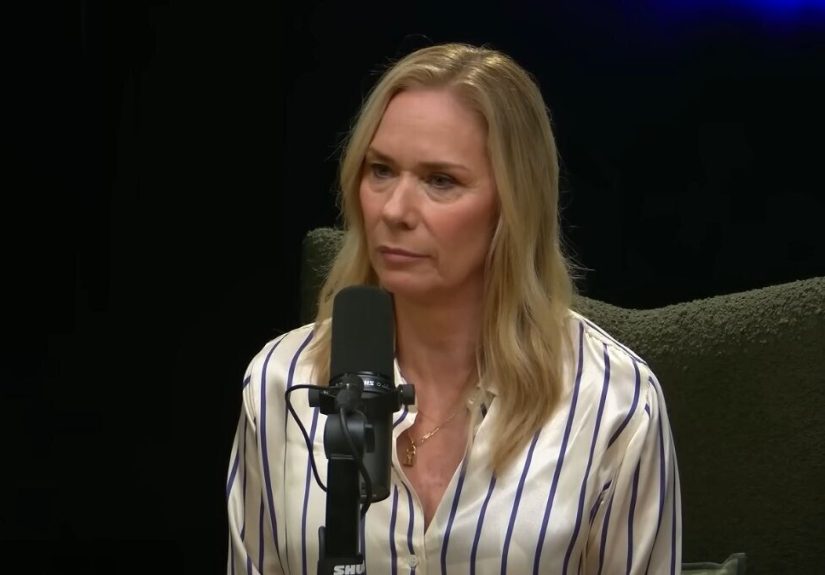
A big reason this topic keeps getting attention is that a lot of people have lived some version of it. Maybe not as a comedian on a podcast with Conan O’Brien, but as a regular human being trying to figure out where they fit. There is a familiar feeling in realizing, “These are my values, but this particular room is not my room.” That experience happens in churches, workplaces, families, and friend groups all the time.
For many women especially, Morgan’s story feels recognizable because it captures the tension between being respectable and being real. Plenty of women were raised to be nice, polished, helpful, and careful. Then they hit midlife and discover that real life is not careful at all. Bodies change. Kids grow up and get weird. Husbands become comedic material by simply existing. Parents age. Hormones stage a hostile takeover. At that point, a comedian who talks honestly about all of it can feel less like entertainment and more like oxygen.
There is also a specific experience many faith-adjacent audiences understand: enjoying something personally while knowing it would never make it onto the official event program. That gap is larger than people admit. The same person who loves a candid Netflix special at home may still understand why a church banquet would book a more traditional performer. That does not make them fake. It makes them aware of context.
Another related experience is creative self-recognition. A lot of people spend years trying to fit a mold that seems close enough. Morgan’s comments suggest the opposite lesson: close enough is not always right. You can share values with a group and still not share its style. You can respect an audience and still know your voice will work better somewhere else. That kind of honesty can save years of frustration.
Then there is the late-bloomer piece, which hits hard for anyone who thought their most important chapter should have happened by now. Morgan’s rise gives people permission to believe that timing is not always failure in disguise. Sometimes it is preparation wearing sensible shoes. Her success tells viewers that you can spend years building a voice in ordinary places and still end up exactly where you were supposed to be.
That may be the deepest experience attached to this whole story. It is not really about whether one comedian is appropriate for one niche audience. It is about the relief of watching someone stop apologizing for being exactly who they are. Not meaner, not safer, not louder, not flatter. Just more fully themselves.
And in a world full of people trying to look suitable for every room, there is something deeply satisfying about a performer who says, with grace and humor, “Bless it, this one just isn’t my room.”