Table of Contents >> Show >> Hide
- Why Weird Al’s Anger Is So Unusual
- The Setup: Lady Gaga, “Born This Way,” and a Perfect Parody Target
- The Permission Process Became a Comedy of Exhaustion
- Why This May Be Weird Al’s Angriest Public Moment
- The Internet Did What the Internet Occasionally Does Best
- What the Gaga Saga Reveals About Weird Al’s Career
- Anger, But Make It Professional
- Why “Perform This Way” Still Matters
- Experiences and Takeaways: What This Story Feels Like From the Fan Side
- Conclusion: The Quiet Fury of a Very Polite Genius
- SEO Tags
If you are looking for a celebrity meltdown involving smashed guitars, flipped tables, or a dramatic statement written entirely in caps lock, “Weird Al” Yankovic is probably not your guy. His public persona has always been more accordion than aggression, more Hawaiian shirt than hot temper. For more than four decades, he has built a career out of making pop culture look ridiculous without making the people inside it feel like villains.
That is why the 2011 Lady Gaga parody controversy stands out. The situation around “Perform This Way,” his spoof of Gaga’s “Born This Way,” may be the closest thing we have to a genuinely angry Weird Al moment. Even then, his version of anger looked less like a tantrum and more like a politely worded customer-service complaint from a man who had just sacrificed a family vacation, rushed into the studio, and been told, “Actually, never mind.”
In other words, this might be the angriest “Weird Al” has ever beenand it is fascinating because he was still more gracious than most people are when the coffee shop spells their name wrong.
Why Weird Al’s Anger Is So Unusual
To understand why the “Perform This Way” drama felt so dramatic, you have to understand Weird Al’s normal operating system. Yankovic is famous for parodying major hits, but he is equally famous for being unusually respectful about it. Legally, parody can qualify as fair use in the United States, meaning a parodist does not always need an artist’s permission to create a commercial spoof. But Weird Al has long followed his own rule: ask first, get the blessing, keep everyone in on the joke.
That unwritten code has helped him survive in an industry where egos are fragile, managers hover like security drones, and a single joke can turn into a years-long grudge. Michael Jackson approved “Eat It” and “Fat,” giving Weird Al a career-changing boost. Kurt Cobain reportedly found the idea behind “Smells Like Nirvana” funny, which helped Al rebound in the early 1990s. Don McLean allowed “The Saga Begins,” a Star Wars retelling set to “American Pie.” Even when artists declined, Weird Al usually took the no and moved on.
That is why he is not seen as a comedy sniper. He is more like a pop-culture funhouse mirror: silly, distorted, and occasionally wearing a fat suit, but rarely cruel. His parodies are built on craft, timing, musical accuracy, and a strange kind of affection. He makes fun of songs because they are big enough to deserve it.
The Setup: Lady Gaga, “Born This Way,” and a Perfect Parody Target
In 2011, Lady Gaga was not merely famous; she was operating somewhere between pop star, fashion event, and walking art installation. “Born This Way” was a massive cultural moment, an anthem tied to self-acceptance and LGBTQ+ pride. That made it both tempting and tricky for Weird Al. The song was everywhere, and Gaga’s theatrical image gave him plenty to play with. At the same time, he did not want to appear to be mocking the message of the original song.
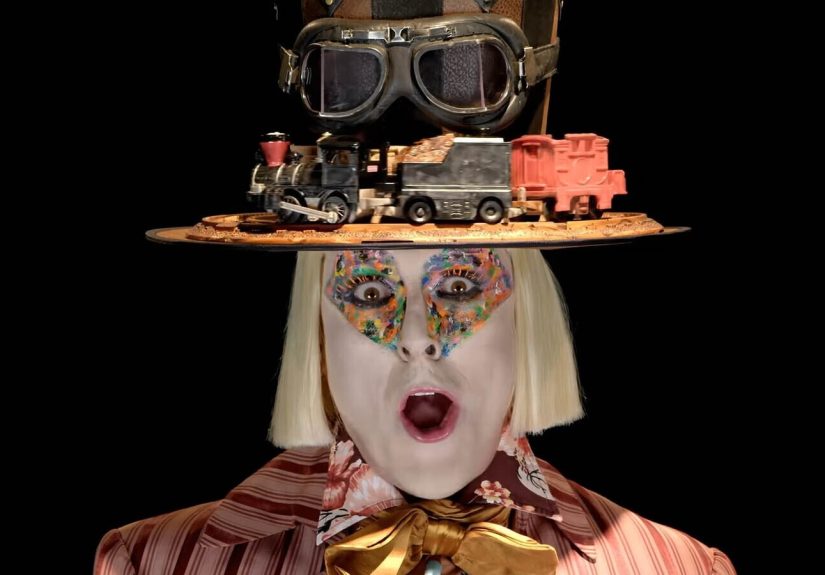
His solution was “Perform This Way,” a parody focused not on the song’s social message but on Gaga’s famously extravagant stage persona. The joke was not “self-acceptance is silly.” The joke was closer to “Lady Gaga might arrive at brunch inside a chandelier, and somehow we would all accept it by dessert.”
That distinction mattered. Weird Al wanted to be playful without punching down. He even planned to donate proceeds from the song and video to the Human Rights Campaign, a decision that fit the spirit of the original hit while giving the parody a charitable purpose. In classic Al fashion, the joke came wrapped in good intentions and paperwork.
The Permission Process Became a Comedy of Exhaustion
The problem began when Gaga’s camp reportedly asked to see the lyrics. That was normal enough. Weird Al provided them. Then came the next request: Gaga supposedly needed to hear the finished recording before deciding. For most artists, that might sound reasonable. For Weird Al, it created a logistical nightmare.
He was already deep into the process of finishing his album Alpocalypse. “Perform This Way” was intended to be the lead singlethe shiny hood ornament on the comedy car. But he was also on vacation with his family after a long stretch of touring. To satisfy the request, he cut that vacation short, returned to Los Angeles, and recorded the parody quickly with his band. The work was not casual. Weird Al’s parodies are not karaoke with jokes taped on. His band famously recreates the sound, arrangement, and production feel of the original tracks with almost surgical precision.
So after the lyrics had already been reviewed, and after he had rushed to create a finished recording at the request of Gaga’s team, he received the answer: no.
That is the moment where the accordion nearly caught fire.
Why This May Be Weird Al’s Angriest Public Moment
What made Weird Al so frustrated was not simply that the parody was rejected. He had been rejected before. Prince famously refused multiple parody ideas over the years, and Al respected that boundary. The difference here was the sequence of events. He had not merely pitched an idea and been told no. He had been asked to do more work, rearrange his schedule, record the song, and then watch the project get blocked after all the important creative information had already been available.
His response was unusually sharp for him. Not vicious, not insulting, not scandal-hungrybut clearly irritated. He explained the situation publicly, saying he was confused about why the decision came only after he had recorded the song. The frustration was logical: if the lyrics were the issue, the lyrics had already been submitted. If the concept was the issue, the concept had already been described. There were no secret trapdoors in the final recording.
For a performer known for being almost aggressively nice, this was a raised eyebrow heard around the internet. Weird Al did not rage. He did something more devastating: he sounded disappointed.
The Internet Did What the Internet Occasionally Does Best
After the rejection, Weird Al posted the song online for free rather than releasing it commercially. He also encouraged fans to donate to the Human Rights Campaign. This move was very on-brand: even in frustration, he redirected the moment toward charity instead of chaos.
Then something remarkable happened. Fans listened. Fans shared. The story spread quickly across social media, entertainment blogs, and music sites. What had looked like a blocked parody became a viral event. Within roughly a day, the situation changed completely. The explanation that emerged was that Gaga herself had not personally rejected the parody. According to later accounts, the decision had apparently been made by her management without her direct input.
Once Gaga heard the song, she liked it. Permission was granted. The parody was included on Alpocalypse, and what could have become a lasting feud turned into one of the strangest little victory laps in Weird Al history.
The punchline is almost too perfect: Weird Al got angry, posted receipts in the gentlest possible way, the internet rallied, and Lady Gaga turned out not to be the villain. It was not a beef. It was a management malfunction with a dance beat.
What the Gaga Saga Reveals About Weird Al’s Career
The “Perform This Way” incident is more than celebrity trivia. It reveals why Weird Al has lasted so long. His career depends on speed, trust, and cultural timing. A parody works best when the original song is still fresh in the public’s ear. Wait too long, and the joke starts feeling like someone showing up to a Halloween party in February.
That timing pressure became even more intense in the internet era. By 2011, YouTube creators and social media comedians could produce parody content within days. Weird Al was no longer the only person in the room with a rhyming dictionary and a questionable wig. What separated him was quality. His songs still sounded like real records. His videos still looked intentional. His jokes still had structure.
But the Gaga situation showed the downside of his permission-first approach. By waiting for approval, he risked losing momentum. By honoring artists’ wishes, he sometimes gave managers and labels the power to slow the joke until it cooled off. His ethics were admirable, but they were not always convenient.
Anger, But Make It Professional
There is also something refreshing about the way Weird Al handled the whole ordeal. Many modern celebrity conflicts are engineered for maximum oxygen. A vague post appears. Fans decode it. Someone unfollows someone. Three podcasts are born. With Weird Al, the complaint was specific, reasonable, and tied to actual work.
He did not attack Gaga’s character. He did not accuse her of lacking humor. He did not turn the situation into a personal crusade. He simply explained what happened, expressed disappointment, and let the facts sound ridiculous on their own. That is a very underrated form of anger: clean, focused, and not covered in emotional nacho cheese.
In the end, the resolution preserved everyone’s dignity. Gaga came out looking supportive once she actually heard the track. Weird Al came out looking principled but human. Fans got the song. The album got attention. The charity angle remained intact. Even the manager’s role became less a scandal than a footnote in the long history of entertainment-industry gatekeeping.
Why “Perform This Way” Still Matters
“Perform This Way” may not be the first song casual listeners name when they think of Weird Al. “Eat It,” “Amish Paradise,” “White & Nerdy,” and “Smells Like Nirvana” tend to dominate the conversation. But the story behind “Perform This Way” is one of the clearest examples of the delicate balancing act behind his comedy.
He is not just swapping words. He is negotiating fame, ego, copyright norms, fan expectations, cultural sensitivity, release schedules, and the possibility that somebody’s manager might accidentally turn a simple yes-or-no question into a public-relations trampoline.
The saga also illustrates how much audiences trust him. Fans did not rally behind the song because they wanted to see Lady Gaga embarrassed. They rallied because Weird Al had spent decades proving that his jokes were not mean-spirited. His reputation gave him credibility. When he said the situation felt unfair, people believed him.
Experiences and Takeaways: What This Story Feels Like From the Fan Side
For longtime Weird Al fans, the “Perform This Way” saga felt oddly personal. Not because everyone had strong opinions about parody law or artist management, but because Al has always occupied a special corner of pop culture. He is the guy many people discovered as kids, often through a friend, an older sibling, a school bus singalong, or a late-night video block that made the world feel slightly less serious. His music gives listeners permission to be clever, nerdy, strange, and deeply enthusiastic about jokes that require footnotes.
That is why seeing him frustrated felt so strange. Fans were used to seeing him as the calm center of the circus. He could dress like a food-obsessed Michael Jackson, turn grunge into a joke about unclear singing, or transform rap swagger into a celebration of trivia skills, and somehow he always came across as friendly. When someone that consistently good-natured finally says, “This was unfair,” the room gets quiet.
There is also a relatable workplace feeling buried inside the story. Many people know what it is like to be asked to do extra work before a decision is made, only to find out the decision was probably already tangled in confusion. You prepare the report. You stay late. You cancel plans. Then someone says, “Actually, we are not moving forward.” Weird Al’s version involved a Lady Gaga parody and a studio session, but the emotional math is familiar. It is the universal frustration of effort wasted by bad communication.
The fan experience also highlights how the internet can sometimes correct a mistake instead of multiplying it. Social media often makes conflicts worse, but here it helped clarify the situation. The song reached listeners, the story reached Gaga’s camp, and the real decision-maker apparently got to hear what had been kept from her. In a messier celebrity ecosystem, that could have become a permanent feud. In this case, it became a happy ending with better distribution.
For writers, musicians, comedians, and online creators, the lesson is practical: professionalism does not mean pretending frustration does not exist. Weird Al did not explode, but he also did not silently swallow the problem. He communicated clearly. He protected his values. He avoided cheap shots. That is a useful model for anyone trying to make creative work in public. You can be kind and still say, “This process was not okay.”
The story also reminds fans why Weird Al’s career is so rare. Comedy often ages badly when it depends on cruelty. His best work survives because it is built on craft and affection. Even when he was annoyed, he still cared about fairness, charity, and the original song’s message. That balancesilly on the surface, thoughtful underneathis exactly why people keep showing up for him decades later.
Conclusion: The Quiet Fury of a Very Polite Genius
So, was the Lady Gaga “Perform This Way” saga truly the angriest Weird Al has ever been? Publicly, it has a strong case. Not because he screamed, threatened, or torched a bridge, but because the moment pushed directly against the values that define his career: respect, clarity, fairness, and shared laughter.
His frustration made sense. He had followed his own ethical code. He had done the extra work. He had tried to honor the spirit of “Born This Way.” Then a confusing approval process nearly derailed a major album single. For most artists, that would be a standard Tuesday in show business. For Weird Al, it was enough to produce the comedy-music equivalent of a sternly folded napkin.
And yet the ending is perfectly Weird Al. The song got released. Gaga liked it. Fans helped fix the mess. The proceeds supported a good cause. No one had to become a permanent enemy. The angriest Weird Al has ever been still somehow ended with charity, forgiveness, and a joke you can dance to.