Table of Contents >> Show >> Hide
- Quick Table of Contents
- Microcassettes: Small Tape, Big Personality
- What an “Audio Tape Interface” Actually Does
- Why the Encoding Choice Matters (A Lot)
- How Much Data Fits on a Microcassette?
- Why Revive Tape Storage in 2026?
- A Quick Historical Detour: Tapes Were Once Normal
- Practical Tips If You Want to Try It
- Limitations (Because Physics Has Opinions)
- Conclusion: The Joy of Storage You Can Hear
- Extra: Experiences Related to “Audio Tape Interface Revives Microcassettes As Storage Medium” (About )
Some storage devices whisper. Some scream. And some… screech like a robot seagull trapped in a boombox.
If you ever grew up around home computers (or you’ve fallen into the wonderfully weird rabbit hole called retrocomputing),
you already know the ritual: plug in an audio cable, stare intensely at a tape counter, adjust volume like you’re tuning a
finicky radio station, and pray the load doesn’t fail at 97%. Tape storage was slow, temperamental, and somehow still magical.
Fast-forward to today, where you can buy a microSD card that holds more data than your entire childhoodand yet tape is making a
very specific kind of comeback: not as a competitor to SSDs, but as a hands-on, educational, delightfully stubborn way to store data.
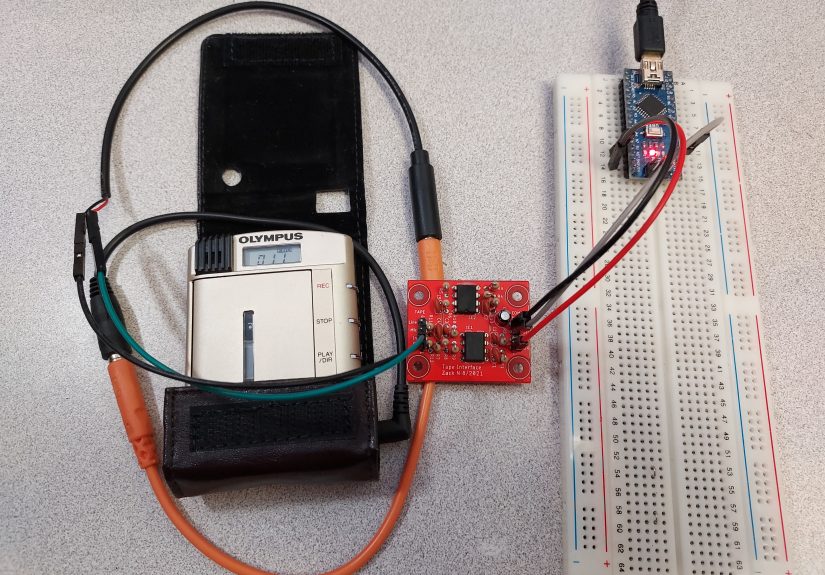
A standout example is an audio tape interface that uses microcassettesthose tiny dictation tapes
as a functional storage medium for a retro-style computer build.
This article breaks down what’s going on under the hood (without turning into a textbook), why microcassettes are oddly suited for this,
what kind of capacity you can realistically expect, and why tapeyes, tapestill matters in a world of cloud everything.
Quick Table of Contents
- Microcassettes: Small Tape, Big Personality
- What an “Audio Tape Interface” Actually Does
- Why the Encoding Choice Matters (A Lot)
- How Much Data Fits on a Microcassette?
- Why Revive Tape Storage in 2026?
- Practical Tips If You Want to Try It
- Limitations (Because Physics Has Opinions)
- Extra: of Hands-On “Experience” Notes
Microcassettes: Small Tape, Big Personality
Microcassettes were designed for voice dictationthink journalists, office memos, interviews, and answering machines. They’re physically
smaller than the familiar compact cassette, and they typically run at slower tape speeds. That combination makes them portable and
practical for speech… but also gives them a narrower “comfort zone” in terms of audio frequency response.
Here’s the twist: that narrow comfort zone doesn’t automatically make microcassettes bad for data. It just means the data encoding has to be
strategic. Tape recorders introduce hiss, dropouts, and the classic villains known as wow and flutter
(speed variations that bend your signal timing). A good digital-on-audio system has to treat those problems like expected weather, not rare disasters.
In other words: if you want to store bits on microcassette, you can’t just shout “010101” into the microphone and hope for the best.
You need a robust method that keeps timing recoverable and avoids long runs of silence or one-note tones that drift into the recorder’s weak spots.
What an “Audio Tape Interface” Actually Does
An audio tape interface is basically a translator between two worlds:
- World A: computers think in bits and bytes
- World B: tape recorders capture changing voltages over time
The interface turns digital data into an audio waveform that can be recorded onto tapethen later converts the recorded waveform back into
digital data. Conceptually, it’s cousin to early cassette-based computer storage systems and to modems (which also encode digital data into audio frequencies).
In the microcassette revival project, the overall flow looks like this:
- Encode: convert a file into an audio pattern that fits inside the recorder’s usable bandwidth
- Record: play that audio into the recorder and store it on tape
- Playback: play the tape back out through the recorder’s audio output
- Condition: filter/amplify the signal so it behaves nicely
- Decode: detect edges/timing and reconstruct bytes (often via a microcontroller like an Arduino)
Notice what’s missing: “download instantly.” Tape does not do instantly. Tape does “hold my beverage, I’m going to load this BASIC program in five minutes.”
Why the Encoding Choice Matters (A Lot)
If tape were perfectly stable, you could use simpler methods. But consumer tape recorders aren’t stablethey’re charmingly chaotic.
So the encoding method has to protect the data from speed and amplitude weirdness.
Meet Differential Manchester Encoding
A key design decision in the microcassette interface is using differential Manchester encoding.
Without getting too mathy, it forces the signal to include regular transitions (edges) so the decoder can stay “clocked” even if the tape speed wobbles.
It’s also less bothered by polarity flips (some tape playback paths can invert the waveform, which is irrelevant to audio but annoying to naive digital decoding).
Another smart move is keeping the encoded signal in a comfortable frequency band for the recorderthink roughly the “sweet spot” the machine can reproduce cleanly,
rather than pushing into bass rumble or high-frequency mush. When you’re working with a device built for speech, you want your data to behave like a disciplined,
polite voice… not a cymbal crash.
Signal Conditioning: Filters and a Schmitt Trigger
Tape playback is analog, which means it comes with noise and soft edges. A practical interface typically:
- uses a high-pass filter to cut low-frequency motor rumble and DC offset
- amplifies the signal and may low-pass it to reduce hiss outside the data band
- feeds the waveform into a Schmitt trigger so the output becomes a clean digital square wave with noise immunity
That final step is huge: once you have stable digital transitions, decoding becomes a timing problem instead of a “guess what the tape meant” problem.
How Much Data Fits on a Microcassette?
Let’s be honest: you’re not backing up 4K movies on microcassette unless your goal is to create the world’s slowest film festival.
But you can store meaningful amounts of data for retro projects, configuration files, small programs, logs, and “time capsule” archives.
A representative build runs around a few thousand baud. In practical terms, that can land you in the neighborhood of a few hundred bytes per second after framing/overhead.
Over the length of a tape, you end up with storage on the order of hundreds of kilobytes for common tape durations, and potentially around
about a megabyte if you scale the time up.
That sounds tiny by modern standards, but it’s strangely perfect for what tape storage does best:
small, meaningful chunks of data that you can label, shelve, and revisit.
Think “source code snapshot,” “bootloader + utilities,” or “this is the exact build that worked before I started ‘optimizing’ things.”
Why Revive Tape Storage in 2026?
There are three big reasons people do this, and none of them are “because tape is faster.”
1) Learning by Wrestling With Reality
Tape forces you to understand fundamentals: signal bandwidth, noise, thresholds, timing recovery, error detection, framing, checksums, and physical media handling.
It’s not abstract. The tape either decodes… or it doesn’t. That feedback loop makes tape projects incredible learning tools for digital communications and embedded systems.
2) Offline, Air-Gapped Storage Has Real Value
Modern enterprise computing never truly abandoned tape. It remains popular for backup and archival storage because it can sit offline without consuming power,
and because “air-gapped” media is naturally resistant to many forms of cyberattack. Microcassette is not enterprise tape,
but it borrows that same superpower: when it’s in a drawer, it’s not on the network.
3) Nostalgia, Yesbut Also Control
Tape gives you a tangible artifact. You can label it. You can store it. You can hand it to someone. You can build the reader yourself.
In an era where “storage” often means “someone else’s server,” a physical tape you can understand end-to-end is oddly refreshing.
A Quick Historical Detour: Tapes Were Once Normal
Cassettes weren’t a gimmick in early personal computingthey were often the default. Early machines relied on cassette tape storage before floppy drives became
widespread and affordable. Museums and historical archives still document how cassette-based storage shaped the early experience of home computing:
programs loaded from tape, saving took patience, and reliability was an adventure.
So when modern makers revive tape storage, they’re not inventing something brand-new. They’re rebuilding a classic interface with better tools,
clearer theory, and microcontrollers that can do in seconds what earlier hardware struggled to do at all.
Practical Tips If You Want to Try It
Pick a Recorder With a Reliable Line Output
The easiest path is a recorder that offers a stable headphone/line output. Built-in automatic gain control can be helpful for voice,
but it can mess with data levels. A setup with consistent playback amplitude is your friend.
Use a Calibration Tone and Checksums
A calibration tone at the start of a recording helps the decoder estimate timing and level before real data begins.
Add checksums so you can detect errors without needing psychic powers.
Handle and Store Tapes Like They’re… Well, Tape
- Store tapes in cases, upright when possible
- Keep them away from strong magnetic fields (speakers, motors, certain power equipment)
- Avoid heat, humidity swings, and dust
- Let cold media acclimate before playback if it’s been stored in a different environment
Tape is physical. It ages. But good handling goes a long way toward preventing avoidable failures.
Limitations (Because Physics Has Opinions)
Tape storage comes with tradeoffs you can’t “code your way out of”:
- Speed: access is sequential; rewinding is part of the user interface
- Noise and dropouts: hiss happens; tape can stretch or shed over time
- Mechanical variability: wow and flutter affect timing, especially on portable recorders
- Convenience: you can’t search a tape like a filesystem without extra indexing tricks
The good news is that many of these issues are exactly why the project is interesting. The limitations are the curriculum.
Conclusion: The Joy of Storage You Can Hear
“Audio Tape Interface Revives Microcassettes As Storage Medium” sounds like a headline from an alternate universe where Walkmans never died.
But the real story is simpler and cooler: by pairing modern microcontrollers with smart encoding,
you can make a humble microcassette recorder behave like a functional storage device.
It won’t replace your SSD. It won’t beat the cloud. But it will teach you what “reliable communication over a noisy channel” really means,
and it will give you a physical, offline archive you can hold in your handand hear when it loads.
Extra: Experiences Related to “Audio Tape Interface Revives Microcassettes As Storage Medium” (About )
People who actually try tape-based storage often describe a funny shift in mindset: modern storage trains you to expect silence and instant results,
but tape storage makes you participate. There’s a whole sensory layer to itclicks, whirs, the soft friction of transport mechanisms,
and that unmistakable “data audio” sound that’s halfway between a fax machine and a synth auditioning for a sci-fi movie.
The first “experience moment” usually happens before any data is stored: it’s when you realize your cassette deck is no longer a music device.
Suddenly, the volume knob isn’t about comfortit’s about signal integrity. Too low and edges vanish into hiss. Too high and the waveform clips into a square-ish mess
that confuses the decoder. The sweet spot can feel like tuning a radio station while wearing oven mitts.
Then comes the ritual of labeling. With flash storage, “organization” is a folder you forget to maintain. With tape, it’s a physical label that decides whether
Future You will understand what’s on it. Makers tend to get surprisingly thoughtful here: date, baud rate, encoding method, and a short description like
“ROM dump + monitor v0.3 (works)” or “UART logger build (don’t erase!).” It feels more like archiving than saving.
Playback is its own tiny drama. Tape counters aren’t precise, so finding a file can involve gentle rewinds and fast-forwards, listening for the calibration tone
and watching whatever “lock” indicator the decoder provides. If the interface includes a lead-in tone (a long run of predictable bits), it becomes a recognizable
landmarklike the opening notes of a song you use to find your favorite track on an old mixtape.
When decoding succeeds, the satisfaction is weirdly outsized. A few hundred kilobytes shouldn’t feel like a victoryuntil you remember those bytes survived
motor rumble, speed warble, and tape hiss, then came back as clean data. It’s like threading a needle while riding a bus: the result is small, but the feat is real.
And when decoding fails? That becomes part of the learning loop. People report re-recording with a different level, swapping tapes, cleaning heads, or trying a
different recorder. The process reveals just how physical “data” can be when it’s stored as magnetized particles. It also encourages smarter design:
stronger error detection, better filtering, more robust framing, maybe even multiple passes or redundancy.
Over time, the experience becomes less about nostalgia and more about craft. Tape turns storage into a hands-on engineering problem you can hear, touch, and improve.
That’s why microcassettesas quirky as they aremake a surprisingly lovable storage medium for the right kind of builder.