Table of Contents >> Show >> Hide
- Why Pee Is So Hard to Remove From a Couch
- Before You Clean: Check the Couch Tag First
- What You Will Need
- How to Clean Fresh Pee Off a Couch
- The Best DIY Fix for Stubborn Pee Smell
- How to Clean Dried Pee Off a Couch
- DIY Solutions by Couch Type
- What Not to Do
- When DIY Is Not Enough
- How to Prevent Future Couch Accidents
- Quick Recap: The Best Way to Clean Pee Off a Couch
- Final Thoughts
- Experiences and Real-Life Lessons From Cleaning Pee Off a Couch
Let’s be honest: few household moments feel more insulting than discovering pee on the couch. It is never convenient. It is never glamorous. And it somehow always happens when guests are due in 20 minutes, the dog looks suspiciously innocent, or a toddler has just declared, “It’s okay, I only got a little on it.”
The good news is that you usually can clean pee off a couch successfully with a calm approach, the right supplies, and one very important rule: act fast. Whether the accident came from a puppy, an older pet, a potty-training child, or an adult spill you would rather not discuss at brunch, the cleanup basics are the same. Remove moisture, neutralize odor, treat the stain safely, and avoid damaging the upholstery while you play crime scene investigator.
This guide walks you through easy DIY solutions, when to use a homemade cleaner, when an enzyme cleaner is the smarter move, and how to avoid turning a small mess into a permanent souvenir. Because your couch deserves better, and so do your nostrils.
Why Pee Is So Hard to Remove From a Couch
Urine is a sneaky little overachiever. It does not just sit politely on the surface waiting to be wiped away. It seeps into fabric, cushion batting, and foam, then leaves behind odor-causing residue that can linger long after the visible wet spot disappears. That is why a couch can look clean but still smell like a bad decision two days later.
The challenge gets bigger when the accident dries before you notice it. Fresh urine is easier to blot and lift. Dried urine often needs deeper treatment, more than one round of cleaning, and a little patience. Pet urine can be especially stubborn because lingering odor may encourage repeat accidents. In other words, if your dog thinks the couch is now a designated restroom, you need to clean like you mean it.
Before You Clean: Check the Couch Tag First
Before you go full DIY chemist, look for the upholstery care tag. This tiny label can save you from making a bad problem worse.
Common upholstery cleaning codes
- W: Safe for water-based cleaners.
- S: Use solvent-based cleaner only. Water can damage it.
- WS or SW: Usually safe with either water-based or solvent-based cleaners.
- X: Vacuum only. No water, no solvent, no experimenting.
If your couch is marked X, skip the DIY liquid cleaning and call a professional upholstery cleaner. If it is marked S, use a solvent-safe upholstery product instead of a homemade water solution. If it is W or WS, you have more room to work with vinegar, mild dish soap, or an enzyme cleaner.
Also, always test any cleaner on a hidden area first. The last thing you want is a clean spot that is now lighter than the rest of the couch and shaped like regret.
What You Will Need
- Paper towels or clean white cloths
- Cold or cool water
- White vinegar
- Mild dish soap
- Baking soda
- Spray bottle
- Soft brush or microfiber cloth
- Vacuum with upholstery attachment
- Enzyme cleaner for urine odors
- Gloves if you prefer not to touch mystery moisture barehanded, which is a very reasonable life choice
How to Clean Fresh Pee Off a Couch
Step 1: Blot immediately
Press paper towels or a clean white cloth into the wet area and blot up as much liquid as possible. Do not scrub. Do not mash it around like you are frosting a cake. Scrubbing pushes urine deeper into the upholstery and can damage the fabric.
Keep blotting with fresh towels until very little moisture transfers. If the accident soaked through the cushion, press firmly and repeatedly. Some people even stand on towels laid over the spot to help absorb deeper moisture. Yes, this is glamorous now.
Step 2: Choose the right DIY solution
For many fabric couches with a W or WS code, a simple homemade mix works well for fresh urine:
- 1 cup white vinegar
- 1 cup water
- 2 teaspoons mild dish soap
Put the mixture in a spray bottle and lightly mist the stained area. You want the fabric damp, not soaked like it just lost a water balloon fight. Let it sit for several minutes, then blot again with a clean cloth.
Step 3: Rinse lightly
Use a separate cloth dampened with plain cool water to gently blot away leftover cleaner. This helps reduce residue, which can attract dirt later. Again, light touch, not flood season.
Step 4: Deodorize with baking soda
Once the area is only slightly damp, sprinkle baking soda generously over the spot. Let it sit for at least 15 to 30 minutes. For stronger odor, leave it several hours or overnight. Then vacuum it thoroughly.
Baking soda is great for absorbing lingering moisture and soft odors. Think of it as the quiet, dependable friend of the cleaning world. It does not ask for attention, but it gets invited back.
The Best DIY Fix for Stubborn Pee Smell
If the couch still smells after the first round, do not panic. That does not mean you failed. It means the odor likely reached deeper layers of the cushion, and this is where an enzyme cleaner earns its paycheck.
Why enzyme cleaners work
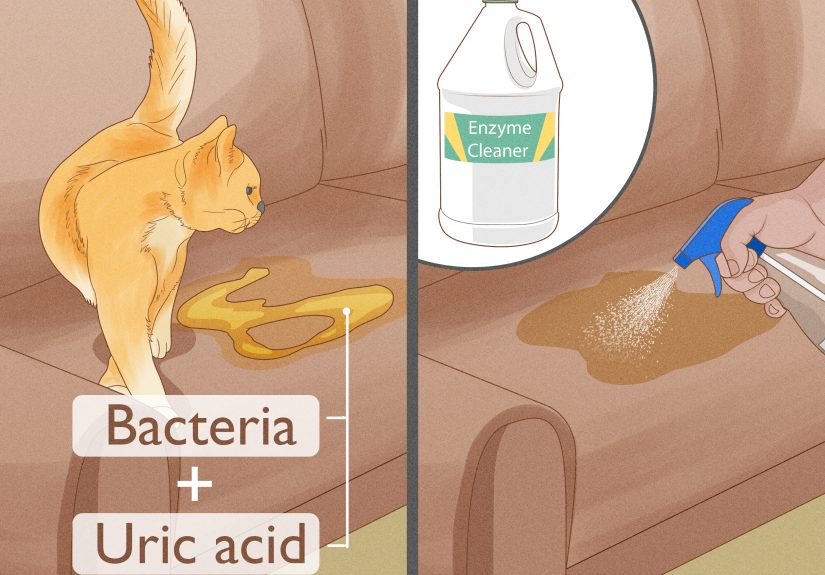
Urine odor is not just “a smell.” It comes from residue that needs to be broken down. Enzyme cleaners are designed to tackle organic messes like body fluids and pet accidents. Instead of merely covering up odor, they help break down the stuff causing it.
How to use an enzyme cleaner on a couch
- Blot the area first if there is any moisture left.
- Apply the enzyme cleaner according to the label.
- Make sure it reaches as deep as the urine did. Surface spraying is not enough if the pee soaked into the cushion.
- Let it dwell for the time recommended on the bottle.
- Allow the couch to air dry completely.
- Repeat if needed.
This part matters: enzyme cleaners need time to work. If you rush the process, blot too soon, or try to heat-dry the couch, you may sabotage the treatment. Urine cleanup is one of those annoying moments where patience is not optional.
How to Clean Dried Pee Off a Couch
Dried urine is the couch equivalent of a stain saying, “I live here now.” But you can still tackle it.
Step 1: Vacuum first
Vacuum the area to remove dust, dried residue, and baking soda from any earlier attempts. Starting clean helps the next treatment work better.
Step 2: Rehydrate the stain slightly
Lightly mist the area with your vinegar-water-dish-soap solution or an upholstery-safe cleaner. The idea is to loosen residue, not soak the cushion into a sad sponge.
Step 3: Blot and repeat
Blot carefully, then repeat the treatment if needed. Old stains often require more than one pass.
Step 4: Follow with enzyme cleaner
If the smell lingers, move to an enzyme cleaner. This is especially helpful for pet urine, old accidents, and any situation where the couch smells “fine” until the room warms up. That is not your imagination. That is chemistry being rude.
DIY Solutions by Couch Type
Fabric couch
This is usually the easiest kind to treat, as long as the care code allows water-based cleaning. Start with blotting, use a mild DIY solution, then finish with baking soda or an enzyme cleaner if needed.
Microfiber couch
Microfiber can be tricky because some versions hate water and show rings. Check the tag. If it is S, use a solvent-safe cleaner. If it is W or WS, use a very light hand and avoid over-wetting.
Leather couch
Leather is different. Blot quickly, wipe with a slightly damp cloth, and use only mild soap and water if the manufacturer allows it. Do not soak leather. Do not attack it with strong DIY mixtures. After cleaning, use a leather conditioner if appropriate. Leather likes being treated like a fancy jacket, not a garage floor.
Removable cushion covers
If the covers unzip and the care label says they are washable, remove them and pre-treat the stain. Wash according to the label, and avoid high heat when drying. If the foam insert also got wet, it must be cleaned and air-dried separately. Otherwise, the smell can come back like an unwanted sequel.
What Not to Do
- Do not scrub aggressively. That can spread the stain and rough up the fabric.
- Do not use hot water or steam. Heat can set urine stains and odors.
- Do not over-saturate the cushion. Too much liquid can push the mess deeper and slow drying.
- Do not use bleach on urine. Mixing bleach with urine can create dangerous fumes.
- Do not ignore the care tag. A “one-size-fits-all” cleaner is how good couches become cautionary tales.
- Do not put covers in a hot dryer if odor remains. Heat can lock in odor.
When DIY Is Not Enough
Sometimes a couch needs professional help, and that is not defeat. It is strategy.
Call a pro if:
- The urine soaked deep into thick cushions or foam
- The couch still smells after repeated treatment
- The fabric is delicate, vintage, suede-like, or marked X
- The stain is old and large
- You are dealing with repeated pet marking
Professional upholstery cleaners have extraction equipment and specialty products that go deeper than a spray bottle and optimism.
How to Prevent Future Couch Accidents
- Use washable throw blankets or slipcovers if kids, pets, or accidents are part of daily life.
- Clean accidents thoroughly the first time so odor does not invite repeats.
- Rotate and air out cushions now and then.
- Vacuum regularly to keep dirt from mixing with odors.
- For pets, address marking behavior instead of only cleaning the evidence.
A couch is basically the living room’s main character. Protect it accordingly.
Quick Recap: The Best Way to Clean Pee Off a Couch
If you want the simplest game plan, here it is:
- Check the upholstery code.
- Blot immediately and do not rub.
- Use a light vinegar-water-dish-soap mix on water-safe fabric.
- Rinse lightly and blot again.
- Sprinkle baking soda and vacuum when dry.
- Use an enzyme cleaner for lingering odor, pet urine, or older stains.
- Let everything air dry fully before declaring victory.
Simple, practical, and much better than pretending nobody will notice. They will notice.
Final Thoughts
Cleaning pee off a couch is not exactly the home-care content of your dreams, but it is one of those life skills that pays off immediately. The key is speed, restraint, and knowing when homemade solutions are enough and when an enzyme cleaner needs to step in like the hero of the third act.
Handled correctly, most couch accidents can be cleaned without drama, permanent odor, or fabric damage. So the next time your sofa suffers an unfortunate incident, take a breath, grab some towels, and remember: this is a problem, not a personality trait. Your couch can recover, and so can your dignity.
Experiences and Real-Life Lessons From Cleaning Pee Off a Couch
One of the biggest lessons people learn from dealing with couch accidents is that the first five minutes matter more than the next five hours. People who blot right away usually say the cleanup feels manageable. People who discover the spot later often find themselves sniffing random cushions like detectives in a very low-budget mystery show. Timing really changes everything.
A lot of households also discover that the visible stain is only half the battle. The couch may look perfectly fine after a quick wipe, then surprise everyone with a lingering smell the next afternoon when the room gets warm. That is why so many people swear they “cleaned it already” but still catch a whiff later. The surface can be clean while the inside of the cushion is still holding onto moisture and odor.
Another common experience is underestimating how far the liquid traveled. A small spot on top of the cushion can spread wider underneath, especially on deep, soft couches with thick foam. This is where people realize that a few paper towels and positive thinking are not always enough. Pressing deeper, changing towels often, and treating the cushion insert instead of just the cover can make a huge difference.
Pet owners often learn a slightly different lesson: if the odor is not fully removed, the couch can become the scene of a repeat performance. That is one reason enzyme cleaners get such loyal fans. A homemade solution may improve the smell for humans, but if a pet can still detect leftover odor, the couch may stay on the “approved bathroom locations” list. Not ideal. Not cute. Very avoidable.
Families with kids usually report a different challenge: speed and chaos. The cleanup itself is not always hard, but it rarely happens in calm silence. Someone is crying, someone else is saying it is “not that bad,” and another person is standing there offering deeply unhelpful advice. In those moments, having a simple method matters. Blot first. Cleaner second. Baking soda later. Fancy panic is not a strategy.
People with leather couches often say they get nervous because they know one wrong product can create a bigger problem than the original accident. That caution is smart. Leather usually responds better to gentle blotting and mild manufacturer-approved care than aggressive DIY mixes. In other words, treat leather like a nice pair of boots, not like patio furniture after a barbecue.
There is also a very human emotional side to this topic that nobody talks about enough. Cleaning pee off a couch can feel embarrassing, especially when the accident involves a guest, an older family member, illness, or a child in the middle of potty training. But accidents are part of real life. A good cleanup routine helps remove not just the stain, but a lot of the stress around it. Once you know what to do, the whole situation feels far less overwhelming.
And perhaps the most universal experience of all: nearly everyone who has cleaned pee off a couch becomes evangelical about protecting furniture afterward. Suddenly there are washable throws, backup covers, waterproof pads, extra enzyme cleaner under the sink, and a household rule that any suspicious dampness gets reported immediately. Once you have lived through one mystery odor saga, prevention starts looking downright glamorous.