Table of Contents >> Show >> Hide
- Why a 1U Raspberry Pi Cluster Gets So Much Attention
- What Actually Goes Into the Build
- What a Raspberry Pi Rack Cluster Is Actually Good For
- Where the Dream Meets Reality
- Modern Design Tips for Building One the Right Way
- Is a 1U Raspberry Pi Server Cluster Worth It?
- Real-World Experiences and Lessons From Builds Like This
- Conclusion
- SEO Tags
There is something deeply satisfying about squeezing a tiny army of single-board computers into a sleek 1U rack-mount case. It feels a little rebellious, a little brilliant, and a little like telling full-size servers, “Relax, big guy, we’re just here to run containers and look adorable.”
But a Raspberry Pi server cluster in a 1U rack-mount case is not just a cute homelab flex. It is a real answer to a real question: how do you build a compact, low-power, modular platform for learning distributed systems, hosting lightweight services, experimenting with Kubernetes, or deploying edge workloads without turning your electricity bill into a suspense novel?
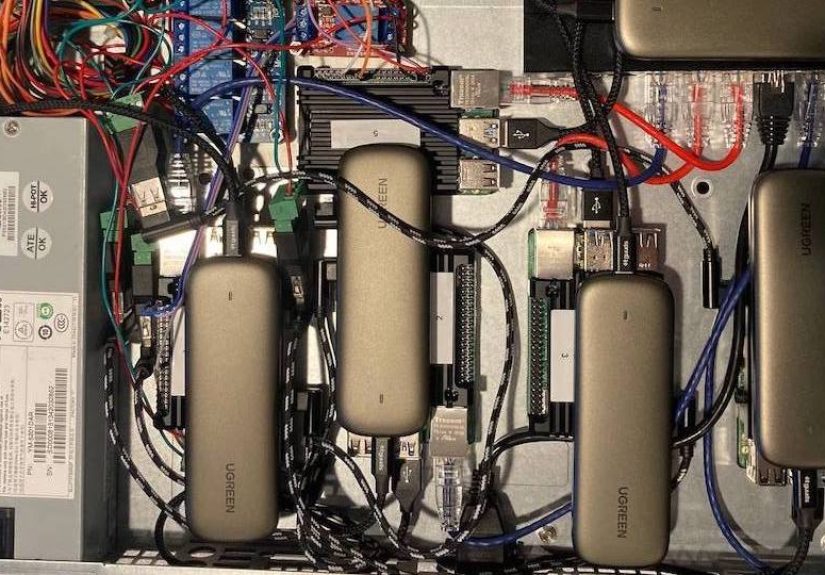
The idea got a lot of attention when makers began packing multiple Raspberry Pi boards into rack gear, including a well-known 1U build that used five Raspberry Pi 4 boards, SSDs, an Ethernet switch, and carefully managed power distribution. That project captured the charm and the chaos of the concept. It also revealed the truth: these builds are clever, useful, and educational, but they demand thoughtful planning around storage, cooling, networking, and cable management.
Today, the idea is even more compelling. Raspberry Pi 5 brings a major performance jump, faster I/O, and PCIe support for SSD-friendly designs. At the same time, commercial rack solutions and more polished cluster backplanes have made the whole concept less “bundle of cables in a metal drawer” and more “surprisingly respectable micro-datacenter.” If you have ever wanted a tiny cluster that can serve websites, run CI jobs, host containers, or teach you more about infrastructure than a dozen YouTube rabbit holes, this is your lane.
Why a 1U Raspberry Pi Cluster Gets So Much Attention
A standard 1U rack space is only 1.75 inches tall, which means every millimeter matters. That limitation is exactly what makes these projects interesting. A normal Raspberry Pi by itself is easy to mount on a desk, a shelf, or a wall. Put four to six of them in one rack unit, though, and suddenly you are solving the same kinds of problems real infrastructure teams solve: airflow, serviceability, power density, cable routing, remote access, and failure handling.
That is why the format is more than a gimmick. It turns a handful of affordable boards into a serious lab environment. Instead of one server doing everything, each node can have a role. One board can be the control plane. Another can run monitoring. Others can host containers, lightweight databases, Git mirrors, reverse proxies, home automation tools, build agents, or test deployments. When one node fails, the whole project becomes a lesson instead of a disaster. In other words, a 1U Raspberry Pi cluster is what happens when curiosity starts wearing rack ears.
What Actually Goes Into the Build
The Nodes
The original generation of rack Pi clusters often used Raspberry Pi 4 boards because they hit a sweet spot of price, gigabit Ethernet, USB 3.0, and decent 64-bit performance. In 2026, Raspberry Pi 5 makes the idea more attractive for builders who want more headroom. It delivers a much faster CPU, stronger I/O, and support for PCIe storage through adapters, which helps modern cluster designs move away from the old “pray the microSD card survives another reboot” strategy.
That said, not every build needs the latest board. If your goal is learning orchestration, running small services, or building an internal development playground, older nodes can still be perfectly practical. If your goal is faster CI jobs, more responsive web apps, or better storage performance, Raspberry Pi 5 or Compute Module-based designs make more sense.
The Storage
This is where many ambitious Pi projects either become grown-up infrastructure or remain charming experiments. MicroSD cards are fine for light testing, but clusters generate writes. Logs write. package updates write. Kubernetes writes. Your monitoring stack writes like it just discovered caffeine.
That is why serious builders increasingly prefer SSD-based storage, whether through USB-attached drives on older boards or NVMe-friendly designs on newer ones. Storage performance affects not just speed but reliability. If your cluster is meant to stay online, stable storage is one of the least glamorous and most important upgrades you can make.
The Networking
A Pi cluster without a decent switch is just a support group for lonely boards. In most 1U designs, an internal or nearby gigabit Ethernet switch ties the nodes together and exposes one or more uplinks to the outside world. This keeps the cluster neat and gives each node predictable network connectivity.
For homelab use, gigabit Ethernet is usually enough. You are not building a supercomputer here. You are building a small, distributed environment for services and experimentation. The bottleneck in Pi clusters is often not just the network anyway. It is storage, CPU, or the overhead introduced by the orchestration stack itself.
The Power and Cooling
This is the part that separates the clever from the crispy. A 1U chassis is cramped, and several boards running together create real heat. Add SSDs, switches, power adapters, and maybe a relay or management board, and suddenly your tiny cluster starts acting like a toaster with networking.
Power distribution also gets messy quickly. One famous 1U Pi server build used custom power cabling and a dedicated node for power control. That kind of setup works, but it also shows how quickly “low-power” turns into “surprisingly complicated.” More polished commercial systems and cluster backplanes improve this with integrated power regulation, cooling, monitoring, and easier node access. If your goal is reliability, those features matter more than the thrill of hand-wiring every connection like a caffeinated octopus.
What a Raspberry Pi Rack Cluster Is Actually Good For
Kubernetes and Container Learning
This may be the single best reason to build one. A Pi cluster gives you a real multi-node environment for learning Kubernetes, K3s, kubeadm, container networking, service discovery, ingress, storage classes, node draining, rolling updates, and observability. It is dramatically more educational than running everything on one laptop VM and pretending the cluster fairy is doing the rest.
K3s is especially appealing in this world because it is designed to be lightweight and friendly to resource-constrained environments. For many homelab and edge scenarios, it feels like regular Kubernetes after somebody finally hid the pain behind the curtain. MicroK8s is another solid option for people who want a compact, fairly approachable route into clustered workloads.
Edge and Remote Services
A 1U Pi cluster also makes sense when you need modest compute near the network edge. Think branch office workloads, local dashboards, lightweight automation, MQTT brokers, DNS filtering, log collection, internal documentation, webhook handlers, or event-driven functions. Tools like OpenFaaS and faasd are useful here because they let you run functions and small services without dragging in more complexity than the hardware can comfortably support.
CI, Dev, and Testing
Developers who target ARM workloads get an extra advantage. A Pi cluster is an excellent place to test ARM-native containers, validate deployment scripts, run build agents, or stage GitOps pipelines. Docker’s multi-platform image tooling makes it easier to build images for both amd64 and arm64, which is handy when your laptop and your deployment target are not from the same silicon neighborhood.
Homelab Services
If you enjoy self-hosting, a rack-mounted Pi cluster can run a surprising amount of useful infrastructure: reverse proxies, uptime monitors, password management for small teams, small static sites, internal APIs, personal dashboards, automation tools, and monitoring stacks. It can even become a tidy control plane for a broader lab full of unrelated machines.
Where the Dream Meets Reality
Let us ruin the fantasy just enough to keep your weekend project honest. A Raspberry Pi cluster in a 1U case is not a magical bargain replacement for a serious x86 server. It is usually worse at raw performance, weaker at storage-heavy workloads, more finicky to assemble, and often not as cheap as people expect once you factor in the case, switch, drives, power hardware, cooling, and assorted “tiny accessories” that somehow cost real money.
There is also the software overhead. Distributed systems are educational, but they are not free. Running a cluster means dealing with orchestration overhead, load balancing, internal networking, node maintenance, and storage decisions. If your only goal is “run one app reliably,” a small mini PC or used enterprise box may be the simpler and smarter choice.
Then there is serviceability. A messy DIY cluster can look impressive from six feet away and become a horror movie the moment you need to swap a failed SSD, replace a fan, or identify which cable belongs to which node. This is why rack systems with front access, labeled modules, captive screws, or hot-swap-like trays are such a big step forward. The less your infrastructure resembles a bowl of network spaghetti, the happier Future You will be.
Modern Design Tips for Building One the Right Way
Use SSDs Whenever Possible
If you remember one sentence from this article, make it this one: your cluster deserves better than living and dying by microSD cards. Boot from SSD or use external SSD storage where practical. Your logs, databases, and control plane will thank you in a language that sounds suspiciously like uptime.
Choose the Right Orchestration Layer
Do not install the heaviest thing you can spell. If you are learning vanilla Kubernetes deeply, kubeadm makes sense. If you want a lightweight but fully capable Kubernetes experience for ARM nodes, K3s is often the sweet spot. If you want simple function hosting, faasd or OpenFaaS may be cleaner. If you mostly want container management without becoming emotionally dependent on YAML, Docker plus Portainer can be the sane middle ground.
Plan Airflow Before Screws
Many builders choose parts first and airflow second. That is how you end up with a rack that looks sharp in photos and wheezes under load like it ran a marathon in a winter coat. In a 1U space, define intake, exhaust, fan direction, and cable path before you finalize the layout. Cooling is not an accessory. It is part of the architecture.
Design for Maintenance
Label nodes. Label ports. Label power leads. Use identical drive naming schemes. Keep a printed or digital map of what each node does. Your cluster is not a museum sculpture. It is a system that should remain understandable after three months, two updates, and one very annoying Sunday outage.
Consider Compute Module or Backplane-Based Systems
Traditional Raspberry Pi boards are great, but once you start chasing density, neatness, and cleaner power distribution, Compute Module-based ecosystems and purpose-built cluster backplanes become very attractive. They reduce cable clutter, improve serviceability, and can feel more like proper infrastructure than a stack of hobby boards auditioning for a data center talent show.
Is a 1U Raspberry Pi Server Cluster Worth It?
Yes, if you want to learn, experiment, self-host lightweight services, build edge systems, or create a compact ARM lab that teaches you real operational skills. It is one of the most fun ways to turn theory into hands-on infrastructure. You learn Linux, networking, storage, automation, observability, and orchestration all at once. That is a lot of educational value packed into 1.75 inches of vertical space.
No, if you expect it to outperform a used mini server, carry heavy database loads effortlessly, or behave like enterprise hardware without enterprise planning. A Raspberry Pi rack cluster is best when you treat it as what it is: a clever, modular, low-power platform for specific workloads and serious learning.
In other words, the Raspberry Pi server cluster in a 1U rack-mount case is not the answer to every infrastructure problem. But for the right builder, it is absolutely the answer to, “How can I make my lab more useful, more compact, and way more fun?”
Real-World Experiences and Lessons From Builds Like This
What people usually experience with a 1U Raspberry Pi cluster is a mix of delight, surprise, and the occasional muttered sentence that should not be repeated in front of polite company. The delight comes first. You install the nodes, line up the ports, tighten the rails, and stand back. Suddenly your project stops looking like a pile of parts and starts looking like infrastructure. It has a front panel. It has status lights. It lives in a rack. That alone scratches a very specific nerd itch.
Then the surprises begin. The first is usually cable density. On paper, a few short Ethernet cables and power leads look manageable. In reality, once you add storage, fans, uplinks, management access, and maybe a display or serial console, the inside of the case gets crowded fast. Builders often discover that physical organization matters just as much as software design. A bad cable route can block airflow, make maintenance miserable, and turn a quick node swap into a puzzle game designed by chaos itself.
The second experience is learning how different a cluster feels from a single machine. Even simple tasks become more interesting. Updating software is now a rolling process. Rebooting requires a plan. Storage is no longer just “that folder over there.” Monitoring becomes essential because one misbehaving node can create weird symptoms elsewhere. This is exactly why so many people love Pi clusters: they teach operational thinking in a small, affordable environment.
Another common lesson is that the software stack can either make the cluster joyful or exhausting. Lightweight tools feel magical on this hardware. A clean K3s deployment, a few ARM containers, a dashboard, and some automation can make the whole rack feel polished and efficient. But an oversized stack with too many background services can make the nodes feel sluggish, especially if storage is weak. Builders often come away with a healthier respect for minimalism. Just because you can deploy twelve services does not mean your cluster wants that life.
Reliability also changes how people think. The first time a cheap storage device acts flaky or a fan starts whining, the cluster stops being an experiment and becomes a responsibility. That is usually the moment builders begin labeling cables, documenting node roles, backing up configuration, and replacing improvised power distribution with something more trustworthy. It is a rite of passage. The cluster teaches you that good infrastructure is less about cleverness and more about repeatability.
And finally, there is the payoff. Once the rack is stable, it becomes one of the most satisfying pieces of gear in a homelab. It can host real services, teach real skills, and start real conversations. Visitors may not understand your ingress controller, but they will absolutely understand that a tiny rack of Raspberry Pis looks cool. Sometimes that is all the validation a builder needs.
Conclusion
A Raspberry Pi server cluster in a 1U rack-mount case is part infrastructure, part learning platform, and part engineering art project. It can be tidy or tangled, elegant or improvised, lightweight or surprisingly capable. The best versions are not the ones with the most boards. They are the ones with the clearest purpose, the smartest layout, and the fewest avoidable headaches.
If you build one thoughtfully, it can become a compact ARM lab for Kubernetes, containers, edge services, automation, and self-hosted tools. More importantly, it teaches lessons that scale far beyond Raspberry Pi: design for reliability, respect airflow, choose storage carefully, automate what you can, and never trust unlabeled cables. That last one is not just advice. It is survival.