Table of Contents >> Show >> Hide
- Why This Beach Cottage Design Worked So Well
- What Makes a Modern Beach Cottage Feel Modern
- Why Dual Fireplaces Are More Than a Pretty Feature
- Design Ideas to Borrow From This Look
- Are Dual Fireplaces Actually Practical?
- How to Recreate the Look Without a Full Luxury Renovation
- My Experience With the Idea of Dual Fireplaces
- Final Thoughts
Some homes are pretty. Some homes are smart. And then there are the rare overachievers that manage to be pretty, smart, relaxing, and just a little bit smug about it. That was my reaction when I first encountered a modern beach cottage with dual fireplaces. I expected the usual coastal greatest hits: pale wood, white linen, woven textures, a few blue accents trying very hard to look effortless. What I did not expect was to become emotionally attached to a fireplace with commitment issuesin the best possible way.
The dual fireplace, also called a see-through fireplace or indoor-outdoor fireplace depending on the setup, completely changed how I think about coastal living. Instead of acting like a single-room feature, it connected spaces. It warmed the bedroom and the deck. It made an indoor sitting area feel more open and made the outdoor lounge feel like a real extension of the house rather than a place where patio furniture goes to await pollen season. In one move, the cottage managed to feel cozier and breezier at the same time, which is honestly rude levels of design confidence.
If you love modern beach cottage style, coastal interiors, or the idea of an indoor-outdoor fireplace that works as hard as your coffee maker, there is a lot to steal from this concept. Below, I break down why dual fireplaces are so memorable, how they fit into modern coastal design, what practical details matter, and how to recreate the look without buying an entire boutique hotel or moving to an expensive zip code with suspiciously photogenic hydrangeas.
Why This Beach Cottage Design Worked So Well
Modern beach cottage design lives in a sweet spot between relaxed and refined. It is not the old-school version of coastal decor that throws anchors, seashells, and rope at every wall until the house starts to resemble a themed seafood restaurant. The newer approach is cleaner and calmer. It leans on airy layouts, soft neutrals, natural textures, and materials that feel sun-washed rather than showroom shiny.
That is why a dual fireplace works so beautifully here. A modern beach cottage is already trying to blur the line between indoors and outdoors. Large doors open wide. Windows frame greenery like artwork. Decks and patios are treated like legitimate living spaces. A two-sided fireplace turns that philosophy into something you can actually feel. It is not just visual continuity. It is shared warmth, shared atmosphere, and a shared focal point that makes both sides feel intentionally connected.
In practical design terms, the move is genius. In emotional terms, it is even better. On one side, you get the cocooning comfort of a lit room at night. On the other, you get fresh air, salty breeze, and the kind of glow that makes everyone look like they have just returned from a three-day wellness retreat and definitely drink enough water.
What Makes a Modern Beach Cottage Feel Modern
1. The palette stays quiet
Modern coastal rooms usually begin with a restrained backdrop: warm whites, sandy beige, driftwood tones, soft gray, muted blue, and the occasional sea-glass green. That palette keeps the home bright without feeling sterile. It also helps a fireplace stand out without screaming for attention.
In a cottage setting, this means the fireplace surround does not need to be dramatic in a flashy way. A plaster finish, limestone, painted brick, pale tile, or a single slab of stone can do the job beautifully. The point is to create a focal point with texture and proportion, not with chaos.
2. Texture does the heavy lifting
The best beach cottages understand that neutral does not have to mean boring. Linen upholstery, jute rugs, cane chairs, woven pendants, white oak floors, and weathered wood furniture all add depth. A dual fireplace fits right into that strategy because fire itself is texture. It flickers, glows, reflects, and softens a room without adding clutter.
This is one reason dual fireplaces feel so luxurious. They add movement to a space that might otherwise rely only on fabric and finish. In a room full of quiet colors, the flame becomes the most animated thing in the house. It is like live wallpaper, but far more sophisticated and with fewer regrets.
3. Nature is treated like part of the decor
Modern beach cottages are at their best when they frame the outdoors instead of competing with it. That means large glass doors, simple window treatments, and furniture placement that acknowledges the view. A see-through fireplace strengthens that relationship by acting like a glowing bridge between the interior and the landscape.
That design move matters because great coastal homes rarely depend on decoration alone. They depend on atmosphere. The light, the breeze, the changing sky, the sound of birds or waves, the shadows across the floor in late afternoonthose become part of the room. A dual fireplace helps all of that feel closer.
Why Dual Fireplaces Are More Than a Pretty Feature
They connect two zones without closing either one off
Open-concept homes are wonderful until every space starts feeling like one large room where the couch, kitchen, dining table, and existential dread all live together. A dual fireplace helps define zones without using a full wall. It can separate a bedroom from a bathroom, a living room from a dining area, or an indoor lounge from an outdoor patio while still preserving flow and sightlines.
They make one investment do double duty
This is the part that sells people. Instead of creating one fireplace feature and then trying to duplicate the same magic somewhere else, a dual-sided unit gives you two experiences from one installation. One fire, two viewpoints, one very strong argument for becoming insufferable at dinner parties about “spatial efficiency.”
They elevate the entire mood of a home
A fireplace already tends to anchor a room. A two-sided fireplace makes that effect even stronger because both adjoining spaces benefit from the same atmosphere. Indoors, it makes a sitting room feel intimate. Outdoors, it transforms a deck or patio into a destination. Suddenly, the outside area is not just where you keep planters and forget to sweep. It becomes where people actually want to linger.
Design Ideas to Borrow From This Look
Choose a surround that feels coastal, not clichéd
Skip anything too themed. No shell mosaic unless you are truly committed to living inside a vacation souvenir shop. Instead, look for materials that feel organic and timeless: limewash, honed marble, limestone, slate, pale brick, or textured plaster. These finishes nod to beach living without turning your fireplace into a costume.
Keep the lines clean
Dual fireplaces often look best when the form is simple. A boxy, minimal surround works especially well in a modern beach cottage because it echoes the calm architecture around it. Clean lines also let the flame stay center stage.
Match the scale to the room
A fireplace that is too small can disappear, and one that is too bulky can hijack the room. In coastal interiors, proportion matters because the whole style depends on ease. The fireplace should feel integrated, not like it was air-dropped into the space by a very dramatic contractor.
Use furniture to support the fireplace, not fight it
Place seating so both sides of the fireplace feel intentional. Inside, that may mean a pair of slipcovered chairs angled toward the fire. Outside, maybe a daybed, teak lounge chairs, or a simple dining setup that catches the glow. The best layouts treat the fireplace as a social anchor rather than just a decorative object.
Are Dual Fireplaces Actually Practical?
They can be, but this is where design daydreams need a little adult supervision. Not every fireplace type performs the same way. Traditional open fireplaces can look romantic, but they are not usually the most efficient heating option. In fact, open fireplaces can pull heated indoor air up the chimney. That is why many modern renovations lean toward sealed, direct-vent gas systems or high-efficiency inserts when function matters as much as appearance.
If you are considering a dual fireplace for a real home, the practical questions matter just as much as the aesthetic ones:
What fuel type makes sense?
Gas fireplaces are a common choice for dual-sided installations because they offer cleaner lines, easier operation, and flexible placement. Direct-vent models are especially appealing because they draw combustion air from outdoors and vent exhaust outdoors, which can make them more efficient than older vent styles. Wood-burning versions bring classic crackle and smell, but they usually demand more maintenance and planning.
Where will it go?
The dream setup in a beach cottage is often indoor-outdoor: living room on one side, deck or patio on the other. But dual fireplaces can also work between a bedroom and bath, living and dining room, or even a lounge and home office. The right spot depends on your circulation, view, and wall construction.
What about safety?
This part is not optional. Any fireplace project should follow local building codes and manufacturer requirements. Keep combustibles at safe distances, install carbon monoxide alarms where required, and never assume “pretty” automatically means “properly installed.” If you have a wood-burning or other solid-fuel setup, annual inspection and maintenance matter. If you have a flue, keeping it closed when the fireplace is not in use can also help reduce heat loss.
Will it really improve daily life?
That is the million-dollar question, hopefully not literally. The best dual fireplaces improve the way you use your home. They encourage longer evenings outside. They make shoulder seasons more comfortable. They create separate zones in open layouts. And maybe most importantly, they make the house feel special on an ordinary Tuesday, which is where good design earns its paycheck.
How to Recreate the Look Without a Full Luxury Renovation
You do not need a sprawling Hamptons property to borrow this idea. You just need to understand what made the original concept so effective.
Start with the mood
Use a soft coastal palette, layered textiles, and natural materials first. Even if a dual fireplace is years away, the overall atmosphere can begin now. Paint walls a warm white. Swap in linen curtains. Add a jute rug. Choose light woods over dark formal finishes. Bring in texture through baskets, ceramics, and woven lighting.
Create an indoor-outdoor relationship
If a two-sided fireplace is not in the budget, strengthen the connection between inside and outside in smaller ways. Match the color palette across the threshold. Use similar seating styles indoors and out. Repeat materials like teak, rattan, or pale cushions. Make the patio feel like a room, not an afterthought.
Upgrade one fire feature well
A standard fireplace can still capture the spirit of this look if it is treated thoughtfully. Reface the surround in stone or plaster. Add built-ins. Simplify the mantel. Replace clutter with a few sculptural objects. Style it like a calm focal point, not a shelf desperately auditioning for a gift shop.
Think long term
If you are renovating, ask your architect or contractor whether a see-through or indoor-outdoor fireplace makes structural and budget sense. It is one of those features that can feel indulgent at first and then oddly logical once you imagine how often you would actually use it.
My Experience With the Idea of Dual Fireplaces
I can honestly say this design detail changed the way I look at cozy spaces. Before, I thought of fireplaces as singular things. They belonged to one room. They did one job. They were lovely, sure, but predictable. Then I spent time in a modern beach cottage that treated the fireplace differently, and suddenly it felt less like a background feature and more like the quiet mastermind of the whole layout.
What struck me first was the emotional effect. During the day, the cottage felt open and breezy, almost feather-light. Sun moved across pale floors, doors stood open, and the entire place seemed to inhale and exhale with the weather. At night, that same house became intimate without ever feeling closed in. The fireplace was responsible for a lot of that shift. It did not fight the openness. It simply gave it a center.
I loved the contradiction of it. Beach houses are often associated with sun, salt air, and summer casualness, while fireplaces belong to colder mental picturesmountain cabins, winter weekends, thick socks, and stew. But seeing both worlds meet in one space made perfect sense. A beach cottage is not just for hot afternoons. It is for cool mornings, windy evenings, shoulder-season escapes, rainy days, and the kind of spring nights when you want fresh air without pretending you are not chilly.
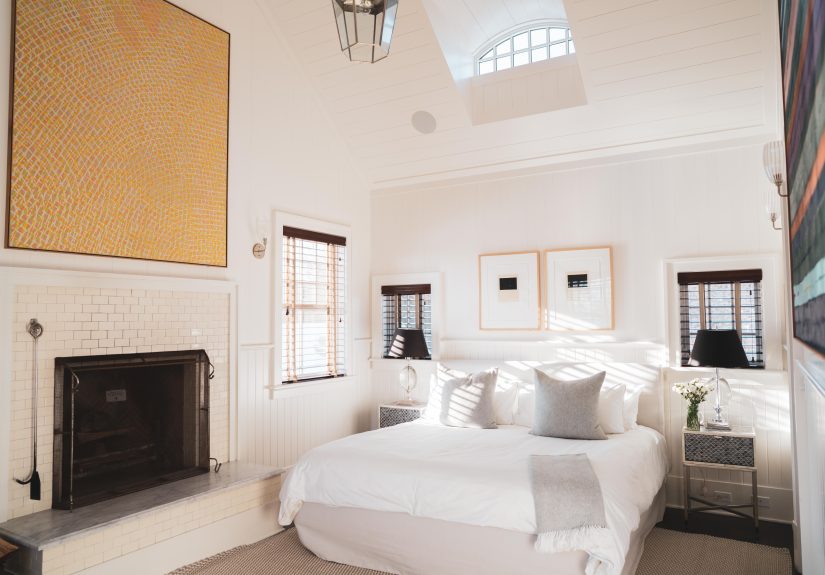
The dual fireplace made those in-between moments feel luxurious. One side faced inward, where soft bedding, pale upholstery, and warm lamplight made the room feel deeply restful. The other side faced outward, where a simple seating area instantly became the best place on the property after sunset. It was the same fire, but it changed character depending on where you stood. Indoors, it felt private. Outdoors, it felt social. Indoors, it invited you to slow down. Outdoors, it invited you to stay just one more hour.
That is the part I keep returning to. The feature did not just look good in photographs. It changed behavior. People gathered differently around it. The deck was used more. The interior felt more layered and intentional. Doors stayed open longer. The whole house seemed designed around comfort in a way that was subtle, not showy.
And maybe that is what good coastal design is really about. Not perfection. Not expensive finishes for the sake of bragging rights. Not a room so styled that nobody dares to sit down. It is about making a home feel easy to inhabit. A dual fireplace does that brilliantly because it supports the two best things a beach cottage can offer: connection and calm.
Connection, because it physically links two spaces and encourages people to move between them. Calm, because fire has a way of slowing the tempo of a room. It makes conversations stretch out. It makes reading feel richer. It makes a plain cup of tea feel suspiciously cinematic. Add that to the natural ease of coastal materials and soft light, and you have a home that feels restorative in a way that is hard to fake.
Since that experience, I have started noticing fireplaces differently in every house tour and design story I see. I pay attention to placement. I notice whether the surround feels heavy or light, whether the materials help the architecture, whether the room acknowledges the fire as a focal point or just leaves it stranded beneath a television the size of a moon landing screen. And yes, I have become deeply opinionated about indoor-outdoor living. This is who I am now.
If I were ever designing my own modern beach cottage, a dual fireplace would move from “nice idea” to “nonnegotiable splurge” very quickly. I would want one side facing a simple interior lounge with linen seating and a chunky woven rug, and the other opening onto a sheltered deck with low chairs, soft throws, and maybe a tiny table for coffee in the morning or a glass of wine at night. Nothing fussy. Nothing overdecorated. Just enough design to let the fire and the view do the talking.
That is why this modern beach cottage stayed with me. It did not just introduce me to dual fireplaces. It introduced me to a better version of coastal livingone that is warm without heaviness, elegant without stiffness, and memorable without trying too hard. Honestly, every house should be so lucky.
Final Thoughts
This modern beach cottage introduced me to dual fireplaces, but the real lesson was bigger than one clever feature. Great coastal design is about flow, restraint, texture, and atmosphere. A dual fireplace happens to bring all of that together in one move. It creates a focal point, defines zones, supports indoor-outdoor living, and adds the kind of warmth that makes a home feel used and loved rather than merely admired.
So if you are dreaming about a modern beach cottage, renovating a coastal home, or just trying to make your house feel more relaxed and welcoming, take this as your sign. Think beyond furniture. Think beyond paint. Think about how a home feels at 8 p.m. with the doors cracked open, the air cooling down, and one fire making two spaces feel like they belong to each other. That, my friend, is not just good design. That is a lifestyle upgrade with excellent lighting.