Table of Contents >> Show >> Hide
- What Is a Smoothie Subscription Service, Exactly?
- How We Chose the Best Smoothie Subscription Services
- 1. Splendid Spoon – Best Overall Smoothie Subscription
- 2. Daily Harvest – Best Organic, Plant-Forward Variety
- 3. Revive Superfoods – Best for Smoothie-Shop Quality at Home
- 4. Kencko – Best Budget-Friendly, No-Blend Smoothies
- 5. SmoothieBox – Best Value for Family-Friendly Smoothies
- 6. Hungryroot – Best for One-Stop Groceries and Smoothies
- 7. Frozen Garden – Best Whole-Food, No-Nonsense Blends
- 8. Factor – Best for Smoothies Plus Full Prepared Meals
- How to Choose the Right Smoothie Subscription for You
- Are Smoothie Subscriptions Worth It in 2025?
- Real-World Experiences with Smoothie Subscriptions (Extra Insights)
If you’ve ever stared at a sad, wilted bunch of spinach in your fridge and thought, “I was totally going to make smoothies this week,” you are not alone. That’s exactly why smoothie subscription services exploded over the last few years. In 2025, they’re smarter, more customizable, and way tastier than the dusty protein powder you bought in 2019.
This guide breaks down the 8 best smoothie subscription services of 2025, who they’re best for, what they cost, and how to pick the right one for your lifestyle. Whether you want grab-and-go bottles, freezer cups ready for the blender, or no-blend powdered mixes you can shake at your desk, there’s a service with your name (and your daily produce serving) on it.
What Is a Smoothie Subscription Service, Exactly?
A smoothie subscription service delivers smoothie ingredients or ready-to-drink blends straight to your door on a recurring schedule. Depending on the brand, you might get:
- Ready-to-drink bottles that live in your fridge and require zero effort.
- Pre-portioned freezer cups you just add liquid to and blend.
- Powdered mixes made from freeze-dried fruits and veggies that you shake with water or milk.
Most services focus on whole foods, minimal prep, and clear nutrition labels. Many offer options that are plant-based, gluten-free, high-fiber, or high-protein, making them an easy way to add fruits and vegetables into busy routines.
How We Chose the Best Smoothie Subscription Services
There are dozens of smoothie delivery brands out there now, but not all of them are worth your freezer space. For this list, we looked at:
- Ingredient quality: Emphasis on real fruits, vegetables, nuts, and seeds with minimal fillers and gums.
- Nutritional profile: Reasonable calories, fiber, and protein per serving, plus attention to added sugars.
- Flavor variety: Options beyond basic berry and banana, including greens, tropical, cocoa, and functional blends.
- Convenience: How much prep is required, how well items store, and how flexible the subscription is.
- Price and value: Cost per smoothie compared to what you’d pay at a local café.
- User experience: Reviews from dietitians, testers, and real customers in 2024–2025.
With that in mind, let’s meet the smoothie heavy-hitters of 2025.
1. Splendid Spoon – Best Overall Smoothie Subscription
Best for: Busy professionals who want ready-to-drink, plant-based smoothies with zero prep.
Splendid Spoon has become the go-to name in smoothie subscriptions because it checks almost every box: high-quality ingredients, chef-designed recipes, and bottles that are truly grab-and-go. The brand focuses on vegan, gluten-free, plant-based meals and smoothies, and its smoothie line features blends packed with fruits, veggies, nuts, seeds, and spices.
Most smoothies come in 16-ounce bottles that technically contain two servings, but in reality, most people drink the whole bottle as one satisfying portion. Flavors range from approachable (like Strawberry Chocolate) to functional (like Green Matcha or Blueberry Coconut loaded with good fats and antioxidants).
Pros:
- Fully prepared and ready to drinkno blender required.
- Plant-based and dairy-free, good for many dietary preferences.
- Can bundle smoothies with grain bowls, soups, and noodles for full meals.
Cons:
- On the pricier side per bottle, especially if you treat each as a single serving.
- Requires fridge space and has a shorter shelf life than powdered options.
Ideal for: Anyone who wants a “just open and sip” solution and is willing to pay more for convenience and quality.
2. Daily Harvest – Best Organic, Plant-Forward Variety
Best for: People who love smoothies but also want harvest bowls, flatbreads, and other plant-based meals.
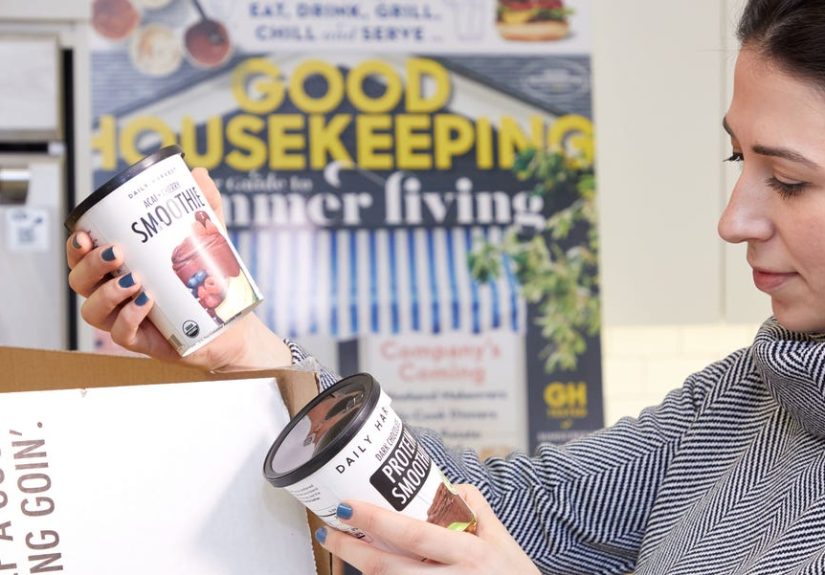
Daily Harvest helped make freezer smoothies mainstream, and in 2025 it’s still a favorite for organic produce and creative flavors. Instead of shipping premade drinks, the brand sends frozen cups filled with chopped fruits, veggies, seeds, and superfoods. You simply add your liquid of choice (water, milk, or juice) and blend.
Popular smoothie flavors include blends like Mango + Turmeric, Chocolate + Blueberry, and Greens + Ginger. The brand focuses on organic ingredients, minimal sweeteners, and functional add-ins such as adaptogens, healthy fats, and fiber.
Pros:
- Certified organic ingredients in most items.
- Excellent variety beyond smoothiesbowls, flatbreads, and more.
- Frozen cups make it easy to stock your freezer for weeks at a time.
Cons:
- Requires a blender and a bit of prep each time.
- Per-cup pricing is higher than powdered options.
Ideal for: Home smoothie fans who enjoy the ritual of blending and want organic, chef-inspired combinations ready to go.
3. Revive Superfoods – Best for Smoothie-Shop Quality at Home
Best for: People who want that “juice bar” feel without paying café prices.
Revive Superfoods sends you pre-portioned cups full of frozen ingredientsthink berries, leafy greens, nuts, seeds, and sometimes protein or oats. The flavor lineup is extensive, with classic berry combos, tropical smoothies, protein-heavy options, and more indulgent blends that taste like dessert but still pack nutrients.
To make a smoothie, you just fill the cup with liquid, pour into your blender, blend, and pour it back into the same cup. Many dietitians like the brand’s focus on fruit and vegetable variety, plus its willingness to add ingredients like chia seeds and flax for extra fiber.
Pros:
- Large flavor variety, including protein-packed and lower-sugar choices.
- Reusable cups keep things convenient and cut down on dishes.
- Often cheaper per smoothie than ordering from a local smoothie bar.
Cons:
- Some blends may include added sweeteners or thickenersalways check labels.
- Requires freezer space and a blender.
Ideal for: Smoothie lovers who want café-level taste without leaving home.
4. Kencko – Best Budget-Friendly, No-Blend Smoothies
Best for: Travelers, office workers, and minimalists who don’t own (or want to wash) a blender.
Kencko takes a different approach to smoothie subscriptions. Instead of frozen cups, it delivers powdered smoothie packets made from freeze-dried fruits and vegetables. Each packet typically includes the equivalent of about 2½ cups of produce and is free from refined sugar.
To prepare, you pour the packet into water or milk, shake vigorously, and drink. Flavors are color-codedPinks, Greens, Reds, Purpleseach focusing on different fruits and veggies. The texture is a bit lighter than a traditional smoothie, more like a thick juice, but the convenience is hard to beat and the price per serving is significantly lower than most frozen services.
Pros:
- Very affordable per serving compared to most frozen subscriptions.
- Shelf-stable packets require no freezer or fridge space.
- Great for travel, office use, or tiny kitchens.
Cons:
- Texture isn’t as thick and creamy as blended frozen smoothies.
- Some packets may need extra shaking or blending to fully dissolve.
Ideal for: Anyone focused on price and portability who still wants a big bump in daily produce.
5. SmoothieBox – Best Value for Family-Friendly Smoothies
Best for: Households that go through smoothies fast and want a good price per ounce.
SmoothieBox specializes in big bags of frozen smoothie blends that offer excellent bang for your buck. Instead of single-serving cups, you get multi-serving pouches filled with organic fruits and veggies, often combined with healthy fats and proteins.
Flavors tend to be more classicthink berry, cacao, and greensbut they’re designed to appeal to both adults and kids. Many blends include protein or collagen, which can make them more satisfying as meal replacements or post-workout shakes.
Pros:
- Strong value compared to many per-cup services.
- Family-friendly flavors that aren’t overly “green” or bitter.
- Organic ingredients and simple recipes.
Cons:
- Less adventurous flavor palette than some boutique brands.
- Requires measuring portions from bags and using a blender.
Ideal for: Families and heavy smoothie drinkers who want lower cost per serving and don’t mind scooping from larger bags.
6. Hungryroot – Best for One-Stop Groceries and Smoothies
Best for: People who want smoothies and groceries delivered in one box.
Hungryroot started as a healthy grocery plus recipe service, but in recent years it’s expanded its lineup of bottled smoothies and smoothie-friendly ingredients. Instead of being “just” a smoothie subscription, Hungryroot lets you allocate your subscription credits toward smoothies, fresh produce, snacks, and pantry essentials.
You’ll find both Hungryroot-branded bottled smoothies and third-party options in the mix, plus yogurts, plant-based milks, and frozen fruits if you prefer blending your own. This makes it simple to build a weekly box that covers both breakfast and snacks without multiple subscriptions.
Pros:
- Extremely flexiblesmoothies, groceries, and ready-made items in one plan.
- Bottled smoothies require zero prep.
- Ideal for people already relying on grocery delivery.
Cons:
- Not a smoothie-only service, so choices may change week to week.
- Nutrition profile varies widely by brand and product.
Ideal for: Busy households that want to streamline deliveries and keep breakfast as simple as “open bottle, drink smoothie.”
7. Frozen Garden – Best Whole-Food, No-Nonsense Blends
Best for: Ingredient purists who want smoothies that taste homemade.
Frozen Garden focuses on whole-food, minimally processed frozen smoothie blends with no powders, supplements, or mystery ingredients. Each blend contains fruits, vegetables, and sometimes herbs, spices, or seedsclearly listed on the label.
The brand’s flavors lean toward sophisticated but still approachable combinations, like greens balanced with pineapple or berry blends with added chia. The emphasis is on simplicity and real-food nutrition rather than trendy add-ins.
Pros:
- Transparent, short ingredient lists.
- No added sugars in many blends.
- Flavors feel like something you’d make at home if you had time to prep.
Cons:
- Requires freezing and blending.
- Limited availability in some regions depending on shipping.
Ideal for: People who care deeply about clean labels and want a “from-scratch” feel without chopping a single carrot.
8. Factor – Best for Smoothies Plus Full Prepared Meals
Best for: Anyone who wants grab-and-go smoothies with ready-made meals in the same subscription.
Factor is best-known as a fully prepared meal delivery service, but its lineup now includes bottled and frozen smoothies that complement its breakfasts, lunches, and dinners. While the smoothie menu is smaller than that of dedicated smoothie brands, Factor makes up for it with variety in the rest of your weekly box.
The smoothies often skew toward higher protein or balanced macronutrients, making them a solid choice for post-workout recovery or a quick breakfast alongside a small snack.
Pros:
- Lets you manage meals and smoothies from one subscription.
- Ready-to-drink options, no blender needed.
- Dietitian input on macronutrient balance for many menu items.
Cons:
- Smaller dedicated smoothie selection than standalone smoothie services.
- Best value if you actually want the full meal lineup, not just smoothies.
Ideal for: People already considering a prepared-meal service who also want better snack and breakfast options.
How to Choose the Right Smoothie Subscription for You
Still torn between freezer cups and powdered packets? Use these quick questions to narrow down your options:
1. Do you want to use a blender?
- No blender, please: Splendid Spoon, Kencko, Hungryroot, and Factor are your best bets.
- Blender is fine: Daily Harvest, Revive Superfoods, SmoothieBox, and Frozen Garden open up more whole-ingredient options.
2. What’s your budget?
- Most affordable per serving: Kencko and SmoothieBox usually come out ahead.
- Premium experience: Splendid Spoon and Daily Harvest are higher in price but also in perceived quality and convenience.
3. Are you replacing meals or just adding snacks?
- Meal replacement: Look for higher-protein and higher-calorie options from Splendid Spoon, SmoothieBox, Revive Superfoods, or Factor.
- Snack or produce boost: Kencko, Daily Harvest, and Frozen Garden work beautifully.
4. How important are organic ingredients and clean labels?
- Very important: Daily Harvest, SmoothieBox, and Frozen Garden tend to emphasize organic and whole ingredients.
- Somewhat important: Splendid Spoon and Revive Superfoods still focus on whole foods but may include more “fun” flavors and add-ins.
Are Smoothie Subscriptions Worth It in 2025?
Short answer: for many people, yes. Making a smoothie at home is cheaper on paper, but that assumes you always have fresh produce, time to prep, and the motivation to actually blend. Smoothie subscription services shine because they remove the friction:
- No last-minute grocery runs.
- No half-used bags of frozen fruit you forget in the back of the freezer.
- No thinking required before coffee.
If your goal is to eat more fruits and vegetables, reduce ultra-processed snacks, or simplify breakfast on workdays, a smoothie subscription can be a surprisingly powerful habit-builder. The key is matching the service to your lifestyle so you actually drink what shows up.
Real-World Experiences with Smoothie Subscriptions (Extra Insights)
Beyond specs and ingredient lists, what is it actually like to live with a smoothie subscription in 2025? Here are some practical, real-life observations that don’t always make it into marketing pages.
1. Your freezer (or pantry) becomes prime real estate
The first surprise for many new subscribers is just how much space those cute cups take up. A big box from Daily Harvest, Revive Superfoods, SmoothieBox, or Frozen Garden can easily fill half a freezergreat if smoothies are replacing multiple meals and snacks, less great if you’re already juggling frozen pizza, leftovers, and ice cream.
People in small apartments or dorms often find that powdered services like Kencko are a lifesaver. Shelf-stable packets live happily in a drawer or basket, and you don’t have to play Tetris every time a new shipment arrives.
2. Convenience really does change behavior
It’s easy to say “I’ll make smoothies from scratch” when you’re meal planning on Sunday. It’s a different story on Thursday morning when you’re late for work and the blender sounds like a jet engine. Smoothie subscriptions win because they remove decision fatigue.
Having a row of Splendid Spoon or Factor bottles in the fridge means breakfast is literally as simple as opening the door and grabbing one. Even freezer-based services like Daily Harvest and Revive Superfoods are much faster than washing and chopping fruit, especially if you’re making smoothies for multiple people.
3. Texture and sweetness levels vary more than you’d expect
One of the biggest “surprises” people mention is how different textures can be from brand to brand. Some Splendid Spoon and Revive flavors are thick and spoonable, almost like a shake, while others drink more like juice. SmoothieBox and Frozen Garden tend to feel homemade, especially if you control how much liquid you add.
With powdered options like Kencko, texture depends heavily on how vigorously you shake or whether you toss it into a blender. If you’re picky about mouthfeel, you may need a week or two of experimenting to dial in your preferred thickness and mixing method.
Sweetness is another variable. Brands that lean heavily on fruit will taste sweeter, while veggie-forward blends from Daily Harvest or Frozen Garden can feel more “green” and earthy. The nice thing about subscription models is that you can quickly rate or remove flavors that don’t suit your taste and lean into your favorites.
4. Subscriptions are flexiblebut you still have to manage them
Almost all of the top smoothie subscription services now offer flexible schedulingskip weeks, pause, or cancel. That said, it’s still on you to remember to adjust orders based on your calendar. People who travel often or eat out a lot may prefer subscriptions like Hungryroot or Factor where smoothies are just one part of a larger food plan rather than the main event.
A good rule of thumb: start with the smallest box or plan available, then adjust up once you know how many smoothies you realistically drink in a week. It’s better to run out and wait a few days than to discover a stack of forgotten cups buried under frozen peas.
5. The psychological “health halo” can be helpfulif you use it wisely
There’s something about opening your freezer and seeing colorful, fruit-and-veggie-packed cups that makes you feel like you have your life together. That “health halo” can be a powerful motivator, nudging you to reach for a smoothie instead of ultra-processed snacks.
At the same time, smoothie subscriptions work best when they complement balanced meals, not replace them entirely. Using high-protein or fiber-rich options as breakfast or post-workout fuel is great; relying only on fruit-heavy blends might leave you hungry later. Pairing your smoothies with healthy fats (like nut butter or avocado toast) or proteins (like yogurt or eggs) creates better long-term satisfaction.
Ultimately, the best smoothie subscription is the one that fits your budget, your kitchen, and your taste budsand actually helps you build sustainable, healthier habits in 2025 and beyond.
SEO JSON