Table of Contents >> Show >> Hide
- Myth #1: Minimalism Means Empty Rooms and Zero Personality
- Myth #2: Minimalist Homes Have to Be White, Beige, and Mildly Frightening
- Myth #3: Minimalism Is Cold, Uncomfortable, and Not Actually Livable
- Myth #4: Minimalism Is Only for People With Big Budgets
- Myth #5: Minimalism Means Throwing Everything Awayand It Can’t Work for Families or Small Spaces
- What Real-Life Experience Teaches You About These Minimalism Myths
- The Bottom Line
Minimalism has one of the worst branding problems in home design. Say the word out loud and half the room imagines a gorgeous, calm, easy-to-clean home. The other half pictures a rental apartment with one chair, one lamp, and the emotional warmth of a dentist’s waiting room. Somewhere along the way, minimalist design got flattened into a stereotype: white walls, zero personality, expensive furniture, and the kind of silence that makes you nervous to set down your coffee mug.
Designers, however, have been trying to clear this up for years. Real minimalism is not about turning your home into a museum where no one is allowed to sit. It is about intention. It is about choosing what stays, why it stays, and how each piece helps the room function, breathe, and feel good to live in. A minimalist home can be layered, cozy, family-friendly, colorful, and even a little quirky. In other words, it can still feel like youjust with less visual noise and fewer random objects that somehow migrated onto every flat surface like decorative raccoons.
If you have been curious about a more minimalist home but keep getting scared off by the myths, this is your permission slip to stop believing the nonsense. Let’s bust the five biggest minimalism myths designers want retired immediately.
Myth #1: Minimalism Means Empty Rooms and Zero Personality
This is probably the biggest misunderstanding of them all. Many people assume minimalism means stripping a room down until it looks like a hotel lobby that forgot to check in the guests. Designers see it differently. A minimalist room is not supposed to feel empty. It is supposed to feel edited.
That distinction matters. Empty means nothing is happening. Edited means only the right things are happening. A minimalist space may have fewer objects, but the pieces that remain usually have stronger presence: a sculptural chair, a beautiful light fixture, a ceramic bowl with actual character, or a single piece of art that does more heavy lifting than twelve generic wall prints ever could.
Personality in minimalist design comes from restraint, not absence. Instead of showing everything at once, the room gives your favorite pieces room to breathe. A vintage bench becomes more noticeable. A family photograph feels more intentional. A handmade vase suddenly gets main-character energy. Minimalism does not erase personal taste; it actually makes personal taste easier to see.
What designers want you to believe instead
Minimalism is about curating, not deleting your identity. If an object is beautiful, useful, meaningful, or all three, it belongs in the conversation. The goal is not to own nothing. The goal is to stop letting the room get crowded by things that say nothing.
Think of it like writing a better sentence. Good writing does not use every word in the dictionary. Good design does not use every item in the storage bin. A minimalist room still tells a story. It just stops mumbling.
Myth #2: Minimalist Homes Have to Be White, Beige, and Mildly Frightening
There is a persistent myth that minimalist interiors require an oath of loyalty to white paint, pale oak, and a single oatmeal-colored throw blanket. Sure, neutral palettes are common in minimalist spaces, but “common” is not the same as “mandatory.” Designers have been making it clear that minimalist homes can absolutely include color.
The real principle is cohesion, not colorlessness. Minimalist rooms usually feel calm because the palette is controlled, not because it is drained of life. That could mean warm whites and sandy neutrals, but it could also mean olive green, clay, charcoal, rust, navy, soft terracotta, or muted plum. Even black can feel elegant and minimalist when used with intention.
In fact, the all-white version of minimalism is one reason the style got labeled as cold and boring. Many designers now lean into warmer minimalism, which swaps stark whites for softer tones and adds richer wood finishes, earthy hues, and materials that feel grounded. The result is calmer than a high-contrast trend-heavy room, but far more inviting than the old “blank canvas forever” approach.
Color also does not have to scream to make a point. A minimalist room might rely on one signature accent: a moss-green chair, smoky blue cabinetry, or muted rose textiles. That little moment of color feels more memorable because the room is not competing with itself.
What designers want you to believe instead
Minimalism is not a ban on color. It is a reminder to use color deliberately. Choose fewer shades, repeat them thoughtfully, and let them support the mood of the room. Calm is not the same thing as bland. A home can be restrained without looking like it was designed by a gallon of primer.
Myth #3: Minimalism Is Cold, Uncomfortable, and Not Actually Livable
People often confuse sleek with sterile. The second a room has clean lines and less clutter, someone inevitably declares, “Looks nice, but I’d never want to live there.” Designers would like to file an official complaint.
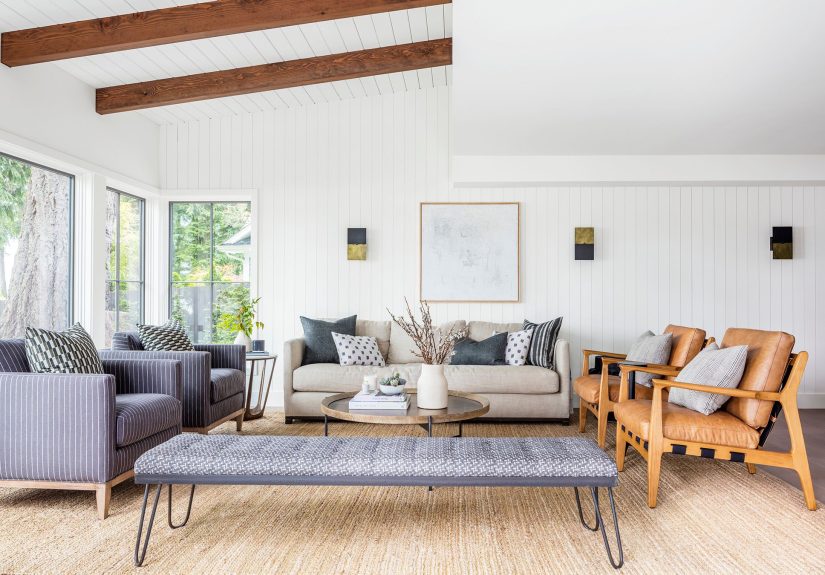
A good minimalist space should feel comfortable first. If it does not, it is not working. The secret is texture. Texture is what saves minimalism from feeling flat. Think linen curtains, nubby wool rugs, soft boucle upholstery, oak tables, plaster walls, matte ceramics, woven baskets, aged brass, leather accents, and natural stone. When a room uses tactile materials, even a simple palette feels rich and layered.
Comfort also comes from scale and proportion. Minimalist design is not about choosing the skinniest, hardest furniture known to humanity. A deep sofa in a simple silhouette can be minimalist. A rounded armchair can be minimalist. A chunky knit throw can be minimalist. Clean lines and comfort are not enemies; they just need a competent introduction.
Lighting plays a huge role here too. Harsh overhead lighting can make any space feel like an interrogation room, minimalist or not. Designers often build warmth through layered lighting: sconces, table lamps, floor lamps, and softer bulbs that make a room glow instead of glare. Suddenly the room feels calm, not clinical.
Minimalism also benefits from natural elements. Wood tones, plants, stone, and handmade materials keep the space from becoming too polished. That slightly imperfect, organic quality is often what makes minimalist rooms feel human. The room should whisper “welcome home,” not “please do not touch the decor.”
What designers want you to believe instead
Minimalism should be livable. If a room looks great on social media but feels terrible at 7:30 p.m. when you want to read, snack, and exist in sweatpants, it is not good design. A warm minimalist home is still simple, but it is soft around the edges where real life happens.
Myth #4: Minimalism Is Only for People With Big Budgets
This myth survives because minimalist homes are often photographed beautifully, and beautiful photography has a magical ability to make a lamp look like a financial decision that requires a co-signer. But minimalist design is not inherently expensive. In many cases, it is more affordable than constantly chasing trends and filling rooms with impulse purchases.
Minimalism begins with editing what you already own. That costs nothing. Rearranging furniture costs nothing. Removing visual clutter costs nothing. Painting a room a calmer color can be a relatively low-cost update with a huge payoff. Swapping chaotic accessories for fewer, more useful items is often cheaper than continuing to buy decor that does not really solve anything.
Designers also stress that minimalist homes do not need luxury everything. The goal is fewer, better choices over timenot a same-day transformation into a showroom. You can mix affordable basics with one or two investment pieces. You can shop secondhand. You can choose timeless shapes that will not feel dated in a year. You can use smart storage to make a room feel better without buying more decorative filler.
In fact, minimalism can save money because it puts friction between you and random purchases. When you start asking, “Does this improve function, comfort, or beauty in a meaningful way?” your shopping habits change fast. Suddenly you are not buying six tiny trendy objects to make a shelf look finished. You are buying one thing you actually like and then walking away like the emotionally mature adult your cart did not see coming.
What designers want you to believe instead
Minimalism is not about owning the most expensive version of less. It is about being more intentional with what you bring home. That can happen on almost any budget. Fancy minimalism exists, sure. But so does practical minimalism, renter-friendly minimalism, thrifted minimalism, and “I finally stopped buying nonsense for my entry table” minimalism.
Myth #5: Minimalism Means Throwing Everything Awayand It Can’t Work for Families or Small Spaces
This one scares people the most. They imagine minimalism as a ruthless purge, followed by a life of owning exactly two forks, one towel, and a single chair that somehow must serve the kitchen, living room, and emotional support needs of the entire household.
Designers do not define minimalism that way. Real minimalism is flexible. It depends on your lifestyle, your square footage, and the people using the space. A family with kids may need durable storage, easy-clean surfaces, baskets for toys, and more daily-use items than a single person in a studio apartment. That does not make the home “bad at minimalism.” It makes the home honest.
Minimalism works especially well in small spaces because it forces better decisions. In compact homes, every object needs a job. Furniture often has to multitask. Storage has to be smarter. Layout matters more. The good news is that minimalist principlesclarity, functionality, and intentionare exactly what help small rooms feel calmer and larger.
Families can benefit too. A simpler system is often easier to maintain. Fewer scattered toys on display, better drop zones near the entry, hidden storage that actually fits the things you use, and rooms that prioritize flow over excess decor can make daily life feel less chaotic. The point is not perfection. The point is reducing friction.
And no, minimalism does not require you to get rid of every sentimental object. It asks you to choose the most meaningful ones and display or store them in ways that support the room instead of overwhelming it. There is a big difference between honoring a memory and letting every souvenir from the last decade form a hostile takeover on your bookshelf.
What designers want you to believe instead
Minimalism is customizable. It is not a contest to own the fewest things. It is a framework for making your home easier to use and nicer to look at. A minimalist home for a family of five will not look like a minimalist home for one person, and that is exactly how it should be.
What Real-Life Experience Teaches You About These Minimalism Myths
Here is what tends to happen when people stop chasing the myths and start applying minimalist ideas in real life: the home gets better, not emptier. At first, many homeowners think they need a dramatic overhaul. They picture a weekend purge, a new sofa, matching storage bins, and maybe a personal transformation into someone who folds throws with spiritual precision. In reality, the biggest shift is usually much quieter.
It often starts with one frustrating corner. The entryway where shoes multiply overnight. The kitchen counter that has become a museum of mail, chargers, and one lonely banana. The bedroom chair that has not been a chair in months because it is currently employed as a wardrobe assistant. Once that one area is simplified, people notice something surprising: the room feels calmer almost immediately, even though nothing expensive happened.
Then comes the second lesson. People realize that minimalism is less about owning less in an abstract way and more about making daily routines easier. When the coffee mugs fit the cabinet without an avalanche, mornings feel smoother. When the living room has enough closed storage, cleanup takes ten minutes instead of an hour. When the nightstand holds only what you actually use, bedtime feels quieter. That is not design theory. That is lived experience.
Another common experience is discovering that warmth matters more than strict rules. Homeowners who try the ultra-stark version of minimalism often hit a wall fast. The room may look neat, but it does not feel good. So they add a woven rug, a lamp with a softer glow, a wooden stool, linen pillows, or art that means something. Suddenly the room clicks. The lesson is simple: people do not want less life in their homes. They want less distraction around the life already there.
Families learn this especially quickly. Parents often find that the most successful minimalist changes are not the most dramatic ones, but the most practical. A bin near the sofa for toys. Hooks at kid height. A small tray for papers. One shelf for favorite books instead of fifteen random stacks. These choices do not make the home look severe. They make it function better. And when a house functions better, it almost always looks better too.
Small-space dwellers tend to report a similar pattern. They do not need a miracle. They need breathing room. Once furniture is scaled correctly, storage is intentional, and surfaces are not overloaded, even a tiny apartment can feel stylish and relaxed. The space may still be small, but it stops feeling crowded. That emotional difference is huge.
Perhaps the most valuable experience of all is this: people become more selective. They stop buying decor just to fill visual gaps. They stop treating organization as a side hobby and start seeing it as part of design. They get clearer on what they actually like. The home begins to reflect their habits, values, and routines instead of random shopping moments from three versions of their former selves.
That is why the myths fall apart in real homes. Minimalism is not a punishment, a personality test, or a design cult led by beige candles. It is a practical, flexible way to create more ease. When people experience it that way, they rarely want to go back to rooms filled with things they neither need nor love.
The Bottom Line
Minimalism is not about deprivation. It is about clarity. Designers are not asking you to erase your personality, paint everything white, buy wildly expensive furniture, or throw out every possession that has ever made you smile. They are asking you to be more intentional: choose what supports your life, let go of what does not, and make room for beauty that actually feels good to live with.
So the next time someone says minimalism is boring, cold, unrealistic, or only for rich people with suspiciously empty countertops, feel free to smile politely and ignore them. A well-designed minimalist home is not less home. It is just less nonsense. And honestly, most rooms could use a little less nonsense.