Table of Contents >> Show >> Hide
- What Is This Hackaday Prize Entry All About?
- Why Hand Strength Measurement Matters After Stroke
- The Big Idea: Turning “Looks Better” Into Real Data
- How This Device Could Help in Real Rehabilitation Settings
- Where It Fits in the Bigger Rehab Picture
- Strengths of the Hackaday Prize Entry
- Limitations and Challenges
- Why This Project Still Deserves Attention
- Experiences and Lessons Around Post-Stroke Dynamometer Rehabilitation
Note: This article is for informational purposes only and is not a substitute for professional medical advice, diagnosis, or treatment.
Some inventions arrive wearing a lab coat. Others show up in a workshop, smelling faintly of solder and ambition. The Hackaday Prize entry “Dynamometer For Post Stroke Rehabilitation” belongs firmly in the second category. It is the kind of project that makes engineers nod, therapists lean in, and makers immediately think, “Okay, where’s the schematic?”
At its core, this project tackles a very real challenge in post-stroke rehabilitation: how do you measure hand and finger recovery in a way that is affordable, objective, and practical? Stroke recovery is rarely a straight line. Some days are a victory lap. Other days feel like trying to move a mountain with a teaspoon. For patients dealing with hand weakness, reduced coordination, spasticity, and impaired fine motor control, small gains matter. The problem is that small gains can be hard to see if the only measuring tool is a therapist saying, “Hmm, that seems a little better.”
That is exactly where a dynamometer for stroke rehab becomes interesting. Instead of relying only on observation, this kind of device gives users numbers, trends, and repeatable measurements. And numbers, unlike vague optimism, are wonderfully stubborn things.
What Is This Hackaday Prize Entry All About?
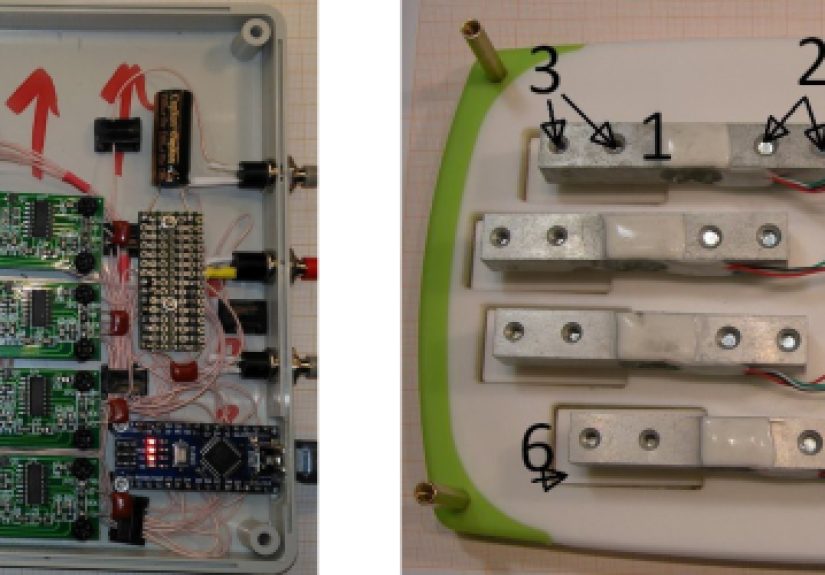
The project is an open-source, 4-channel differential dynamometer designed for post-stroke hand rehabilitation. In plain English, it is a device that measures finger pressing force across multiple sensors, then displays and logs that information. According to the project description, it includes four strain gauges, 24-bit ADCs, a device display, and PC software, all aimed at tracking the progress of a patient over time.
That alone makes it stand out. Many rehabilitation tools are effective but expensive, bulky, or difficult to customize. This build takes a different route. It aims to be comparatively low-cost, open-source, and easier to reproduce. That matters because stroke rehab does not happen only in elite clinics with glossy brochures and suspiciously happy stock photos. It also happens in ordinary homes, local therapy centers, and resource-constrained settings where affordability can determine whether a tool is used at all.
The spirit of the project is refreshingly practical. Rather than trying to build a science-fiction glove that looks like it escaped from a superhero movie, it focuses on a basic but essential task: measuring finger force accurately. That sounds simple until you remember the human hand is basically an overachieving mechanical puzzle with feelings.
Why Hand Strength Measurement Matters After Stroke
Stroke often leaves survivors with one-sided weakness, commonly called hemiparesis. This can reduce the ability to grab objects, coordinate movement, and perform everyday tasks like buttoning a shirt, holding a cup, turning a key, or using utensils without staging a minor kitchen drama. Fine motor problems in the wrist and hand can significantly affect independence and quality of life.
Rehabilitation starts early, often within a day or two after stroke, and may continue for weeks, months, or even years. Recovery varies widely. Some people regain function quickly; others face long-term disability and need structured support, repetition, and measurable feedback. This is why objective assessment tools matter so much. They help therapists and patients understand not just whether effort is happening, but whether progress is happening.
Clinical rehabilitation already relies on standardized measures. Tools such as the Fugl-Meyer Assessment help evaluate post-stroke motor recovery, while tests like the Jebsen-Taylor Hand Function Test assess practical hand use through activities of daily living. The TRI-HFT, meanwhile, specifically measures upper-extremity manipulation and grip force. In other words, the rehab world already values quantification. The Hackaday project fits into that same logic, but in a maker-built, open-hardware form.
The Big Idea: Turning “Looks Better” Into Real Data
One of the smartest aspects of this Hackaday Prize entry is that it confronts a common rehab problem: qualitative guesswork. If a patient squeezes a tennis ball today and squeezes it again next week, how much stronger are they really? Enough to celebrate? Enough to change the exercise plan? Enough to justify that triumphant “I’m back” playlist? Without measurement, it is hard to know.
A dynamometer solves that by converting force into data. In this project, finger presses are measured through strain gauges and digitized using high-resolution electronics. The result is a clearer picture of performance: how much force is being applied, whether one finger is improving faster than another, and whether overall hand control is changing over time.
This matters because recovery is often uneven. A patient may gain strength before dexterity. Another may improve endurance but still struggle with precision. One finger may remain stubbornly weak while the others begin to cooperate. Detailed force readings can expose those differences in a way that general observation often misses.
Why Engineers Should Care
From an engineering standpoint, the project is a neat example of how assistive technology can be both sophisticated and accessible. It uses familiar components, emphasizes measurement fidelity, and pairs hardware with software for logging and analysis. That combination turns the device from a one-time gadget into a tool for longitudinal tracking.
And that is the magic word here: tracking. Rehab is not a single event. It is a sequence of small attempts, repeated exercises, and gradual change. A tool that captures those changes over time becomes far more useful than one that produces a lone flashy number and then disappears into a drawer next to three dead chargers and a mystery Allen key.
How This Device Could Help in Real Rehabilitation Settings
For stroke survivors, everyday goals often revolve around activities of daily living: getting dressed, eating independently, preparing food, writing, using a phone, or returning to work and hobbies. Rehabilitation professionals frequently build therapy plans around those goals, because improvement is most meaningful when it translates into real life.
A device like this could support that process in several ways:
1. Baseline Testing
At the beginning of therapy, the dynamometer can help establish how much force each finger or the hand as a whole can generate. That baseline gives therapists and patients a starting point that is more precise than “the hand is weak.”
2. Progress Monitoring
As therapy continues, repeated tests can reveal whether the patient is improving in strength, symmetry, or consistency. That feedback can be encouraging. It is one thing to feel like progress might be happening. It is another to see the graph and say, “Oh, wow, my index finger has stopped behaving like it is on strike.”
3. Exercise Adjustment
If the data shows plateauing, therapy intensity or exercise selection can be adjusted. If one grip pattern improves but another lags, treatment can become more targeted. That kind of fine-tuning is especially useful in upper-limb rehab, where generalized exercise does not always restore meaningful hand function.
4. Home Rehabilitation Support
Because the project is open-source and comparatively low-cost, it has potential beyond hospitals and specialized labs. A home-use or community-clinic version could make structured measurement more widely available, especially in settings where expensive commercial systems are out of reach.
Where It Fits in the Bigger Rehab Picture
It is important to be realistic: a dynamometer is not a miracle machine. It does not replace occupational therapy, physical therapy, or medical supervision. It does not teach movement patterns on its own. And it cannot instantly turn a difficult recovery into an easy one, because that is not how neurology works and, frankly, not how Tuesdays work either.
What it can do is strengthen the measurement side of rehabilitation. In modern stroke care, data-driven evaluation is increasingly important. Clinicians use validated assessments because they need consistent, objective ways to measure function. Researchers use force, motor scores, and task-based tests to determine whether an intervention is helping. Patients benefit when therapy is guided by evidence rather than wishful thinking.
This project aligns with that broader shift. It brings quantitative thinking into an open-hardware rehab device and demonstrates how maker culture can support healthcare innovation. That is one reason the entry feels so compelling. It is not just building a thing. It is building a bridge between DIY engineering and clinical need.
Strengths of the Hackaday Prize Entry
Open-Source Accessibility
The open-source approach is one of the project’s strongest features. It lowers barriers for replication, modification, and improvement. In assistive tech, openness can be a force multiplier. One well-documented project can inspire therapists, students, biomedical engineers, and hackerspaces to adapt the design for different patients and use cases.
Low-Cost Potential
Commercial rehabilitation technology can be expensive enough to make your wallet stage a silent protest. A more affordable alternative has obvious appeal, especially for community programs, educators, and independent developers exploring rehab tools.
Quantitative Feedback
The device’s biggest practical advantage is objective force measurement. Rehab thrives on feedback. When patients can see measurable gains, motivation often improves. When therapists can compare sessions consistently, treatment decisions become sharper.
Focus on a Real Need
This is not a gadget searching for a problem. Post-stroke hand impairment is common, disruptive, and hard to measure precisely outside specialized setups. The project addresses a real rehabilitation gap with a focused solution.
Limitations and Challenges
Like any promising prototype, the concept also raises important questions. Measurement is valuable, but real-world use depends on more than hardware specs.
Clinical Validation
To move from clever project to trusted rehab tool, devices like this need validation against established clinical measures. Accuracy, repeatability, ease of use, and correlation with functional outcomes all matter.
User Comfort and Ergonomics
Stroke survivors may have spasticity, pain, reduced range of motion, or fatigue. A rehab tool has to be physically comfortable and cognitively simple enough to use consistently. In rehabilitation, elegant engineering loses points quickly if the patient takes one look at it and says, “Absolutely not.”
Meaningful Data Interpretation
Numbers are helpful, but context is everything. An increase in pressing force is encouraging, yet rehabilitation success is also about coordination, task performance, endurance, and daily independence. The best use of a dynamometer is as part of a broader assessment strategy, not as the sole judge and jury of recovery.
Why This Project Still Deserves Attention
Even with those caveats, the project deserves real credit. It represents the best kind of maker thinking: grounded, compassionate, and technically purposeful. Instead of building a novelty, it addresses a problem that affects millions of people living with the consequences of stroke. It also reflects a broader truth about innovation in healthcare: not every important advance comes from a giant corporation with a polished launch video and a logo that cost more than a small apartment.
Sometimes innovation begins with a simple question: what if we could measure this better? And sometimes that question leads to better rehab tracking, more informed therapy, and a more empowering recovery experience for patients.
Experiences and Lessons Around Post-Stroke Dynamometer Rehabilitation
One of the most striking things about post-stroke recovery is how deeply personal it is. Two people can have similar diagnoses and completely different rehabilitation stories. One person might regain grip strength steadily but struggle with finger isolation. Another might recover enough force to hold a mug but still find shirt buttons impossibly tiny, like they were designed by a committee of gremlins.
In that context, a dynamometer becomes more than a measuring tool. It can become a witness to effort. That may sound dramatic, but in rehabilitation, effort is everything. Patients repeat exercises day after day, often with slow progress that is hard to feel in the moment. A device that records a small increase in force can validate weeks of persistence. It says, in numbers, what the patient hopes is true: the work is doing something.
Therapists, too, often benefit from objective tracking. In many rehab settings, clinical time is limited. Sessions have to balance stretching, task practice, education, compensatory strategies, and motivation. A simple, reliable measurement tool can help focus those sessions. It gives structure to decisions: keep going with the current plan, increase difficulty, or pivot toward a different exercise pattern.
There is also an emotional side to measurement. Recovery after stroke can be frustrating because survivors frequently compare what they can do now with what once felt automatic. Writing a grocery list, holding a toothbrush, opening a jar, tying a shoe: these are not glamorous tasks, but they are deeply human markers of independence. A tool that tracks hand improvement does not just measure force. It measures the possibility of getting a piece of ordinary life back.
For caregivers and family members, quantifiable progress can also reduce uncertainty. Loved ones want to help, but they often struggle to tell whether home exercises are making a difference. A rehab device with visual feedback can turn vague encouragement into something more concrete. Instead of saying, “I think you’re doing better,” they can say, “You’re pressing harder than you were last month, and your control is steadier too.” That changes the tone of recovery from hopeful guessing to informed support.
From the maker perspective, projects like this are inspiring because they remind us that engineering does not have to be flashy to be meaningful. A board, sensors, firmware, and a software interface may not sound cinematic, but when those pieces come together around a human need, they become powerful. Open-source rehab tools also invite collaboration. A biomedical student might improve calibration. A therapist might suggest a better hand position. A software developer might add clearer progress charts. A patient might reveal the one usability issue no one else noticed.
That collaborative possibility may be the most exciting part of the Hackaday Prize entry. It opens the door to iteration. And iteration is the secret language spoken by both engineering and rehabilitation. You test, adjust, repeat. You learn what works, what fails, what needs refinement, and what unexpectedly helps. Whether you are debugging a sensor board or relearning hand function after stroke, progress is often built the same way: one imperfect attempt at a time.
In the end, the value of a project like this is not just in the electronics. It is in the mindset behind it. It respects the difficulty of stroke recovery. It respects the need for objective measurement. And it respects the idea that useful healthcare technology can be built to be shared, improved, and made more accessible. That is not just smart design. It is humane design.
So yes, the Hackaday Prize entry “Dynamometer For Post Stroke Rehabilitation” is a clever piece of hardware. But more importantly, it is a reminder that good assistive technology does not merely count force. It helps count progress, possibility, and persistence. And for anyone navigating the long road of stroke hand rehabilitation, those things matter a great deal.