Table of Contents >> Show >> Hide
- Who Is the Japanese Artist Behind These Optical Illusion Drawings?
- Why These Drawings Look Like Optical Illusions
- The Art Tradition Behind the Trick: Trompe L’oeil
- Hyperrealism, Photorealism, and the “Is This a Photo?” Effect
- What Makes the 29 Drawings So Addictive to Look At?
- Lessons Artists Can Learn From Keito’s Optical Illusion Style
- Why Optical Illusion Art Performs So Well Online
- Specific Examples of What Makes These Drawings Convincing
- The Bigger Meaning: Seeing the Ordinary Again
- Experience Section: What It Feels Like to Spend Time With These Illusion Drawings
- Conclusion: When a Drawing Becomes a Double Take
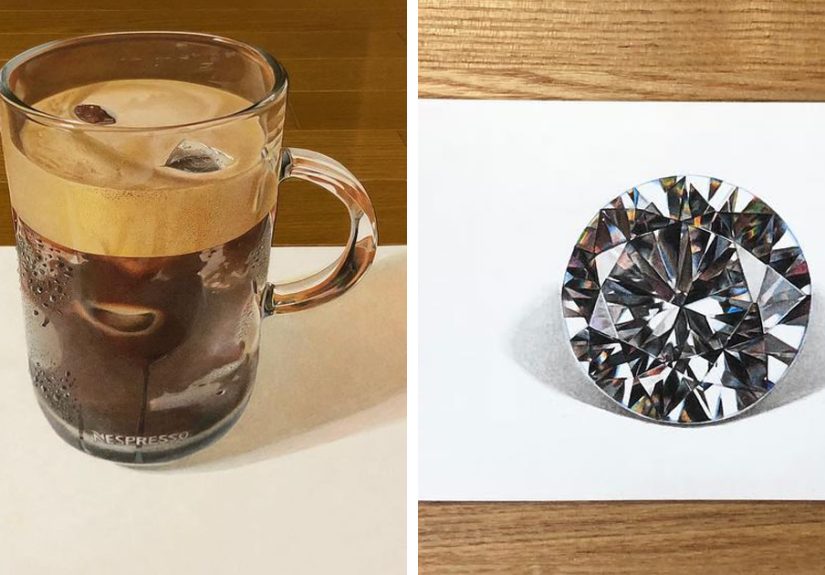
Some drawings politely ask to be admired. Others grab your brain by the collar, shake it gently, and say, “Look again, buddy.” The viral works of Japanese artist Keito, also known online as yassun0222k, belong firmly in the second category. His hyper-realistic drawings of everyday objectscans, keys, food, gems, wrappers, and small items you might normally ignore on a tablelook so convincing that the first reaction is usually not “beautiful,” but “Wait… is that real?”
That tiny moment of confusion is the magic. Keito’s drawings do not rely on neon spirals, spinning patterns, or classic black-and-white optical illusion tricks. Instead, they use careful shading, perspective, highlights, texture, and placement to make flat paper appear three-dimensional. The result is a collection of drawings that feel like visual pranks with excellent manners: quiet, precise, and extremely good at fooling your eyes.
In this article, we explore why these 29 drawings feel so astonishing, how they connect to the long history of trompe l’oeil and hyperrealism, and what artists, designers, students, and casual doodlers can learn from them. Grab your pencil. Or do not. After seeing these pieces, you may look at your pencil suspiciously.
Who Is the Japanese Artist Behind These Optical Illusion Drawings?
Keito is a young Japanese artist who gained attention online for colored pencil and graphite works that appear almost indistinguishable from real objects. Public art blogs described him as only 18 years old when his work began spreading widely, which made the technical control even more impressive. Many artists spend decades learning how to draw a soda can that looks like a soda can; Keito draws one that looks like it might roll off the page and ruin your carpet.
His subjects are intentionally familiar. Instead of dragons, castles, or cosmic dreamscapes, he often chooses ordinary items: a crushed can, a snack, a key, a shiny stone, a piece of packaging, a coin-like object, or something small enough to sit in your palm. That choice matters. The viewer already knows how these things should look, weigh, shine, bend, and cast shadows. When a drawing matches those expectations, the brain quickly accepts it as real.
In other words, Keito’s art works because it is not trying to look magical. It looks normaltoo normal. And that is where the illusion begins.
Why These Drawings Look Like Optical Illusions
Optical illusions happen when the information received by the eyes does not match what the brain finally interprets. In Keito’s drawings, the illusion is not caused by movement or color vibration. It comes from realism pushed to a level where a flat image seems to have physical presence.
1. Shadows Create the Lie Your Brain Believes
One of the strongest tools in realistic drawing is the cast shadow. When an object blocks light, it leaves a shadow on the surface beneath it. Our brains read that shadow as evidence that the object occupies space. Keito uses shadows carefully, often placing them beneath drawn objects in a way that makes them appear slightly raised from the paper.
A key, for example, does not need dramatic lighting to look real. It needs the right edge, the right metallic reflection, and a shadow that says, “Yes, I am sitting here.” Once those pieces line up, the viewer’s brain signs the paperwork and accepts the illusion.
2. Highlights Make Flat Surfaces Look Glossy
Shiny objects are excellent illusion material because they reflect light in sharp, specific ways. A soda can, a rhinestone, or glossy packaging can look fake if the highlights are slightly wrong. But when the bright spots, dark bands, and reflected shapes are placed accurately, the drawing begins to sparkle like the real thing.
Keito’s work often captures these tiny shifts in value. A thin white highlight along an edge can make metal look curved. A soft gradient can make plastic look smooth. A dark reflection can make a gem feel transparent or raised. These details are small, but together they create the visual equivalent of a magician’s “nothing up my sleeve” moment.
3. Perspective Turns Paper Into Space
Perspective is the quiet engine behind many 3D drawings. If the angles are correct, a flat shape can appear to tilt toward or away from the viewer. When a can is drawn from above, the ellipse at the top must be convincing. When a rectangular package is drawn at an angle, the sides must narrow naturally. If one line goes rogue, the illusion collapses like a cardboard chair at a family barbecue.
Keito’s drawings succeed because the perspective is disciplined. Even when the subject is simple, the structure feels believable. That gives the realistic textures a solid foundation.
The Art Tradition Behind the Trick: Trompe L’oeil
Keito’s drawings fit beautifully into the tradition of trompe l’oeil, a French term meaning “deceive the eye.” Trompe l’oeil art uses extreme realism to make viewers believe they are seeing real objects or three-dimensional space on a flat surface. The style has appeared in murals, still-life painting, architecture, stage design, and interior decoration for centuries.
The idea is simple but endlessly entertaining: paint or draw something so convincingly that the viewer hesitates. Is that a real note pinned to the wall? Is that shelf actually carved into the room? Is that snack sitting on the paper, or is the paper lying to me again?
Keito updates this old tradition for the social media age. Instead of grand palace walls or painted architectural ceilings, the illusion appears in small, shareable drawings. The viewer encounters the trick on a phone screen and still feels the urge to zoom in. That is one reason these works spread so easily. They invite instant participation. You do not merely view them; you test them.
Hyperrealism, Photorealism, and the “Is This a Photo?” Effect
Keito’s drawings are also connected to hyperrealism and photorealism, art styles known for extreme detail and photographic accuracy. Photorealism is often associated with artists who recreate images with such precision that they resemble photographs. Hyperrealism can go even further, emphasizing texture, light, and presence so intensely that the artwork feels more vivid than ordinary reality.
That is exactly what makes these Japanese optical illusion drawings so satisfying. They are not just accurate; they are dramatically accurate. The viewer notices the wrinkles in packaging, the dents in metal, the shine on plastic, the grain of paper, and the way a shadow fades. These are the clues we use every day to understand the physical world. Keito gathers those clues and arranges them into a convincing little visual trap.
The funny part is that the subject matter is often humble. A crushed can is not glamorous. A key is not majestic. A snack wrapper is not normally museum behavior. But when drawn with this much skill, the ordinary becomes fascinating. The art says, “You thought this object was boring? Look closer.”
What Makes the 29 Drawings So Addictive to Look At?
There is a reason people love scrolling through collections of illusion drawings. Each image becomes a tiny challenge. The viewer wants to solve it: Where does the drawing end? Where does the real surface begin? How much of this is pencil? Is the shadow drawn too? Why am I arguing with a picture of a can?
The Pleasure of Being Fooled
Most of the time, being wrong is annoying. In art, being wrong can be delightful. A good illusion gives the viewer a safe, playful mistake. You think you are seeing an object, then discover it is a drawing. The surprise creates pleasure because it reveals skill. The artist did not fool you by hiding information; he fooled you by showing you information so well that your brain completed the illusion.
The Beauty of Everyday Objects
Keito’s drawings also remind us that everyday objects are visually rich. A can has curves, reflections, printed design, dents, and shadows. A piece of food has texture, color shifts, crumbs, and irregular edges. A key has worn metal, scratches, holes, and tiny changes in thickness. These things are easy to overlook in real life because we use them, toss them, or forget them.
In a drawing, however, they become stars. The humble object gets a close-up. The viewer slows down. Suddenly, a wrapper has drama. A snack has architecture. A rhinestone has a personality problem because it is clearly showing off.
Lessons Artists Can Learn From Keito’s Optical Illusion Style
You do not need to draw at Keito’s level to learn from his approach. In fact, his work is valuable because it reveals the building blocks of realism. The illusion may look mysterious, but the method depends on practical skills that any artist can study.
Study Real Objects, Not Just Photos
Photos are useful, but real objects teach you how light behaves in space. Place a can, key, or spoon on white paper and observe it for five minutes. Notice where the highlight is sharp, where the shadow is soft, and where reflected light bounces back into the dark side. That observation is the foundation of convincing drawing.
Master Values Before Details
Beginners often rush into tiny details because details feel impressive. But realism depends first on valuesthe range from light to dark. If the big shadows and highlights are wrong, no amount of tiny scratches will save the drawing. Keito’s work succeeds because the value structure is strong before the details arrive.
Edges Matter More Than You Think
Some edges in a realistic drawing are sharp. Others are soft. A metal rim may need a crisp line, while a shadow fading across paper needs a gentle transition. Controlling edges helps create depth. It tells the viewer what is solid, what is soft, what is close, and what is slightly out of focus.
Patience Is a Technique
Hyper-realistic art is not only about talent. It is also about patience. Building smooth gradients, layering pencil color, adjusting shadows, and refining tiny reflections take time. The finished drawing may look effortless, but the process is usually slow and careful. Basically, it is the opposite of panic-doodling in the corner of your math notebook.
Why Optical Illusion Art Performs So Well Online
Optical illusion drawings are perfect for the internet because they create instant engagement. People stop scrolling when an image causes uncertainty. The brain wants closure. It wants to know whether the object is real or drawn. That extra second of attention is powerful in a fast-moving digital feed.
These works also encourage sharing. A viewer sends the image to a friend with a message like, “Look at this,” or “No way this is a drawing.” The artwork becomes a conversation starter. It does not require a degree in art history to appreciate. The reaction is immediate and universal.
At the same time, the drawings reward deeper looking. After the first surprise, viewers can admire the technique: the layering, the control, the composition, and the tiny decisions that make the illusion work. That combination of instant wow-factor and lasting craftsmanship is rareand extremely clickable.
Specific Examples of What Makes These Drawings Convincing
Imagine a drawn soda can. The illusion depends on several elements working together: the oval top, the curved side, the reflective metal, the printed label, the dark opening, and the shadow underneath. If the can is crushed, the challenge becomes even greater because the artist must show irregular folds and dents while keeping the object structurally believable.
Now imagine a drawn key. A key is familiar, but it is not simple. It has hard edges, cut teeth, small holes, metallic reflections, and surface wear. The artist must make it feel thin but solid. Too much shadow and it looks thick; too little and it floats awkwardly. The sweet spot is narrow.
Food drawings present another challenge. A snack or sweet item may have crumbly edges, translucent parts, powder, shine, or soft texture. The viewer knows when food looks wrong because we have spent our lives staring at snacks with great emotional commitment. A realistic food drawing must capture both structure and appetite.
Rhinestones or gem-like objects are especially tricky because they depend on reflections and refractions. They are tiny architecture made of light. To draw them convincingly, the artist must break the object into planes, highlights, and dark facets. When done well, the result looks like it is sitting on the paper, waiting to be picked up.
The Bigger Meaning: Seeing the Ordinary Again
The charm of Keito’s optical illusion drawings is not only technical. These works also change how we see ordinary life. A discarded can, a key, a wrapper, or a small shiny object becomes worthy of careful attention. The drawing asks us to slow down and notice form, light, and texture in things we normally treat as background noise.
That is one of art’s best tricks. It does not always need to invent a new world. Sometimes it simply returns the existing world to us with sharper edges. After looking at these drawings, you may notice the reflection on your spoon, the shadow under your phone, or the tiny folds in a candy wrapper. Congratulations: your brain has been upgraded, and it did not even ask for a software update.
Experience Section: What It Feels Like to Spend Time With These Illusion Drawings
Looking at Keito’s drawings is a strangely personal experience because the first reaction is usually private embarrassment. You think you are looking at a real object. Then you realize it is a drawing. Then you zoom in. Then you zoom in again, because apparently pride has left the building. The best optical illusion drawings create this funny little loop: belief, doubt, investigation, admiration.
One of the most enjoyable things about this kind of art is that it makes viewing active. You are not just passively receiving an image. You are checking the edges, following the shadow, comparing the drawn object with the paper surface, and searching for the moment where the trick reveals itself. It feels a bit like detective work, except the suspect is a very realistic snack.
For artists, the experience can be both inspiring and mildly rude. Inspiring, because it proves what careful observation and practice can achieve. Mildly rude, because your own sketchbook may suddenly look at you with judgment. But that feeling can be useful. Instead of seeing Keito’s work as unreachable perfection, it helps to see it as a map. Every convincing illusion is made from smaller choices: one accurate shadow, one clean edge, one patient layer of color, one corrected angle.
For non-artists, these drawings offer a different pleasure. They make the familiar feel surprising again. Many people move through daily life on autopilot. We see cans, keys, wrappers, and bits of food without really seeing them. A hyper-realistic drawing interrupts that habit. It says, “This object has shape. This object has light. This object has a tiny drama happening on its surface.” That may sound dramatic for a can, but honestly, some cans have been through a lot.
There is also something calming about studying these works. In a world full of fast images, loud feeds, and content begging for attention, a realistic drawing rewards slow looking. The longer you look, the more you notice. A soft shadow becomes important. A reflection becomes evidence. A crease becomes structure. The artwork teaches patience not by lecturing, but by making patience enjoyable.
These drawings are especially useful for students or beginner artists because they show that realism is not magic. It is a collection of learnable observations. Start with simple objects. Put them under one light source. Notice the darkest dark and the lightest light. Draw the big shapes first. Add texture later. Do not panic when it looks terrible halfway through; many realistic drawings go through an awkward teenage phase. Keep adjusting, keep comparing, and keep looking.
The lasting experience of Keito’s optical illusion art is wonder. Not the loud kind of wonder, but the quiet kind that makes you look twice at your desk after closing the browser. That is the real success of these 29 drawings. They do not only trick the eye for a moment. They train the eye to become more curious afterward.
Conclusion: When a Drawing Becomes a Double Take
“29 Drawings By This Japanese Artist That Look Like Optical Illusions” is more than a catchy title. It describes the rare pleasure of seeing technical skill meet everyday subject matter in a way that feels fresh, funny, and genuinely impressive. Keito’s art shows how pencil, paper, patience, and observation can turn ordinary objects into visual puzzles.
These drawings sit at the crossroads of hyperrealism, trompe l’oeil, and internet-friendly optical illusion art. They remind us that the eye is easy to fool, the brain is eager to guess, and a talented artist can use both facts to create something unforgettable. Whether you are an artist studying technique or a casual viewer enjoying the trick, the lesson is the same: look closer. Reality has details, and sometimes paper does too.
Note: This article is original web content written in standard American English and synthesized from public information about the artist, optical illusion art, trompe l’oeil, hyperrealism, photorealism, and visual perception. No direct source links or publishing clutter are included in the article body.