Table of Contents >> Show >> Hide
- Why This Designer Visit Still Matters
- The Setting: June Taylor’s Still-Room in Berkeley
- Heidi Swanson Brings the Menu, and the Mood
- Little Flower School and the Art of Relaxed Flowers
- Why the Collaboration Worked So Beautifully
- Design Lessons You Can Borrow from the Still-Room
- An Experience Related to This Visit: What a Guest Would Likely Feel in the Room
- Conclusion
Some design stories age like milk. Others age like marmalade: deeper, brighter, and somehow more interesting once a little time has passed. “Designer Visit: Heidi Swanson, June Taylor, and the Little Flower School at the Still-Room” belongs firmly in the marmalade category. On paper, it sounds like a niche collision of names from the worlds of food, flowers, and California craft. In practice, it is a tiny masterclass in how to build atmosphere without turning a room into a stage set.
At the center of this gathering was June Taylor’s Still-Room in Berkeley, a work space that managed to feel both practical and enchanted. Into that setting came Heidi Swanson, the influential voice behind 101 Cookbooks and Super Natural Every Day, along with the Little Flower School, the floral project created by Nicolette Owen and Sarah Ryhanen. The result was not just a stylish event. It was a lesson in how food, flowers, and space can speak the same language when the people involved care about seasonality, restraint, and beauty that actually earns its keep.
Why This Designer Visit Still Matters
What makes this visit so memorable is that it never chases spectacle. Nobody seems interested in proving how “creative” they are with a capital C. There are no giant installations begging for applause and no overwrought menu theatrics trying to convince you a lentil has just completed a residency in Copenhagen. Instead, everything is grounded. The flowers are lush but relaxed. The food is nourishing but elegant. The room is styled, yet still obviously a place where actual work happens.
That balance is rare. A lot of modern entertaining either leans too polished or too performatively rustic. This gathering avoided both traps. It had a real table, real tools, real ingredients, and real texture. Better still, it understood something many lifestyle stories forget: when the setting is honest, even small details feel cinematic.
The Setting: June Taylor’s Still-Room in Berkeley
A room with history in its bones
The Still-Room was the perfect backdrop because it already carried meaning before a single flower stem hit the counter. June Taylor’s interpretation of the “still room” drew from an old British domestic tradition: a separate place for preserving, specialty baking, medicine, and work tied to gardens and orchards. That historical echo matters because it tells you exactly what kind of beauty lived here. Not beauty for decoration alone, but beauty tied to usefulness, memory, and the rhythms of the seasons.
Physically, the space had the right kind of humility. Taylor’s Still-Room occupied a former electrical company building, which she adapted into a simple workshop with the kitchen at its center and a small shop in front. She even added a skylight because seeing the color of fruit clearly mattered to the work. That detail says everything. In the Still-Room, color was not a branding exercise; it was part of craft.
The surfaces did a lot of quiet storytelling. Butcherblock countertops doubled as buffet tables. Cabinets held jars of preserves, conserves, and marmalades. Fruit peels dried on racks. Labels waited to be applied. In another space, these things might have read as props. Here, they were evidence. June Taylor’s world was built on patient transformation: peel to candy, fruit to conserve, herb to syrup, season to memory. No wonder the room looked so good. Rooms devoted to serious making usually do.
Why June Taylor’s aesthetic feels different
Taylor’s preserves were beloved not just because they were delicious, but because they reflected a whole philosophy. She was known for local sourcing, foraging, and using the whole fruit rather than wasting parts that still held flavor or function. Flesh and peel could become marmalade, seeds and membranes could contribute pectin, and leftover ends could become candied fruit. That approach gives the Still-Room its emotional charge. It is a place built around attention.
And attention, not luxury, is what makes a room feel rich.
Heidi Swanson Brings the Menu, and the Mood
From 101 Cookbooks to Super Natural Every Day
Heidi Swanson was already a major figure in modern home cooking by the time of this visit. She started 101 Cookbooks in 2003, long before food blogging became an industrial complex of overhead shots and affiliate links. Her work stood out because it made whole-food, vegetarian cooking feel intelligent, calm, and deeply livable. She was not selling guilt or health-food asceticism. She was making the case that nourishing food could also be beautiful, generous, and weeknight-friendly.
That sensibility carried directly into Super Natural Every Day, the cookbook featured in the event. The book’s promise was wonderfully unglamorous in the best way: approachable, good-for-you recipes that people would actually return to. Not “special occasion food” in the formal sense, but food that makes everyday life look a little more graceful.
For the Still-Room gathering, that philosophy translated into a menu that felt perfectly calibrated to the setting. Swanson served green lentil soup with curried brown butter in tiny Weck jars, plus crostini with goat cheese, yellow split peas, and chives. Even the menu format mattered. Little jars, small toasts, layered textures, edible colors, and portable portions all reinforced the room’s mood of crafted abundance. This was food that invited lingering, not performance.
Why Swanson’s cooking worked in this room
Swanson’s food tends to look like it belongs in rooms where people notice light, grain, ceramics, and linen. That is not an insult to the food; it is a compliment to how complete her point of view is. Her recipes do not merely feed people. They participate in a larger domestic atmosphere. That is why putting her menu inside June Taylor’s Still-Room made so much sense. The jars of preserves, the butcherblock counters, the floral arrangements, and the lentil soup were all making the same argument: daily life deserves care.
There is also a refreshing lack of excess in Swanson’s cooking. Lentils remain lentils. Brown butter remains brown butter. The ingredients are treated with respect, not costume jewelry. In design terms, that is the culinary equivalent of choosing one excellent vintage chair instead of six trendy ones with terrible posture.
Little Flower School and the Art of Relaxed Flowers
Flowers that look like they are breathing
If Heidi Swanson supplied the edible architecture, Little Flower School supplied the room’s emotional weather. Founded by Nicolette Owen and Sarah Ryhanen, the school became known for loose, natural, garden-focused floral design. That phrase gets thrown around a lot now, usually by people trying to justify bouquets that look as if they lost a bar fight. But Owen and Ryhanen meant something more disciplined.
Their arrangements were relaxed, yes, but never careless. Owen described arranging as creating “a little landscape,” and that idea helps explain the magic. The flowers were not packed into stiff domes or bullied into symmetry. They were composed with movement, space, and contrast in mind. Showy blooms were balanced with leafy material and something softer or wispy. Different stem heights created depth. The arrangement behaved like a scene rather than a centerpiece.
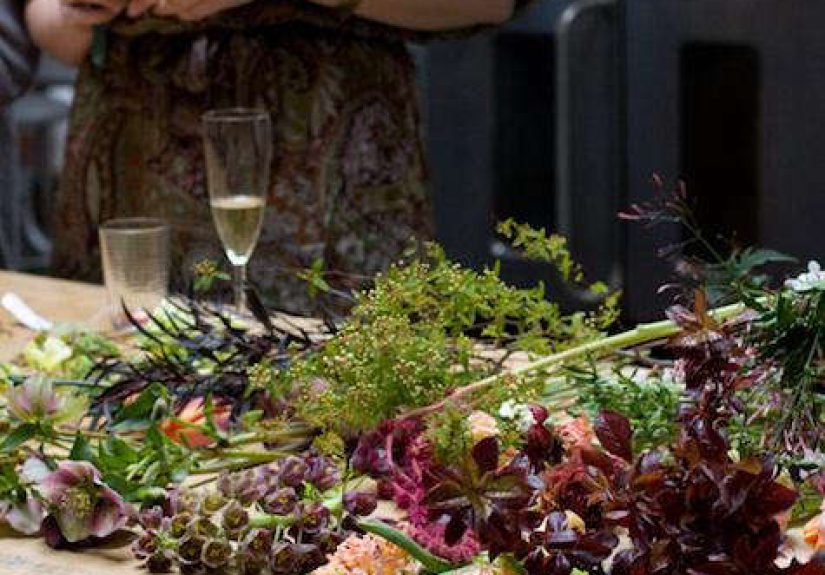
For the Still-Room visit, Owen and Ryhanen gathered blooms from the San Francisco Flower Mart, including jasmine, sweet pea, plum foliage, hellebores, ranunculus, hyacinth, and tulips. One finished arrangement even featured variegated carnations in berry shades, with Ryhanen joking that they were trying to bring the carnation back. That one line alone tells you why their work charmed people. It had taste, but it also had humor. Nothing was too precious to enjoy.
The details that made the flowers memorable
Some of the smartest choices were the most modest. Whitewashed terra-cotta urns became rustic vases. Japanese gardening clippers doubled as place card holders. These details blurred the boundary between tools and decoration, which made the entire setting feel more intimate and intelligent. Instead of hiding the labor behind beauty, the event let labor become part of beauty.
That is a principle worth stealing. People respond to spaces that reveal a bit of process. Not mess, exactly. More like proof of life.
Ryhanen’s later work at Worlds End, her upstate New York flower farm, makes the Little Flower School philosophy even clearer in retrospect. When unusual varieties became harder to source through conventional markets, she began growing them herself. That garden-first mentality explains why the school’s arrangements never felt generic. They were rooted in a grower’s eye, not just a stylist’s hand.
Why the Collaboration Worked So Beautifully
The genius of this designer visit was not that it assembled three recognizable names. It was that all three names shared the same operating system.
June Taylor worked from fruit, herbs, and old preserving traditions, transforming seasonal ingredients with patience and precision. Heidi Swanson built her culinary voice around whole foods, thoughtful cooking, and a table that welcomes rather than intimidates. Little Flower School approached flowers as seasonal material to be observed, understood, and arranged with sensitivity rather than domination. Different mediums, same values.
That shared value system created coherence. The event did not have to be themed to death because it already had an internal logic. Flowers from the market, food from a beloved cookbook, preserves from a historic-minded workshop, and tablescape details drawn from the actual tools of making: it all belonged together.
This is where so many branded collaborations go wrong. They gather pretty parts without a worldview. The Still-Room gathering had a worldview. It believed in seasonality, tactile materials, usefulness, and the kind of hospitality that whispers instead of shouts.
Design Lessons You Can Borrow from the Still-Room
First, let the workspace be part of the style. June Taylor’s butcherblock counters did not need disguising. They became serving surfaces naturally because they were already beautiful in a working way. A home kitchen, studio, or dining area becomes more persuasive when it stops pretending it is not used.
Second, choose flowers with personality, not just prestige. The Little Flower School arrangements mixed delicate blooms with foliage and texture, favoring shape and movement over perfection. That is a useful reminder for anyone styling a table: a stem with character will do more for a room than a bouquet with excellent manners and nothing to say.
Third, food should look like it belongs to the people serving it. Swanson’s menu made sense in the room because it reflected her larger body of work. You do not need a flashy menu for a memorable gathering. You need one that feels honest to the host and comfortable in the setting.
Finally, give useful objects a second life as design elements. Clippers as place card holders. Urns as vases. Jars as serving vessels. These choices create rooms that feel collected rather than purchased in a panic at 4:45 p.m.
An Experience Related to This Visit: What a Guest Would Likely Feel in the Room
Picture arriving at the Still-Room just before the gathering settles into its happiest rhythm. The first thing you would probably notice is not one dramatic object but a sequence of quiet impressions: the softened industrial shell of the room, the daylight coming from above, the warm matte glow of butcherblock, and the glassy little gleam of jars lined up with purpose. Nothing begs for attention, yet everything seems to deserve it.
Then the scent would begin to sort itself out. Not one smell, but a braided one. Something floral and green from the arrangements. Something citrusy and faintly candied from Taylor’s preserving world. Something nutty and comforting from Swanson’s cooking. The room would feel less like a styled event and more like walking into a conversation already happening between ingredients.
You would move closer to the flowers and realize why Little Flower School became so beloved. The arrangements would not look locked into place. They would seem alive in that slightly wild, intelligent way that good garden-inspired florals do. A stem would lean. A tulip would arc. Plum foliage would darken one pocket while hyacinth or ranunculus brightened another. You would not think, “What a centerpiece.” You would think, “Of course these belong here.”
And then your eye would jump to the little human details that make a room memorable. Whitewashed urns instead of standard event vases. Clippers standing in as place card holders. The counters doing double duty as buffet tables. The kind of details that feel discovered rather than announced. These are the moments that make guests exhale. They suggest someone planned carefully, but not nervously.
When the food appeared, it would deepen that feeling. Tiny Weck jars of green lentil soup with curried brown butter would seem almost jewel-like without becoming fussy. Crostini topped with goat cheese, yellow split peas, and chives would echo the flowers nearby: soft, fresh, layered, spring-minded. Even if you came only for the design, you would understand that the design was incomplete without the meal. The room was not merely decorated for eating; it was organized around nourishment.
What lingers most in an experience like this is not luxury in the conventional sense. It is permission. Permission to let a work surface stay visible. Permission to use seasonal materials instead of “perfect” ones. Permission to make the useful beautiful and the beautiful useful. By the end of the visit, a guest would likely leave with the strange but lovely feeling that home life could be elevated without becoming artificial.
That may be the Still-Room’s real magic. It does not inspire envy so much as aspiration of the healthiest kind. It makes you want to shop at the flower market, cook a better lunch, save jars you would normally recycle, pay attention to the color of fruit, and finally stop treating daily life like the opening act. In a world full of interiors that look expensive and feel empty, that kind of inspiration is worth hanging onto.
Conclusion
The beauty of “Designer Visit: Heidi Swanson, June Taylor, and the Little Flower School at the Still-Room” is that it captures more than a stylish afternoon. It shows what happens when three different disciplines meet on common ground. Swanson brings food that is generous, intelligent, and deeply livable. Taylor provides a room shaped by heritage, preservation, and tactile craft. Little Flower School supplies flowers that feel seasonal, emotional, and just unruly enough to be unforgettable.
Together, they create a model of entertaining that still feels relevant: local without preaching, refined without stiffness, and beautiful without losing touch with work, usefulness, or appetite. Seen now, it also carries a little extra poignancy. June Taylor’s Berkeley operation would later close after a long and admired run, which makes this visit feel even more like a snapshot of a particular creative moment in American design culture. Fortunately, it is the kind of moment that keeps teaching. All these years later, the lesson still lands: if you want a room to feel extraordinary, start with real ingredients, real tools, and people who know how to use them well.