Table of Contents >> Show >> Hide
- 1. The disaster unfolded much faster than most people realize
- 2. Titanic carried more lifeboats than the law required, yet still not nearly enough
- 3. The “unsinkable” image was part myth, part marketing, and all trouble
- 4. Wireless radio helped save lives, but it also revealed a dangerous communication gap
- 5. A nearby ship may have been closer than the one that actually rescued survivors
- 6. Class mattered more than people like to admit
- 7. The band probably did play on, but the details are murkier than legend suggests
- 8. Titanic was also a floating post office, and the mail clerks died doing their jobs
- 9. The world got the news wrong almost immediately
- 10. Titanic’s greatest legacy was not the wreck itself, but the safety rules it forced the world to rewrite
- Why the Titanic Still Feels Personal More Than a Century Later
- Conclusion
More than a century later, the Titanic disaster still feels oddly modern. It has everything: cutting-edge technology, overconfidence, class tension, bad communication, a media mess, and a heartbreaking lesson in what happens when safety rules fail to keep up with ambition. That is probably why people keep returning to the story. Titanic was not just a shipwreck. It was a collision between human pride and cold reality, with an iceberg playing the role of the world’s least forgiving editor.
Most people know the broad outline: the RMS Titanic struck an iceberg on its maiden voyage and sank in the North Atlantic in April 1912. But once you look past the famous movie scenes and the “unsinkable” slogan, the real story gets even more fascinating. Some facts are stranger than fiction, others are more tragic than the myths, and a few still feel uncomfortably familiar in an age of viral headlines and systems that fail at exactly the wrong moment.
Here are 10 things you may not know about the Titanic disaster, followed by a deeper reflection on why this tragedy still grips people today.
1. The disaster unfolded much faster than most people realize
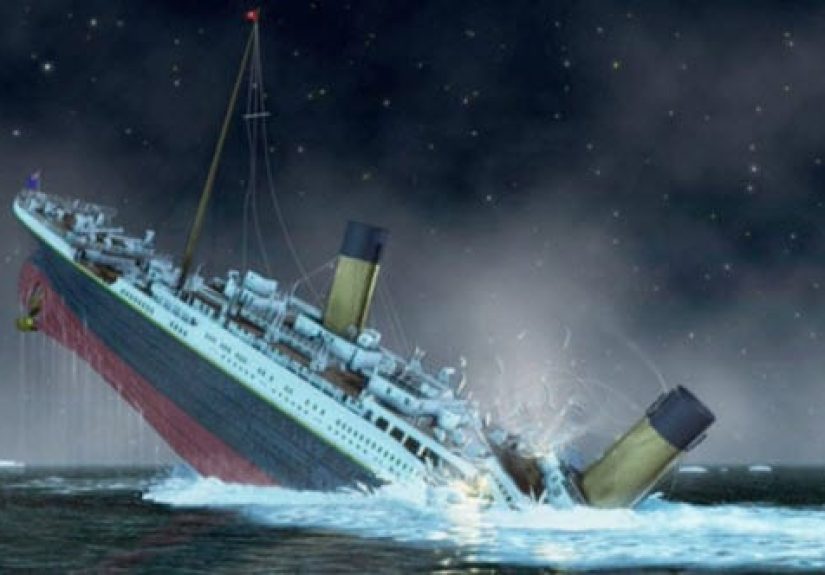
Titanic struck the iceberg at about 11:40 p.m. on April 14, 1912, and was gone by 2:20 a.m. on April 15. That means the whole catastrophe played out in just 160 minutes. For an event that has become one of the biggest legends in modern history, the actual window for decision-making was shockingly short.
Even more startling, the lookout crew had only seconds to react once the iceberg was spotted. Historians often point out that there were roughly 37 seconds between the sighting and the collision. In other words, the most famous maritime disaster in history was not a slow-motion mistake from the start. It was a chain reaction that became almost impossible to reverse once the danger was fully visible.
That speed matters because it helps explain why so many bad choices piled up so quickly. There was not enough time for a perfect evacuation, not enough time for orderly planning, and definitely not enough time for the passengers to fully understand that this was not just an awkward bump in the night.
2. Titanic carried more lifeboats than the law required, yet still not nearly enough
This is one of the most maddening facts in the entire story. Titanic actually carried more lifeboats than the British Board of Trade required for a ship of its tonnage. The problem was that the regulations were outdated and absurdly inadequate for vessels that had grown so much larger.
Titanic sailed with 20 lifeboats, enough for 1,178 people. That sounds like a lot until you remember there were about 2,240 passengers and crew on board. So yes, the ship technically met and exceeded the rules of the day. It also still left more than a thousand people without any chance of getting a seat.
To make things worse, several boats were launched partly empty during the early stages of the evacuation. Fear, confusion, poor communication, and lack of training all played a role. It was like having too few exits in a building and then opening them half-heartedly. Bureaucratic compliance looked great on paper. In the North Atlantic, paper was not especially buoyant.
3. The “unsinkable” image was part myth, part marketing, and all trouble
Many people talk about Titanic as though its builders nailed a giant sign to the hull that read, “Physics Can’t Touch This.” The truth is more complicated. Titanic was praised for advanced safety features, especially its watertight compartments, and the public absorbed those claims with enormous enthusiasm.
That confidence became a powerful myth before and after the disaster. The ship was seen as the ultimate symbol of industrial progress, a floating palace with engineering swagger. But the watertight design had a critical weakness: the bulkheads did not extend high enough to prevent water from spilling from one compartment into the next as the bow dipped lower.
Once enough compartments were breached, the ship’s fate was sealed. The Titanic was not defeated because safety features were meaningless. It was defeated because safety features were treated like invincibility. Those are not the same thing, and the ocean was kind enough to offer a brutal demonstration.
4. Wireless radio helped save lives, but it also revealed a dangerous communication gap
Titanic’s distress calls were a landmark moment in maritime communication. The ship’s wireless operators sent out emergency messages using both CQD and SOS, and those signals absolutely mattered. Without them, even fewer people would have survived.
But the wireless system also exposed a major flaw in early twentieth-century safety culture: radio traffic was not managed with the nonstop emergency discipline we would expect today. Nearby ships received warnings about ice. Some messages never reached the bridge in the way they should have. Other operators on other ships were not continuously available.
The rescue ship Carpathia answered Titanic’s calls and rushed through ice to help, but it was about 58 miles away. That meant rescue still took hours. Titanic had cutting-edge communication for its time, yet not enough infrastructure, staffing, or procedure to make that technology fully reliable. The lesson is painfully familiar: having the tool is not the same as having the system.
5. A nearby ship may have been closer than the one that actually rescued survivors
One of the great controversies of the Titanic disaster involves the SS Californian. Survivors and crew members reported seeing lights in the distance during the sinking, and many accounts suggested another ship was relatively close by. The Californian later became the focus of intense scrutiny because its crew saw distress rockets but did not mount a timely rescue.
Historians still debate exactly what was seen, how far away that ship really was, and whether visual conditions distorted the situation. But the central fact remains chilling: the rescue ship that actually saved survivors was not the closest possibility in the public imagination. Carpathia was the hero because it answered and acted.
This part of the story remains haunting because it turns tragedy into something even harder to accept. It is one thing to imagine help being impossibly far away. It is another to imagine help maybe being visible and still not arriving in time.
6. Class mattered more than people like to admit
Titanic is often remembered through grand romance, elegant dining rooms, and orchestral dignity, but survival statistics tell a less glamorous truth. Social class and access mattered. A lot.
Cross-checks of passenger and casualty data have shown a steep divide in survival rates. First-class passengers had a much better chance of living than those in second or third class. One widely cited breakdown shows survival at roughly 62 percent for first class, 42 percent for second class, and only 26 percent for third class.
This was not simply about wealth buying luck. It was also about cabin location, access to information, familiarity with the ship, language barriers, and how quickly passengers could physically reach the boat deck. When people say the Titanic disaster exposed the social structure of the Edwardian world, that is not poetic exaggeration. It is statistical reality.
7. The band probably did play on, but the details are murkier than legend suggests
Yes, the image of Titanic’s musicians continuing to play as the ship sank comes from survivor testimony, not just Hollywood flair. Multiple accounts say the band performed to help keep passengers calm while lifeboats were being loaded. It is one of the most enduring and moving parts of the story.
What is less certain is the exact final song. Popular culture has long favored “Nearer, My God, to Thee,” but other accounts point to a different tune, often identified as “Autumn” or “Songe d’Automne.” The uncertainty does not weaken the story. If anything, it makes it more human. In a disaster of that scale, memory is not a neat filing cabinet.
What seems clear is that the musicians helped create calm in a situation that could easily have become even more chaotic. That was not a magical act. It was a profoundly practical one. Sometimes courage looks like a life jacket. Sometimes it looks like a violin.
8. Titanic was also a floating post office, and the mail clerks died doing their jobs
Because Titanic was a Royal Mail Steamer, it carried an onboard post office and a huge volume of mail. That part of the ship’s identity is often forgotten, but it matters. The vessel was not just transporting wealthy passengers and hopeful immigrants. It was also carrying the everyday machinery of connection: letters, parcels, documents, and messages meant for life on shore.
The ship had five mail clerks and more than 3,300 sacks of mail. According to accounts preserved by postal and museum historians, the clerks worked desperately as water rose, trying to move mailbags and protect the cargo. None survived.
It is one of those details that makes the disaster feel less abstract. The Titanic did not just lose people. It lost conversations, plans, business records, love letters, and ordinary pieces of human life in transit. History remembers the chandelier glow. The mail room reminds us that the ship was also carrying tomorrow.
9. The world got the news wrong almost immediately
If you think misinformation is a modern invention, Titanic would like a word. Or several panicked telegraphs.
In the confusion after the sinking, some newspapers reported that all passengers had been rescued and that the ship was being towed to safety. Those headlines were disastrously wrong. The false reports spread because of fragmentary wireless messages, newsroom haste, and the general difficulty of confirming facts in real time across the Atlantic in 1912.
The result was a cruel emotional whiplash. Families who briefly believed their loved ones were safe were later hit with the truth. That part of the story feels eerily current. Technology can move information faster than certainty. Titanic did not just become a disaster at sea. It became one of the earliest modern case studies in how quickly bad information can outrun reality.
10. Titanic’s greatest legacy was not the wreck itself, but the safety rules it forced the world to rewrite
The Titanic disaster shocked governments into action. Investigations in the United States and Britain pushed for major reforms, and the long-term impact on maritime safety was enormous.
The changes included stronger lifeboat requirements, better crew training, regular drills, improved wireless monitoring, and the creation of the International Ice Patrol to track iceberg danger in the North Atlantic. The disaster also helped drive the first International Convention for the Safety of Life at Sea, better known as SOLAS.
That may be the most important “thing you may not know” of all. Titanic did not just become a symbol of tragedy. It became a turning point. Modern ship safety rules were shaped in part because thousands of people learned, too late, what happens when innovation outruns regulation.
Why the Titanic Still Feels Personal More Than a Century Later
There is a reason people do not talk about Titanic the way they talk about just any shipwreck. The story refuses to stay in the past. You can walk through a museum exhibit, look at a pair of shoes recovered from the debris field, study a menu, read a passenger list, or stare at a photo of lifeboats approaching the Carpathia, and suddenly the disaster stops feeling like a chapter in a history book. It starts feeling like interrupted life.
Part of that emotional pull comes from the sheer variety of people on board. Titanic carried millionaires, engineers, musicians, workers, families, emigrants, postal clerks, stewards, cooks, and children. It was a tiny world stacked in layers, each with its own routines and expectations. That means almost anyone can find a point of identification in the story. Some people imagine the elegance of the first-class staircase. Others think about third-class families trying to reach the upper decks in confusion. Others focus on the crew members trying to improvise under pressure while time vanished like sand through a fist.
The disaster also feels personal because it is full of ordinary choices made under extraordinary conditions. Should you go back for a coat? Should you believe the crew when they say it is precautionary? Should you wake the children now or wait a minute? Should you step into a half-filled lifeboat even if the ship still looks mostly fine? Titanic is terrifying because many life-and-death decisions did not arrive with dramatic music and flashing warnings. They arrived disguised as uncertainty.
Then there is the strange intimacy of the artifacts. A shipwreck can seem huge and abstract until you encounter the small things: mail, eyeglasses, tableware, shoes, handwritten names, and deck plans. Those details strip away the mythology and reveal what was really lost. Not just “passengers,” but people who had breakfast plans, business deals, new jobs, honeymoons, and letters waiting to be mailed. The famous grandeur of Titanic matters, but the little details are what make the story linger.
In that sense, Titanic is not remembered only because it was large, luxurious, or dramatic. It endures because it captured a universal human illusion: the belief that impressive systems will protect us simply because they are impressive. We still fall for that. We trust scale, polish, reputation, and technical confidence. Titanic reminds us that safety is not a mood. It is a discipline.
And that is why the disaster still resonates. It is a story about technology, class, duty, courage, confusion, media error, and human vulnerability all packed into one freezing night. It is a tragedy, yes, but also a warning written in steel, ice, and silence. The ship sank in 1912. The lesson never really did.
Conclusion
The Titanic disaster remains one of history’s most studied tragedies because it was far more than a collision with an iceberg. It exposed outdated laws, uneven survival chances, fragile communication systems, and the dangerous gap between confidence and preparedness. The deeper you look, the more the story becomes less about a famous ship and more about how societies handle risk, status, and truth under pressure.
That is why these lesser-known facts still matter. Titanic was a maritime disaster, but it was also a human one in the broadest sense. It revealed who got warned, who got believed, who got access, who stayed calm, and who paid the price when the system failed. For a ship that sailed only once, it has been teaching the world for a very long time.