Table of Contents >> Show >> Hide
- What Are Bone Conduction Headphones?
- How Bone Conduction Headphones Work
- What Bone Conduction Headphones Actually Sound Like
- When You Should Use Bone Conduction Headphones
- When You Should Not Use Bone Conduction Headphones
- Bone Conduction Headphones vs. Regular Earbuds
- What to Look for Before You Buy
- The Real-World Experience: What Using Bone Conduction Headphones Feels Like
- Final Verdict
- SEO Tags
Bone conduction headphones sound like something invented by a sci-fi engineer who got bored with normal earbuds and decided the skull deserved a side hustle. But the technology is very real, very useful, and, in the right situation, surprisingly clever. Instead of sending sound through your ear canal the traditional way, these headphones vibrate the bones near your ears so your inner ear can still pick up the signal. Translation: your ears stay open while your podcast keeps talking.
That simple difference is exactly why bone conduction headphones have become popular with runners, cyclists, walkers, warehouse workers, commuters, and anyone who wants to hear both their audio and the world around them. They are not magical. They will not suddenly turn a busy intersection into a Zen garden. They will not make a subway sound like a private listening room. But when used in the right context, they solve a very specific problem better than regular earbuds do.
In this guide, we will break down how bone conduction headphones work, what they sound like, when they shine, when they absolutely do not, and how to know whether they belong in your life or should stay on your “interesting but unnecessary gadgets” list.
What Are Bone Conduction Headphones?
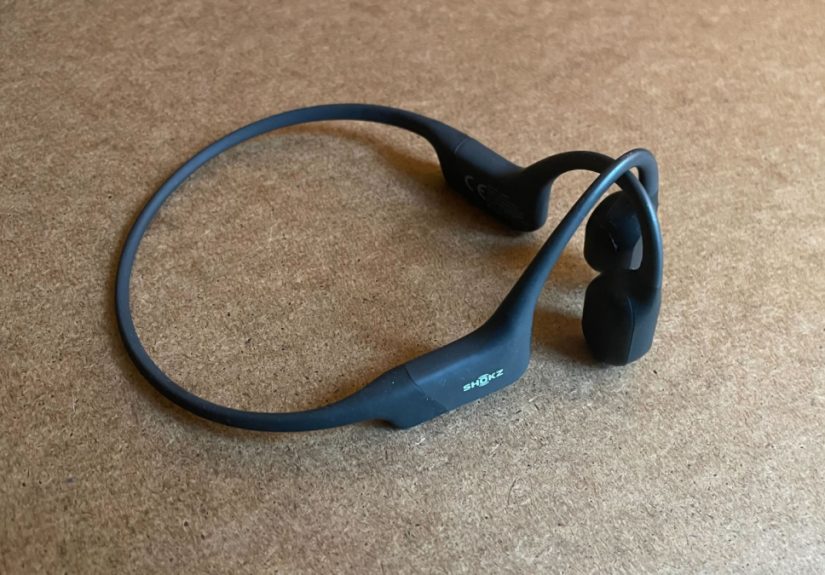
Bone conduction headphones are open-ear headphones that rest just in front of your ears, usually on your cheekbones. Instead of placing speakers inside your ears or sealing off your ear canal, they use small transducers that create vibrations. Those vibrations travel through the bones of your skull to the cochlea, the inner-ear structure that helps your brain interpret sound.
The result is a strange but useful audio trick: you can listen to music, calls, podcasts, or navigation prompts while still hearing traffic, coworkers, the doorbell, or the suspicious rustling in the bushes that is probably just a squirrel but never feels like just a squirrel in the moment.
How Bone Conduction Headphones Work
The usual route sound takes
Under normal circumstances, sound travels through the air, enters your ear canal, vibrates your eardrum, moves the tiny bones in your middle ear, and eventually reaches the fluid-filled cochlea in your inner ear. Inside the cochlea, tiny sensory hair cells convert those vibrations into electrical signals that your brain recognizes as sound. It is a beautifully efficient system, even if most of us only think about it when our ears pop on a plane.
The bone conduction shortcut
Bone conduction headphones skip part of that route. Their transducers turn audio signals into physical vibrations and send those vibrations through the bones near your ear. The cochlea still does the heavy lifting at the end of the process, but the outer ear and much of the middle ear are bypassed. That is why bone conduction technology is also important in some medical hearing applications for people with certain conductive hearing problems.
For everyday consumer use, the big advantage is not that the audio sounds dramatically better. It usually does not. The advantage is that your ear canal remains open. You keep access to environmental sound while listening to your own audio. In the real world, that can be more valuable than deep bass or studio-grade detail.
What Bone Conduction Headphones Actually Sound Like
Let’s be honest: if your dream listening experience involves cinematic bass, crisp detail, and the feeling that your favorite song has emotionally adopted you, bone conduction headphones are not your best bet. Their sound is typically leaner than traditional earbuds or over-ear headphones. Bass is weaker, outside noise competes with your music, and noisy places can make everything sound thinner or less immersive.
That does not mean they sound bad for every purpose. In fact, for spoken-word content, casual playlists, phone calls, workout audio, and turn-by-turn directions, they can be more than good enough. Bone conduction headphones are less about audio luxury and more about functional listening. Think “useful tool” rather than “private concert.”
Some people also notice a slight vibrating sensation on the cheekbones, especially at higher volumes. Others adapt quickly and stop noticing it after a few sessions. Fit matters, too. If the transducers are not sitting in the right position, clarity can drop fast. In other words, placement is part of the product, whether the box mentions that or not.
When You Should Use Bone Conduction Headphones
1. Outdoor running, walking, and cycling
This is the classic use case, and for good reason. When you are moving through real streets with cars, bikes, people, dogs, puddles, and the occasional driver who treats stop signs as decorative suggestions, situational awareness matters. Bone conduction headphones keep your ears open, which makes it easier to hear what is happening around you while still enjoying audio.
That does not make them automatically “safe” in every situation. They can still distract you. But compared with sealed earbuds, they generally do a better job of preserving awareness, which is why they are so popular with runners and outdoor fitness users.
2. Workouts where sweat and stability matter
Many bone conduction models are designed with exercise in mind. They often have lightweight frames, secure wraparound bands, and water-resistance ratings that make them practical for sweaty runs, gym sessions, hikes, and high-movement activities. If in-ear buds constantly wiggle loose or make your ears feel like tiny steam rooms, bone conduction can feel refreshingly low-maintenance.
3. Long periods when earbuds bother your ears
Some people simply do not enjoy having silicone tips stuffed into their ears for hours at a time. Others find that in-ear headphones create pressure, itchiness, or fatigue. Bone conduction headphones leave the ear canal open, which can make them more comfortable for extended wear, especially when the goal is background audio, not maximum fidelity.
4. Calls and directions during daily life
If you take calls while walking the dog, navigating an airport, or moving around the office, bone conduction headphones can be useful because they let you stay aware of conversations and announcements around you. They also work well for voice navigation while driving a bike, jogging a route, or multitasking around the house. You hear the prompt, but you do not feel acoustically kidnapped by it.
5. Swimming, but only with the right model
This is where the fine print matters. Some waterproof bone conduction headphones are designed for swimming and use onboard music storage because Bluetooth does not work well underwater. That makes them a niche but genuinely smart option for pool workouts. A normal “water-resistant” pair is not automatically a swim-ready pair, so this is the moment to read the specs like an adult and not like a person who once bought “weatherproof” shoes for a thunderstorm.
6. As a comfort-friendly option for some people with ear-canal issues
There is a reason bone conduction as a concept shows up in hearing medicine: it can bypass parts of the outer and middle ear. For consumer buyers, that does not mean these headphones are a treatment. It does mean that some people who dislike anything inserted into the ear canal may find them easier to live with than earbuds. If you suspect actual hearing loss, recurring ear problems, or chronic ear infections, that is a conversation for an audiologist or physician, not a shopping cart.
When You Should Not Use Bone Conduction Headphones
1. In very noisy environments
On a train, plane, busy office floor, or loud city street, bone conduction headphones can struggle. Because they do not seal off your ears, outside noise remains fully in the conversation. If you need isolation, focus, or quiet, traditional closed-back headphones or noise-canceling earbuds are usually better. Bone conduction is open by design. That strength becomes a weakness when the world gets loud.
2. When sound quality is your top priority
If you care deeply about bass response, stereo imaging, detail retrieval, or the emotional importance of hearing every hi-hat shimmer exactly as the producer intended, bone conduction may leave you underwhelmed. This category is built for utility first. Audiophile joy comes second, or third, or possibly after “remembered to charge them.”
3. When you need hearing protection
Bone conduction headphones are not hearing protection. They do not replace earplugs or earmuffs, and they should not be used as a workaround in loud occupational or industrial settings where certified protection is necessary. Open ears are great for awareness. They are not great for chainsaws, jackhammers, or a friend who insists on testing concert speakers in the garage.
4. When you are trying to self-diagnose hearing problems
If you think you have hearing loss, ringing in the ears, chronic infections, or persistent difficulty understanding speech, do not treat bone conduction headphones as a DIY medical solution. Real bone conduction hearing devices exist in clinical care for a reason, and proper evaluation matters. Sometimes the issue is conductive hearing loss. Sometimes it is sensorineural. Sometimes it is something else entirely. Guessing is not a treatment plan.
Bone Conduction Headphones vs. Regular Earbuds
If you are deciding between bone conduction headphones and regular earbuds, the simplest question is this: do you want immersion or awareness? Earbuds usually win on sound quality, bass, and noise isolation. Bone conduction wins on openness, comfort for people who dislike in-ear tips, and awareness during movement.
That makes the choice less philosophical than practical. For flights, focused work, and deep music listening, earbuds or over-ear headphones tend to make more sense. For outdoor exercise, quick calls, daily errands, and general “I need to hear the world but not all of it” use, bone conduction is often the smarter pick.
What to Look for Before You Buy
- Fit and stability: A secure frame matters more here than with many earbuds because placement affects sound quality.
- Water resistance: Sweat resistance is useful for workouts. Full waterproofing is only necessary if you truly plan to swim.
- Battery life: Great for runners, commuters, and long shifts. Less exciting when it dies halfway through your motivational playlist.
- Call quality: Check microphone performance if you plan to use them for frequent calls.
- Comfort with glasses or hats: Bone conduction headphones and eyewear can coexist, but some designs play nicer than others.
- Realistic expectations: Buy them for open-ear convenience, not because you expect them to outperform great earbuds on sound.
The Real-World Experience: What Using Bone Conduction Headphones Feels Like
For many people, the first experience with bone conduction headphones is mildly confusing in the best possible way. You put them on, press play, and your brain has a brief moment of, “Wait, why is the sound here if my ears are still available for public use?” It feels different from earbuds immediately. There is no seal, no plugged-up sensation, and no dramatic hush over the outside world. Instead, your audio arrives like a polite guest rather than a house takeover.
That difference becomes especially obvious outdoors. Imagine starting a morning run with a podcast playing through bone conduction headphones. You can hear the host, but you can also hear your footfalls, the cyclist coming up behind you, a car turning at the intersection, and the neighbor who is already leaf-blowing with the energy of someone in a home-improvement montage. With normal earbuds, those sounds might be reduced or blurred. With bone conduction, they stay part of the picture. That can feel less immersive, but also far more practical.
The second common experience is realizing that these headphones are incredibly context-dependent. In a quiet neighborhood walk, they can feel almost ideal. In a loud subway station, they can feel like your audio is fighting for survival. Your music is still there, but outside noise is very much there too, and it is not shy about sharing the stage. This is the moment many users understand the category properly: bone conduction is not “better sound without earbuds.” It is “more awareness with acceptable sound.”
Comfort is another area where experiences vary. Some users love the fact that nothing goes into the ear canal and say they can wear bone conduction headphones much longer than earbuds. Others notice pressure on the cheekbones or a light buzzing sensation at higher volumes. People who wear glasses often need a few tries to find the most comfortable setup. It is not usually a deal-breaker, but it is not always perfectly invisible either.
Workouts are where many users become loyal fans. The wraparound style tends to stay put, sweat is less of a problem with sport-focused models, and there is no constant need to shove an earbud back into place mid-run. For gym circuits, hiking, brisk walks, and outdoor chores, that convenience adds up fast. You stop fussing with the headphones and just use them.
Then there is the swimming experience, which is its own weird little universe. With a true waterproof model and onboard storage, you can listen in the pool without dealing with underwater Bluetooth issues. That sounds niche until you realize how few audio products genuinely work for swimmers. Suddenly, bone conduction headphones stop being “that unusual exercise gadget” and start looking like a very smart specialized tool.
Perhaps the most accurate summary of the experience is this: bone conduction headphones rarely become someone’s only headphones, but they often become the pair they reach for in the exact situations where regular headphones are annoying, impractical, or just too isolating. They are not the king of sound quality. They are the champion of “I still need to know what is going on around me.” And honestly, that is a pretty useful title.
Final Verdict
Bone conduction headphones work by sending sound as vibrations through the bones near your ears to your inner ear, leaving your ear canal open to the outside world. That design makes them especially useful for outdoor exercise, awareness-heavy routines, casual calls, daily multitasking, and certain specialized activities like swimming with the proper model.
They are less ideal for loud environments, deep music listening, and anyone chasing premium sound quality. They are also not medical hearing devices and not a replacement for actual hearing protection. But in the right context, they are one of the smartest examples of audio design solving a real-life problem instead of just adding another feature nobody asked for.
If your biggest priority is hearing your surroundings without giving up audio entirely, bone conduction headphones are not a gimmick. They are a very specific, very practical solution. And sometimes practical is exactly what wins.