Table of Contents >> Show >> Hide
- What a C-Section Scar Actually Is
- Types of C-Section Incisions
- What Normal C-Section Scar Healing Looks Like
- What Can Affect How a C-Section Scar Heals?
- How to Care for a C-Section Incision While It Heals
- How to Minimize C-Section Scars
- Common Scar Problems After a C-Section
- When to Call a Healthcare Professional
- Future Pregnancies and the C-Section Scar Question
- Common Experiences People Report With C-Section Scars
- Conclusion
- SEO Tags
Let’s be honest: when most people imagine life after a C-section, they picture a baby, diapers, snacks balanced on one arm, and a heroic attempt to sit up without making a sound effect. What they do not always picture is the scar. Yet a C-section scar is one of the most visible reminders of major abdominal surgery and one very memorable way a baby can make an entrance.
The good news is that most C-section scars heal well over time. Many become thin, low on the abdomen, and easy to hide under underwear or a swimsuit. The even better news is that understanding how C-section scars work can make recovery feel much less mysterious. Once you know the types of incisions, what normal healing looks like, and what actually helps minimize scarring, the process feels a lot less like a surprise pop quiz from your own body.
This guide explains the most common C-section incision types, what affects healing, how to care for the scar, when to worry, and what options exist if the scar becomes raised, painful, or emotionally frustrating. Because yes, “I just had surgery and now my pants hate me” is a valid postpartum concern.
What a C-Section Scar Actually Is
A C-section leaves two scars: one on the skin and one on the uterus. That distinction matters. The scar you can see on your lower belly is not always a perfect clue to the incision made on the uterus. In other words, the outside may look like one thing while the inside has its own surgical story.
For everyday recovery, most people focus on the skin scar because that is where they notice tenderness, itching, numbness, tightness, and appearance changes. But for future pregnancies, the uterine scar matters too, especially when discussing labor after a prior cesarean. That is why it is smart to ask your obstetrician what type of uterine incision was used instead of trying to decode it by looking in the mirror like a postpartum detective.
Types of C-Section Incisions
1. Low Transverse Incision
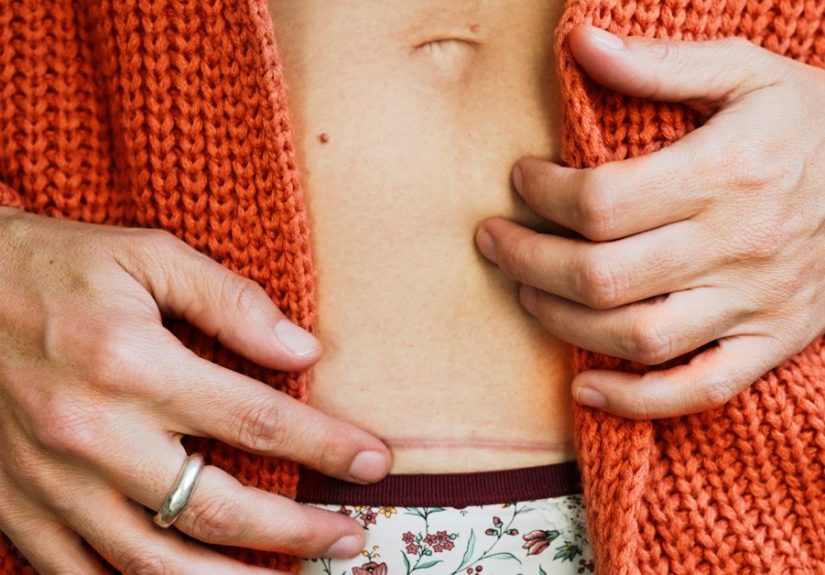
This is the most common type of C-section incision. It runs horizontally across the lower abdomen, usually below the bikini line. Because it sits low and follows natural skin lines better, it often heals into the least noticeable scar over time. It is the overachiever of the group: practical, common, and generally easier to hide.
A low transverse skin incision is often paired with a low transverse uterine incision, which is also the most common uterine approach. In many cases, this combination offers good healing and can be relevant when discussing future birth options.
2. Low Vertical Incision
A low vertical incision runs up and down in the lower part of the abdomen. It is less common than the transverse cut but may be chosen in certain situations based on anatomy, fetal position, urgency, or prior surgical history. Visually, it tends to be more noticeable than a low horizontal scar because it crosses natural skin folds instead of hiding within them.
Some people assume a vertical scar automatically means a dramatic emergency scenario. Not necessarily. Surgical decisions are individualized, and the goal is always safe delivery, not winning a scar beauty pageant.
3. Classical Vertical Uterine Incision
Here is where things get a little tricky. A classical vertical incision usually refers to the uterus, not necessarily the skin. It is used much less often and usually only in specific medical situations, such as certain emergencies, unusual fetal positions, or cases involving placental complications or very preterm delivery.
This matters because a person can have a low skin scar but still have a different uterine incision than expected. That is one reason why medical records matter more than scar guesswork.
What Normal C-Section Scar Healing Looks Like
Healing is not a straight line. It is more like a winding path with random detours through swelling, tenderness, fatigue, and the occasional moment of wondering why laughing feels like abdominal betrayal.
The First Few Days
In the first several days, the incision is usually sore, swollen, and tender. Bruising can happen. The area may feel tight when standing up straight, coughing, or rolling out of bed. Some numbness is common because small nerves are cut during surgery. The scar itself may look pink or red at first, and that is not automatically a problem.
Weeks 2 Through 6
During the next several weeks, the skin edges continue sealing and strengthening. Many people notice itching, mild pulling, or a “shelf” appearance above the scar caused by swelling, tissue changes, or normal body shape. The area can still feel uncomfortable, especially with bending, twisting, or wearing snug waistbands that seem designed by someone who has never met a healing abdomen.
Full recovery after a C-section often takes about six weeks, though energy levels and tenderness can improve more gradually. That does not mean the scar is completely finished changing at six weeks. It simply means the major early recovery phase is usually settling down by then.
Months 2 Through 12
Scars continue maturing for months. A scar that looks pink, slightly raised, or firm early on may flatten and fade considerably over time. Some become a thin pale line. Others remain darker, thicker, or more noticeable depending on genetics, skin tension, inflammation, and whether the body tends to form hypertrophic or keloid scars.
Numbness or altered sensation can also linger for months. Some people regain normal feeling quickly, while others notice a persistent patch of reduced sensation around the scar. It is common, annoying, and weirdly specific, but not usually dangerous.
What Can Affect How a C-Section Scar Heals?
Scar healing is influenced by several factors:
- Incision type and location: horizontal scars often blend in more easily than vertical ones.
- Genetics: some people are naturally more prone to raised or darker scars.
- Skin tension: movement and abdominal stretching can affect scar appearance.
- Infection or wound separation: complications during healing can make scars more prominent.
- Repeat C-sections: more surgery can mean more scar tissue and possible adhesions.
- Irritation and friction: constant rubbing from waistbands, sweat, or dampness can slow comfort and recovery.
There is also the matter of plain old biology. Some bodies heal like quiet perfectionists. Others prefer to improvise.
How to Care for a C-Section Incision While It Heals
The best scar care starts with boring basics. That is frustrating because everyone wants a miracle cream, but early healing usually depends more on consistency than fancy products.
Keep It Clean and Dry
Follow your clinician’s instructions carefully. In general, once cleared to shower, the incision should be washed gently with mild soap and water and then patted dry. Avoid scrubbing. Avoid soaking in a tub until your clinician says it is okay. A healing incision does not need drama.
Avoid Heavy Lifting Too Soon
Most postpartum instructions limit lifting heavier than the baby for the first stretch of recovery. That advice is not meant to ruin your independence. It is meant to reduce strain on the healing abdomen and protect the incision while tissues regain strength.
Wear Soft, Non-Irritating Clothing
Soft underwear, loose waistbands, and breathable fabrics can make a surprisingly large difference. A waistband that lands directly on the scar can turn “mild annoyance” into “why is this pair of leggings my enemy?”
Watch for Signs of Infection
Call your clinician if you notice increasing redness, warmth, swelling, foul-smelling drainage, pus, worsening pain, fever, or the incision starting to open. Those symptoms are not part of the charming side of recovery. They deserve prompt medical attention.
How to Minimize C-Section Scars
No scar treatment can make a C-section scar disappear completely. Anyone promising vanishing-level magic is overselling. But several strategies can help a scar heal flatter, softer, and less visibly.
1. Let the Wound Fully Close First
Before using scar products, the incision needs to be closed and healing on the surface. Do not put random creams, oils, or internet-famous miracle goo on a fresh surgical wound unless your clinician says to. Fresh incisions need appropriate wound care, not a chemistry experiment.
2. Consider Silicone Gel or Silicone Sheets
Silicone is one of the most commonly recommended options for scar management once the wound has closed. Silicone gel sheets or silicone gel may help flatten and soften raised scars over time, especially when used consistently for weeks to months. They are not glamorous, but then again, neither are taxes, and both can be surprisingly effective when handled correctly.
3. Protect the Scar from the Sun
Sun exposure can darken scars and make them more noticeable. If the scar will be exposed, cover it or use broad-spectrum sunscreen once the area is fully healed. Even low abdominal scars can get sun from swimsuits, crop tops, or those rare moments when you are standing in actual daylight and not just pacing a nursery at 3 a.m.
4. Ask When Scar Massage Is Safe
Some postpartum recovery specialists recommend scar massage after the incision has healed, often around six weeks, but timing varies. The goal is not to punish the scar into submission. Gentle massage may help soften tissue, reduce tightness, and improve mobility in the area. Always get clearance first, especially if healing has been slow or complicated.
5. Get Help for Raised, Itchy, or Painful Scars
If the scar becomes thick, raised, itchy, or tender, talk with a dermatologist, obstetrician, or plastic surgeon. Options may include silicone therapy, steroid injections, laser treatments, or scar revision procedures. Some scars need patience; others need a proper treatment plan.
Common Scar Problems After a C-Section
Hypertrophic Scars
These are raised scars that stay within the borders of the original incision. They can feel firm, thick, or itchy. They often improve with time and may respond to silicone or other treatments.
Keloid Scars
Keloids grow beyond the boundaries of the original wound and can continue enlarging over time. They may itch, ache, or feel cosmetically upsetting. If you have a personal or family history of keloids, tell your clinician early, because prevention and prompt treatment matter.
Adhesions
Adhesions are bands of internal scar tissue that can form after abdominal surgery. You cannot see them from the outside, but they can matter during repeat C-sections and sometimes contribute to discomfort or surgical complexity later on.
Cesarean Scar Defect
A cesarean scar defect, sometimes called an isthmocele or niche, happens when the uterine incision does not heal completely and a pouch forms in the scar area. This is not the same thing as a skin scar problem. It may be linked to pelvic pain, abnormal bleeding, infertility, or issues in future pregnancy. It is uncommon, but it is worth knowing the term because some long-term scar questions are internal, not visible.
When to Call a Healthcare Professional
Do not wait it out if something seems wrong. Contact your clinician if you have:
- fever or feeling ill
- increasing belly pain rather than gradual improvement
- redness, warmth, swelling, or drainage from the incision
- the incision opening up
- foul-smelling vaginal discharge
- new calf pain, one-sided leg swelling, or redness in a leg
- a scar that becomes significantly raised, painful, or increasingly bothersome over time
Postpartum recovery is full of strange sensations, but not every strange sensation is normal. When in doubt, call.
Future Pregnancies and the C-Section Scar Question
If you plan another pregnancy, your C-section history matters, but the most important details are in your medical records. The external scar gives only part of the picture. The type of uterine incision and the time between pregnancies can affect future recommendations. This is one of those moments when guessing is less helpful than asking your obstetrician directly, “What kind of uterine incision did I have, and what does it mean for next time?”
Also, one prior C-section does not automatically mean every future birth must follow the same route. The answer depends on your surgical history, your health, the pregnancy itself, and your clinician’s guidance. The scar is part of the conversation, not the whole conversation.
Common Experiences People Report With C-Section Scars
One of the most common experiences after a C-section is surprise. Not surprise that there is a scar, of course, but surprise at how many things the scar can feel like. Many people expect pain and tenderness, yet they are less prepared for numbness, tingling, itching, tightness, or the strange sensation that the lower abdomen does not fully belong to them for a while. That can be unsettling, especially when paired with sleep deprivation and the general chaos of caring for a newborn.
Another common experience is emotional contradiction. A person can feel deeply grateful for a safe delivery and still feel annoyed, sad, self-conscious, or frustrated about the scar. Those feelings are not mutually exclusive. Some people view the scar as a badge of strength right away. Others need time before they can look at it without wincing emotionally or physically. Both responses are normal. Recovery is not a movie montage where everyone instantly feels powerful in soft lighting.
Many also describe a “pulling” feeling when standing upright during the first weeks. Rolling out of bed, coughing, sneezing, laughing, and even reaching for a diaper can feel like the lower abdomen is filing a formal complaint. This usually improves as the tissues heal, but in the early days it can make even ordinary movement feel unexpectedly strategic.
Body image concerns are also common. Some people notice swelling above the incision, unevenness along the scar line, or a small fold of skin over the area. Sometimes this improves dramatically over time; sometimes it lingers. Either way, it can affect confidence, especially when the internet is busy showing polished postpartum images that somehow never include giant underwear, ice water, or a person muttering about waistbands.
There is also a practical side to the experience. Clothing suddenly becomes political. Seams matter. Elastic placement matters. The difference between “supportive” and “absolutely not” can come down to one inch of fabric. Many people find that soft high-rise underwear, loose pajamas, or postpartum support garments make everyday life much more comfortable while the scar settles down.
Some people later notice sensitivity changes long after the pain is gone. The scar may feel slightly numb, oddly ticklish, or more sensitive in cold weather or during exercise. Others only think about it when a future pregnancy or gynecologic appointment brings the topic back. For some, the scar fades into background scenery. For others, it remains a meaningful marker of a complicated birth, a hard recovery, or a moment of resilience they do not want minimized.
What all these experiences share is one simple truth: a C-section scar is not just a line on the skin. It can be physical, emotional, practical, and deeply personal all at once. That is why compassionate care matters. Good scar guidance should address not only how the incision looks, but also how it feels, how it functions, and what it means to the person living with it.
Conclusion
C-section scars are common, and most heal well with time, patience, and proper care. The most common scar is a low transverse “bikini line” incision, but scar appearance can vary based on the type of surgery, your body’s healing response, and whether complications occur. Keeping the incision clean, protecting it as it heals, asking before starting scar massage, and considering silicone after closure can all help minimize the final look of the scar.
Just as important, remember that a scar is not only cosmetic. If it becomes painful, raised, infected, emotionally distressing, or tied to long-term symptoms, you deserve medical guidance. A C-section scar may be small compared with the size of the life event behind it, but it still deserves attention. Your body did something enormous. A little respect for the scar is more than fair.