Table of Contents >> Show >> Hide
Most people see a snail and think one of two things: “Aw, cute,” or “Get away from my lettuce, you tiny vandal.” Macro photographers, however, see something else entirely. They see glassy tentacles, spiral architecture, jewel-like droplets, and a slow-motion drama unfolding at ankle height. That is exactly why I Capture The Tiny World Of Snails In Poland works so well as both a title and a mission. It sounds whimsical, sure, but it also describes a real creative practice: using close-up photography to turn a creature most of us ignore into the star of a magical, cinematic world.
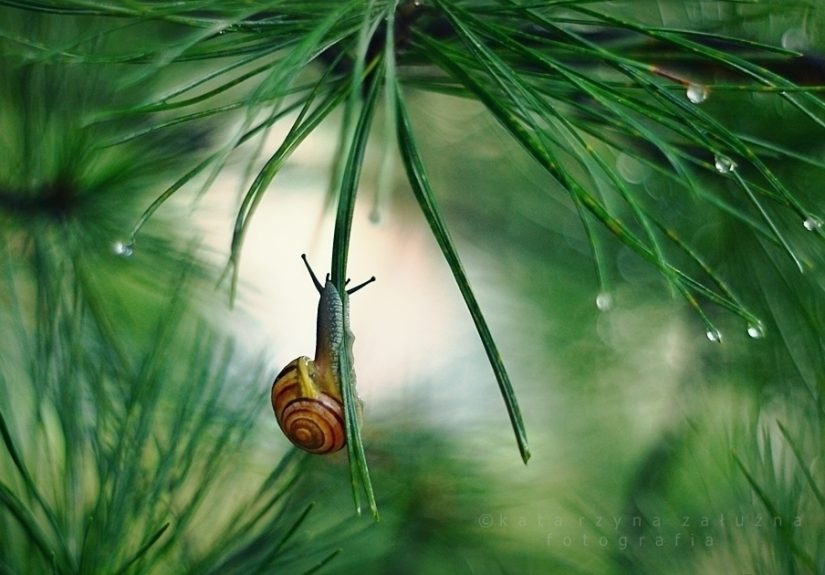
At the center of that idea is Polish photographer Katarzyna Załużna, whose snail photographs have drawn attention for making humble garden mollusks look like enchanted travelers wandering through glowing meadows. Her images are not random snapshots of a shell on a leaf. They are patient, carefully composed studies of light, texture, scale, and mood. She has described the process as slow, difficult, and delightfully stubborn, noting that the hardest part is getting the snail to cooperate. In other words, she is directing the world’s least punctual model, and somehow making it look glamorous.
This is where the story becomes more interesting than “photographer takes pretty nature pictures.” Snail photography sits at the crossroads of art, biology, weather, timing, and pure persistence. It requires an understanding of how macro photography works, why snails behave the way they do, and how a place like Poland becomes more than a backdrop. Forest edges, meadows, damp gardens, mossy leaves, and wet evening air all help create a visual language that feels intimate and otherworldly. The result is not just photography of snails. It is a way of seeing.
Why Snails Make Surprisingly Great Subjects
Let’s give the snail its overdue public relations makeover. In the right light, a snail is a masterpiece of design. The shell carries natural geometry. The body glistens with moisture. The movement is slow enough to study but never totally still. For a macro photographer, that combination is gold. Tiny details become huge visual events: a bead of water on a feeler, a shell curve catching the sunset, or a translucent body stretching across the edge of a leaf like a living ribbon.
There is also a biological reason snail images feel so rich. Land snails and slugs are gastropods that depend on moisture to survive, which is why they tend to thrive in damp, humid conditions and often become active at night or in cooler, wetter parts of the day. That means photographers working in the early evening or after rainfall are not just chasing pretty light; they are working on the snail’s schedule. Finally, a model that has firm opinions about humidity.
Snails are also more complicated than their “garden pest” reputation suggests. Some species feed on fungi and decaying plant material, which means they play a role in decomposition and nutrient cycling. Others are beneficial predators of other snails. That matters because a strong article on snail photography should not treat these animals as props. The best macro work gives them character without stripping away their ecological reality. A snail is not merely a slimy ornament on a flower stem. It is part of a living system, moving through leaf litter, moss, bark, soil, and moisture-rich microhabitats that shape both its behavior and the photographer’s shot.
Why Poland Feels Like the Perfect Stage
The phrase in Poland in the title is more than a location tag. It helps explain the atmosphere of the work. Poland offers diverse natural textures that suit this kind of close-up storytelling: forests, meadows, wetlands, dunes, gardens, and lush seasonal growth. Parts of the country are heavily wooded, while other regions offer open grasslands, damp ground cover, and richly layered vegetation. For macro photography, that means endless tiny stages built out of moss, clover, seed heads, bark, and dew.
Even better, Poland’s landscapes support mood. Snail macro photography is not about grand vistas. It is about kneeling down until a single blade of grass becomes a skyline. In that sense, a Polish meadow at dusk can feel as dramatic as a mountain range. Soft evening light, backlit plants, misty moisture, and dark green backgrounds help create the dreamy bokeh effect often seen in Załużna’s work. She is not photographing vast geography in the traditional sense. She is compressing it into a miniature theater where a snail becomes the explorer of a tiny frontier.
This sense of place matters for SEO as well as storytelling. Readers searching for snail photography in Poland, macro nature photography, tiny world photography, or Polish wildlife photography are often looking for more than gear talk. They want atmosphere. They want to know why the images feel enchanted instead of clinical. The answer is that Poland provides soft, layered, moisture-friendly environments that help turn ordinary natural scenes into visual fairy tales.
The Craft Behind the Magic
Macro photography has a sneaky way of looking effortless after the fact. The final frame says, “Behold, a serene snail enjoying life on a blade of grass.” What it does not say is, “The photographer spent an hour hunched over in damp air trying not to breathe too hard near a focus plane thinner than a potato chip.”
That is why the technical side matters. Close-up work comes with an extremely narrow depth of field. At wide apertures, such as f/1.8 or f/2.8, only a small slice of the subject may stay sharp while the rest melts into blur. Used well, that creates the creamy background softness known as bokeh. Used badly, it turns a beautiful snail into an abstract blob with one eyeball in focus and the rest lost in a fog of regret.
Manual Focus, Patience, and Missed Frames
Załużna has spoken about using a manual lens at a wide aperture, which makes focusing difficult and causes many shots to fail. That detail explains a lot. Macro work magnifies every small mistake. A tiny shift in camera position or a slight movement from the snail can ruin the frame. Photographers often work by gently rocking the camera or adjusting their body position to find the exact plane of focus. It is delicate, physical, and sometimes mildly absurd.
But that challenge is also part of the charm. The most effective snail portraits do not look overworked. They feel discovered. The photographer controls light, framing, and timing, but the animal still brings its own rhythm. That tension creates images with life in them. You are not looking at a posed product shot. You are seeing a moment negotiated between human patience and mollusk indifference.
Light Is the Real Co-Star
Light does enormous work in macro imagery. Evening light, in particular, adds warmth and softness while avoiding the harshness of bright midday sun. It also pairs beautifully with the snail’s moist body and reflective shell, which can catch highlights without becoming overly harsh. In many of these images, the background turns into glowing circles and soft color washes, making the snail appear to move through a world made of lanterns and dreams.
Good macro photographers also think about scene control. Because tiny details become huge in close-up work, everything in the frame matters. A distracting stem in the background, a dirty leaf, or an awkward shadow can break the illusion. That is why macro images often feel half documentary, half stage design. The photographer is not inventing the snail, but they are absolutely curating the tiny world around it.
What These Images Really Show Us
The best snail photography changes the viewer before it entertains them. It makes us slow down. It asks us to pay attention to a creature that usually gets noticed only when it has committed crimes against basil. That shift in attention is powerful. In an online world obsessed with speed, scale, and spectacle, a close-up image of a snail crossing a stem at sunset feels almost rebellious.
These photographs also remind us that beauty is often hiding in overlooked places. A damp garden after rain, a patch of moss by a fence, or a weedy edge of a meadow can hold scenes as visually rich as any famous landscape. Macro photography democratizes wonder. You do not need a safari, a volcano, or a drone. Sometimes you just need patience, soft light, and the willingness to admire a snail without making a face.
There is also a quiet ecological lesson here. Snails are sensitive to moisture, temperature, and microclimate. Their activity depends on environmental conditions that are easy to overlook. When a photographer pays attention to where snails gather and when they emerge, they are also paying attention to habitat. Small creatures reveal big truths. If the ground is too dry, too disturbed, or stripped of cover, the tiny world disappears long before most people notice anything is wrong.
Why Audiences Connect With Snail Photography
Part of the appeal is novelty. Most people have never seen a snail photographed like a fantasy protagonist. That surprise creates instant engagement. But the deeper reason is emotional. Snail images often feel gentle, peaceful, and strangely optimistic. Their slowness reads as calm. Their vulnerability reads as tenderness. Their glowing surroundings make them feel like tiny survivors moving through a large, messy world with surprising dignity.
And honestly, who among us has not felt like a damp little creature trying to get somewhere important while carrying an unreasonable amount of baggage? That shell is relatable.
From a content perspective, the subject also performs well because it combines several strong search themes: wildlife photography, macro photography tips, nature art, Poland travel imagery, and animal fascination. The title I Capture The Tiny World Of Snails In Poland taps into all of those angles at once. It promises place, personality, and perspective. That is strong SEO, but more importantly, it is strong storytelling.
Extended Experience: Evenings With Snails in Poland
If you spend enough time photographing snails in Poland, you begin to understand that the experience is less like hunting for subjects and more like entering a secret club with a very strict moisture policy. The evening starts quietly. The light softens, the air cools, and plants that looked ordinary an hour earlier begin to glow around the edges. Dew gathers. Leaves darken. The garden or meadow no longer feels flat. It develops layers. That is when the search begins, not with rushing, but with looking closer than you usually do.
At first, nothing seems to happen. Then suddenly a shell appears where there was only green. A small striped snail lifts itself along a stem as if testing whether the night is worth the effort. Another clings to the underside of a leaf like a tiny monk avoiding social obligations. This is one of the odd pleasures of photographing snails: they teach you to enjoy the almost-moment before the moment. You stop expecting action in the usual sense. The drama is in a turn of the head, a stretch of the body, a feeler touching a drop of water.
There is also a strange intimacy in working at that scale. You end up kneeling in grass, elbows damp, face close to the ground, watching a creature advance by millimeters while your camera insists that everything is either too blurry or somehow blurrier. You adjust. You wait. You mutter encouraging things to an animal that absolutely does not care. Then the light hits the shell just right, the background dissolves into soft circles, and suddenly the scene looks enormous. The snail is no longer “small.” It is the center of a world.
Poland adds something special to that experience. The visual texture is rich: wildflowers, seed heads, moss, thin grasses, wet bark, garden leaves after rain. Even the color palette helps. Greens tend to be deep and layered, and evening light often leans warm, which makes shells glow and moisture sparkle. In some places, a simple patch of clover feels like a forest canopy when viewed through a macro lens. The ordinary becomes theatrical. The backyard becomes mythology with slugs.
What stays with you after repeated evenings is not just the beauty of the photographs, but the way your attention changes. You begin walking more slowly. You notice humidity. You notice leaf litter, bark texture, small shadows under plants, and the way a tiny habitat can support a whole hidden commute of invertebrates. You also develop respect for snails as working professionals in the field of persistence. They are never in a hurry, never dramatic for the sake of it, and completely committed to carrying their homes without complaining on social media.
That is why experiences like these matter beyond the image itself. They remind us that wonder does not always arrive loudly. Sometimes it appears on a blade of grass after sunset, wearing a spiral shell and moving at the speed of reflection. Photographing snails in Poland is not only about capturing something cute or unusual. It is about learning to see scale differently, to appreciate patience as part of creativity, and to recognize that even the tiniest corners of nature can hold grandeur when given enough time, light, and attention.
Conclusion
I Capture The Tiny World Of Snails In Poland succeeds because it is more than a catchy phrase. It captures the essence of a real artistic approach: patient macro photography rooted in observation, atmosphere, and respect for small life. Katarzyna Załużna’s snail images work so well because they blend technical skill with genuine curiosity. They understand that snails are not just subjects to magnify, but living creatures shaped by moisture, habitat, timing, and fragile micro-worlds.
That combination of artistry and natural truth is what makes the photographs memorable. They transform Poland’s meadows, gardens, and damp green spaces into miniature epics. They show how a wide aperture, evening light, and patient focus can turn a quiet crawl across a leaf into a scene full of drama and tenderness. Most of all, they remind us that nature does not have to be big to feel breathtaking. Sometimes the most captivating world is the one you nearly stepped over.