Table of Contents >> Show >> Hide
- What Happened to John Dutton in Yellowstone?
- How Beth Reacted and Why Fans Couldn’t Stop Talking About It
- Why the Fan Reaction Was So Split
- Why Beth’s Reaction Fits Her Character So Perfectly
- The Finale Turned Grief Into Legacy
- Kelly Reilly Is a Huge Reason This Story Worked
- What This Says About Yellowstone Fans
- The Viewing Experience: Why Beth’s Reaction Feels So Personal for Fans
- Final Thoughts
If Yellowstone knows how to do one thing, it is this: turn family drama into a full-contact sport and then set it against a Montana sunset so beautiful you almost forget someone is about to threaten a blood relative. So when John Dutton’s fate finally landed like a steel horseshoe in Season 5B, fans did not respond with a calm golf clap. Not even close. They argued, posted, groaned, applauded, and emotionally sprinted across the internet. At the center of that storm stood Beth Dutton.
And honestly, that makes perfect sense. Beth has never been the kind of character who processes loss by journaling, lighting a candle, and whispering, “I’m on a healing journey.” Beth processes pain the way thunderstorms process humidity: loudly, dramatically, and with property damage nearby. So when John Dutton’s death reshaped the final run of Yellowstone, viewers watched Beth’s reaction with the kind of fascination usually reserved for fireworks, train wrecks, and family group chats after Thanksgiving dinner.
The result was one of the most talked-about emotional turns in the series. Some fans thought Beth’s reaction was raw, devastating, and exactly what the story needed. Others felt it proved the show had backed itself into a corner, replacing a powerful goodbye for John with a revenge-fueled detour. But whether viewers loved it, hated it, or watched through their fingers like the TV might bite, one thing became clear: Beth’s response to John Dutton’s fate was not just another plot beat. It became the emotional engine of the final chapter.
What Happened to John Dutton in Yellowstone?
By the time the back half of Season 5 arrived, fans already knew the show had a gigantic cowboy hat-sized problem to solve. Kevin Costner’s exit meant Yellowstone had to move forward without the man whose face had basically become the franchise’s Mount Rushmore. The series answered that question with a brutal twist: John Dutton was found dead, and what first appeared to be a suicide was ultimately revealed to be a murder-for-hire plot tied to Sarah Atwood and Jamie’s spiral into bad judgment, worse alliances, and catastrophic family politics.
That choice immediately split the audience. A lot of viewers believed John deserved a bigger sendoff, something more heroic, more ceremonial, more John Dutton-ish. This is, after all, a character who spent years staring down enemies like he personally invented intimidation. Fans had imagined many possible exits for him, but “offscreen death wrapped in political conspiracy” was not exactly topping most wish lists.
Still, the show’s creative logic was clear. Instead of making John’s death itself the spectacle, Yellowstone pushed the spotlight onto the aftermath. The story became less about the mechanics of his death and more about what happened to the people orbiting him once that center of gravity disappeared. In other words, the real explosion was emotional, not visual. And no one embodied that explosion more completely than Beth.
How Beth Reacted and Why Fans Couldn’t Stop Talking About It
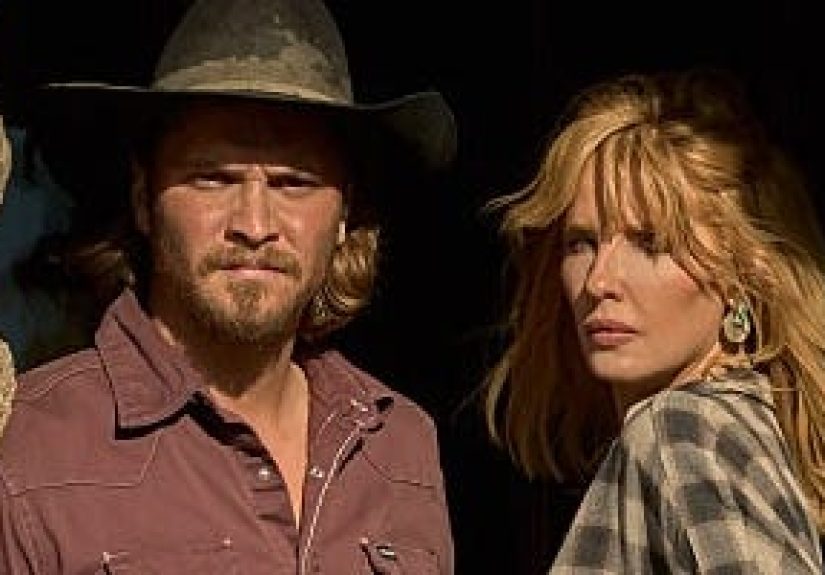
Beth’s reaction hit fans so hard because it felt instinctive before it felt strategic. She did not respond like a politician’s daughter. She responded like Beth Dutton: suspicious, feral, heartbroken, and instantly ready to turn grief into a weapon. The emotional shock mattered because her relationship with John was never casual background material. It was foundational. He was her anchor, her justification, her weakness, and in many ways the one person she was always trying to save, even while setting half the room on emotional fire.
What really grabbed viewers was the intensity of the performance. Beth’s grief was not tidy or poetic. It was ugly in the most convincing way. Fans who praised the scene kept circling back to the same idea: Kelly Reilly made Beth’s pain feel physical. Not melodramatic. Not decorative. Physical. Like the loss changed the air around her. In a series that often treats pain like something you bury under land deals and vengeance speeches, Beth’s reaction gave the audience a rare moment where grief refused to sit quietly in the corner.
And then came the second wave of fan discussion: what Beth did with that grief. Because Beth does not believe in closure; she believes in follow-through. Once she locked onto Jamie’s role in John’s fate, the story stopped being about mourning alone. It became about promise, payback, and whether Beth had crossed from wounded daughter into full-blown executioner of family destiny.
Why the Fan Reaction Was So Split
Some viewers thought John deserved better
This was probably the loudest complaint. Many longtime fans felt the patriarch of Yellowstone should have gone out on-screen, with more dignity, more control, or at least a more mythic kind of farewell. For those viewers, Beth’s reaction was moving, but it also felt like emotional compensation for a loss the show had not fully dramatized. In plain English: they appreciated the acting, but still wanted the series to do more justice to John himself.
Others believed Beth’s grief was the whole point
Another group of fans argued the opposite. They felt the aftermath was the story. From that perspective, John’s death was never supposed to be satisfying. It was supposed to be enraging, abrupt, and destabilizing. Beth’s reaction worked precisely because it mirrored the audience’s sense of violation. If viewers were upset, good. The characters were upset too. That parallel gave the show some of its strongest late-stage emotional energy.
And then there were the viewers who loved the chaos
Let’s be honest: Yellowstone has always attracted people who enjoy prestige drama with a side of righteous mayhem. For those fans, Beth’s reaction was classic Beth unfiltered, extreme, and entirely in character. They did not want subtle grief. They wanted the human equivalent of a lit fuse walking into a room. And that is exactly what Beth delivered.
Why Beth’s Reaction Fits Her Character So Perfectly
Beth has never loved in a balanced, therapist-approved way. Her love is possessive, loyal, wounded, and absolute. John was not merely her father; he was the emotional axis around which much of her identity spun. Her rage, her ambition, her need to prove herself, her loyalty to the ranch, even her contempt for weakness all roads led back to him.
That is why Beth’s reaction felt so believable. She was not just losing a parent. She was losing the person who gave her life structure, purpose, and a battlefield to fight on. Remove John, and Beth is not simply grieving. She is suddenly forced to answer a terrifying question: Who is she when the man she built herself around is gone?
Yellowstone answers that question in the most Beth Dutton way imaginable. She becomes action. She becomes vengeance. She becomes the final keeper of her father’s will. It is not healthy. It is not noble in the conventional sense. But it is truthful to the character the show built over five seasons. Beth has always translated pain into movement. If sadness knocks on the door, she tells it to get in the truck because there is work to do.
The Finale Turned Grief Into Legacy
One reason Beth’s reaction kept echoing with fans is that it did not end with a scream or a threat. The finale made her grief consequential. She kept fighting for the ranch. She carried John’s mission into the show’s last chapter. And at his funeral, that emotional through-line tightened into something almost tender. Beth’s private goodbye was not flashy. It was deeply personal. In that moment, all the sharp edges fell away just enough for the audience to see that beneath the sarcasm, fury, and titanium-grade bitterness was a daughter desperate to tell her father she had not failed him.
That matters because Beth’s story in the finale is not only about revenge. It is about inheritance. Not money. Not land in the legal sense. Emotional inheritance. She inherits John’s war, his burden, his stubbornness, and his idea that the ranch is worth almost any cost. Fans who responded strongly to Beth’s behavior were really responding to that transfer of power. John died, but his intensity did not. It moved into Beth like lightning finding a new tree.
And yes, the finale gave that idea a brutal edge when Beth finally settled things with Jamie. Viewers had been anticipating some kind of collision between them for years, and the show made good on that promise. For some fans, it was cathartic. For others, it felt inevitable to the point of exhaustion. But even among people who disliked the broader execution, many still admitted Beth’s emotional trajectory tracked. Once John was gone, there was no version of Beth that would simply shrug, bake a casserole, and move on with her life.
Kelly Reilly Is a Huge Reason This Story Worked
Let’s give credit where it is wildly deserved: Kelly Reilly carried a massive amount of emotional weight here. Beth has always been a high-risk character. Played badly, she could have become a cartoon of cruelty and one-liners. Played well, she becomes something much more compelling a woman so damaged and so fiercely devoted that even her worst impulses feel rooted in real pain.
That is why so many fan responses focused less on plot and more on performance. Reilly did not make Beth easier to like. She made her impossible to ignore. Her grief felt raw. Her anger felt earned. Even Beth’s most extreme choices after John’s death were grounded in a clear emotional logic. Viewers may not have agreed with what Beth did, but they understood why she did it. That is a big difference, and it is the kind of difference that keeps audiences talking long after the credits roll.
In a strange way, Beth’s reaction also helped solve one of the show’s biggest late-stage storytelling problems. Without John physically present, Yellowstone needed someone to hold the emotional center. Beth became that center, not because she was calm or reasonable, but because she was incapable of pretending the loss was smaller than it was.
What This Says About Yellowstone Fans
The uproar around Beth’s reaction says something important about the audience, too. Yellowstone fans are not passive viewers. They are emotionally invested in these characters the way sports fans are invested in a rival team, the way family members are invested in a messy holiday argument, and the way dog owners are invested in whether the couch was truly destroyed “for no reason.” They care loudly.
So when Beth reacted to John’s fate with all the emotional restraint of a tornado in designer boots, fans did what passionate fandoms do: they projected, debated, defended, and dissected. Some saw a daughter’s devastation. Some saw manipulative plotting. Some saw the only reaction Beth could ever plausibly have. That range of responses is not a weakness in the story. It is a sign that the moment landed hard enough to mean different things to different people.
The Viewing Experience: Why Beth’s Reaction Feels So Personal for Fans
Watching Beth react to John Dutton’s fate feels personal for a lot of fans because Yellowstone trained viewers to understand her as both weapon and wound. For years, Beth has walked through the series like someone who already knows life is cruel, so she might as well be cruel first. That attitude makes her entertaining, but it also hides the fact that much of her identity is built around two things: protecting the ranch and protecting John. When one of those things is suddenly ripped away, audiences are not just watching a plot development. They are watching the core design of the character crack open.
That is why the experience of those episodes can feel weirdly intimate, even for viewers who do not always like Beth. You may disagree with her methods. You may think she has needed about six straight years of therapy, a nap, and one extremely honest apology tour. But you still understand the emotional math. Losing a parent can make people look for control in the wrong places. It can make anger feel easier than sorrow. It can make revenge look suspiciously like purpose. Beth embodies all of that with the subtlety of a freight train, but the emotional truth underneath it is recognizable.
There is also the long-history factor. Fans have spent years watching John and Beth operate with a kind of silent shorthand. He understood what she could do. She understood what he needed, even when he did not deserve the level of devotion she gave him. That relationship was never soft, but it was central. So when Beth reacts the way she does, viewers are not just responding to one episode. They are responding to seasons of accumulated tension, loyalty, disappointment, and love. It feels like a payoff, even if it is a painful one.
Another reason the experience hits so hard is that Beth’s grief is not polished for TV comfort. It is not a “single tear, cue the violin, cut to commercial” kind of sadness. It is explosive and inconvenient. It interrupts strategy. It consumes the room. For fans, that can feel refreshing in a television landscape that sometimes sands grief down until it becomes aesthetically pleasing. Beth does not grieve in a way that looks good. She grieves in a way that feels dangerous. That messiness gives the audience something strong to react to, whether they admire it or recoil from it.
And then there is the simple fact that many fans saw their own experiences reflected in the chaos. Not the revenge part, obviously let us all keep Thanksgiving civil but the deeper emotional pattern. The way grief can sharpen old resentments. The way losing a parent can make siblings look at one another differently. The way one death can suddenly reorganize an entire family. Yellowstone wraps those truths in cowboy noir and premium-cable swagger, but the feelings underneath are surprisingly familiar.
So when fans say they had a lot to say about Beth’s reaction, what they really mean is that the show struck a nerve. Some viewers thought it was too much. Some thought it was perfect. Some wanted more from John’s farewell and less from Beth’s fury. But almost nobody watched it and shrugged. In TV terms, that is powerful. In Beth Dutton terms, that is practically a love letter.
Final Thoughts
In the end, Beth’s reaction to John Dutton’s fate became one of the defining emotional flashpoints of Yellowstone because it captured everything the show does best and worst at the same time. It was intense, divisive, messy, operatic, and rooted in genuine character history. Some fans will always argue John deserved a more heroic goodbye. Others will insist Beth’s grief was the real story all along. Both readings have merit.
But here is the simplest truth: viewers kept talking because Beth made John’s loss feel enormous. She made it impossible to treat his death like a mere production problem or a behind-the-scenes workaround. Through Beth, the show transformed an awkward necessity into an emotional event. Whether you loved that choice or cursed at your television like it owed you rent, it worked in the one way that matters most for a finale-era TV drama: it made people care.
And in the wild, bruised, beautiful mess that is Yellowstone, getting fans to care loudly may be the most authentic ending of all.