Table of Contents >> Show >> Hide
- What Is Surreal Photography?
- What Do Polka Dots Add to Surreal Images?
- Surreal Photography And Polka Dots in Visual Culture
- Key Techniques for Creating Surreal Polka Dot Photography
- Surreal Photography And Polka Dots in Portraiture
- How Polka Dots Affect Composition
- Color Choices: Black, White, Red, Yellow, and Beyond
- Modern Uses: Social Media, Editorials, and Digital Art
- Common Mistakes to Avoid
- Experience-Based Section: Working With Surreal Photography And Polka Dots
- Conclusion
Surreal photography and polka dots may sound like two guests who accidentally sat at the same dinner table: one whispers about dreams, shadows, and impossible realities; the other arrives cheerfully wearing a spotted scarf and asking where the snacks are. But put them together, and something strangely powerful happens. Dots become portals. Portraits become puzzles. Ordinary rooms begin to feel as if they are floating three inches above common sense.
At its best, surreal photography uses the camera not only to record what exists, but to question whether what exists is behaving properly. A hand may emerge from a wall. A face may disappear behind a mirror. A landscape may look calm until a tiny visual contradiction makes the viewer blink twice. Polka dots add another kind of magic: repetition, rhythm, playfulness, infinity, and visual tension. They can make a photograph feel fashionable, theatrical, comic, eerie, or cosmicsometimes all before lunch.
This article explores how surreal photography and polka dots overlap in art history, contemporary image-making, fashion photography, portraiture, conceptual photography, and visual storytelling. We will look at major influences such as Surrealism, Man Ray, Dora Maar, Lee Miller, Yayoi Kusama, pattern-based composition, and the psychological effect of repeated circles. Then, at the end, you will find an experience-based section for creators who want to experiment with this deliciously odd combination themselves.
What Is Surreal Photography?
Surreal photography is photography that bends reality until it reveals something hidden, poetic, funny, or unsettling. It grew from the broader Surrealist movement, which developed in the early 20th century and was deeply interested in dreams, the unconscious mind, irrational combinations, and the strange life of ordinary objects. Instead of simply showing a person, chair, street, or fruit bowl, surreal photography asks: what if the chair had a secret? What if the street remembered your dream? What if the fruit bowl was judging you?
Surrealist photographers used several methods to create unexpected images. Some relied on darkroom techniques such as double exposure, solarization, photograms, montage, cropping, and unusual lighting. Others staged scenes with theatrical props, odd gestures, masks, mirrors, dolls, mannequins, body fragments, or impossible juxtapositions. The goal was not always to shock. Sometimes it was to make the everyday world feel slightly untrustworthy, like a familiar hallway in a dream where the doors lead to the wrong rooms.
Why Photography Was Perfect for Surrealism
Photography has a special relationship with truth. Viewers often assume a photograph shows something that really happened in front of the camera. Surreal photographers love that assumption because it gives them something to gently sabotage. When a painted image looks impossible, we accept the fantasy. When a photograph looks impossible, our brain wants a meeting with the manager.
Artists such as Man Ray helped prove that the camera could be experimental, not merely documentary. His rayographs, solarized portraits, and studio inventions pushed photography toward mystery and abstraction. Dora Maar brought psychological intensity and strange beauty to her photographic work, often turning ordinary subjects into uncanny visual experiences. Lee Miller moved across fashion, Surrealism, and war photography, showing how one photographer could inhabit glamour, experimentation, and harsh reality without staying politely in one lane.
What Do Polka Dots Add to Surreal Images?
Polka dots are simple: circles repeated across a surface. That simplicity is exactly why they are so flexible. A dot can be cute, stylish, mathematical, obsessive, childlike, retro, futuristic, or hypnotic. Repeat it enough times and the pattern begins to change personality. One dot is a mark. Ten dots are decoration. A thousand dots can feel like weather.
In surreal photography, polka dots can do several jobs at once. They can flatten depth, making a human body look like part of a backdrop. They can create camouflage, allowing a model to disappear into a patterned wall. They can introduce humor into a serious scene, or unease into a cheerful one. They can suggest infinity, repetition, obsession, or the feeling that the image is multiplying beyond the frame.
The Kusama Connection: Dots, Infinity, and Self-Obliteration
No modern discussion of polka dots in art can ignore Yayoi Kusama. Her dots appear across paintings, sculptures, rooms, pumpkins, clothing, installations, and mirrored environments. Kusama’s repeated dots are not just decoration; they are connected to infinity, perception, identity, and the dissolving of the self into a larger field. Her famous Infinity Mirror Rooms use reflection, pattern, light, and repetition to make viewers feel as if they have stepped into a universe that forgot to stop expanding.
For photographers, Kusama’s influence is enormous because her work is not only art to look atit is art that changes how people understand space. A polka-dotted room becomes a stage. A dotted pumpkin becomes an icon. A mirror filled with lights and repeated shapes becomes a photographic event. Whether artists are directly inspired by Kusama or simply working with the same visual language, dots can transform a photo from a scene into a system.
Surreal Photography And Polka Dots in Visual Culture
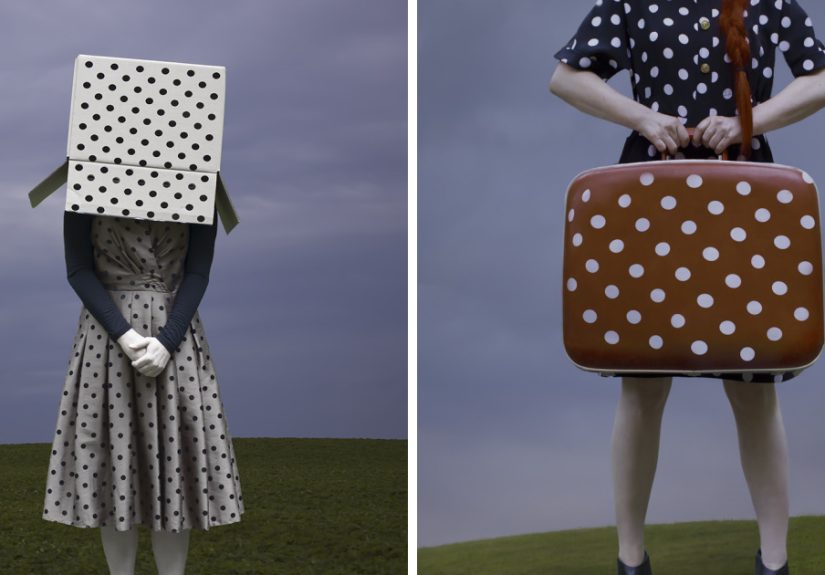
The pairing of surreal photography and polka dots appears naturally in fashion editorials, album covers, gallery portraits, conceptual self-portraits, advertising campaigns, and experimental social media art. Fashion photographers often use polka dots because they are instantly readable on camera. A dotted dress, scarf, wall, umbrella, or floor can turn a simple pose into a graphic composition. Add surreal staging, and the image begins to tell a stranger story.
Imagine a model in a black-and-white polka dot dress standing against a black-and-white polka dot background. At first, the image feels stylish. Then the model’s outline begins to blur into the wall. The person becomes pattern. The fashion becomes camouflage. The viewer starts asking where the body ends and the room begins. That is the sweet spot where design turns surreal.
Polka Dots as Camouflage
Camouflage is one of the most effective uses of dots in surreal photography. A photographer can paint dots on a subject’s face, match clothing to a dotted backdrop, or use projection to cover skin and objects with circular patterns. The result can be playful or eerie. A person may seem to dissolve into the setting, as if swallowed by wallpaper. The effect raises questions about identity, visibility, performance, and the pressure to blend in.
Polka Dots as Portals
Dots also work beautifully as symbolic portals. A single large dot can look like a moon, an eye, a hole, a spotlight, or a planet. Many dots can suggest stars, bubbles, cells, memories, or thought particles. In surreal photography, a dotted wall may become outer space. A dotted dress may become a constellation. A dotted umbrella may look like a portable galaxy for someone who refuses to have a normal rainy day.
Polka Dots as Humor
Surreal art does not have to be gloomy. In fact, some of the best surreal images are funny in a quiet, elegant, “wait, why is that fish wearing gloves?” kind of way. Polka dots are useful because they carry a sense of lightness. They can make an image approachable before the surreal element sneaks in. A portrait with dots may look charming at first glance, then reveal that the subject’s shadow is dotted too, or that the dots are floating off the clothing and drifting through the air like visual confetti with suspicious intentions.
Key Techniques for Creating Surreal Polka Dot Photography
You do not need a museum budget, a warehouse full of props, or a team of assistants named after European espresso drinks to create surreal polka dot photography. Many strong concepts can be made with fabric, paper circles, lighting, mirrors, editing software, and a willingness to look mildly ridiculous during the process.
1. Use Pattern Matching
Pattern matching is one of the easiest ways to make a surreal image. Choose a polka dot backdrop and dress the subject in a similar pattern. The closer the scale, spacing, and color of the dots, the more the person blends into the environment. This can create optical confusion and make the viewer work to separate figure from ground.
2. Play With Scale
Dots become surreal when their scale feels wrong. Tiny dots on a huge wall may feel like stars. Huge dots on a face may feel like planets. A small person standing beside enormous circular shapes can look as if they are trapped inside a board game designed by the moon. Scale shifts help ordinary patterns feel dreamlike.
3. Add Mirrors and Reflections
Mirrors multiply dots, bodies, rooms, and light. A dotted outfit reflected in several mirrors can create a visual loop, making the subject seem duplicated or infinite. Reflections also introduce ambiguity: which version is real, which is reversed, and which one looks like it knows something the others do not?
4. Try Projection
Projecting polka dots onto a subject can create a painterly, theatrical effect. Unlike clothing or wallpaper, projected dots can wrap across skin, hair, objects, and backgrounds all at once. This makes the pattern feel less like decoration and more like an atmosphere. It also allows the photographer to distort the dots by changing the angle, distance, and surface shape.
5. Use Double Exposure or Composite Editing
Double exposure and digital compositing are natural tools for surreal photography. A portrait can be merged with dotted fabric, bubbles, planets, flowers, or city lights. A subject’s silhouette can be filled with circles. A landscape can be interrupted by floating dotted spheres. The key is to keep the concept clear so the image feels intentional rather than like the editing software got overexcited.
Surreal Photography And Polka Dots in Portraiture
Portraiture is one of the strongest places to use this visual pairing because faces are emotionally powerful and dots are visually magnetic. When a face is partly covered with dots, the viewer experiences both recognition and interruption. We see a person, but we also see a pattern trying to take over the image.
A dotted veil can suggest secrecy. Dotted makeup can feel futuristic or ritualistic. A dotted background can create tension between individuality and repetition. A subject surrounded by floating dots may appear to be inside their own thoughts, memories, or anxieties. The portrait becomes less about what the person looks like and more about what their inner world might feel like.
Fashion Portraits
In fashion photography, polka dots are often associated with vintage charm, elegance, playfulness, and graphic confidence. When placed in a surreal context, that familiar fashion language becomes stranger. A model in a dotted suit may stand in a room where every object is also dotted. A dotted hat may cast circular shadows. A dotted glove may reach through a picture frame. The result feels polished but uncanny, like a magazine spread that wandered into a dream and decided to stay.
Fine Art Portraits
Fine art photographers can use dots more symbolically. Repetition may represent memory, anxiety, social pressure, digital identity, cosmic scale, or the feeling of being one small point in an enormous universe. Because dots are abstract, they do not force one meaning. They invite interpretation, which is exactly what surreal photography loves to do.
How Polka Dots Affect Composition
Composition is the skeleton of a photograph, and polka dots are very opinionated bones. Because dots repeat, they naturally guide the eye. They create rhythm and movement across the frame. They can balance empty space, emphasize symmetry, or deliberately overwhelm the subject.
Small, evenly spaced dots create order. Large, irregular dots create energy. High-contrast dots demand attention. Low-contrast dots feel softer and more atmospheric. A photographer can use dots to lead the viewer toward the subject, hide the subject, or make the entire frame feel like one vibrating surface.
Figure and Ground
One of the most interesting compositional effects happens when the subject and background compete. In a traditional portrait, the subject stands out clearly. In surreal polka dot photography, the subject may almost disappear. This figure-ground confusion can be visually exciting because it slows the viewer down. The eye has to search, and that search becomes part of the experience.
Negative Space
Dots also change negative space. A blank wall feels quiet. A dotted wall feels active. Even empty areas of the photo begin to participate. This can be helpful when creating surreal images because the entire frame feels alive, not just the central subject.
Color Choices: Black, White, Red, Yellow, and Beyond
Color can completely change the mood of surreal polka dot photography. Black-and-white dots feel classic, graphic, and slightly cinematic. Red dots can feel energetic, theatrical, romantic, or alarming. Yellow dots often feel playful and bright, especially when paired with pumpkins, balloons, or pop-art-inspired sets. Blue dots may feel dreamy or aquatic. Metallic dots can feel futuristic, like disco balls had a serious philosophical awakening.
For a clean surreal effect, limit the palette. Too many colors can make the image feel chaotic rather than mysterious. A tight palette gives the viewer a visual anchor while the concept does the strange work. Think of color as the music under the photograph: it sets the emotional tempo.
Modern Uses: Social Media, Editorials, and Digital Art
Surreal photography and polka dots have found a natural home in digital culture. The combination is highly shareable because it is bold, recognizable, and visually immediate. A strong dotted surreal image can stop a scrolling viewer because the pattern reads quickly, while the surreal twist rewards a longer look.
On social platforms, creators use dotted rooms, dotted makeup, dotted props, and editing effects to build distinctive visual identities. In editorial design, dots add structure and style. In advertising, dots can make a product campaign feel playful, premium, or avant-garde. In gallery settings, the same motif can be more conceptual, raising questions about repetition, identity, consumer culture, and the endless loop of images in modern life.
Common Mistakes to Avoid
The biggest mistake is treating polka dots as a gimmick instead of a visual idea. A dotted background alone does not make an image surreal. The dots need to interact with the subject, space, lighting, or concept. They should do something: hide, reveal, multiply, confuse, decorate, distort, or symbolize.
Another mistake is over-editing. Surreal does not mean messy. The most memorable surreal photographs often have clean execution. The impossible element is stronger when the image itself looks deliberate. If everything is distorted, glowing, floating, melting, and covered in dots, the viewer may feel less like they entered a dream and more like they accidentally opened twelve browser tabs inside a blender.
Experience-Based Section: Working With Surreal Photography And Polka Dots
Creating surreal photography with polka dots is one of those artistic experiments that sounds easy until you actually try it and discover that circles have opinions. The first experience many photographers have is realizing that scale matters more than expected. A fabric that looks charming in person may look too busy on camera. Large dots may dominate the subject. Tiny dots may disappear under soft light. The camera is brutally honest in the way only cameras and toddlers can be.
One useful experience is to begin with a very simple setup: one subject, one dotted object, and one surreal action. For example, place a person in front of a plain wall and give them a polka dot umbrella indoors. Already, the scene feels slightly wrong because umbrellas belong outside, unless your ceiling has emotional weather. Then add a twist: cover the floor with paper dots that appear to be falling from the umbrella, or edit the dots so they float upward instead of downward. The image becomes surreal without needing a complicated set.
Another practical lesson is that polka dots work best when they have a relationship with the body. A dotted glove covering the eyes can suggest mystery. Dotted socks floating above the floor can suggest levitation. Dots painted along the jawline can make the face appear to dissolve. When the pattern touches the body, the image becomes more intimate and less like simple background decoration.
Lighting is also a major part of the experience. Hard light creates sharp shadows, which can turn dots into graphic shapes on walls and skin. Soft light makes dots feel more fashionable and gentle. Colored light can push the image into fantasy. A red light on black-and-white dots, for instance, can turn a playful pattern into something theatrical and moody. The same polka dot dress can look like a picnic outfit at noon and a psychological thriller at midnight.
Props are helpful, but they should not take over the concept. Balloons, mirrors, dotted fabric, round stickers, paper circles, plates, records, bubbles, lamps, and painted spheres can all work. The trick is choosing one main idea. If the photograph is about disappearance, use dots to camouflage. If it is about infinity, use mirrors or repeated editing. If it is about humor, let the dots behave badly: escaping from a suitcase, clustering around a shoe, or forming a halo around someone who clearly did not request sainthood.
Editing should support the illusion. Clean masking, consistent shadows, and believable perspective make surreal images more convincing. If dots are floating in the air, some should be sharp and others slightly blurred to suggest depth. If dots are added to skin, they should follow the curves of the body. If a subject blends into a backdrop, the match should be close enough to confuse the eye but not so perfect that the viewer misses the person completely.
Perhaps the most enjoyable part of working with surreal photography and polka dots is how quickly the mood can change. The same pattern can be innocent, stylish, cosmic, or creepy depending on composition. A dotted teacup on a table is cute. A hundred dotted teacups stacked in a bedroom is surreal. A person calmly sleeping under a blanket while dots crawl up the walls is stranger still. Repetition turns ordinary objects into events.
For beginners, the best advice is to sketch before shooting. Draw the frame, mark where the dots go, decide what should feel impossible, and keep the concept simple enough to explain in one sentence. “A woman disappears into a dotted wall.” “A man opens an umbrella and releases planets.” “A child’s shadow is made of polka dots.” These simple concepts are memorable because they give the viewer a visual riddle.
The experience also teaches patience. Pattern alignment takes time. Wrinkled fabric can break the illusion. Stickers fall off. Balloons wander. Mirrors reflect the photographer, the lamp, and sometimes the snack table. But these small problems are part of the fun. Surreal photography rewards playful problem-solving. It asks the photographer to think like a magician, designer, storyteller, and slightly mischievous decorator.
In the end, surreal photography and polka dots work together because both are about seeing differently. Surrealism questions reality; polka dots reorganize it. One bends the world. The other repeats it until it becomes music. Put them together, and a simple photograph can become a dream with excellent pattern discipline.
Conclusion
Surreal photography and polka dots make a surprisingly rich creative partnership. Surreal photography brings dreams, contradictions, psychological depth, and visual surprise. Polka dots bring rhythm, repetition, charm, infinity, and graphic force. Together, they can turn portraits, fashion shoots, still lifes, interiors, and digital composites into images that feel playful at first glance and profound after a longer look.
From the experimental legacy of Surrealist photographers to the dotted universe of Yayoi Kusama, this combination has deep roots and fresh possibilities. For artists, designers, photographers, bloggers, and visual storytellers, the lesson is simple: a dot is never just a dot when it knows how to misbehave.
Note: This article synthesizes information from reputable art, museum, photography, and design references, including major U.S. and international cultural sources, and rewrites the material in original standard American English for web publication.