Table of Contents >> Show >> Hide
- Why a Work Tote Has to Do More Than Look Expensive
- The Five Features That Matter Most
- Leather, Nylon, or Canvas? The Material Reality Check
- The Best Shape for Your Commute
- How to Choose Based on Your Actual Work Life
- Style Advice: Matching the Tote to Your Wardrobe
- Red Flags Before You Buy
- How to Make a Good Work Tote Last Longer
- Long-Haul Experience: What Living With a Work Tote Really Feels Like
- Conclusion
If your work tote has ever betrayed you in public, welcome. Maybe the strap dug into your shoulder like it had a personal vendetta. Maybe your keys disappeared into a fabric abyss so deep you briefly considered filing a missing persons report. Or maybe your sleek office bag turned into a floppy black hole by week three, which is not exactly the polished professional energy you were going for.
A truly great work tote is not just attractive. It is dependable, structured when you need it, forgiving when your day gets weird, and sturdy enough to survive the commute, the coffee run, the client meeting, the airport security bin, and the “I’ll just throw one more thing in there” habit we all pretend we do not have. In other words, the best work totes for the long haul are equal parts style, engineering, and emotional support system.
This guide breaks down what makes a commuter tote worth carrying for the long term, how to choose the right material and silhouette, what features matter most, and how to avoid spending serious money on a bag that is secretly a beautiful nuisance.
Why a Work Tote Has to Do More Than Look Expensive
There is nothing wrong with loving a handsome bag. In fact, the right work tote can make a whole outfit feel sharper. But the long-haul test is not passed in your mirror. It is passed on crowded trains, in elevators, under desks, and on the walk from the parking garage while holding coffee, phone, badge, lunch, and whatever remains of your patience.
A long-lasting work tote needs to do four jobs at once: carry weight comfortably, protect what matters, keep your essentials organized, and still look appropriate with the rest of your wardrobe. That is why the smartest shoppers do not just ask, “Is it cute?” They ask, “Can I live with this bag five days a week?”
That question changes everything. Suddenly, a stiff handle, an open top, a too-shallow laptop sleeve, or a single giant compartment starts looking less charming and more chaotic. The best office bag is not the one that photographs best on a bench next to a croissant. It is the one that still feels like a good decision in month eight.
The Five Features That Matter Most
1. A Closure That Keeps Your Stuff Where You Left It
An open tote can look beautifully minimal, but for commuting, travel, or any day involving motion, a zip-top work tote is usually the saner choice. A zipper helps keep your things contained, adds a little weather protection, and prevents the dramatic “wallet spill at crosswalk” scenario nobody enjoys. Magnetic snaps can work if you carry light and move calmly, but if your schedule includes rushing, stairs, or public transit, security matters.
2. A Real Laptop Compartment
A work tote with laptop sleeve details is not a luxury anymore. It is the baseline. You want a compartment that fits your device without forcing it in sideways like a reluctant casserole dish. Bonus points for padding, because your laptop should not be one pothole away from a hard lesson in physics.
3. Comfortable Straps
Straps are where romance goes to die. A bag can be gorgeous, but if the straps are thin, stiff, or too short to sit comfortably over a blazer, you will know by lunchtime. Look for shoulder-drop room, wider straps, and hardware that does not jab, squeak, or pull. Comfort is not boring. Comfort is why you still like your bag by Thursday.
4. Organization Without Overengineering
Too few pockets and you are rummaging. Too many and you need a map. The sweet spot is a tote with enough structure to separate your laptop, water bottle, wallet, charger, keys, and small daily extras without turning the interior into a puzzle. A key leash, exterior slip pocket, and one or two zip compartments go a long way.
5. Materials That Match Real Life
A work tote is not just an accessory. It is a load-bearing object. That means material matters more than trend. The right choice depends on how you commute, how much you carry, and how precious you want to be about maintenance.
Leather, Nylon, or Canvas? The Material Reality Check
Leather Totes
A leather work tote is the classic choice for a reason. It looks polished, works across office dress codes, and tends to age with more character than synthetics. If you want a bag that can move from Monday meetings to dinner plans without missing a beat, leather is hard to beat.
That said, not all leather behaves the same. Smooth leather looks elegant but can show scratches faster. Pebbled leather is more forgiving and often better for everyday commuters who are not interested in babying their bag like a museum object. Structured leather also tends to hold shape better, which makes the entire bag look more expensive and easier to organize.
The trade-off is weight. Leather can be heavier before you even add your laptop, charger, notebook, water bottle, and the mysterious receipts that multiply in every handbag. If you carry a lot, choose lighter leather or a tote with optional organization inserts rather than a heavily built interior.
Nylon Totes
If leather is the elegant overachiever, nylon is the practical genius. A nylon commuter tote is lighter, often easier to clean, and usually more forgiving in bad weather. For people who walk long distances, travel often, or carry a truly aggressive amount of stuff, nylon may be the better long-haul material.
Done well, nylon does not have to look sporty. Many of today’s best work totes use clean lines, dark tones, and smart hardware to keep the look professional. If you want a bag that feels functional first but still office-appropriate, nylon deserves more respect than fashion snobs sometimes give it.
Canvas Totes
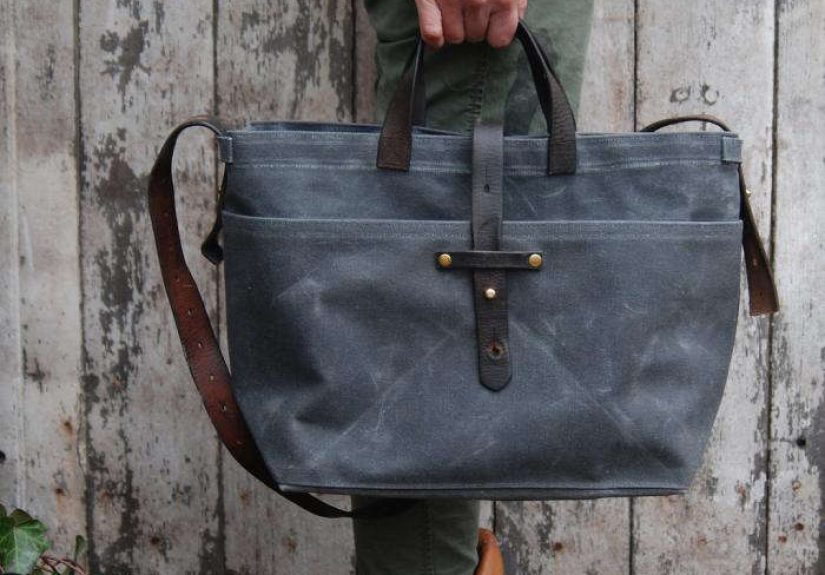
Canvas sits in the sweet spot between rugged and casual. A good canvas tote can be durable, roomy, and refreshingly unfussy. It is especially appealing if you want a sturdy everyday bag that can also handle errands, trains, and last-minute detours without looking fragile.
The catch is finish. Some canvas totes lean too informal for conservative offices. Others solve that by adding leather trims, reinforced bottoms, or a zip-top design that makes them look more intentional. If your workplace is relaxed or creative, canvas can be an excellent work tote choice. If your office still loves a power blazer and a quiet luxury attitude, leather or elevated nylon may fit better.
The Best Shape for Your Commute
Shape changes the experience of a bag more than most people expect. A soft slouchy tote looks effortless, but it can be annoying when packed with tech because everything shifts. A boxier structured tote feels more controlled and often more professional, though it can be less forgiving when you add sneakers, lunch, and a cardigan for the office Arctic tundra.
Vertical totes often feel more elegant and less bulky against the body, especially for shorter commutes. Horizontal totes usually make better laptop bags and can be easier to pack. A medium-to-large tote is ideal for most workdays. Oversized styles look chic in theory, but in practice they invite overpacking. That is not always a design feature. Sometimes it is just a trap with handles.
How to Choose Based on Your Actual Work Life
The Train or Subway Commuter
You need secure closure, easy-access outer pockets, and a shape that tucks close to the body. This is not the time for a floppy open tote that swings into strangers. Choose something streamlined with a zipper, durable straps, and an interior that lets you grab your card holder or phone without excavation.
The Car Commuter
You can get away with a bit more structure and weight because you are not carrying the bag continuously. A polished leather tote with a laptop sleeve and room for daily extras works beautifully here. You still want comfort, but elegance can play a slightly bigger role when the tote is not on your shoulder for forty minutes straight.
The Hybrid Worker
You need a work tote that can flex. Some days it carries a laptop and lunch. Other days it just needs to look sharp on a coffee meeting run. A medium structured tote with optional inserts or snap-in organizers is your best friend because it adapts without making you feel overbagged.
The Frequent Traveler
Look for a luggage sleeve, zip-top closure, lightweight material, and pockets that keep documents and chargers from staging a mutiny. A travel-friendly work tote should feel substantial but not heavy, because airports are already annoying enough without your bag joining the opposition.
Style Advice: Matching the Tote to Your Wardrobe
The best work tote should not fight your clothes. It should quietly elevate them. For conservative offices, structured leather in black, espresso, navy, or warm taupe is a smart move. These shades work with tailoring, dresses, loafers, and all the usual suspects without looking loud.
For creative or relaxed offices, you have more freedom. Suede, canvas, softer silhouettes, oversized shapes, and warmer earth tones can feel more personal. Just keep one principle in mind: if the bag is casual in material, the design should still feel intentional. A giant shapeless tote may hold everything, but it can read less “professional chic” and more “I fled the house with great speed.”
Minimalist dressers should lean into clean lines, tonal palettes, and subtle hardware. More expressive dressers can use the tote as a counterweight: if your outfits are colorful or printed, a quieter work bag keeps the overall look grounded. If your outfits are simple, a richly textured leather or strong silhouette can do the styling heavy lifting.
Red Flags Before You Buy
Skip the bag if the straps already feel stiff in the store. Skip it if the closure is decorative instead of functional. Skip it if the laptop compartment technically fits your device but only with patience, prayer, and a geometry lesson.
Also be suspicious of a tote that looks beautifully empty but collapses into a puddle when full. Some softness is lovely. Total loss of shape is another matter. Check handle attachment points, seam quality, base reinforcement, and whether the bag keeps its balance when set down. A tote that tips over every time you breathe near it is not long-haul material.
How to Make a Good Work Tote Last Longer
First, stop carrying your entire life. A bag can be durable and still lose the will to live under unnecessary weight. Rotate out what you do not need daily. A lighter load is better for the tote and for your shoulders.
Second, use pouches. Not because you are trying to become a hyper-organized lifestyle influencer, but because lip balm, pens, chargers, and hand cream behave like tiny gremlins when left loose. A few slim pouches reduce mess and interior wear.
Third, treat the material with respect. Leather likes conditioning and thoughtful storage. Nylon likes a quick wipe-down and less drama. Canvas benefits from spot cleaning and not being dropped on mystery sidewalks every morning. Store your tote upright when possible and avoid stuffing it so full that the seams begin negotiating their exit.
Long-Haul Experience: What Living With a Work Tote Really Feels Like
Here is the part that product descriptions rarely tell you: the best work tote slowly becomes part of your routine in a way that feels almost suspiciously intimate. You stop thinking about it, which is exactly the point. On Monday morning, it opens wide enough for your laptop without scraping your knuckles. On Tuesday, the exterior pocket saves you from doing the awkward subway shuffle while looking for your badge. On Wednesday, when the weather turns rude, the zipper and sturdier material suddenly feel like brilliant life choices.
A long-haul tote also changes your behavior. You become less likely to overpack when the bag has designated zones. Your keys go where your keys belong. Your charger stops wrapping itself around your headphones like a tiny hostile vine. Your water bottle stands upright instead of rolling through the interior and smacking your sunglasses. It sounds minor until you have spent enough mornings trying to find one pen in a bag that resembles an archaeological dig site.
There is also the confidence factor. A good work tote makes transitions easier. You can go from the office to dinner, from a coworking space to an airport, from a client meeting to a grocery stop, and the bag still makes sense. It does not look too precious for real life, but it does not look like an afterthought either. It earns its keep.
Some of the most loyal tote owners are not the ones carrying the trendiest bag. They are the ones carrying the bag that fits their real day. The lawyer with the structured leather tote that stands up on its own. The designer with the canvas carryall that holds sketchbooks, chargers, and a snack the size of a brick. The consultant with the nylon work bag that glides onto a suitcase handle and survives three flights a month. These are not fantasy-use cases. They are the habits that reveal whether a bag is worth its closet space.
And then there is the emotional truth: once you find a good one, you get weirdly protective of it. You notice when it still looks polished after months of use. You appreciate that the straps have softened without stretching. You stop envying every new tote trend because your bag already does what those bags are promising to do. That is the real long-haul win. Not constant novelty. Reliable performance with enough style to make the daily grind look a little more put together.
In a world full of bags that are photogenic but fussy, the best work tote is the one that proves itself in motion. It carries the weight, keeps the chaos organized, and somehow still makes you feel like you have your act together, even when your calendar says otherwise.
Conclusion
The perfect work tote for the long haul is not the flashiest one or even the most expensive one. It is the bag that respects your routine. It protects your laptop, keeps essentials in reach, carries comfortably, and still looks good after the honeymoon phase has worn off. Whether you choose leather, nylon, or canvas, the smartest move is to buy for your actual life, not your fantasy commute. A stylish work tote should not just complement your outfit. It should make your whole day easier. That is the kind of fashion advice your shoulders, schedule, and sanity can all get behind.