Table of Contents >> Show >> Hide
- Why Remy Became the Moral Center of The Rehearsal
- The Reddit Claim Fans Want to Believe
- Why “Not Traumatized” Does Not End the Conversation
- Nathan Fielder’s Comedy Has Always Lived in the Danger Zone
- Child Actors, Consent, and the Limits of Legal Protection
- Why Fans Are Clinging So Tightly
- The Show’s Brilliance Is Also the Problem
- Season 2 Changed the Scale but Not the Question
- A Better Way to Read the Reddit Claim
- What Viewers Can Learn From the Remy Debate
- Personal Viewing Experience: Laughing, Then Freezing
- Conclusion
There are television finales that leave viewers arguing about plot twists, and then there is the Season 1 finale of The Rehearsal, which left the internet debating child psychology, documentary ethics, HBO release forms, Reddit credibility, and whether Nathan Fielder had somehow built a prestige-comedy machine powered entirely by awkward silences and moral panic.
The latest spark in that still-burning conversation is a claim circulated by a Reddit user who said they were connected to Remy, the young child actor at the center of the finale’s most uncomfortable storyline. According to that Redditor, Remy was not harmed or traumatized by the experience, and Nathan Fielder cared about his well-being beyond what made it into the episode. For many Fielder fans, the claim arrived like emotional bubble wrap: finally, a way to enjoy the show’s genius without feeling as if they had accidentally applauded a small child’s confusion.
But the situation is not that simple. The Reddit claim has not been independently verified, and the episode itself was edited, shaped, and presented as television. That means viewers are left with a deeply modern question: when a show is built on blurring reality and fiction, how much comfort should fans take from an anonymous internet post saying everything turned out fine?
Why Remy Became the Moral Center of The Rehearsal
The Rehearsal began with a clean, almost sitcom-ready premise: Nathan Fielder helps ordinary people prepare for difficult life events by recreating their real environments, hiring actors, and running through possible outcomes. It is part reality show, part psychological experiment, part deadpan comedy, and part evidence that HBO will apparently fund anything if Nathan describes it in a calm enough voice.
In Season 1, the show eventually shifts into a larger simulation involving Angela, a woman rehearsing motherhood. To make the experiment work, the production uses multiple child actors to play her pretend son, Adam, at different ages. One of those children is Remy, a six-year-old performer whose comic alter ego, Dr. Fart, instantly became more memorable than many fully staffed streaming dramas.
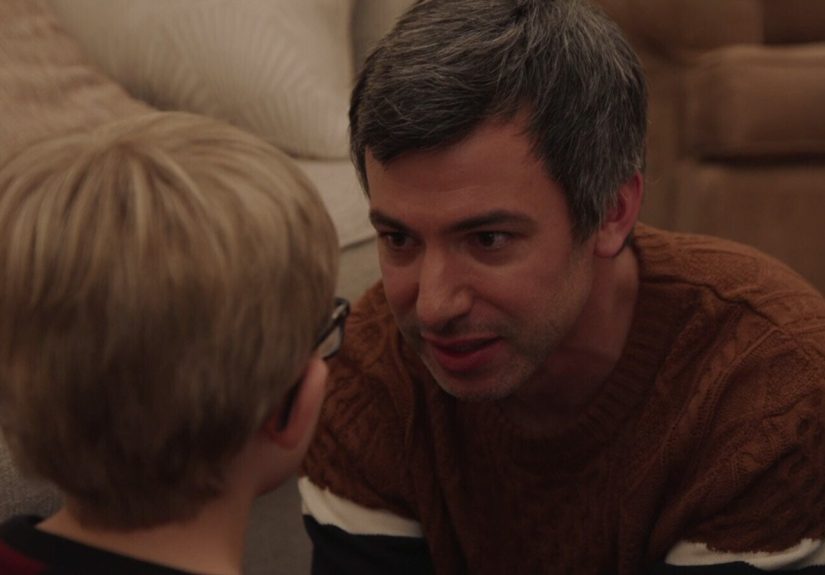
The emotional problem arrives in the finale, “Pretend Daddy.” Remy does not want to leave the set. He has grown attached to Nathan, calling him “Daddy” even after the scenes are over. Remy’s mother, Amber, explains that his real father is not part of his daily life, and that the pretend father-son dynamic may have become more real to him than anyone expected.
That is the moment the show changes. What had been an absurd experiment in controlling outcomes suddenly becomes a portrait of the one thing Nathan cannot control: another person’s emotional reality. More specifically, a child’s emotional reality.
The Reddit Claim Fans Want to Believe
After the finale aired, fans debated whether The Rehearsal had crossed an ethical line. Some viewers argued that Remy’s confusion showed the dangers of involving very young children in reality-based performance. Others insisted the sequence might have been staged, exaggerated, or carefully managed off-camera.
Then came the Reddit posts. A user claiming to be Remy’s real-life grandmother reportedly said that Remy was doing fine and was not harmed or traumatized during filming. The same account also suggested that Nathan showed genuine concern for Remy and that more conversations happened off-camera than viewers saw in the final cut.
For fans, that claim functions like a permission slip. It allows them to keep admiring The Rehearsal as a brilliant, unsettling, once-in-a-generation comedy without feeling complicit in something cruel. It says, in effect: yes, the scene was painful to watch, but the child is okay.
That may be true. It may also be incomplete. The key issue is verification. A Reddit post, even one that includes personal details or photos, is not the same as a documented statement from HBO, Remy’s family, a child welfare professional, or an independent reporter. Reddit can be useful, funny, insightful, and occasionally heroic. It can also be a place where a man with an anime avatar explains aviation law with the confidence of a Supreme Court justice. Caution is healthy.
Why “Not Traumatized” Does Not End the Conversation
The word “traumatized” is doing a lot of work here. In everyday internet arguments, it often gets used as a dramatic synonym for “upset,” “confused,” or “had a bad time.” Clinically, trauma is more specific and cannot be diagnosed by strangers watching an edited television episode. Viewers cannot responsibly declare that Remy was traumatized. They also cannot responsibly declare that he definitely was not.
Even if Remy was fine afterward, the ethical question remains. Was it appropriate to place a young child in a scenario where he might reasonably confuse performance with family attachment? Did the adults involved understand the emotional stakes? Were the safeguards enough? Did the show turn Nathan’s guilt into art in a way that helped the audience think, or did it turn a child’s distress into premium-cable content?
The most honest answer is that The Rehearsal makes these questions hard on purpose. The finale does not simply show a mistake and move on. It builds an entire emotional maze around Nathan trying to understand what happened. He talks to Remy. He talks to Amber. He re-creates the situation with other actors. He eventually plays Amber in a new rehearsal, trying to inhabit the perspective of the parent who allowed her child into the experiment.
That self-interrogation is part of the show’s artistic power. It is also part of what makes the show so slippery. When a series criticizes its own methods inside the episode, viewers can feel as if the criticism has already been handled. But dramatizing regret is not the same thing as undoing the cause of regret.
Nathan Fielder’s Comedy Has Always Lived in the Danger Zone
Nathan Fielder built his reputation on a very specific kind of comedy: elaborate plans, real people, awkward interactions, and the slow realization that the joke may not be pointed where you thought it was pointed. In Nathan for You, he offered absurd business advice to small companies. In The Rehearsal, he turned that logic inward, transforming practical problem-solving into existential theater.
His persona is central to the effect. Nathan appears stiff, literal, polite, and emotionally hard to read. He can ask a devastatingly personal question with the tone of someone checking whether a coupon is still valid. That deadpan style creates comedy, but it also creates uncertainty. Is he exposing the absurdity of social life? Manipulating people for laughs? Revealing his own loneliness? All of the above, probably, which is why audiences keep watching even when they are quietly whispering, “Should I be watching this?”
The Remy storyline intensified that discomfort because children are different from adult participants. Adults can sign releases, understand cameras, and negotiate embarrassment. Children, especially very young ones, may not fully understand performance, editing, permanence, or the emotional afterlife of a televised moment. A child can be a gifted actor and still be developmentally vulnerable. Both things can be true at once.
Child Actors, Consent, and the Limits of Legal Protection
American entertainment has systems designed to protect child performers. Depending on the state and production, those protections can include work-hour limits, schooling requirements, parental or guardian presence, studio teachers, welfare workers, permits, and rules around earnings. California’s Coogan Law, for example, is historically designed to protect a portion of a child performer’s income. SAG-AFTRA and industry groups also emphasize young performer safety, reporting procedures, and background checks for certain adults working around minors.
Those protections matter. They are not decorative paperwork. They exist because Hollywood has a long history of discovering, usually after the damage is done, that children need more than applause and a snack table.
But legal compliance and emotional clarity are not identical. A production can follow rules and still create a situation that viewers find ethically troubling. A parent can consent and still underestimate how a child will interpret an unusually realistic scenario. A child can be paid, supervised, and treated kindly while still being placed inside a confusing emotional environment.
That is why the Remy debate has lasted. It is not only about whether one boy was okay. It is about whether reality television, docu-comedy, and experimental performance can ever fully protect children when the art depends on capturing unscripted emotional reactions.
Why Fans Are Clinging So Tightly
Fans cling to the Reddit claim because it resolves cognitive dissonance. The Rehearsal is funny. It is inventive. It is beautifully constructed. It can feel profound in ways that make ordinary television look like a beige waiting room with snacks from 2009. People want to love it without an asterisk.
The Remy finale makes that difficult. If the child was harmed, the show becomes harder to defend. If the child was not harmed, the finale can be framed as a controlled, moving, ethically risky but ultimately safe piece of television. The Reddit claim gives fans the second version.
There is also a parasocial layer. Fielder’s audience tends to trust his intelligence and sensitivity because his work often appears aware of its own moral traps. When the show seems to indict Nathan, fans can read that indictment as evidence of responsibility. “He knows it was wrong” becomes “therefore he is not the kind of person who would do something wrong.” That is emotionally comforting, but logically wobbly. Self-awareness is valuable; it is not a force field.
The Show’s Brilliance Is Also the Problem
The most fascinating thing about The Rehearsal is that its artistic strengths are inseparable from its ethical problems. The show is compelling because the boundaries are unstable. It is funny because real people behave unpredictably inside fake structures. It is moving because the fake structures sometimes produce real feelings. It is disturbing because the real feelings are then edited into entertainment.
The Remy arc is the clearest example. If it were entirely fake, it would be a clever scripted meditation on parenthood. If it were entirely real, it would be emotionally alarming. Because it sits somewhere between performance, documentary, editing, and self-critique, it becomes unforgettable. Viewers are not just watching a scene. They are rehearsing their own judgment of it.
That may be Fielder’s deepest trick. He does not simply create awkwardness on screen; he transfers it to the audience. By the end, viewers are not asking, “What should Nathan do?” They are asking, “What does my reaction to this say about me?” That is either great art, emotional entrapment, or the most elaborate way anyone has ever made people feel weird about a kid named Dr. Fart.
Season 2 Changed the Scale but Not the Question
When The Rehearsal returned for Season 2, the focus shifted from intimate domestic simulations to aviation safety and pilot communication. The scale became larger, the premise stranger, and the ambition even more surreal. Instead of rehearsing fatherhood, Fielder explored systems, authority, and the difficulty of speaking up in high-stakes environments.
Still, the Remy debate followed the show like a ghost in a tiny actor’s costume. Fans and critics continued to ask whether Fielder’s methods are justified by the insight they produce. Does the show expose hidden truths, or does it manufacture distress and then congratulate itself for noticing? Does Nathan’s apparent vulnerability soften the manipulation, or does it make the manipulation more sophisticated?
Season 2 may not have repeated the exact child-actor controversy of “Pretend Daddy,” but the core issue remained: The Rehearsal is always about control, and control always has consequences.
A Better Way to Read the Reddit Claim
The most reasonable response to the Reddit claim is neither blind belief nor total dismissal. It is possible to say: this is encouraging if true, but it does not erase the broader ethical concerns. It is also possible to say: viewers should be careful about diagnosing harm from edited footage, but productions should be even more careful about creating conditions where such harm seems plausible.
In other words, the Redditor’s claim may reduce one fear without solving the whole debate. If Remy is healthy, happy, and supported, that is genuinely good news. Nobody should want the worst-case scenario to be true just to win an argument online. But the absence of visible long-term harm does not automatically prove the process was ideal.
Sometimes a situation can end well and still teach us that the setup was risky. A person can cross a busy street blindfolded and arrive safely, but that does not make blindfolded traffic navigation a lifestyle brand.
What Viewers Can Learn From the Remy Debate
The debate around Remy has become bigger than one episode because it touches a nerve in modern media culture. Audiences now consume reality-based entertainment with more awareness than ever. We know scenes are edited. We know participants may be guided. We know producers shape narratives. Yet we still respond emotionally as if we are seeing the raw truth.
The Rehearsal weaponizes that contradiction. It makes us question what is real while making us feel that the feelings are real. That is why the Remy storyline remains so powerful. Whether every beat unfolded exactly as shown is almost beside the point. The episode captures something true about childhood, attachment, and adult responsibility.
Children do not experience pretend the way adults do. A cardboard spaceship can be a spaceship. A blanket fort can be a castle. A pretend daddy, under the wrong circumstances, can feel like a daddy. That is not evidence that a child is fragile in some insulting way. It is evidence that children are imaginative, open, and still learning where the stage ends.
Personal Viewing Experience: Laughing, Then Freezing
Watching the Remy episode is a strange experience because it begins in the familiar Nathan Fielder register: odd, dry, socially uncomfortable, and somehow both ridiculous and precise. You expect to laugh at the machinery of the rehearsal. You expect the camera to linger a second too long. You expect Nathan to respond to human emotion as if it were a software update he forgot to install.
Then Remy cries, and the laughter changes shape.
The experience feels similar to realizing a magic trick has used a real knife. At first, the audience admires the construction. The rotating child actors, the fake family, the staged birthdays, the hyper-detailed house, the Fielder Methodall of it seems like part of a grand comic apparatus. Then a child appears to have real feelings inside that apparatus, and suddenly the machine looks less clever and more dangerous.
That is why many viewers went searching for reassurance after the finale. It is emotionally uncomfortable to admire something that may have caused pain. Fans wanted someone close to the situation to say, “It is okay. You are allowed to think the episode is brilliant.” The Reddit claim met that need perfectly. It offered a softer ending than the show itself provided.
But one of the most valuable experiences a viewer can have with The Rehearsal is resisting the urge to make the discomfort disappear too quickly. The show is not designed to be clean. It is designed to sit in the messy place where art, comedy, manipulation, vulnerability, and performance overlap. The discomfort is not a bug in the episode. It is the engine.
For viewers who write about television, study media, work with children, or simply care about how entertainment is made, the Remy storyline is a case study in why “good intentions” are not enough. Nathan may have cared. The production may have had safeguards. Amber may have believed the experience would be manageable. Remy may genuinely be doing fine. Even with all of that, the episode still raises fair questions about whether very young children should be placed inside emotionally realistic adult simulations for a television audience.
The experience also reveals how fandom works in the age of Reddit. Fans do not merely watch a show and move on. They investigate, defend, reinterpret, archive, and litigate. A single comment can become a coping mechanism for an entire community. In this case, the Redditor’s claim became a kind of emotional sequel to the finale: not official, not verified, but powerful because it gave fans the ending they wanted.
Personally, the most useful way to sit with the episode is to hold two ideas at once. First, it is entirely possible that Remy was supported, cared for, and ultimately okay. Second, the episode still exposes a real ethical tension in using children in reality-adjacent entertainment. Those ideas do not cancel each other out. They make the discussion more honest.
That is also why the episode remains one of the most talked-about moments in Nathan Fielder’s career. It is not just cringe comedy. It is not just a parenting allegory. It is not just a scandal, and it is not just a masterpiece. It is a piece of television that forces viewers to rehearse their own boundaries: what they will laugh at, what they will excuse, what they need verified, and what kind of discomfort they are willing to call art.
Conclusion
The claim that Remy was not traumatized may be comforting, and it may even be true. But because it comes from an unverified Reddit account, it should be treated as a hopeful data point rather than a final verdict. What The Rehearsal gave viewers in “Pretend Daddy” was not a simple accusation against Nathan Fielder or a simple defense of experimental television. It gave them something much harder to dismiss: a scenario where everyone may have meant well, the child may have ended up okay, and the ethics may still be worth questioning.
That is why fans are clinging to the Reddit claim. They want closure. They want to love the show without guilt. They want proof that the hardest scene was emotionally safe after all. But The Rehearsal has never been about easy closure. It is about the fantasy that life can be practiced until nothing goes wrongand the painful discovery that feelings do not follow the script.
Note: This article is written for web publication in standard American English, based on public reporting, official show information, entertainment criticism, industry context, and the publicly discussed but unverified Reddit claim. It does not diagnose any child’s mental health or assert private facts beyond what has been publicly reported.