Table of Contents >> Show >> Hide
- Why the Zumwalt Looks Like a Naval Ghost
- Why a Stealth Ship Needed Reflectors
- What the USS Zumwalt Was Supposed to Be
- Where the Program Ran Into Trouble
- The Reinvention: From Ammo Problem to Hypersonic Platform
- So Is the USS Zumwalt a Success?
- Experiences Around the Zumwalt: What This Ship Feels Like in the Real World
- Conclusion
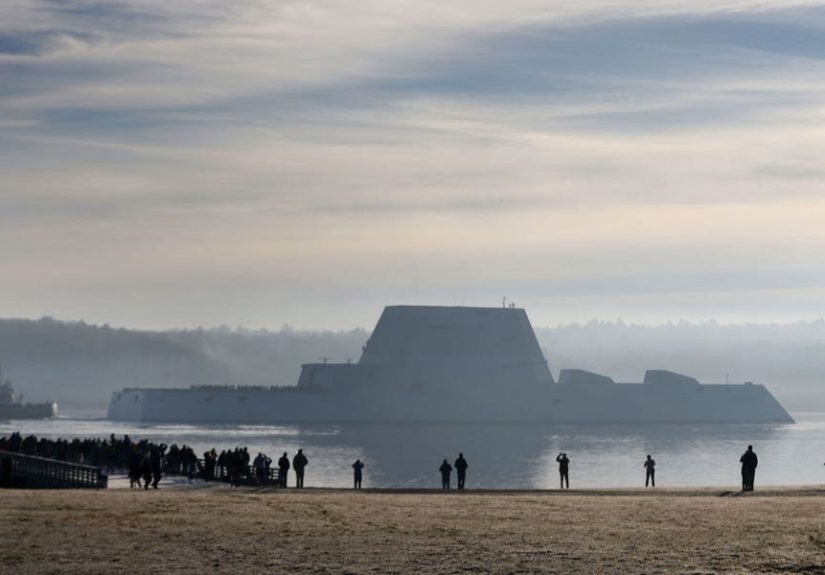
If a Hollywood prop department were asked to design a warship from the year 2045, it would probably sketch something suspiciously close to the USS Zumwalt. The ship looks less like a traditional destroyer and more like a sleek gray wedge that took one look at naval architecture and decided rules were optional. Its bow slices forward like a blade, its sides angle inward, and its superstructure seems determined to avoid doing anything as uncool as reflecting radar. That last detail is not just design theater, either. During trials, the Navy actually tested reflective material that could be hoisted so other ships could spot it more easily on radar. Yes, really. The stealth destroyer was so stealthy that it sometimes needed help being seen.
That odd little detail captures everything fascinating about the Zumwalt program. It is one of the most ambitious naval projects of the modern era: a massive destroyer designed to be hard to detect, heavily automated, loaded with advanced electronics, and built with enough electrical power for the Navy’s future dreams. It is also one of the most debated warships in recent memory, famous for cost growth, a shrinking production run, ammunition problems, engineering headaches, and a dramatic reinvention. In other words, the USS Zumwalt is not just a ship. It is a floating TED Talk about what happens when military innovation aims for the moon and lands somewhere between genius and glorious complication.
Why the Zumwalt Looks Like a Naval Ghost
The first thing people notice about the USS Zumwalt is that it does not look like other Navy destroyers. That is not an accident. The ship’s unusual shape is part of its stealth strategy. Its wave-piercing tumblehome hull slopes inward above the waterline instead of flaring outward like a conventional warship. Its surfaces are smooth and angular. Its antennas are arranged to reduce radar return. On the early ships, the composite deckhouse also helped cut the radar signature.
The result is a vessel that is enormous in real life but deliberately small-looking to radar. That is the whole trick. A 610-foot destroyer is not supposed to resemble a humble fishing boat on a radar screen, but the Zumwalt was designed to do exactly that. One mariner famously described seeing what looked like a much smaller vessel on radar, only to discover that the “small contact” was this giant futuristic warship moving nearby. That is the naval equivalent of expecting a house cat and finding a stealthy rhino.
Stealth at sea works differently than stealth in the air. A ship cannot become invisible. It still makes noise, still pushes water, still emits heat, and still exists in the embarrassingly visible world of daylight. But naval stealth can reduce radar cross section, lower infrared signatures, and make a ship harder to classify, track, or target quickly. In combat, even a little confusion can matter. If an enemy sensor sees a smaller, less threatening radar contact than what is really there, the stealthy ship gets a valuable edge.
Why a Stealth Ship Needed Reflectors
Now for the wonderfully ironic part. A ship that is harder for enemies to spot can also be harder for everyone else to spot. In busy sea lanes, crowded approaches, fog, storms, and other non-combat situations, being mysteriously ghostlike is not always a virtue. Sometimes the correct tactical posture is not “ninja.” Sometimes it is “please notice this 610-foot destroyer before somebody has a very stressful afternoon.”
That is why the Navy tested reflective material during builder’s trials. By hoisting radar-reflective gear, the Zumwalt could make itself more visible when needed. Think of it as putting a high-visibility vest on a stealth warship. The ship was not abandoning stealth forever; it was adding flexibility. In dangerous waters or wartime conditions, low observability is a feature. In crowded civilian shipping channels, low observability can be a paperwork-generating lifestyle choice.
This detail also says something important about the real world of naval operations. Warships do not spend every moment sneaking through hostile waters like characters in an action movie. They transit ports, move through commercial traffic, conduct tests, join exercises, and operate in ordinary maritime environments where safety and clear identification matter. The reflectors were not proof that stealth was pointless. They were proof that ships have to live in reality, and reality includes tankers, fishing boats, weather, and humans making judgment calls at 3 a.m.
What the USS Zumwalt Was Supposed to Be
The Zumwalt class began with huge ambition. The Navy originally envisioned a much larger class of advanced destroyers focused heavily on land attack. These ships were meant to deliver precise firepower ashore, support forces near the coast, and bring a new generation of naval technology into service. The design promised lower manning demands through automation, a powerful combat system, advanced radar, an all-electric drive architecture, and room for future weapons that did not yet fully exist outside PowerPoint and hope.
That power architecture remains one of the class’s most genuinely important achievements. The Zumwalt is the first U.S. Navy surface combatant built around an Integrated Power System that can distribute electrical power flexibly to propulsion, ship service loads, and combat systems. Translation: instead of acting like a traditional ship with separate plumbing for every major function, the Zumwalt behaves more like a high-end electrical platform with the ability to shift power where it is needed. That is useful today and potentially priceless tomorrow if the Navy wants to field more demanding sensors or directed-energy weapons.
The ship was also built with a much smaller crew than older destroyers of comparable size. That is another major concept buried under the public drama. Automation, reduced signatures, and future-ready power were all supposed to point toward a smarter, leaner kind of surface combatant. In some ways, the Zumwalt is less important as a fleet in itself and more important as a laboratory of ideas for what future warships could become.
Where the Program Ran Into Trouble
Then came the part where innovation submitted its expense report.
The Zumwalt program became notorious for cost growth and shrinking numbers. The class that was once discussed in much larger terms was ultimately cut to just three ships. That mattered for more than headlines. When production numbers collapse, unit economics go from “challenging” to “would you like to sit down before hearing this?” The Navy and Congress faced the classic modern procurement dilemma: the ship was advanced, but advanced was not cheap, and cheap became even less possible once the class got smaller.
One of the biggest setbacks involved the ship’s Advanced Gun System, or AGS. This weapon was supposed to be one of the class’s signature features, giving the Zumwalt long-range precision fire support ashore. The problem was the specialized ammunition. The Long Range Land Attack Projectile became so expensive that the planned buy no longer made practical sense. Reports put the cost at roughly $1 million per round. At that point, “artillery support” starts sounding suspiciously like “luxury artillery support.”
Without affordable ammunition, the AGS lost much of its purpose. And because the gun system was built around a unique round rather than standard artillery ammunition, swapping in easy alternatives was not simple. The result was one of the more painful military-tech plot twists in recent memory: the giant advanced destroyer designed in part around revolutionary naval gunfire ended up with guns that struggled to justify themselves.
The class also dealt with engineering and reliability questions that fed criticism. The USS Zumwalt had a highly publicized breakdown during its Panama Canal transit in 2016, which helped cement the idea that the ship was brilliant, beautiful, and occasionally allergic to calm public relations. Critics pounced. Supporters argued that early problems are not unusual in highly complex first-of-class vessels. Both sides, frankly, had a point.
The Reinvention: From Ammo Problem to Hypersonic Platform
If the Zumwalt story ended there, it would be remembered mostly as a cautionary tale. But the Navy did not leave the class parked in the museum of expensive “what ifs.” Instead, it began repurposing the ships for a different future.
The modern Zumwalt narrative centers on Conventional Prompt Strike, the Navy’s effort to field a sea-based hypersonic weapon. Official Navy material has described the class as the first surface platform slated to deliver this capability. The USS Zumwalt entered a modernization period in Mississippi to receive major upgrades, including removal of at least part of the original gun arrangement and installation of large missile tubes designed for the new role. Reporting in 2025 indicated the lead ship had returned to the water after installation of four missile tubes that could eventually carry up to 12 hypersonic missiles.
That is a dramatic shift in mission. The ship once pitched as a stealthy land-attack destroyer built around advanced naval guns is evolving into a stealthy strike platform for one of the Pentagon’s most high-profile emerging weapons categories. It is an expensive reinvention, yes, but also an example of the Navy refusing to waste a hull with unusual power, volume, and signature advantages.
There is logic to the choice. The Zumwalt’s design already emphasized survivability, power margin, and advanced systems. A hypersonic strike mission gives the ship a clearer strategic identity than the awkward post-AGS years. It turns the class from a symbol of unrealized promise into something more useful: a small but potentially potent tool for long-range conventional deterrence.
So Is the USS Zumwalt a Success?
That depends on what question you ask. If the question is whether the original program achieved its full vision on cost, schedule, and planned scale, the answer is not flattering. If the question is whether the ship delivered exactly the kind of affordable, scalable land-attack capability once imagined, the answer is also uncomfortable. But if the question is whether the Zumwalt introduced real technological advances and still offers serious military value, the answer becomes much more interesting.
The class proved that the Navy was willing to experiment with radical signature control, integrated electrical architecture, reduced manning, and a very different hull form. It also showed the limits of betting too heavily on bespoke systems, especially when the production run becomes tiny. In that sense, the Zumwalt did what many ambitious prototypes do: it taught expensive lessons while still preserving some genuinely useful innovations.
And that is why the “reflectors” story remains such a perfect symbol. The USS Zumwalt was designed to cheat radar, confuse expectations, and bring tomorrow’s ideas into the fleet. Sometimes that made it look brilliant. Sometimes it made it look bizarre. Sometimes it made it look like a tiny fishing boat when everyone involved would have preferred “obvious giant warship, please do not cut us off.”
Either way, the ship succeeded at one thing almost immediately: getting people to pay attention. In a Navy full of capable gray hulls, the Zumwalt became instantly recognizable, endlessly debated, and impossible to ignore, even when its whole design philosophy was built around being harder to notice. That is a pretty funny outcome for a stealth destroyer.
Experiences Around the Zumwalt: What This Ship Feels Like in the Real World
One of the most interesting ways to understand the USS Zumwalt is not just through budgets, weapons, or design diagrams, but through the experiences it creates for the people around it. For civilian mariners, the ship can be disorienting. Radar is supposed to simplify the world. Big things should look big. Small things should look small. The Zumwalt messes with that logic, which is exactly why the reflector story became so memorable. Imagine scanning the water, seeing a modest contact, and then realizing a huge destroyer is quietly occupying that space like some kind of naval optical illusion. That is not just a fun anecdote. It is a real reminder that stealth changes human experience as much as it changes sensor data.
For sailors serving aboard or alongside the ship, the experience is different. The Zumwalt is not merely “new.” It is different in ways that affect daily life, watchstanding, maintenance, training, and tactics. Its integrated power system, automation, unusual layout, and mission evolution mean crews are not simply repeating decades of inherited destroyer habits. They are helping define them. That can be exciting, because sailors on an unusual platform get to shape doctrine in real time. It can also be exhausting, because experimental sophistication has a habit of making ordinary tasks less ordinary.
Shipyard workers and engineers experience the Zumwalt in yet another way: as a long conversation between ambition and adaptation. Few modern warships have been asked to reinvent themselves so publicly. Moving from a signature land-attack concept toward a hypersonic strike role is not a cosmetic update. It is structural, strategic, and symbolic. For the people physically cutting into the hull, removing systems, adding tubes, rerouting support spaces, and modernizing one of the fleet’s strangest surface combatants, the ship is less a finished product than a living project. The Zumwalt experience is not “we built the future once.” It is “we are still editing the future with power tools.”
Even for casual observers, the ship leaves an impression. Photos rarely capture how odd it feels to see a vessel that large with lines that clean. Traditional destroyers look armed and busy. The Zumwalt looks composed, almost quiet, like it has fewer visible parts because it already knows something the rest of the pier does not. That visual experience matters. Warships communicate by presence as much as by capability. The Zumwalt’s presence says, very calmly, “I am not here to match your expectations.”
Strategically, the experience of watching the Zumwalt program unfold has been a lesson in patience. It is easy to mock a ship for being expensive, delayed, and reworked. It is also easy to over-romanticize futuristic hardware. The truth is more human and more useful. The Zumwalt has been experienced by the public as a symbol of both American technological daring and American procurement frustration. It is the rare vessel that can make defense analysts argue about radar cross section, artillery economics, hypersonic deterrence, and hull aesthetics in the same conversation. No small achievement for a gray ship with the personality of a stealthy refrigerator designed by science fiction enthusiasts.
In that sense, the USS Zumwalt is unforgettable not because it was flawless, but because it made people feel the friction between imagination and execution. You can almost see that friction in the reflectors themselves: a practical little answer to a very futuristic problem. The ship wants to vanish from hostile radar, but sometimes it also needs to wave politely at the rest of the ocean and say, “Hello, giant destroyer here.” And honestly, that may be the most human detail of the whole story.
Conclusion
The USS Zumwalt remains one of the most unusual and revealing ships the U.S. Navy has built in decades. Its stealth design was advanced enough to create real visibility challenges, which is why the radar reflectors became such an unforgettable detail. But the story does not stop at stealth. The Zumwalt embodies the promise and peril of military innovation: bold design, escalating cost, mission drift, technical setbacks, and a determined effort to evolve into something strategically valuable. Today, the ship stands not as a punchline, but as a serious platform still being reshaped for the next era of naval warfare. For a vessel that sometimes needed help being seen, the Zumwalt has certainly made itself impossible to overlook.