Table of Contents >> Show >> Hide
- Why “Harmless Things Turned Dark” Documentaries Are So Addictive
- 14 Documentaries About Harmless Things That Turned Dark
- 1. Tickled
- 2. Class Action Park
- 3. Three Identical Strangers
- 4. McMillion$
- 5. Fyre: The Greatest Party That Never Happened
- 6. LuLaRich
- 7. The Queen of Versailles
- 8. The Inventor: Out for Blood in Silicon Valley
- 9. Catfish
- 10. The King of Kong: A Fistful of Quarters
- 11. Pepsi, Where’s My Jet?
- 12. Beanie Mania
- 13. Made You Look: A True Story About Fake Art
- 14. The Contestant
- Common Themes in These Dark Documentaries
- How to Watch These Documentaries Without Falling Into Doom Mode
- Viewer Experience: What These Stories Feel Like After the Credits Roll
- Conclusion
Some documentaries walk in wearing a friendly sweater and leave wearing a trench coat. They begin with toys, arcade games, sweepstakes, leggings, water slides, online friendships, or a dream house big enough to need its own weather report. Then, somewhere around the second act, the mood shifts. The cheerful subject starts creaking. The quirky hobby becomes an obsession. The cute business idea reveals a trapdoor. The “fun little story” suddenly has lawyers, investigators, ethical nightmares, and one very nervous viewer whispering, “Wait… how did we get here?”
That is the strange magic of documentaries about harmless things that turned dark. They remind us that danger does not always arrive wearing a villain cape. Sometimes it shows up as a fast-food game piece, a plush toy with a heart-shaped tag, a viral festival flyer, a harmless commercial, or a water park brochure promising “fun for the whole family” with the confidence of a raccoon driving a school bus.
Below are 14 true story documentaries and docuseries that start with seemingly innocent subjects and slowly reveal something stranger, sadder, sharper, or more unsettling underneath. They are not all traditional true crime documentaries, but each one exposes how entertainment, ambition, marketing, fandom, greed, fame, and trust can turn ordinary life into a cautionary tale.
Why “Harmless Things Turned Dark” Documentaries Are So Addictive
The best dark documentaries do not simply shock viewers. They build curiosity. They start with a question that feels small: Who won the arcade record? Why did the festival fail? How did a toy become an investment strategy? Why would anyone sue a soda company over a jet? Then they widen the lens until the subject becomes a story about power, pressure, deception, denial, or human nature.
These films are popular because they let us safely study bad decisions from the couch, ideally with snacks and the smug confidence that we would never fall for such nonsense. Then the documentary quietly proves otherwise. It shows how smart people get swept up by hype, how institutions ignore warning signs, and how innocent fun can become a machine that keeps rolling even when everyone can hear the bolts rattling.
14 Documentaries About Harmless Things That Turned Dark
1. Tickled
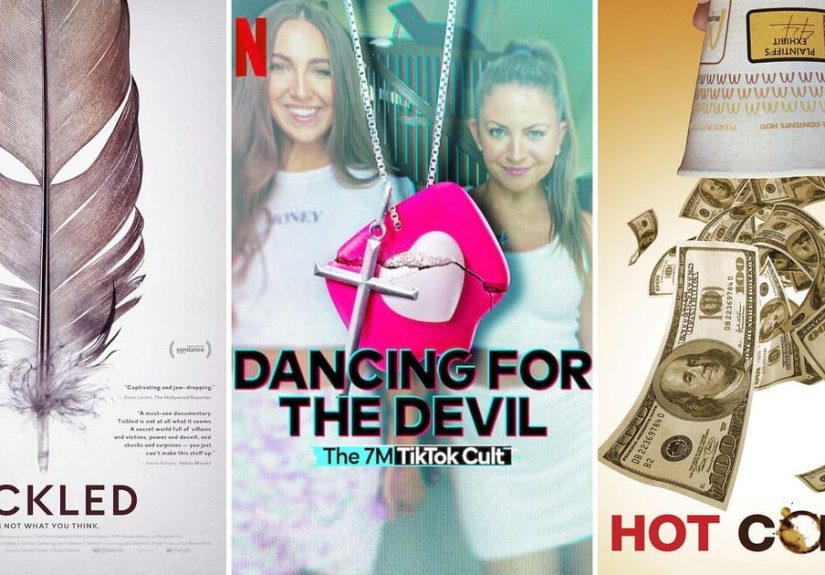
Tickled begins with what sounds like the most bizarrely harmless internet rabbit hole imaginable: competitive endurance tickling. Journalist David Farrier finds online videos of young men participating in tickling contests and thinks he has found a quirky human-interest story. Instead, his simple inquiry triggers hostile responses, legal threats, and a deeper investigation into online control, intimidation, and reputational harm.
What makes Tickled so gripping is the contrast between the silliness of the surface and the seriousness underneath. The documentary is funny in the “surely this cannot be real” way, but it gradually becomes a sharp warning about digital abuse, privacy, and how the internet can turn embarrassment into leverage. It is one of the clearest examples of a harmless subject becoming deeply uncomfortable without ever losing its investigative momentum.
2. Class Action Park
At first glance, Class Action Park looks like a nostalgia trip about Action Park, a legendary New Jersey amusement and water park remembered by many former visitors as wild, chaotic, and thrilling. It had the energy of summer freedom: teenagers, water slides, go-karts, and the kind of rule-free fun that sounds amazing until an adult with insurance knowledge enters the room.
Then the documentary reveals the darker side of that nostalgia. Through interviews, archival material, and a careful look at the park’s safety record, Class Action Park explores how a place marketed as fun became infamous for dangerous attractions and poor oversight. The film works because it does not just laugh at the madness. It asks why people romanticize risk after the fact, especially when real families paid the price.
3. Three Identical Strangers
Three Identical Strangers opens like a feel-good miracle. Three young men discover they are identical triplets separated as infants and adopted by different families. Their reunion becomes a media sensation, full of laughter, talk-show appearances, and the irresistible sweetness of long-lost siblings finding one another.
But the fairy tale darkens when the brothers begin to uncover why they were separated. The documentary shifts from joyful reunion to disturbing questions about adoption ethics, scientific research, consent, and the emotional consequences of treating human lives like data points. It is a powerful reminder that even the happiest headline may hide decisions made behind closed doors by people who never had to live with the outcome.
4. McMillion$
A fast-food Monopoly game sounds innocent enough. Peel a little sticker, maybe win fries, maybe dream of a million dollars while ordering a burger. McMillion$ takes that familiar promotion and turns it into a sprawling story of fraud, investigators, middlemen, fake winners, and a scheme that ran for years.
The docuseries is entertaining because the subject is so ordinary. Millions of people played the game casually, never imagining that the biggest prizes might be connected to a criminal network. McMillion$ succeeds by mixing humor, FBI interviews, and colorful personalities while showing how a promotion built on chance became a lesson in corruption, temptation, and the surprisingly dramatic life of tiny cardboard game pieces.
5. Fyre: The Greatest Party That Never Happened
Fyre begins with the glossy promise of a luxury music festival in the Bahamas. The marketing was pure social media catnip: beaches, celebrities, influencers, private-island fantasies, and a lifestyle so polished it practically came with its own ring light. For ticket buyers, it looked like paradise with a wristband.
The documentary then tracks how hype outran planning. Behind the glamorous videos were logistical failures, unpaid workers, misleading promises, and decisions that turned a dream festival into a public disaster. Fyre remains one of the most useful documentaries about influencer culture because it shows how image can overpower reality when everyone is selling the fantasy and nobody wants to count the tents.
6. LuLaRich
Leggings should not be scary. They are soft, stretchy, and generally minding their own business. LuLaRich, however, turns the world of colorful clothing sales into a sharp investigation of multi-level marketing, financial pressure, recruitment culture, and the gap between entrepreneurial dreams and business reality.
The docuseries focuses on LuLaRoe, a fashion company known for patterned leggings and enthusiastic sellers. Through interviews with founders, former retailers, and insiders, LuLaRich explores how a cheerful promise of flexible income and community became, for many participants, a financially and emotionally draining experience. It is funny, strange, and uncomfortable in equal measure, especially for anyone who has ever been invited to a “business opportunity” that starts with compliments and ends with inventory.
7. The Queen of Versailles
The Queen of Versailles starts with a billionaire family building a 90,000-square-foot mansion inspired by the Palace of Versailles. On paper, that sounds like a luxury lifestyle documentary: marble, chandeliers, big dreams, and rooms so enormous you could misplace a cousin for several fiscal quarters.
Then the 2008 financial crisis changes the story. The film becomes a portrait of wealth, debt, family stress, and the fragility of an American dream built on constant expansion. Director Lauren Greenfield captures the shift with a mix of irony and empathy. The result is not just a film about a big house; it is about what happens when status becomes a structure too large to maintain.
8. The Inventor: Out for Blood in Silicon Valley
The promise behind Theranos sounded revolutionary: simpler blood testing, faster answers, and a future where health technology would become more convenient for everyone. The Inventor: Out for Blood in Silicon Valley examines how that appealing idea helped build one of Silicon Valley’s most famous corporate scandals.
Directed by Alex Gibney, the documentary studies Elizabeth Holmes, the company’s media image, investor excitement, secrecy, and the difference between a bold vision and a working product. What begins as a story about innovation becomes a warning about charisma, hype, and the danger of believing a beautiful pitch before the evidence catches up. It is a polished, unsettling look at how “changing the world” can become a slogan that hides very real risks.
9. Catfish
Catfish begins as a story about online connection. A photographer develops a relationship through social media, messages, artwork, and emotional intimacy. At first, it feels like a modern tale of digital friendship and maybe romance, the kind of story that could only happen in the age of profile pictures and late-night notifications.
As the filmmakers investigate inconsistencies, the documentary becomes a deeper look at identity, loneliness, performance, and deception online. The film helped popularize the term “catfish” for a person using a false online identity, but its lasting strength is more emotional than sensational. It asks why people invent lives on the internet and why others want so badly to believe them.
10. The King of Kong: A Fistful of Quarters
On the surface, The King of Kong is about a Donkey Kong high-score competition. That sounds charmingly low-stakes. Nobody expects an arcade cabinet to produce Shakespearean rivalry, institutional politics, and enough tension to make a joystick sweat.
The documentary follows Steve Wiebe’s attempt to challenge Billy Mitchell’s record and gradually turns a retro gaming story into a study of status, gatekeeping, obsession, and credibility. It is funny because the arena is small, but compelling because the emotions are enormous. The King of Kong proves that people can turn almost anything into a kingdom if there is a scoreboard involved.
11. Pepsi, Where’s My Jet?
A flashy soda commercial once joked that consumers could collect enough points to claim a military jet. Most viewers understood it as exaggerated advertising. John Leonard saw a challenge. Pepsi, Where’s My Jet? explores how a playful marketing gag turned into a real legal battle.
The docuseries is lighter than many entries on this list, but its darker edge comes from what it reveals about corporate messaging, fine print, and the blurry line between joke and offer. It is a story about ambition, advertising, and the delightful American tradition of asking, “But what if we sued?” Behind the comedy is a serious lesson: brands may treat exaggeration as harmless, but consumers do not always read the room the same way.
12. Beanie Mania
Beanie Babies were plush toys. Small, cute, bean-filled, and seemingly incapable of causing financial drama. Beanie Mania shows how those toys became the center of a 1990s collecting frenzy, complete with resale speculation, scarcity tactics, emotional attachment, and adults treating stuffed animals like tiny retirement accounts.
The documentary captures the absurdity and psychology of consumer bubbles. A toy craze became a marketplace where rumors could drive prices and collectors chased value as much as joy. The darkness here is not criminal in the usual true-crime sense. It is the quieter darkness of mass hype: the moment when play becomes pressure, and a cute bear starts acting suspiciously like a stock tip.
13. Made You Look: A True Story About Fake Art
Fine art can seem elegant, intellectual, and harmless. A gallery wall, a glass of sparkling water, a few people nodding thoughtfully at a canvaswhat could go wrong? Made You Look answers: a lot, especially when authenticity, wealth, prestige, and wishful thinking collide.
The documentary examines a major art forgery scandal involving works attributed to famous modern artists and sold through the high-end art world. It is fascinating because the fraud depends not only on fake paintings but also on real desire. Collectors want to believe. Experts want to be right. Institutions want the story to hold. Made You Look turns art appreciation into a mystery about trust, ego, and expensive uncertainty.
14. The Contestant
The Contestant begins with a reality TV premise that might sound like an odd stunt: an aspiring comedian participates in a prize-based challenge for a Japanese television show. But the documentary reveals a far more troubling story about isolation, consent, entertainment, and the human cost of turning someone’s hardship into a national spectacle.
The film studies the experience of Tomoaki Hamatsu, known as Nasubi, and raises uncomfortable questions about reality television before reality television became a global industry. What looks like comedy to an audience can feel very different to the person being filmed. The Contestant is one of the most haunting documentaries about the boundary between entertainment and exploitation, and it makes modern viewers rethink just how much “content” should cost.
Common Themes in These Dark Documentaries
Hype Is a Powerful Drug, Even When Nobody Calls It That
Several of these documentaries show hype behaving like a weather system. In Fyre, Beanie Mania, LuLaRich, and The Inventor, excitement becomes its own proof. People buy in because other people are buying in. The crowd becomes the evidence. The more confident the marketing looks, the harder it becomes to ask boring but necessary questions.
Small Worlds Can Create Big Drama
The King of Kong, Tickled, and Made You Look all focus on niche communities where reputation matters intensely. Arcade gaming, online subcultures, and elite art collecting may seem unrelated, but each has insiders, rules, status symbols, and gatekeepers. When those systems go wrong, the drama can feel surprisingly huge because everyone involved has something personal at stake.
Institutions Often Fail Quietly Before They Fail Publicly
Many of these stories become dark because someone with authority ignores warning signs. A company keeps selling a dream. A park keeps operating risky attractions. A research project hides its ethical problems. A show treats a participant’s distress as entertainment. The public scandal is usually the final chapter, not the first mistake.
How to Watch These Documentaries Without Falling Into Doom Mode
Dark documentaries can be thrilling, but they can also leave viewers feeling cynical. The trick is to watch them as studies in systems, not just as collections of bad behavior. Ask what incentives pushed people forward. Ask who benefited from silence. Ask which warning signs were visible early. That approach turns the viewing experience from “Wow, people are terrible” into “Wow, people need better safeguards, clearer rules, and fewer meetings where nobody says the obvious thing.”
It also helps to balance the mood. Watch Class Action Park and maybe do not immediately follow it with another documentary about institutional failure. Add a comedy, take a walk, or reorganize your snack drawer with the seriousness of an art curator. The goal is curiosity, not emotional quicksand.
Viewer Experience: What These Stories Feel Like After the Credits Roll
Watching documentaries about harmless things that turned dark creates a very specific emotional experience. At first, you feel clever for choosing something unusual. You think, “Ah yes, tonight I will learn about a weird toy craze,” or “A documentary about a fast-food contest? This will be light.” Then, 40 minutes later, you are sitting upright like a courtroom sketch artist, wondering how plush animals, soda points, or leggings managed to become a full moral investigation.
The biggest experience these documentaries offer is the slow loss of innocence. Not childhood innocence, exactly, but consumer innocence. You start noticing how many everyday activities depend on trust. A theme park ticket assumes someone checked the rides. A contest assumes the game is fair. A medical startup assumes the science works. A social media profile assumes the person exists as presented. A luxury festival assumes the tents, food, transportation, staffing, and basic planning are more than a mood board with palm trees.
That realization can be uncomfortable, but it is also useful. These documentaries train viewers to respect small doubts. A strange email response in Tickled, a too-perfect pitch in Fyre, a too-good business opportunity in LuLaRich, a too-confident founder in The Inventoreach begins as something people might dismiss. The films show that curiosity is not negativity. Asking questions is not being a buzzkill. Sometimes the person saying “Can we verify this?” is the only adult in the bounce house.
Another memorable experience is how funny many of these films are before they become unsettling. Pepsi, Where’s My Jet? has the structure of a legal comedy. The King of Kong turns arcade competition into epic theater. Beanie Mania makes toy speculation seem both ridiculous and completely human. The humor matters because it keeps the stories accessible. It also makes the darker turns more effective. Laughter lowers your guard, and then the documentary quietly places a folder labeled “Consequences” on the table.
These films also make viewers think about their own participation in hype. We may not have invested in rare plush toys or joined a questionable leggings empire, but most of us have believed in something because everyone around us seemed excited. Maybe it was a trendy app, a viral product, a too-polished online personality, or a limited-time deal that suddenly made us forget math. The documentaries work because they do not simply point at foolish people. They show ordinary human needs: belonging, recognition, hope, escape, success, and the desire to be part of something before it becomes big.
By the end, the best lesson is not “trust no one.” That would be exhausting, and frankly terrible for dinner parties. The better lesson is “trust carefully.” Enjoy the festival trailer, but check the logistics. Love the collectible, but do not mortgage your sanity for it. Admire the founder, but ask for evidence. Join the community, but keep your boundaries. The world is full of harmless things, and most of them stay harmless. These documentaries are memorable because they show what happens when nobody notices the harmless thing growing teeth.
Conclusion
The best documentaries about harmless things that turned dark do more than expose scandals. They reveal how ordinary dreams can become distorted when mixed with ego, secrecy, money, fame, or unchecked enthusiasm. A water park becomes a safety lesson. A reunion becomes an ethical reckoning. A game becomes a fraud case. A toy becomes a bubble. A TV stunt becomes a debate about consent. That is why these documentaries stay with viewers: they begin in familiar places and end somewhere we never expected to go.
For anyone who enjoys true story documentaries, strange documentaries, dark documentaries, or cultural investigations with sharp twists, these 14 titles offer a fascinating watchlist. They are entertaining, unsettling, and surprisingly useful. After all, the next time something looks too fun, too easy, too profitable, or too perfectly marketed, you may hear a tiny documentary narrator in your head saying, “Let’s take a closer look.” Honestly, that narrator deserves a raise.
Note: This article is written for web publication and synthesizes publicly documented information from official film descriptions, distributor materials, entertainment reporting, and widely available film references. Source links are intentionally not included in the body, following the publishing requirements.