Table of Contents >> Show >> Hide
- The Real-Life Batman Behind Batman4Paws
- Why Dressing As Batman Actually Works
- What Batman4Paws Actually Does
- Why Shelter Animals Need This Kind Of Help
- The Secret Weapon Is Not The Cape. It Is Attention.
- What Makes This Story More Than A Feel-Good Headline
- What Animal Lovers Can Learn From Batman4Paws
- The Experience Behind The Headline: 500 More Words On Why This Story Hits So Hard
- Conclusion
Every now and then, the internet hands us a story so wholesome it feels suspicious. A man in a Batman suit driving across Florida and beyond to rescue shelter animals sounds like the setup to a very specific indie comedy. But this one is real, and somehow even better than the headline. Chris Van Dorn, the founder of Batman4Paws, has turned a superhero costume into a surprisingly effective rescue tool. He transports dogs, cats, and other animals from dangerous situations to foster homes, no-kill shelters, adopters, and second chances. Yes, the cape is dramatic. Yes, the mission is dead serious.
And maybe that’s why the story sticks. It is easy to scroll past another sad shelter post. It is much harder to ignore Batman carrying a kennel. Van Dorn’s work lands right at the strange intersection of compassion, creativity, logistics, and internet-age attention economics. In other words, he figured out that saving animals sometimes requires more than a good heart. It also requires a hook. Preferably one with pointy ears.
The Real-Life Batman Behind Batman4Paws
Chris Van Dorn is not trying to cosplay his way into internet fame. The costume came later, after the mission. His path into animal rescue was shaped by a dog named Mr. Boots, an Australian shepherd whose rescue story changed the direction of Van Dorn’s life. Mr. Boots had been found in terrible condition and eventually transported through rescue networks that included volunteer pilots. That experience opened Van Dorn’s eyes to a whole system of animal transport, rescue coordination, and lifesaving teamwork that most people never see.
Van Dorn earned his private pilot’s license and originally hoped to use aviation to help rescue animals. Since owning and flying a plane regularly is expensive, he began doing what he could with the vehicle he had. That meant road transports, long drives, careful handoffs, and a whole lot of fuel receipts. Somewhere in that mix, Batman4Paws was born. He chose Batman because the character symbolized strength, goodwill, and doing the hard thing even when nobody is watching. Also, let’s be honest, “Accountant4Paws” would not have had the same marketing impact.
The result is a nonprofit built around transport and visibility. Batman4Paws helps animals move from overcrowded shelters and risky situations to places where they actually have a shot at life. Sometimes that means a foster home. Sometimes a rescue partner. Sometimes a forever family waiting several states away. Van Dorn has described himself as the middleman, and that modesty makes sense. Rescue is almost never a solo act. But he is a memorable middleman, which turns out to be a pretty useful thing.
Why Dressing As Batman Actually Works
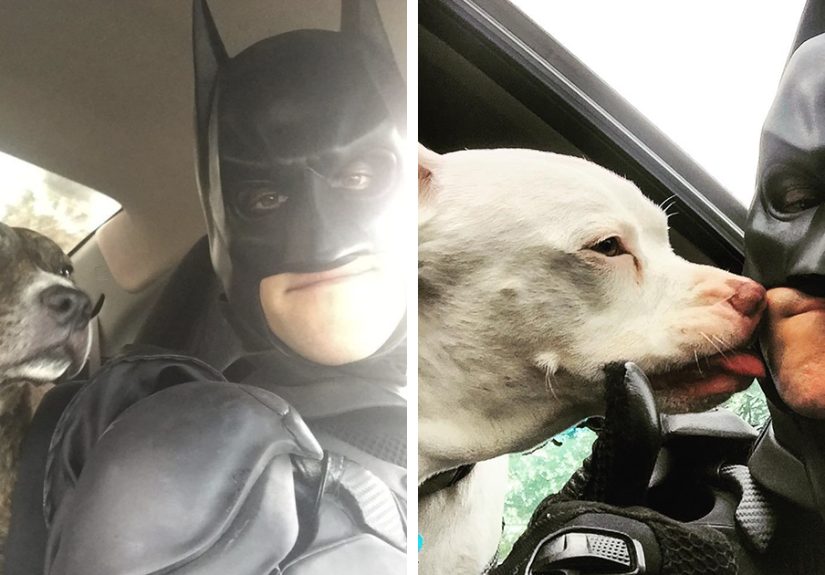
At first glance, the costume seems like a gimmick. In practice, it works like a megaphone. Shelters and rescue groups compete for attention every single day. Social feeds are crowded. Compassion fatigue is real. A sad kennel photo may earn sympathy, but Batman standing beside a shelter dog makes people stop scrolling. It sparks curiosity. It starts conversations. And once people pay attention, rescue organizations can do the part that really matters: tell an animal’s story and help place that pet in a safer situation.
Van Dorn has said the suit also made it easier to keep the focus off himself in the beginning. He reportedly signed things as Bruce Wayne and tried to keep the mission more anonymous. That tracks with the broader spirit of the project. Batman4Paws is not really about a man pretending to be a superhero. It is about using a familiar symbol to make shelter pets more visible in a culture that often overlooks them.
There is another reason the Batman angle works: it makes rescue feel hopeful instead of hopeless. Shelter overcrowding, euthanasia risk, and long wait times are emotionally heavy topics. The costume gives the story a little lift without making light of the animals’ situation. It says: yes, this is serious, but no, despair does not get the final word. Sometimes optimism arrives in a cape and drives a very non-Batmobile-looking car with good air conditioning.
What Batman4Paws Actually Does
The work itself is less glamorous than the outfit. Animal transport is about timing, paperwork, communication, safe handling, clean crates, rest stops, and trust. A rescue mission can involve multiple volunteers, partner organizations, adopters, fosters, and shelters spread across several locations. If even one piece falls apart, the whole plan can wobble. That is why transport-focused rescue is so important. Plenty of animals are not out of danger just because someone wants to help them. They still need a ride, a handoff, a coordinator, and a chain of people willing to say yes.
Batman4Paws helps close that gap. Van Dorn has transported pets to forever homes, no-kill facilities, and foster placements. He has also helped in cases that are not traditional adoptions, including reunifications. In one Florida case, he helped return a stray dog to its family in North Carolina after local shelter staff tracked down the owner through a microchip. That detail matters because animal rescue is not only about adopting out pets. Sometimes it is about making sure an animal gets back where it belongs.
There are also memorable examples that show how transport changes outcomes. Van Dorn has spoken about dogs like Balto, one of his early rescues as Batman, and Koko, a dog on a euthanasia list who later made an eight-hour trip toward a new life. He has also described long relay-style rescue efforts involving multiple volunteers over multiple days, including the transport of a Shih Tzu named Ollie from the Northeast down to Florida. Rescue, in other words, is not just a dramatic pickup and a triumphant ending. Often it is a relay race with leashes.
Why Shelter Animals Need This Kind Of Help
The Batman story is uplifting, but the shelter crisis behind it is very real. American shelters continue to face overcrowding, staffing strain, longer lengths of stay for dogs, and uneven adoption demand. Current national datasets differ somewhat by methodology, but they point in the same direction: progress has happened, yet the pressure is still intense. The ASPCA reports that about 4.2 million shelter animals were adopted into homes in 2024, while roughly 607,000 animals were euthanized. Best Friends Animal Society, using its own national shelter dataset, reported an 82% save rate in 2024 and 425,000 dogs and cats killed in shelters that year. Shelter Animals Count has likewise highlighted ongoing challenges tied to intake, adoptions, and especially length of stay.
Those numbers are not just statistics in a PDF somewhere. They translate into overcrowded kennels, urgent transport requests, hard decisions by shelter staff, and social media posts that can read like ticking clocks. Open-admission facilities face some of the greatest pressure because they take animals regardless of breed, size, or medical condition. That means these shelters are often dealing with the toughest cases while operating with limited space and limited time.
This is exactly where someone like Van Dorn becomes valuable. He is not replacing shelters, veterinarians, behavior teams, foster networks, or adopters. He is connecting them. Rescue systems break down when animals get stuck in one place without enough local options. Transport can relieve that bottleneck. Visibility can speed placements. Creative advocacy can turn a “maybe later” animal into a “we’ll come get him today” animal. That is not magic. It is logistics plus storytelling, wearing a cowl.
The Secret Weapon Is Not The Cape. It Is Attention.
One of the smartest things about Batman4Paws is that it recognizes how modern rescue works online. People do not only adopt because an animal is available. They adopt because an animal becomes visible, memorable, and emotionally real to them. In a crowded media environment, attention is a form of oxygen. Van Dorn’s Batman persona gives shelter pets more of it.
Photos with Batman are not just cute. They create a mental bookmark. A dog on a euthanasia list can become “the one Batman was sitting with.” A transport story becomes easier to share. A rescue partner gets more reach. A local event gets more foot traffic. Van Dorn has even dressed Mr. Boots as Robin at adoption events, which is objectively excellent branding and unfairly adorable.
But there is a deeper lesson here for shelters and rescues everywhere. Creativity matters. Humor matters. Community visibility matters. Humane World for Animals and other advocacy groups regularly emphasize that people can help through adoption, fostering, volunteering, donating, and public support. The organizations doing the best lifesaving work are often the ones that understand rescue is not only about intake and outcomes. It is also about communication. People cannot save what they never notice.
What Makes This Story More Than A Feel-Good Headline
A lesser version of this story would stop at “man dresses as Batman, internet claps politely.” The real version is more interesting because it shows how one person built a practical system out of personal passions. Van Dorn combined animal rescue, transport, aviation knowledge, volunteer work, branding, and nonprofit structure into something that genuinely moves animals toward safety. It is weird in the best possible way: imaginative enough to go viral, useful enough to matter offline.
It also pushes back against a lazy idea people sometimes have about activism and service, which is that good work must look solemn at all times. Not true. Serious causes do not become less serious because the messenger smiles. In fact, many shelters need more approachable, shareable, human-centered storytelling. They need people who can help strangers feel something before they ask those strangers to do something.
Van Dorn’s story reminds us that compassion is often practical before it is poetic. Somebody has to clean the crate. Somebody has to answer the phone. Somebody has to drive the miles. Somebody has to stand in the heat at a gas station dressed like Gotham’s most overcommitted philanthropist and explain why this trembling dog in the back seat deserves another chance. Heroism, it turns out, is frequently just follow-through with a costume budget.
What Animal Lovers Can Learn From Batman4Paws
Most people are not going to launch a Batman-themed rescue nonprofit, and that is probably fine for trademark-related stress levels alone. But the bigger lesson is accessible to everyone. You do not need to copy the costume to copy the model. Use the skills you already have. If you are organized, help coordinate transport. If you are great with social media, make shelter pets impossible to ignore. If you have time, foster. If you have money, donate. If you have neither, volunteer locally and become the reliable person shelters can count on. Reliability is an underrated superpower.
Another lesson is that rescue does not have to be all or nothing. Van Dorn did not begin with a fleet, a giant staff, or a custom superhero van with smoke effects. He started with what he had, where he was, and built from there. That approach is deeply encouraging because it replaces perfection with action. A local shelter does not need a billionaire donor every week. Sometimes it needs one driver, one foster opening, one adoption application, or one person willing to repost an urgent case at the right moment.
If this story inspires anything, it should inspire motion. Visit a shelter. Ask what they actually need. Support open-admission shelters that handle the toughest intake pressure. Learn about foster programs. Consider adopting a pet who is older, larger, shy, or simply overlooked. The spotlight pets are wonderful, but the wallflowers need families too. Batman would probably approve of that plot twist.
The Experience Behind The Headline: 500 More Words On Why This Story Hits So Hard
Part of what makes this story land emotionally is that almost everyone has some version of a shelter memory. Maybe it was the sound first: barking bouncing off concrete walls, metal kennel doors clinking shut, volunteers speaking in cheerful voices that are working very hard to outrun the sadness in the room. Maybe it was the eyes of a dog that looked hopeful and exhausted at the same time. Maybe it was the odd guilt of walking out without taking them all home, as though adulthood should have prepared us for that moment and instead it absolutely did not.
That is why the Batman image works so well. It drops a symbol of rescue into a place that often feels heavy with impossible choices. It gives people a way into the story. For children, it can make a shelter feel less intimidating. For adults, it can cut through emotional numbness. Instead of seeing “just another adoption post,” they see a moment that feels cinematic, and suddenly they are paying attention to the dog, the cat, the transport, the need.
There is also something deeply relatable about the way Van Dorn’s mission grew out of one rescued dog. That is how a lot of animal advocacy begins. It is rarely abstract. It starts with one animal who rearranges your heart and your calendar. One pet teaches you what neglect looks like, what patience looks like, what trust rebuilding itself looks like. Then the issue stops being “animal welfare” in the broad, polite, nonprofit-brochure sense. It becomes personal. It becomes impossible to unsee.
The rescue world is full of these chain reactions. A volunteer helps once and stays for years. A foster family says they will only take one dog and somehow ends up with enough extra leashes to qualify as a small outfitter. A transport driver agrees to one trip and learns that a few hours on the road can be the bridge between a frightening ending and a pretty great couch. The work is exhausting, but it is also weirdly contagious in the best way. Witness enough successful adoptions and reunions, and cynicism starts packing its bags.
There is, too, a beautiful contrast between the dramatic costume and the ordinary details of rescue. The glamour is not in the drive-thru coffee, the crate liners, the text updates, the last-minute route change, the stack of paperwork, or the nervous stop to let a dog stretch its legs. But that is where the real story lives. Not in the cape fluttering at sunset, but in the unflashy decision to keep going until the handoff is complete and the animal is safe.
And perhaps that is why people respond so strongly to Batman4Paws. It reassures us that imagination still has a place in service, that kindness can be strategic, and that helping does not have to look polished to be powerful. Sometimes it looks sweaty, overcaffeinated, and slightly absurd. Sometimes it looks like Batman buckling a rescue dog into the back seat and heading down the highway because no animal should lose a chance at life for lack of a ride.
Conclusion
This story endures because it is not just about a man in a Batman suit. It is about what happens when compassion gets organized. Chris Van Dorn found a way to turn attention into action, symbolism into transport, and internet curiosity into real-world adoptions, fosters, and reunifications. In a shelter system still dealing with overcrowding and lifesaving pressure, that matters.
The cape may grab the headline, but the real engine of Batman4Paws is persistence. Long drives. Coordinated handoffs. Shelter partnerships. Social posts that help one more animal get seen in time. The lesson is refreshingly practical: saving lives is often a team sport, and sometimes the teammate your local rescue needs most is simply the person willing to show up. Extra points if that person has a Bat signal and a full tank of gas.