Table of Contents >> Show >> Hide
- What Is a Monkey Fist Knot?
- Why Use Monkey Fist Knots for Curtain Tie Backs?
- Best Rope for DIY Nautical Curtain Tie Backs
- Supplies You Need
- How Much Rope Do You Need?
- Step-by-Step: How to Make a Monkey Fist Knot Curtain Tie Back
- Where to Install Curtain Tieback Hooks
- Styling Ideas for Nautical Curtain Tie Backs
- Common Mistakes and How to Fix Them
- Cleaning and Maintenance
- Safety Tips for Monkey Fist Curtain Tie Backs
- DIY Experience: What Making Monkey Fist Curtain Tie Backs Is Really Like
- Conclusion
If your curtains are doing their best impression of sad fabric pancakes, a pair of DIY nautical curtain tie backs with a monkey fist knot can rescue the whole window. This project is practical, stylish, and just crafty enough to make you feel like you should be wearing deck shoes while saying things like “secure the line.” The best part? You do not need to own a sailboat, live near the ocean, or know the difference between port and starboard. You only need rope, patience, and the willingness to wrestle a decorative knot into submission.
The monkey fist knot has a long maritime history. Traditionally, sailors used it to add weight to the end of a heaving line so the rope could be thrown more easily from boat to dock or ship to ship. In home decor, however, the same rounded knot becomes a beautiful coastal accent. When used as a curtain tie back, it adds texture, shape, and a relaxed beach-house mood without making your living room look like a seafood restaurant gift shop.
This guide walks you through how to make nautical curtain tie backs using a monkey fist knot, how to choose the right rope, where to place tieback hooks, how to avoid common knotting disasters, and how to style the finished piece. By the end, your curtains will look intentional, not like they lost a wrestling match with a random shoelace.
What Is a Monkey Fist Knot?
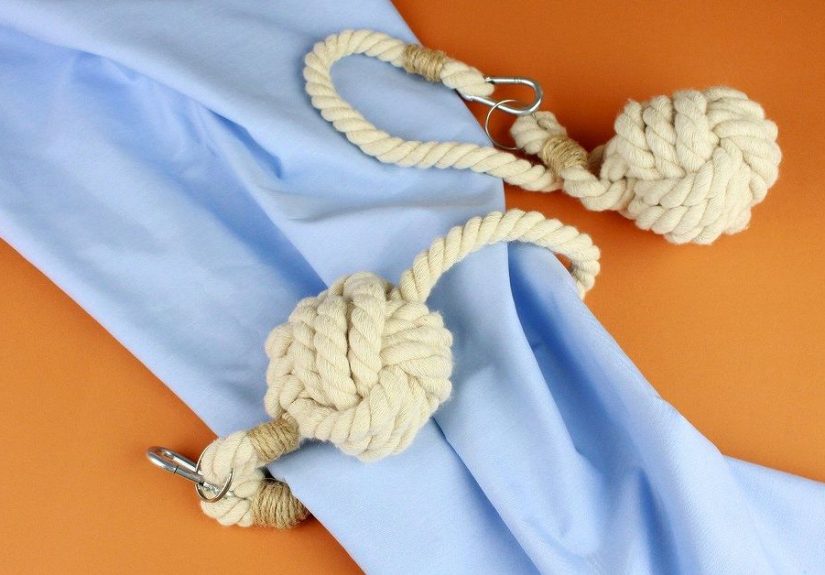
A monkey fist knot is a round decorative knot made by wrapping rope in three directions around a central core. The wraps create a ball-like shape that looks complex but follows a simple pattern once you understand the rhythm. It is sometimes called a monkey paw knot because the finished shape resembles a small clenched fist.
For curtain tie backs, the monkey fist works especially well because it creates a focal point at the side of the window. Instead of using a plain loop of fabric or a basic metal holdback, the knot becomes part of the room’s design. It feels handcrafted, coastal, and slightly rugged, which is exactly why it looks great with linen curtains, cotton panels, striped drapes, bamboo shades, white walls, weathered wood, and navy accents.
Why Use Monkey Fist Knots for Curtain Tie Backs?
There are plenty of curtain tieback ideas out there, from tassels to leather straps to magnetic clips. But monkey fist curtain tie backs stand out because they combine function and personality. They hold curtains open, let natural light into the room, and add a decorative detail that feels custom-made.
They Add Instant Nautical Style
Rope is one of the easiest ways to bring nautical decor into a room. A monkey fist knot feels more polished than simply tying a basic knot around the curtain. It gives the design a deliberate look, as if the window treatment came from a boutique coastal home store instead of your dining table at 10 p.m. with a glue gun nearby.
They Are Budget-Friendly
Store-bought nautical curtain tie backs can be surprisingly expensive, especially if they are handmade or sold as coastal decor. Making them yourself allows you to choose the rope, size, color, and hardware while spending much less. One spool of cotton or sisal rope can often make multiple tie backs, depending on the thickness and length you choose.
They Work in Many Rooms
Monkey fist curtain tie backs are not limited to beach houses. They can soften a farmhouse living room, add texture to a modern bedroom, dress up a lake cabin, or bring personality to a nursery, sunroom, home office, or guest room. The trick is choosing the right rope color and finish for your space.
Best Rope for DIY Nautical Curtain Tie Backs
The rope you choose affects the entire project. It determines how easy the knot is to tie, how large the finished monkey fist becomes, and how polished or rustic your curtain tie backs will look.
Cotton Rope
Cotton rope is soft, flexible, and beginner-friendly. It creates a clean, cozy look that pairs beautifully with white curtains, linen panels, and relaxed coastal interiors. It is also easier on your hands while tying. If this is your first monkey fist knot, cotton rope is the forgiving friend who brings snacks and does not judge your first attempt.
Sisal Rope
Sisal rope has a rougher, more rustic texture. It looks natural and beachy, making it ideal for farmhouse, cottage, and coastal decor. However, sisal can be stiffer and scratchier than cotton, so it may take more patience to tighten the knot evenly. Wear gloves if your hands are sensitive.
Jute Rope
Jute rope has a softer rustic look and a warm tan color. It works well for casual interiors and boho-inspired rooms. The downside is that jute can shed fibers, so it may not be the best choice for crisp white curtains unless you enjoy vacuuming tiny rope confetti.
Synthetic Rope
Nylon or polyester rope can work, especially in outdoor or humid spaces. It is durable and often available in many colors. However, it may look shinier and less natural than cotton or sisal. If you want a true nautical style, choose a matte rope with a braided or twisted texture.
Supplies You Need
Before you begin, gather everything in one place. Monkey fist knots require both hands and some concentration, so hunting for scissors mid-knot is not ideal. That is how projects become “I’ll finish it tomorrow” decorations.
- Rope, about 1/4 inch to 3/8 inch thick
- A core, such as a wooden bead, foam ball, ping pong ball, or tightly wrapped scrap fabric
- Scissors or a utility knife
- Painter’s tape or masking tape
- Hot glue gun or strong craft glue
- Small curtain tieback hooks, wall hooks, or screw eyes
- Measuring tape
- Pencil
- Wall anchors, if needed
- Optional: clear fabric stiffener, twine, decorative beads, or metal rings
For safety, avoid using a metal ball or heavy hard object as the core. Traditional monkey fist knots were weighted for throwing lines, but your curtain tie back does not need that kind of drama. A lightweight core is safer for homes with children, pets, glass doors, or anyone who dramatically opens curtains before coffee.
How Much Rope Do You Need?
The amount of rope depends on the thickness of the rope, the size of the core, and how long you want the tieback loop to be. For a standard curtain tie back, start with about 6 to 8 feet of rope for each side. If you are using thicker rope or making a larger knot, use more. It is always easier to trim extra rope than to discover you are three inches short while your knot is halfway done and silently mocking you.
A good beginner setup is 1/4-inch cotton rope with a ping pong ball or 1.5-inch wooden bead as the core. This creates a knot large enough to be decorative but not so huge that it looks like your curtain is being held hostage by a nautical bowling ball.
Step-by-Step: How to Make a Monkey Fist Knot Curtain Tie Back
Step 1: Tape the Rope Ends
Wrap a small piece of tape around both rope ends. This prevents fraying and makes the rope easier to thread through the knot. If you are using natural fiber rope, this simple step saves a lot of frustration.
Step 2: Make the First Set of Wraps
Hold the short end of the rope in your palm, leaving several inches free. Wrap the long end around your fingers four or five times. Keep the wraps neat and parallel. These first loops form the foundation of the monkey fist knot.
If you want a smaller knot, use three wraps. For a fuller curtain tie back, four or five wraps usually looks better. Try to keep each wrap snug but not tight. You still need room to pass the rope through in the next steps.
Step 3: Turn and Wrap the Second Direction
Carefully slide the first loops off your fingers while holding their shape. Turn the bundle and wrap the rope around the middle in the opposite direction. Again, make four or five wraps. The knot should now look like a small rope cage.
Step 4: Insert the Core
Place your lightweight core inside the center of the knot. A ping pong ball works well for a round, firm shape. A wooden bead creates a slightly heavier but still manageable knot. A ball of scrap fabric or cotton stuffing creates a softer knot, which is a smart choice for children’s rooms.
Step 5: Wrap the Third Direction
Now pass the rope through the remaining open spaces, wrapping around the core in the third direction. This locks the shape together and completes the classic monkey fist pattern. Take your time here. The knot may look messy at first, but that is normal. Many great DIY projects go through an awkward teenage phase.
Step 6: Tighten the Knot Gradually
Tightening is the secret to a beautiful monkey fist knot. Do not yank one end and hope for the best. Instead, follow the rope path and gently pull slack from one loop to the next. Work slowly around the entire knot until the wraps sit evenly around the core.
This step can take several minutes. A neat monkey fist knot depends more on patience than strength. If the knot twists or gaps appear, loosen it slightly and adjust the wraps. The goal is a round, balanced knot with consistent spacing.
Step 7: Create the Curtain Loop
Once the knot is tight, decide how you want the tie back to wrap around the curtain. You can leave a long loop of rope coming from the monkey fist, attach the end to a metal ring, or create a simple rope loop that hooks onto a wall-mounted hook.
For a classic curtain tie back, form a loop long enough to go around the curtain panel comfortably. The loop should gather the curtain without squeezing it too tightly. Curtains need a little breathing room, too.
Step 8: Secure the Loose End
Tuck the loose end into the center of the knot or under a nearby wrap. Add a small amount of hot glue to hold it in place. Use glue sparingly so it does not show. If you want a finished look, wrap a small piece of twine around the joined section and glue the twine ends on the back.
Step 9: Make the Matching Tie Back
Repeat the process for the second curtain panel. Try to use the same number of wraps, the same core size, and the same loop length. Matching tie backs do not need to be machine-perfect, but they should look like siblings, not distant cousins who met once at a family picnic.
Where to Install Curtain Tieback Hooks
Placement matters. Even a gorgeous monkey fist knot can look awkward if the tieback hook is too high, too low, or too close to the window trim. A reliable rule is to position tiebacks about one-third of the way up from the bottom of the curtain. This usually creates a graceful drape with about two-thirds of the fabric above the tieback and one-third below.
Horizontally, place hooks a few inches outside the window frame so the curtain can pull away from the glass. This allows more light into the room and helps the fabric stack neatly. For heavy curtains, use proper wall anchors if you are not drilling into a stud. Rope tie backs are light, but curtains can add pull over time.
Styling Ideas for Nautical Curtain Tie Backs
Classic Coastal White and Navy
Pair white cotton rope monkey fist tie backs with navy curtains or striped panels. Add brass hooks for a polished maritime look. This style works well in bedrooms, guest rooms, and beach-inspired living spaces.
Rustic Lake House Look
Use sisal or jute rope with natural linen curtains. Choose black iron hooks or aged bronze hardware. This version feels warm, casual, and outdoorsy without looking overly themed.
Modern Nautical Minimalism
For a cleaner style, choose thick white cotton rope, simple matte black hooks, and solid neutral curtains. The monkey fist knot provides texture while the limited color palette keeps the room modern.
Kids’ Room Adventure Theme
Use soft cotton rope and a lightweight fabric core. Pair the tie backs with curtains in ocean blue, sandy beige, or soft gray. Add wall art with boats, whales, maps, or lighthouses for a playful but not cartoonish room design.
Common Mistakes and How to Fix Them
The Knot Looks Lumpy
A lumpy monkey fist usually means the wraps were tightened unevenly. Loosen the knot slightly and pull slack through each loop in order. Work slowly. The rope should hug the core evenly from all sides.
The Tie Back Is Too Short
If the rope loop does not fit around the curtain, you may need to remake the tie back with a longer tail. Before cutting rope for the second tie back, test the first one around the curtain. This is the DIY version of “measure twice, avoid muttering under your breath later.”
The Rope Ends Are Fraying
Natural rope frays easily. Tape the ends before tying, then trim cleanly after the knot is finished. You can also add a tiny amount of clear glue to seal the cut ends.
The Knot Slides Down the Curtain
If the tie back slides, the loop may be too loose or the hook placement may be too low. Shorten the loop slightly or reposition the hook. For silky curtains, choose a rope with more texture to help grip the fabric gently.
Cleaning and Maintenance
Dust rope tie backs regularly with a soft cloth or vacuum brush attachment. Cotton rope can sometimes be spot-cleaned with mild soap and water, but avoid soaking the knot because moisture can affect the shape. Sisal and jute should be kept as dry as possible because natural fibers can stain or weaken when wet.
If the curtain tie backs are in a sunny window, check them occasionally for fading or brittleness. Natural rope develops character over time, but if it becomes weak, rough, or dusty beyond rescue, it is easy to make a fresh set.
Safety Tips for Monkey Fist Curtain Tie Backs
Because monkey fist knots were historically used as weighted rope ends, it is important to adapt the design safely for home decor. Use lightweight cores, avoid metal weights, and secure the knot so loose ends do not unravel. If you have small children or pets, install the tie backs high enough that they cannot be swung, chewed, or pulled from the wall.
Also remember that curtain cords and loops can pose hazards in homes with young children. Keep loops short, secure, and out of reach. Decorative should never mean dangerous. A beautiful room is even better when everyone in it can enjoy it safely.
DIY Experience: What Making Monkey Fist Curtain Tie Backs Is Really Like
The first time you make a monkey fist knot, expect a brief moment when you wonder whether rope has personally betrayed you. That is normal. The knot looks simple in photos, but in real life, it asks for rhythm, finger control, and a little humility. The good news is that once the pattern clicks, the process becomes surprisingly satisfying.
In my experience, cotton rope is the best starting point for DIY nautical curtain tie backs. It bends easily, holds its shape, and does not fight back as aggressively as sisal. Sisal looks gorgeous when finished, but it can feel like tying a knot with a very determined broom. If you love the rustic texture, use it, but practice first with softer rope so you understand the wrap sequence.
Another lesson: do not rush the tightening stage. The monkey fist knot is won or lost during tightening. At first, the knot may look loose and uneven, but gradual adjustment transforms it. Pull one loop, follow the slack to the next loop, then continue around the knot. It feels slow, but it prevents the dreaded lopsided rope potato. A small screwdriver, knitting needle, or chopstick can help nudge loops into place without damaging the rope.
Testing the tie back on the actual curtain before gluing anything is also essential. Curtains vary widely in thickness. A loop that works beautifully on sheer panels may be too short for heavy blackout curtains. Wrap the unfinished tie back around the curtain, step back, and check the drape from across the room. The curtain should gather softly, not bunch like it is wearing a belt two sizes too small.
Hardware also changes the final look. Small brass hooks make the project feel classic and nautical, while black hooks give it a modern farmhouse edge. White hooks can disappear visually against white trim, letting the rope stand out. If you rent and cannot drill into the wall, consider removable hooks rated for the curtain’s weight, but test carefully. Rope may be light, yet fabric creates tension when pulled back.
One of the most enjoyable parts of this project is customization. You can add a wooden bead above the knot, wrap the rope joint with thin twine, dip-dye the ends, or use navy-and-white rope for a bolder coastal statement. For a more elegant look, keep everything monochrome. For a casual beach cottage look, let the natural rope texture shine.
The finished result feels more personal than store-bought tie backs. Every small variation in the knot reminds you it was made by hand. That handmade character is exactly what gives nautical decor its charm. The goal is not factory perfection; it is warmth, texture, and a window treatment that says, “Yes, I made this,” without screaming, “I fought rope for three hours and barely survived.”
Most importantly, this is a project that rewards patience but does not require advanced crafting skills. If the first knot looks strange, untie it and try again. Rope is forgiving. By the second tie back, your hands will understand the movement better. By the third, you may start looking around your home for other things to knot. Curtain tie backs today, rope-wrapped lamp tomorrow. This is how nautical decor quietly takes over.
Conclusion
DIY nautical curtain tie backs with a monkey fist knot are a smart way to bring handmade charm, coastal texture, and practical function to your windows. With the right rope, a lightweight core, careful wrapping, and proper hook placement, you can create custom tie backs that look stylish without costing a small treasure chest of gold coins.
Whether your home leans beach cottage, farmhouse, lake house, or modern coastal, this project adds just enough maritime personality to feel fresh and inviting. Take your time, keep the wraps even, and remember: every great knot starts as a confusing pile of rope before it becomes something beautiful.
Note: This original article is written for web publication in standard American English and is based on practical knot-tying, curtain placement, rope craft, and nautical home decor guidance.