Table of Contents >> Show >> Hide
- Why Animal Digital Paintings Feel So Powerful
- The Creative Idea Behind “I Bring Animals To Life In My Digital Paintings”
- 1. The Fox With Firelight Eyes
- 2. The Owl Emerging From Moonlight
- 3. The Lion With a Wind-Swept Mane
- 4. The Elephant With Gentle Wrinkles
- 5. The Hummingbird Frozen in Motion
- 6. The Wolf in Winter Light
- 7. The Cat Who Owns the Composition
- 8. The Horse in Golden Dust
- 9. The Bear With Quiet Strength
- 10. The Deer at the Edge of the Forest
- 11. The Dog Portrait Full of Loyalty
- 12. The Tiger With Stripes That Follow Form
- 13. The Rabbit in Soft Morning Grass
- 14. The Eagle Against a Stormy Sky
- 15. The Sea Turtle in Blue Light
- 16. The Red Panda With Maximum Charm
- 17. The Raven With Glossy Feathers
- How Digital Tools Help Animals Feel Alive
- The Role of Reference Images in Animal Art
- What Makes an Animal Painting Emotionally Memorable?
- SEO-Friendly Art Storytelling: Why This Topic Works Online
- Tips for Artists Who Want to Paint Animals Digitally
- My Experience Bringing Animals To Life In Digital Paintings
- Conclusion
There is a very specific moment in every animal painting when the creature stops being a collection of brushstrokes and starts looking back at you. One second, it is a sketch with a suspiciously potato-shaped head. The next, it has a personality, a mood, and possibly an opinion about your life choices. That is the magic I chase in my digital paintings: taking animals from flat pixels to living, breathing characters with fur, feathers, whiskers, paws, attitude, and just enough sparkle in the eyes to make you wonder if they know your Wi-Fi password.
Digital animal painting is more than drawing a cute fox or a dramatic owl and calling it a day. It is a blend of observation, anatomy, lighting, storytelling, and technical control. A good animal artwork should feel alive even when it is completely still. The viewer should sense the weight of a lion’s shoulders, the alert curiosity of a rabbit, the quiet wisdom of an elephant, or the chaotic confidence of a raccoon who has absolutely been inside your trash can and has no regrets.
In this article, I will walk through the creative process behind a collection of 17 digital animal paintings, from the first rough sketch to the final glowing details. We will explore how animal references, digital brushes, color palettes, texture work, and emotional storytelling all come together to create artwork that feels vivid, expressive, and full of life.
Why Animal Digital Paintings Feel So Powerful
Animals are universal. You do not need a translator to understand the nervous tilt of a deer’s ears or the smug stare of a cat sitting on something it definitely should not be sitting on. Animal art connects quickly because it taps into emotions we already recognize: loyalty, freedom, tenderness, strength, playfulness, mystery, and survival.
Digital painting gives artists a flexible way to capture those emotions. Unlike traditional media, digital tools allow endless adjustments without sacrificing the freshness of the idea. Layers can separate sketch, color, shadows, highlights, textures, and background effects. Brushes can imitate pencil, oil paint, watercolor, charcoal, fur, scales, feathers, and even atmospheric mist. If a tiger’s face looks too serious, you can soften the eyes. If a hummingbird needs more movement, you can blur the wings. If the entire background is behaving like a dramatic theater curtain, you can politely replace it.
The goal, however, is not to make the software do all the work. The heart of digital animal illustration still comes from the artist’s eye. The best tools in the world cannot replace good observation. A painting becomes convincing when the artist understands how the animal moves, where its weight rests, how light touches its form, and what tiny details make it instantly recognizable.
The Creative Idea Behind “I Bring Animals To Life In My Digital Paintings”
The title sounds simple, but it carries the whole mission of the artwork. To “bring animals to life” means creating more than decorative images. It means building presence. Each animal should feel as though it existed before the viewer arrived and will continue existing after the screen is turned off.
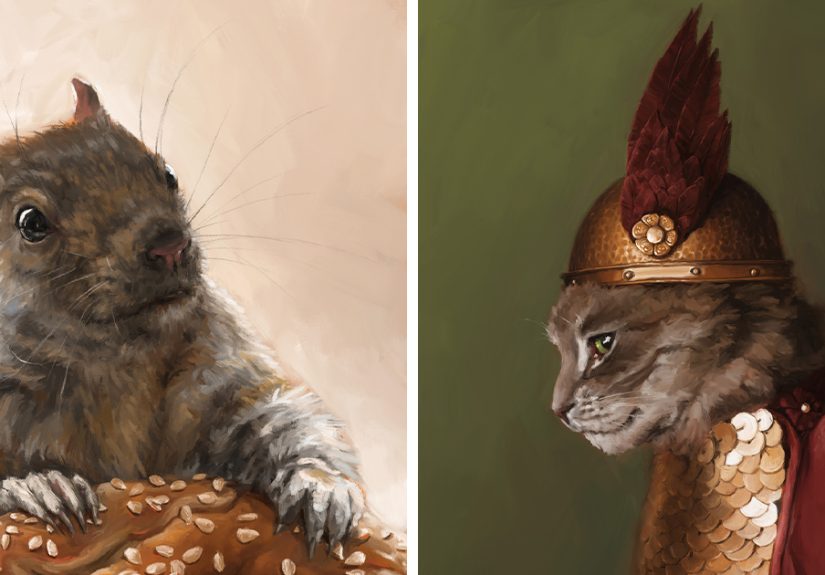
For this 17-picture collection, the concept can be imagined as a digital gallery of animal personalities. Each painting highlights a different creature, mood, or natural texture. Some animals are powerful and cinematic. Others are gentle, funny, curious, or quietly elegant. The collection works because it treats animals not as props, but as characters.
1. The Fox With Firelight Eyes
A fox is a perfect subject for digital painting because it naturally combines elegance and mischief. The warm orange coat offers beautiful opportunities for layered color: amber, rust, copper, cream, and deep brown shadows. The key detail is the eyes. A fox with flat eyes looks like a stuffed toy. A fox with reflective, alert eyes looks like it is planning three escape routes and a snack.
2. The Owl Emerging From Moonlight
Owls carry instant mystery. In a digital painting, the challenge is balancing softness and sharpness. The feathers need subtle texture, but the eyes and beak need crisp focus. Cool blues, smoky grays, and silver highlights can create a night atmosphere, while the owl’s gaze becomes the visual anchor.
3. The Lion With a Wind-Swept Mane
A lion painting needs structure. Beneath all that glorious mane drama is a powerful skull, neck, and shoulder form. The mane should not look like a fancy hair commercial, even if the lion clearly uses premium conditioner. Painting clumps of hair in large shapes first, then adding smaller strokes, creates a more natural and majestic effect.
4. The Elephant With Gentle Wrinkles
Elephants are emotional subjects because their faces carry so much history. The wrinkles, folds, and skin texture should be treated with care. Too many random lines can make the painting noisy. Instead, good texture follows the form of the head, trunk, and ears. Soft highlights along the skin help the elephant feel massive yet tender.
5. The Hummingbird Frozen in Motion
Hummingbirds are tiny, but they bring huge visual energy. A digital painting can capture this by combining sharp detail on the head and body with motion blur around the wings. Jewel-like greens, blues, violets, and reds make the bird shimmer. The result feels like a small flying gemstone with a caffeine problem.
6. The Wolf in Winter Light
Wolves work beautifully in cool palettes. Snowy backgrounds, pale light, and blue-gray shadows create a sense of silence and distance. The fur should follow the direction of the body, especially around the neck, chest, and muzzle. The expression matters most: a wolf can look fierce, lonely, protective, or watchful with only a slight change in eye shape.
7. The Cat Who Owns the Composition
Every cat painting begins with a hard truth: the cat is in charge. The artist is merely staff. Capturing a cat’s personality depends on posture, tail curve, ear angle, and eye shape. A relaxed cat has weight and softness. A suspicious cat has tight focus and dramatic pupils. A royal cat, of course, requires lighting worthy of a tiny emperor.
8. The Horse in Golden Dust
Horses demand strong anatomy. Their muscles, long faces, and elegant legs leave little room for guesswork. In digital painting, blocking in the large shapes first is essential. Dust, sunlight, and background movement can add drama without overwhelming the animal’s form. A horse painting feels alive when the viewer can sense speed, breath, and momentum.
9. The Bear With Quiet Strength
Bears are powerful, but they do not always need to be painted as roaring giants. A calm bear walking through mist can feel just as impressive. Heavy paws, thick fur, rounded ears, and a strong shoulder hump define the silhouette. Soft edges around the background can make the bear appear to step forward from the scene.
10. The Deer at the Edge of the Forest
A deer painting often depends on atmosphere. The animal’s slender legs, lifted head, and alert ears can create a moment of tension. Is it about to run? Has it heard something? Is it judging the artist’s unfinished background layer? Warm morning light and soft forest shapes help create a peaceful but watchful mood.
11. The Dog Portrait Full of Loyalty
Dogs are deeply expressive subjects. The eyes, nose, and mouth carry most of the emotion. A wet nose needs small highlights. Fur around the muzzle should be softer and more directional. The best dog portraits capture not only the breed, but the individual personality: goofy, noble, sleepy, heroic, or ready to chase a tennis ball into another dimension.
12. The Tiger With Stripes That Follow Form
Painting a tiger is not just about adding stripes. The stripes must wrap around the body, face, and legs in a believable way. They follow volume. If the stripes are placed like stickers, the tiger looks flat. Layering orange, gold, black, and creamy whites creates depth, while sharp eyes give the tiger its commanding presence.
13. The Rabbit in Soft Morning Grass
Rabbits offer a lovely contrast between delicate texture and lively alertness. Their fur is soft, but their posture can be full of energy. Long ears, bright eyes, and small nose highlights make them instantly charming. A shallow-depth background effect can make the rabbit feel small and intimate in a large natural world.
14. The Eagle Against a Stormy Sky
An eagle painting thrives on shape design. The beak, brow, and wing structure create strength before details are added. Feathers should be grouped into larger sections first, then refined. A stormy sky adds contrast and drama, but the eagle’s face should remain the clearest focal point.
15. The Sea Turtle in Blue Light
Sea turtles are wonderful for digital painting because water allows beautiful lighting effects. The shell can hold complex patterns, while the flippers create graceful movement. Blue-green tones, bubbles, and soft rays of light help build an underwater atmosphere. The trick is keeping the turtle readable instead of letting it disappear into the ocean glow.
16. The Red Panda With Maximum Charm
Red pandas are basically nature’s answer to the question, “What if cuteness wore a scarf?” Their fluffy tails, masked faces, and warm colors make them irresistible subjects. In digital art, a red panda benefits from soft edges, rounded shapes, and expressive eyes. The painting should feel playful without becoming overly cartoonish.
17. The Raven With Glossy Feathers
Black animals are challenging because black is never just black. A raven’s feathers may reflect blue, purple, gray, or green depending on the light. Digital painting allows subtle color shifts that keep the bird from looking flat. Strong highlights on the beak and feathers can make the raven feel intelligent, sleek, and slightly magical.
How Digital Tools Help Animals Feel Alive
The advantage of digital painting is not that it makes art easier. It makes experimentation faster. Artists can test colors, lighting, and compositions without permanently destroying the work. That freedom encourages bolder choices.
Layers Create Control
Layers are one of the most useful parts of digital animal painting. A typical workflow might include a sketch layer, base color layer, shadow layer, highlight layer, texture layer, and final adjustment layer. This setup allows the artist to refine one part of the image without damaging another. For example, the eyes can be polished while the background remains untouched.
Brushes Build Texture
Animal paintings depend heavily on texture. Fur, feathers, scales, skin, whiskers, claws, and wet noses all need different treatment. Custom digital brushes can speed up the process, but they should not replace intentional painting. A fur brush used carelessly can make an animal look like it lost a fight with a carpet sample. The best approach is to combine broad painted shapes with selective texture details.
Lighting Adds Drama
Lighting is what turns a good animal drawing into a cinematic painting. Rim light can outline a wolf against snow. Warm sunset light can make a horse glow. Moonlight can make an owl feel mysterious. Underwater light can make a sea turtle feel weightless. When lighting is consistent, the animal belongs in the scene instead of floating awkwardly on top of it.
The Role of Reference Images in Animal Art
Reference images are essential for serious animal painting. They help artists understand anatomy, proportions, markings, movement, and texture. Using references does not mean copying mindlessly. It means studying reality so the final artwork can feel believable, even when the style is imaginative.
A good artist may use several references for one painting: one for anatomy, one for lighting, one for fur direction, one for color inspiration, and one for pose. The final result becomes original because the artist interprets, combines, simplifies, exaggerates, and redesigns those observations into a new image.
For animal art, references are especially important because viewers quickly notice when something feels wrong. A horse leg bending strangely, an owl eye placed incorrectly, or a tiger stripe pattern that ignores body structure can break the illusion. Careful study keeps the painting grounded.
What Makes an Animal Painting Emotionally Memorable?
Technical skill matters, but emotion makes the viewer stay. A painting becomes memorable when it suggests a story. The animal does not need to be doing anything dramatic. A quiet glance can be enough.
Expression
The eyes are usually the emotional center. Small highlights can create moisture and life. The direction of the gaze can suggest curiosity, trust, fear, confidence, or mischief. Even animals with less human-like faces can feel expressive through posture and lighting.
Gesture
Gesture is the energy of the pose. A crouching fox feels different from a fox mid-leap. A standing elephant feels different from one gently touching another with its trunk. Gesture gives the viewer a sense of what just happened or what may happen next.
Atmosphere
Backgrounds should support the animal rather than compete with it. Mist, snow, grass, water, moonlight, dust, or soft bokeh can frame the subject and create mood. Even a simple background can make a painting stronger if it helps the animal’s personality shine.
SEO-Friendly Art Storytelling: Why This Topic Works Online
Articles about digital animal paintings perform well because they combine visual appeal, personal process, educational value, and emotional connection. Readers enjoy seeing finished artwork, but they also love learning how the work was made. A title like “I Bring Animals To Life In My Digital Paintings (17 Pics)” promises both a gallery and a behind-the-scenes story.
For search engines, the topic naturally includes useful related keywords such as digital animal paintings, wildlife digital art, animal illustration, digital painting techniques, realistic fur painting, animal portrait art, and digital art process. These keywords fit smoothly into the article because they reflect what readers actually want to know.
The best content does not simply say, “Here are 17 pictures.” It explains why the images matter, how they were created, and what viewers can notice in each one. That added depth improves the reading experience and makes the article more valuable for artists, collectors, animal lovers, and curious browsers who arrived for cute creatures and stayed for the craft.
Tips for Artists Who Want to Paint Animals Digitally
Start With Big Shapes
Before painting tiny hairs or feather details, block in the large forms. Focus on the head, torso, legs, wings, or tail. If the big shapes are wrong, details will not save the painting. They will simply decorate the problem.
Study Anatomy Without Becoming Robotic
You do not need to memorize every bone in a squirrel, although that would be a bold party trick. But understanding basic structure helps your animals feel solid. Learn where joints bend, how weight is distributed, and how muscles influence the silhouette.
Use Texture Strategically
Not every inch needs equal detail. In fact, too much detail everywhere can flatten the artwork. Place the sharpest texture near the focal point, usually the face. Let other areas soften. This guides the viewer’s eye and creates a more natural finish.
Color Is More Than Local Color
A white dog is not painted with only white. A black raven is not painted with only black. A brown bear is not just brown. Light, environment, and reflected color all influence the palette. Adding subtle blues, purples, yellows, greens, or reds can make animal paintings feel richer and more alive.
Do Not Neglect the Background
The animal is the star, but the background is the stage. A simple, well-designed background can make the subject stronger. The background should support the mood, contrast with the animal, and help lead the viewer’s eye toward the focal point.
My Experience Bringing Animals To Life In Digital Paintings
Painting animals digitally has taught me that the smallest details often carry the biggest emotional weight. When I first began creating animal illustrations, I thought realism came from adding more texture. More fur. More whiskers. More feathers. More tiny lines until my wrist started sending formal complaints. But over time, I learned that life does not come from detail alone. It comes from choosing the right details.
For example, a dog portrait may only need a few bright highlights in the eyes to suddenly feel loyal and present. A fox may need sharper ears and a slightly tilted head to become clever. A bear may need soft edges around the body but strong shadows near the face to feel powerful. Every animal has a visual language, and the artist’s job is to listen before painting.
One of the most enjoyable parts of digital animal painting is building the creature gradually. I usually begin with a loose sketch that looks messy, awkward, and deeply unimpressive. At this stage, the animal may resemble a confused sock puppet. That is normal. The sketch is not supposed to be beautiful; it is supposed to solve the pose. Once the structure feels right, I add large color blocks and begin shaping the light. This is when the painting starts to breathe.
The face always receives the most attention. I spend extra time on the eyes because they decide whether the artwork feels alive. A tiny change in the eyelid, pupil size, or highlight placement can completely alter the mood. A wolf can shift from dangerous to lonely. A cat can move from sweet to suspicious. A rabbit can go from calm to “I heard something in the bushes and I am about to become a furry lightning bolt.”
Fur used to intimidate me. I believed every strand had to be painted individually, which is a fast way to lose both time and sanity. Now I paint fur in groups. I begin with shadow masses, then midtones, then larger directional strokes. Only near the end do I add fine strands, flyaway hairs, and bright accents. The result looks more natural because real fur forms clumps, patterns, and soft transitions.
Digital tools make this process forgiving. If a color feels too cold, I can adjust it. If the background steals attention, I can blur it. If the nose is slightly crooked, I can fix it without repainting the entire head. This flexibility lets me experiment more freely, and experimentation is where many of the best ideas appear.
Another lesson I have learned is that animal art works best when it respects the subject. Even in a stylized painting, I want the creature to feel believable. A fantasy glow, dramatic lighting, or playful color palette can enhance the image, but the animal still needs weight, anatomy, and personality. The magic sits on top of observation, not instead of it.
In the end, bringing animals to life in digital paintings is less about chasing perfection and more about creating connection. If someone looks at a painted owl and feels the quiet of night, or sees a dog portrait and thinks of a pet they loved, the artwork has done its job. The pixels have become something warmer than pixels. They have become a small moment of recognition between human and animal.
Conclusion
Digital animal painting is a beautiful meeting point between technology and nature. With the right mix of observation, anatomy, texture, lighting, and emotion, an artist can transform a blank screen into a living gallery of creatures. Whether it is a lion glowing in sunset light, a raven shimmering with blue-black feathers, a rabbit tucked into morning grass, or a fox with eyes full of secrets, each painting becomes a chance to celebrate the personality of the animal world.
The 17-picture concept works because it invites viewers to slow down and notice the details: the shine of an eye, the direction of fur, the softness of feathers, the strength of a pose, and the story hidden in a single glance. Digital tools may provide the brushes, layers, and effects, but the life in the painting comes from attention, patience, and love for the subject. And yes, sometimes from repainting the same paw twelve times until it no longer looks like a spoon.