Table of Contents >> Show >> Hide
- What Are Crutches?
- Why Do People Use Crutches?
- Common Weight-Bearing Instructions
- Main Types of Crutches
- How Crutches Should Fit
- How to Use Crutches Safely
- Crutch Safety Tips for Home and Daily Life
- How to Get Crutches in the United States
- When Crutches May Not Be the Best Choice
- Questions to Ask Before Choosing Crutches
- Real-World Experiences With Crutches: What No One Tells You
- Conclusion
Crutches are one of those medical tools nobody thinks about until life suddenly turns into a one-legged obstacle course. A twisted ankle, a foot surgery, a broken bone, a knee injury, or a doctor saying “keep weight off that leg” can instantly make crutches your temporary sidekick. They may look simpletwo sticks, some padding, a few rubber tipsbut the right crutches can protect an injury, improve balance, reduce pain, and help you move safely while your body heals.
The catch? Crutches only help when they fit correctly and match your needs. The wrong size, the wrong type, or the wrong technique can turn a helpful mobility aid into a shoulder workout you never signed up for. This guide explains the main types of crutches, why people use them, how to choose the right option, how to get crutches in the United States, and what real-life crutch use actually feels like once you leave the clinic and meet your first staircase.
What Are Crutches?
Crutches are mobility aids designed to help a person walk when one leg, foot, ankle, hip, or knee cannot safely support normal weight. Instead of placing full pressure on the injured or healing side, the user transfers some or all of that load through the arms, hands, shoulders, and upper body.
Crutches are commonly used after fractures, sprains, ligament injuries, foot and ankle procedures, knee surgery, hip surgery, tendon injuries, neurological conditions, or temporary pain that makes walking unsafe. They are not just “walking sticks with ambition.” They are medical support devices that help manage weight-bearing, balance, and movement during recovery.
Why Do People Use Crutches?
The main purpose of crutches is to help someone move while protecting an injured or recovering body part. When a doctor, surgeon, physical therapist, or athletic trainer says to avoid full weight on a leg, crutches make that possible.
To Keep Weight Off an Injury
Some injuries need rest from body weight. For example, a severe ankle sprain may feel worse when stepped on, and a foot fracture may need protection while bone tissue heals. Crutches allow the person to move without repeatedly stressing the injured area.
To Support Post-Surgery Recovery
After certain orthopedic surgeries, crutches may be part of the discharge plan. The goal is usually to prevent too much pressure on the surgical site, reduce fall risk, and support a controlled return to walking.
To Improve Balance
Crutches can provide extra points of contact with the ground. This can help people who feel unsteady because of pain, weakness, swelling, or temporary movement restrictions.
To Reduce Pain During Walking
Even when a person is allowed to put some weight on the affected side, crutches can reduce discomfort by sharing the load. Less pressure on a painful foot, ankle, knee, or hip can make short trips more manageable.
Common Weight-Bearing Instructions
Crutches are usually paired with weight-bearing instructions. These instructions matter because “use crutches” does not always mean the same thing for every injury.
Non-Weight Bearing
Non-weight bearing means the injured foot or leg should not carry body weight. The foot may stay off the floor completely while the arms and stronger leg do the work. This is common after certain fractures or surgeries.
Toe-Touch or Touch-Down Weight Bearing
Toe-touch weight bearing means the toes may lightly touch the ground for balance, but the leg should not support meaningful weight. Think of it as touching the floor like it is a hot cookie sheet: contact is allowed, pressure is not.
Partial Weight Bearing
Partial weight bearing allows a specific amount of weight through the injured side. A provider may describe this as a percentage or as a limit in pounds. Physical therapists often teach patients how this should feel.
Weight Bearing as Tolerated
Weight bearing as tolerated means the person may put weight on the affected side as long as pain and stability allow. Crutches may still be used for support while walking improves.
Always follow the exact instructions from your healthcare provider. Guessing is not a recovery strategy; it is how ankles file complaints.
Main Types of Crutches
There are several types of crutches, and each one works best for different needs, body types, strength levels, and recovery plans.
1. Underarm Crutches
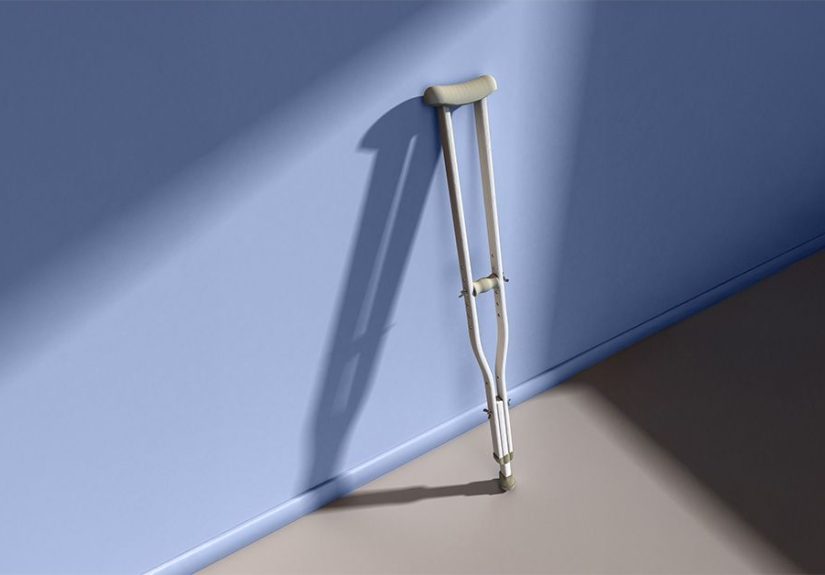
Underarm crutches, also called axillary crutches, are the most familiar style in the United States. They have a padded top that sits below the armpit, a handgrip, an adjustable shaft, and a rubber tip at the bottom.
These crutches are often used for short-term injuries, such as sprains, fractures, or post-surgical recovery. They are widely available, usually adjustable, and commonly provided by hospitals, urgent care centers, orthopedic offices, and medical supply stores.
The most important rule is this: your weight should go through your hands, not your armpits. Leaning heavily into the top pads can irritate skin and put pressure on nerves and blood vessels. In plain English, your armpits are not built to be load-bearing furniture.
2. Forearm Crutches
Forearm crutches, also called elbow crutches or Lofstrand crutches, have a cuff around the forearm and a handgrip. They are common in many parts of the world and may be used for longer-term mobility needs.
Forearm crutches can allow more freedom of movement than underarm crutches, but they usually require good coordination, balance, grip strength, and upper-body control. Some people prefer them for chronic conditions, neurological mobility challenges, or longer recovery periods.
3. Platform Crutches
Platform crutches are designed for people who cannot comfortably bear weight through the hands or wrists. Instead of relying only on handgrips, the user rests the forearm on a horizontal platform. This can be useful for someone with wrist arthritis, hand injuries, reduced grip strength, or conditions affecting the hands.
Because platform crutches are more specialized, they should usually be fitted with help from a physical therapist, occupational therapist, or medical equipment professional.
4. Hands-Free Crutches
A hands-free crutch is a device that straps to the injured leg, allowing the user to support the lower leg while walking without holding traditional crutches. These devices are often used for some below-the-knee injuries, but they are not right for every person.
They require balance, knee comfort, and enough strength to control the device. They may not be appropriate after certain surgeries, with knee problems, balance issues, or injuries above the knee. A clinician’s advice is especially important before choosing this option.
5. Pediatric and Bariatric Crutches
Crutches are not one-size-fits-all. Children need properly sized pediatric crutches, while larger adults may need bariatric crutches with higher weight capacity and stronger construction. Using crutches outside the recommended height or weight range can increase the risk of slipping, bending, or falling.
How Crutches Should Fit
Correct fit is one of the biggest factors in safe crutch use. Poorly fitted crutches can cause shoulder strain, wrist pain, poor posture, nerve irritation, and falls.
Underarm Crutch Fit
When standing upright in your usual shoes, the top pad of an underarm crutch should sit about one to two inches below the armpit. Your shoulders should be relaxed, not shrugged up like you just saw your medical bill.
The handgrips should be adjusted so your elbows bend slightly, usually around 15 to 30 degrees. The bottom tips should rest a few inches to the side and slightly in front of your feet. Adjustment pins or screws should be locked securely before use.
Forearm Crutch Fit
Forearm crutches should place the handgrip at a height that allows a slight bend in the elbow. The cuff should sit comfortably around the forearm, not jam into the elbow or slide too far down the arm. The goal is stability without rubbing, pinching, or forcing awkward posture.
Signs Your Crutches Do Not Fit
- Your shoulders feel hunched or cramped.
- The top pads press directly into your armpits.
- Your elbows are locked straight or bent too sharply.
- Your wrists hurt after short use.
- The crutches feel too wide, too narrow, too tall, or too short.
- The rubber tips are worn, cracked, slippery, or uneven.
How to Use Crutches Safely
Using crutches safely takes practice. Most people are not naturally graceful the first time. The first few minutes may feel like trying to operate two wooden flamingos while one foot is on strike.
Walking With Crutches
A common method is to place both crutches about one foot in front of you, shift weight through your hands, move your body forward, and then step with the stronger leg. Keep your eyes forward instead of staring at your feet. Looking down too much can throw off balance and posture.
Your healthcare provider or physical therapist may teach a specific gait pattern, such as a three-point gait, two-point gait, swing-to gait, or swing-through gait. The right pattern depends on strength, balance, injury type, and weight-bearing status.
Sitting and Standing
To sit, back up until the chair touches the back of your legs. Move the injured leg forward, hold both crutches in one hand, reach back with the other hand, and lower yourself slowly. To stand, move to the edge of the chair, keep the injured leg forward if needed, push up with one hand, and regain balance before placing a crutch under each arm.
Using Stairs
For stairs, many clinicians teach the phrase: “Up with the good, down with the bad.” Going up, the stronger leg leads first. Going down, the crutches and injured leg usually move first, followed by the stronger leg. If a handrail is available, use it if instructed and safe to do so.
Stairs are one of the riskiest parts of crutch use. Practice with supervision at first. If you feel unsafe, scooting up or down stairs while seated may be a safer temporary option.
Crutch Safety Tips for Home and Daily Life
Crutches make walking possible, but they also introduce new ways to trip over ordinary objects. Your home may suddenly reveal itself as a jungle of throw rugs, cords, wet floors, pets, laundry baskets, and suspiciously mobile shoes.
- Remove loose rugs or secure them firmly.
- Keep floors dry and clutter-free.
- Use shoes with non-skid soles.
- Check rubber tips regularly.
- Keep both hands free when walking.
- Use a backpack, crossbody bag, or apron pockets to carry small items.
- Avoid wet grass, icy sidewalks, polished floors, and uneven ground when possible.
- Do not rush, especially near stairs, bathrooms, curbs, or parking lots.
How to Get Crutches in the United States
Getting crutches is usually straightforward, but the best route depends on whether you need them urgently, whether insurance is involved, and whether you need a specialized type.
1. Ask Your Healthcare Provider
If you have an injury, surgery, or medical condition that affects walking, start with a doctor, urgent care clinician, surgeon, physical therapist, or athletic trainer. They can tell you whether crutches are appropriate and what weight-bearing level you should follow.
This is especially important if you have severe pain, swelling, numbness, deformity, inability to bear weight, a fall, or symptoms that are getting worse. Crutches should not be used as a substitute for diagnosis.
2. Get Crutches From a Hospital, Clinic, or Urgent Care Center
Many people receive crutches directly after an emergency room visit, urgent care visit, orthopedic appointment, or surgery. Staff may adjust the crutches and demonstrate basic walking before you leave.
3. Use a Medical Supply Store
Medical supply stores often carry underarm crutches, forearm crutches, replacement tips, padding, handgrip covers, and specialized models. They may also help with fitting and insurance paperwork.
4. Buy Crutches From a Pharmacy or Retailer
Basic underarm crutches are often available at pharmacies, large retail stores, and online marketplaces. This can be convenient for minor, short-term needs, but you still need the correct size and safe technique.
5. Rent, Borrow, or Use a Loan Closet
Some communities have medical equipment loan closets through nonprofits, senior centers, churches, rehabilitation groups, or local health organizations. This can be helpful for temporary use, but inspect borrowed crutches carefully. Rubber tips, padding, screws, cuffs, and adjustment buttons should be in good condition.
6. Check Insurance or Medicare Coverage
In the U.S., crutches may qualify as durable medical equipment when medically necessary and properly prescribed. Medicare lists crutches among covered durable medical equipment items, and CMS policy treats canes and crutches under the durable medical equipment benefit when coverage criteria are met. Private insurance plans vary, so check whether you need a prescription, prior authorization, in-network supplier, or specific documentation.
When Crutches May Not Be the Best Choice
Crutches require balance, coordination, grip strength, arm strength, and the ability to follow weight-bearing instructions. They may not be ideal for people with significant shoulder pain, wrist injuries, weak arms, dizziness, poor balance, certain neurological conditions, or injuries affecting both legs.
In those cases, a walker, knee scooter, wheelchair, cane, brace, or other mobility aid may be safer. The best device is not the one that looks most athletic; it is the one that helps you move without turning your hallway into a stunt course.
Questions to Ask Before Choosing Crutches
- How much weight can I put on the injured side?
- How long will I need crutches?
- Should I use underarm, forearm, platform, or another type?
- Can I use stairs safely?
- Do I need physical therapy for gait training?
- Can I drive while using crutches or recovering?
- Should I use a walker or scooter instead?
- Will insurance cover the device?
Real-World Experiences With Crutches: What No One Tells You
The first real experience most people have with crutches is surprise. They look easy when someone else uses them, but the moment you try them, your brain starts negotiating with gravity. Suddenly, walking to the kitchen feels like a road trip. Carrying a glass of water becomes an engineering problem. Doors become enemies. Stairs become dramatic plot twists.
One of the biggest lessons is that crutches use more energy than expected. Even a short walk from the bedroom to the bathroom can feel like a workout, especially during the first few days. Your hands may feel sore. Your palms may complain. Your shoulders may send strongly worded emails. That does not always mean something is wrong, but sharp pain, numbness, tingling, or skin irritation should be taken seriously. Crutches should support recovery, not create a brand-new list of problems.
Another common experience is realizing how useful preparation can be. Before moving around, it helps to set up small “stations” at home: water bottles near resting spots, medications within reach, a phone charger by the bed, snacks in easy containers, and a backpack for carrying items. A backpack may not be glamorous, but when both hands are busy with crutches, it becomes the height of medical fashion.
Bathrooms deserve special attention. Wet tile and crutches are not friends. A non-slip bath mat, clear floor space, and stable support surfaces can make a big difference. The same goes for kitchens, where spills should be cleaned immediately. If you live with pets, remember that dogs and cats do not automatically understand orthopedic recovery. A small pet crossing your path at the wrong moment can turn into a furry speed bump.
Outside the home, curbs, ramps, gravel, grass, and rain can be challenging. Smooth surfaces are easier. Uneven sidewalks require patience. Parking lots require defensive walking. It is wise to leave earlier than usual, accept help when offered, and avoid rushing. Pride is nice, but safe healing is better.
Socially, crutches can feel awkward at first. People may ask what happened, offer advice, or tell you about their cousin’s ankle injury from 2009. You do not owe everyone a full medical documentary. A simple “I’m recovering, but I’m okay” is enough.
Many people also learn that crutches improve with practice. The first day may feel clumsy. By day three or four, movements often become smoother. Sitting, standing, turning, and getting through doorways start to feel less like choreography and more like routine. The key is not speed; it is control. Move slowly, keep the crutch tips planted securely, follow your provider’s instructions, and ask for help before you need it.
The final real-world lesson is emotional: temporary mobility limits can be frustrating. It is normal to feel impatient when simple tasks take longer. But crutches are not a setback symbol. They are a tool that helps your body heal while keeping you as mobile and independent as possible. Used correctly, they are not just two sticks. They are your short-term bridge between injury and getting back to normal life.
Conclusion
Crutches can make recovery safer, more comfortable, and more independent when an injury, surgery, or medical condition limits walking. The right type matters. Proper fit matters even more. Underarm crutches are common for short-term injuries, forearm crutches may suit longer-term use, platform crutches can help when hand or wrist pressure is a problem, and specialized options may work for select situations.
The best way to get crutches is to ask a healthcare provider what type you need, how much weight you can place on the affected side, and whether you need professional fitting or gait training. Whether you receive crutches from a clinic, buy them from a pharmacy, rent them, borrow them, or use insurance coverage, safety should come first. Check the fit, inspect the rubber tips, clear your walking space, and remember: slow and steady is not boring when it keeps you upright.
Note: This article is for general educational purposes and is based on current medical, orthopedic, rehabilitation, and U.S. durable medical equipment guidance. It does not replace advice from a doctor, surgeon, physical therapist, or other qualified healthcare professional.