Table of Contents >> Show >> Hide
- Meet the Doctor Behind the Tradition
- Why TCM Is Bigger Than a Trend
- Keeping Chinese Traditions Alive Means Protecting Their Meaning
- What Science Says About Chinese Medicine
- A Tradition With Deep American Roots
- Why Patients Still Seek Doctors Like This
- The Future of Chinese Traditions in Modern Care
- The Experience of Walking Into a Tradition That Still Breathes
In a world where wellness trends can go viral faster than you can say “jade roller,” it is easy for traditional Chinese medicine to get flattened into a mood board. A little gua sha here, a little cupping there, maybe a vague caption about “energy.” But for doctors who were raised inside the culture, trained in the medicine, and committed to serving real communities, TCM is not a beauty fad or a spa accessory. It is a living system of care, a language of balance, and, in some cases, a way of keeping family history alive.
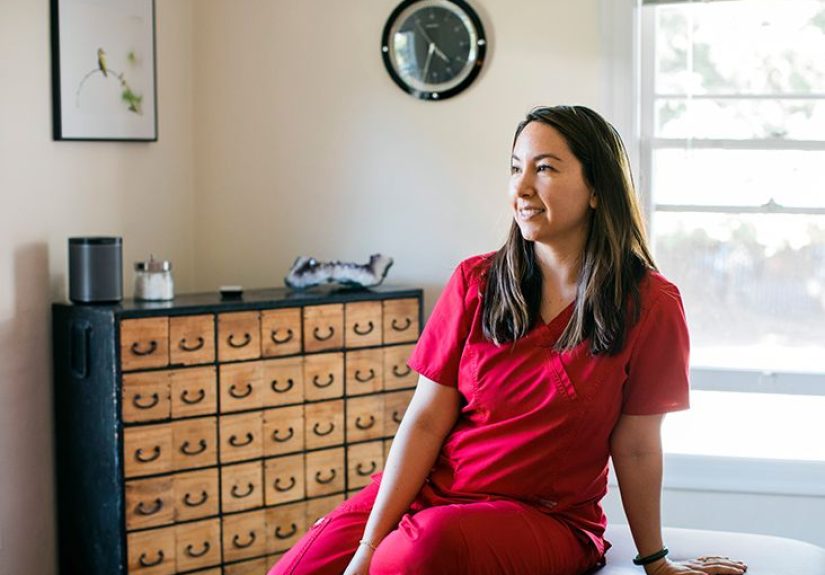
That is what makes practitioners like Paige Yang so compelling. Yang, a doctor of Chinese medicine and licensed acupuncturist, is part of a younger generation helping preserve the depth of Chinese healing traditions in the United States. Her work is not just about needles, herbs, and treatment rooms. It is about honoring lineage, protecting meaning, and reminding patients that a tradition thousands of years old still has something valuable to say in a modern American clinic.
And no, that message is not delivered with mystical fog and vague crystal-shop poetry. It is delivered through detailed intake forms, thoughtful listening, cultural fluency, and the kind of care that makes patients feel like someone finally looked at the whole person instead of skimming the symptoms like a rushed group chat.
Meet the Doctor Behind the Tradition
Yang’s story begins long before she opened treatment rooms in Hawaii and California. She grew up in Kailua, Hawaii, close to the Chinese side of her family, especially her grandmother from Zhongshan, China. That upbringing gave her more than holiday memories. It immersed her in traditions that shaped how she understood health, family, and continuity.
As a child, she celebrated Lunar New Year and Mid-Autumn Festival. She learned stories, customs, and rituals passed down from older generations. Those early experiences mattered because they made Chinese tradition feel lived-in rather than abstract. It was not “heritage” in the museum sense. It was dinner-table heritage. Neighborhood heritage. Grandmother-house heritage. The kind that stays with you because it becomes part of your emotional architecture.
Yang originally considered a conventional medical path and studied pre-med in college. But while studying abroad in Hangzhou, China, she took a one-on-one course in traditional Chinese medicine that shifted her direction. Instead of returning to the United States and following a standard biomedical route, she pursued Chinese medicine more deeply, eventually earning advanced training in the field in San Francisco. That choice was not a detour. It was a return to something that already felt true.
Today, her work reflects both education and inheritance. She practices in a way that is intellectually rigorous, culturally rooted, and community-minded. She has also offered sponsored treatments to help broaden access, which says a lot about how she sees medicine. For Yang, this is not about curating an elite wellness brand. It is about care that remains connected to the people and traditions that made it possible.
Why TCM Is Bigger Than a Trend
Traditional Chinese medicine is often misunderstood in the United States because people tend to meet it one piece at a time. They hear about acupuncture for back pain. They see an athlete with cupping marks. They buy a gua sha tool because social media told them it might sculpt their cheekbones into cinematic perfection. But TCM is not just a collection of disconnected techniques. It is a full medical system built on theories of balance, pattern recognition, prevention, and individualized care.
In practice, that means a TCM doctor does not just ask where it hurts and call it a day. A real intake can cover sleep, digestion, stress, appetite, menstrual cycles, body temperature, emotional state, bowel habits, headaches, energy levels, and more. In other words, if you came in expecting a two-minute “so what brings you in?” and a clipboard with three boxes, TCM would like to politely overachieve.
The system is rooted in ideas such as qi, yin and yang, and the relationships between the body, the environment, and internal balance. Whether a patient fully embraces those concepts philosophically or simply experiences the care as a more holistic encounter, the important point is this: TCM is designed to look for patterns, not just isolated complaints. Two people with similar symptoms may receive different recommendations because their overall presentations differ.
That individualized approach is part of why many patients find Chinese medicine memorable. It can feel less like being processed and more like being understood. In a healthcare culture that often rewards speed, specialization, and symptom management, that difference lands hard.
Keeping Chinese Traditions Alive Means Protecting Their Meaning
Language and lineage still matter
When Yang talks about her work, one theme stands out: respect. Not performative respect. Actual respect. The kind that involves study, humility, and acknowledgment of where the medicine comes from. She has spoken about the importance of learning from Chinese teachers, understanding the roots of the practice, and giving back to the communities tied to it.
That matters because popularity can be a double-edged sword. On one hand, the growing visibility of acupuncture, cupping, herbalism, and gua sha has brought curiosity and wider acceptance. On the other hand, popularity can also strip a tradition of context. Once a practice gets repackaged as aesthetic content, cultural literacy often exits the building through a side door.
For doctors like Yang, preserving TCM means resisting that flattening. It means treating Chinese medicine as more than “content.” It also means challenging the idea that someone can absorb a technique from a few online clips and speak as an expert. Training in Chinese medicine is long, formal, and demanding. This is a profession, not a hobby with excellent lighting.
Cultural preservation is also community work
There is another layer here, too. When a Chinese American practitioner confidently practices a medicine born from Chinese tradition, patients from that background may feel something bigger than clinical relief. They may feel recognition. Pride. Continuity. In a country where immigrant traditions are often exoticized, commercialized, or sidelined, seeing a cultural practice treated with seriousness can be deeply affirming.
That point became even more important during and after the COVID-19 pandemic, when anti-Asian discrimination surged in the United States. In that atmosphere, protecting Chinese traditions was not just about education. It was also about dignity. It was about refusing to let a culture be reduced to stereotype on one day and mined for trendy wellness ideas on the next.
What Science Says About Chinese Medicine
A thoughtful article about TCM cannot stop at cultural admiration. It also has to deal with evidence, safety, and medical reality. The good news is that some parts of traditional Chinese medicine have been studied extensively, especially acupuncture. Research and major U.S. medical institutions suggest acupuncture may help with certain pain conditions, and federal health sources also note benefits for issues such as nausea and vomiting after surgery or chemotherapy.
That does not mean every claim made under the TCM umbrella is equally proven. It does mean acupuncture has earned a more serious place in mainstream integrative care than many skeptics assume. Major health systems now offer it, and many conventional providers refer patients for it, especially in pain management settings.
Other parts of TCM, including tai chi and qigong, also have evidence behind specific benefits. Tai chi, for example, has been associated with improvements in balance and fall prevention in older adults. That may sound less glamorous than a miracle cure headline, but frankly, it is more useful. Real medicine often looks like steadier movement, better function, and a little less suffering. Not fireworks.
At the same time, herbal medicine requires caution. U.S. health authorities have warned that some Chinese herbal products have shown contamination, labeling errors, or serious side effects. That is why expertise matters so much. A qualified practitioner should understand indications, contraindications, sourcing, and potential interactions with medications. This is not an area for random internet experimentation or a “my cousin’s roommate swears by it” prescription plan.
Safety also matters in acupuncture. Reputable institutions note that risks are low when treatment is performed by a competent, properly trained practitioner using sterile, single-use needles. That phrase is doing a lot of work for a reason. Training and standards are not decorative. They are the line between informed care and preventable harm.
A Tradition With Deep American Roots
One of the biggest misconceptions about Chinese medicine in the United States is that it is somehow newly arrived, as if it floated into the country on a wellness cloud sometime after yoga pants were invented. In reality, Chinese herbal traditions have a long American story. Chinese herbs and medicinal ingredients were circulating in early America, and Chinese medicine became more visible during the eras of migration shaped by trade, the Gold Rush, and the building of Chinese communities across the West.
That history is tied to resilience. Chinese immigrants were often denied healthcare by mainstream institutions, especially during periods of open discrimination. In response, communities created their own systems of support. San Francisco’s Chinese Hospital traces its roots to the Tung Wah Dispensary, founded in 1899 because Chinese residents were being shut out of care. That institution offered Eastern and Western medicine side by side, which feels remarkably modern for something born out of exclusion more than a century ago.
In other words, TCM in America is not merely an imported tradition. It is part of the Chinese American survival story. It belongs to railroad towns, Chinatowns, herb shops, family networks, and community clinics. It belongs to the people who preserved it when the broader culture was not exactly rolling out a velvet welcome mat.
That history makes Yang’s work feel even more significant. She is not just practicing medicine. She is continuing a chain.
Why Patients Still Seek Doctors Like This
Some patients come to Chinese medicine because conventional care has not solved a chronic issue. Others come because they want complementary support alongside standard treatment. But many keep coming back for a more human reason: they feel heard.
That might be the quiet superpower in this story. A doctor who asks follow-up questions. A system that allows room for the emotional and physical to coexist. A treatment plan that includes not only what hurts, but how someone sleeps, worries, eats, and moves through the day. Even patients who are not fluent in TCM theory can recognize the emotional difference between rushed medicine and attentive medicine.
Yang has emphasized that many patients already hold clues to their own health patterns; they simply have not been given enough space to articulate them. That philosophy resonates because it treats people as participants rather than passive recipients. It creates a different tone in the room. Less lecture, more collaboration. Less “next.” More “tell me more.”
And in a healthcare culture that can often feel fragmented, that approach has staying power.
The Future of Chinese Traditions in Modern Care
If Chinese traditions are going to remain alive in America, they cannot survive as décor. They have to survive as practice, education, and relationship. That means practitioners need rigorous training. Patients need accurate information. Institutions need to respect the cultural origins of what they offer. And the broader public needs to get comfortable with the idea that ancient traditions and modern standards can coexist without turning into a cartoon of either one.
The strongest future for TCM in the United States is probably not a fantasy battle where East defeats West or vice versa. It is something more practical: integrative care with cultural honesty. Science where science is available. Humility where evidence is still emerging. Respect for safety. Respect for tradition. Respect for the communities that carried this knowledge long before it became marketable.
That is what doctors like Paige Yang represent. Not nostalgia. Not trend-chasing. Not a romanticized return to the past. They represent continuity with standards. Tradition with training. Heritage with relevance.
And that, in a noisy wellness economy, is refreshingly real.
The Experience of Walking Into a Tradition That Still Breathes
What does it actually feel like to encounter a doctor who is keeping Chinese traditions alive instead of turning them into aesthetic wallpaper? Often, the difference appears before a needle is ever opened. The room tends to feel less transactional. There is usually more conversation, more observation, and more patience. You are not only asked where the pain is. You are asked how you sleep, what your stress feels like, whether your digestion has changed, whether your energy crashes at a certain hour, whether your body runs hot or cold, whether your mind has been racing. It can be surprisingly personal, but in a grounding way, not an invasive one.
For many patients, that experience is the first small shock. They realize they have grown used to separating themselves into categories: physical symptoms here, emotions over there, lifestyle somewhere off in the distance. In a TCM setting, those compartments start to blur. A headache is not just a headache. Fatigue is not just fatigue. Sleeplessness is not treated like a bad habit or a moral failure. Everything is part of a larger pattern. Even people who arrive skeptical often respond to that wider lens because it feels less mechanical and more human.
There is also a sensory and cultural layer that matters. In clinics shaped by real tradition, the atmosphere often carries a sense of continuity rather than performance. The tools, language, and rituals do not feel borrowed for effect. They feel lived. That distinction is hard to quantify but easy to notice. The practitioner is not “playing Eastern.” They are practicing a medical tradition with roots, discipline, and meaning. Patients pick up on that seriousness. It builds trust.
For Chinese American patients in particular, the experience can include something deeper than wellness. It can feel like recognition. A philosophy your grandparents respected is not being mocked, watered down, or treated like a quirky side note. It is being spoken confidently in a professional setting. That can be unexpectedly moving. It can turn a routine appointment into a reminder that culture is not only something you inherit at holidays. It can also be something that supports you when you are tired, hurting, anxious, or trying to feel at home in your own body.
And for patients outside the culture, the experience can still be transformative for another reason: it teaches respect. It invites them to see Chinese medicine not as a novelty, but as a serious tradition shaped by centuries of thought and generations of care. In the best version of that encounter, everyone leaves with something useful. Maybe it is symptom relief. Maybe it is a new understanding of prevention. Maybe it is simply the feeling of having been listened to without being rushed out the door.
That is how traditions stay alive. Not through slogans. Not through trending videos. Through rooms where people are treated carefully, knowledge is carried forward responsibly, and culture remains connected to care. In those moments, Chinese medicine is not frozen in history. It is breathing in the present tense.