Table of Contents >> Show >> Hide
- What “Alta Plaza Park Residence” Refers To
- Alta Plaza Park: The “Neighbor” That Changes Everything
- The Remodel Strategy: “Surgical Moves” That Rewire a Home
- Why This Project Resonates Beyond One Address
- Pacific Heights Context: The Lifestyle Around Alta Plaza Park Residence
- How to Steal the Best Ideas (Legally) From Alta Plaza Park Residence
- Visiting Alta Plaza Park Like You Know What You’re Doing
- Wrapping It Up: A Residence That Proves Small Changes Can Feel Huge
- Experiences Around Alta Plaza Park Residence: A “Day-in-the-Life” Feeling (Without Pretending We Live There)
- SEO Tags
Some homes have a “good location.” The Alta Plaza Park Residence has a mic drop location: Pacific Heights, San Francisco, with Alta Plaza Park basically waving at you from across the street like, “Hey neighbor, want a view today?” And if you’ve ever lived in a city where sunlight is treated like a rare collectible, you already understand why that matters.
This article is a deep (but fun) look at what makes the Alta Plaza Park Residence noteworthy: not just as a remodel, but as a playbook for how to turn a dark, chopped-up space into something that feels calm, bright, and bigger than the math says it should. We’ll also zoom out to the park itselfbecause in this story, the landscape isn’t just background; it’s basically a co-star.
What “Alta Plaza Park Residence” Refers To
“Alta Plaza Park Residence” is widely associated with a Pacific Heights renovation by Jennifer Weiss Architecturea project often summarized with a line that sounds like a movie trailer for interior design: a dark, inward-looking home gains rooms with a view. The punchline is that the transformation didn’t rely on flashy gimmicks or infinite budgets. Instead, it leaned on a few high-impact movesthink surgical precision, not sledgehammer chaos.
The residence sits in the orbit of Alta Plaza Park, a hilltop green space known for wide Bay views and a grand staircase that doubles as an unofficial local fitness test. Living near a park is already a lifestyle upgrade; designing a home to see the park from multiple rooms? That’s where things get interesting.
Alta Plaza Park: The “Neighbor” That Changes Everything
Alta Plaza Park isn’t a tiny pocket park that politely minds its business. It’s a four-block hilltop landmark with a split personality: formal terraces on the steeper side and more pastoral, open lawn where the slope chills out. Translation: you can picnic like a poet or do stairs like you lost a bet.
A quick history lesson (with fewer yawns)
Alta Plaza’s story goes way back. It was reserved as a public square through a chain of legal and governmental actions in the 19th century, and it eventually became a fully established public park with major grading, planting, and circulation improvements over time. Early planning is tied to Rudolph Ulrich (a noted landscape designer), and later development occurred under the supervision of John McLaren, the legendary superintendent associated with major San Francisco parkmaking.
The park’s design is also deeply shaped by the hill itself: terraces, stair flights, and view moments that make you stop mid-walk and stare at the Bay like you’re in a commercial for “moving here and starting fresh.”
The grand stairs… plus a little Hollywood damage
The park’s wide stairway is iconicand yes, it’s the same staircase that took a beating during a car-chase stunt for the 1972 film What’s Up, Doc? The damage became part cautionary tale, part weird civic souvenir: “See that patch? That’s cinema, baby.” The larger legacy: San Francisco got a lot more serious about film permits, fees, and liability after that era.
The Remodel Strategy: “Surgical Moves” That Rewire a Home
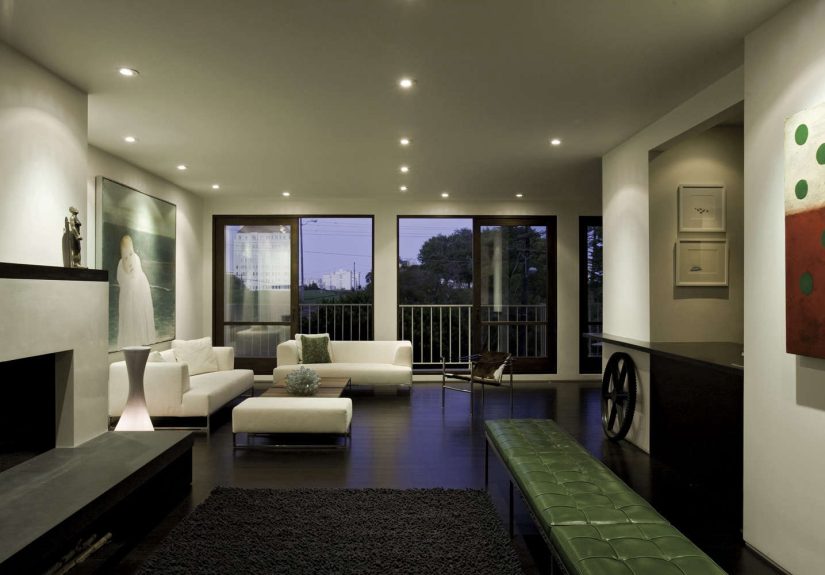
The Alta Plaza Park Residence renovation is famous for proving an uncomfortable truth: your home might not be “small” so much as it’s just… not using its potential. The original space had generous ceiling height (about nine feet), yet still felt crampedbecause the doors and windows were unusually low, keeping the visual center of gravity down where anxiety lives.
Instead of chasing square footage, the remodel chased perception: make rooms feel taller, brighter, and more connected to viewsespecially the courtyard and the park beyond. That meant raising openings, carving strategic sightlines, and rethinking how rooms talk to each other. (Homes should communicate. Silent treatment is for reality TV.)
Move #1: Raise the “horizon line” inside the house
A nine-foot ceiling is a giftunless your doors and windows are so low they visually compress the room. The renovation reportedly stretched new doors to around eight feet and raised window heights, essentially “bringing the eyes up.” That single proportion shift can make an interior feel instantly more architectural and less cave-adjacent.
Here’s why it works: your brain reads vertical lines as volume. Taller openings create a stronger sense of height, even when the ceiling never moved an inch. It’s like changing camera angles in a moviesame set, better shot.
Move #2: Create openings that do more than “open concept”
Not all openings are created equal. Knock down the wrong wall and you just get a bigger room to lose your keys in. In this project, new openings were placed to capture views of both the courtyard and Alta Plaza Park from multiple vantage points kitchen, dining, living, media spacesso the home feels visually expanded in several directions at once.
This is “view borrowing” at a high level: you don’t need huge windows everywhere; you need the right sightlines where people naturally stand, sit, and gather. One well-placed opening can change the experience of three rooms. That’s a better return than most loyalty programs.
Move #3: Reconnect the living room and kitchen (without turning the place into an echo chamber)
The living room was once severed from the kitchen, which is a polite way of saying “your guests are stranded.” A wide pass-through reintroduced connection and made entertaining easier: people can talk, pass food, and pretend they’re not all secretly judging each other’s cutting-board hygiene.
The key detail: this isn’t necessarily a full demolition of boundaries. It’s a calibrated openingbig enough to connect, still structured enough to keep rooms distinct. That balance is often what separates timeless remodels from trends that age like milk.
Move #4: Use finishes to amplify light and calm
Materials in the project are frequently described as warm-modern: rich dark wood against lighter walls, with a clean-lined, trim-minimal sensibility. There’s also a standout fireplace upgrade: a new surround in high-gloss Venetian plaster, chosen in part for how it catches and reflects lightreportedly even echoing the park’s trees in its sheen.
Then there’s the kind of detail design people love because it’s both practical and sculptural: an elongated slate bench wrapping around, creating a reading nook and extra seating without adding furniture clutter. In city homes, built-in seating is basically a cheat code.
Why This Project Resonates Beyond One Address
The Alta Plaza Park Residence stands out because it tackles common urban-home problems with unusually high clarity: low light, chopped-up circulation, and “why does this feel smaller than it is?” energy. The solutions are replicable, even if your view is a neighbor’s ficus tree.
Design principle: perceived volume beats actual square footage (a lot of the time)
If you can increase daylight penetration, align sightlines to the outdoors, and correct proportions (door/window heights), you often get a bigger lifestyle upgrade than adding a small room. That’s especially true in dense neighborhoods where additions are expensive, difficult, or straight-up impossible.
Design principle: the outdoors is a “free room,” if you connect it correctly
The project emphasizes courtyard and park views as functional expansions of the home. When your interior is visually tethered to outdoor space, it reduces the feeling of enclosure. It’s not only aestheticit changes how you move, pause, and gather.
Pacific Heights Context: The Lifestyle Around Alta Plaza Park Residence
Pacific Heights is one of San Francisco’s most iconic neighborhoods: historic architecture, big views, and a mix of quiet residential blocks and lively commercial corridors (hello, Fillmore Street). It’s also famously hillygreat for views, less great for anyone who thinks “cardio” is a streaming service.
Neighborhood guides regularly point to Alta Plaza Park as a core amenity: a place for dog walking, picnics, tennis, family playground time, and the kind of stair workouts that make you question your life choices by step 30. In other words, the park isn’t just “nearby.” It’s part of daily rhythm.
Why park adjacency tends to hold value
Real estate folks love to talk about “location,” but park adjacency is a specific kind of location advantage: view corridors (especially in a city of hills), recreation access, and a psychological sense of openness. You’re not just buying a homeyou’re buying proximity to a public landscape that stays (mostly) the same even as everything else evolves.
How to Steal the Best Ideas (Legally) From Alta Plaza Park Residence
You don’t need a Pacific Heights address to use the lessons from this remodel. Here are the most transferable moves, translated into human language:
1) Audit your “visual bottlenecks”
Stand in the rooms you use most and identify what stops your eyes: low door headers, awkward hall walls, or dead-end sightlines. Sometimes the fix is as simple as a new opening or widening an existing one. Bonus points if that opening frames something worth looking at (trees, sky, courtyard, even a good brick wall).
2) Upgrade proportions before you upgrade possessions
If your room feels tight, don’t start by buying smaller furniture. Start by looking at door and window heights, trim bulk, and how light moves through the space. Taller doors and simplified trim can make a home feel “edited” in the best waylike it finally got a haircut that fits its face.
3) Use reflective surfaces strategically, not like a funhouse
High-gloss or polished finishes (Venetian plaster, certain stone, even thoughtfully placed mirrors) can bounce light deeper into rooms. The trick is restraint: a little goes a long way. You want “luminous,” not “I can see every snack I’ve ever eaten.”
4) Make one “gathering axis” between kitchen and living
The wide pass-through concept is powerful because it supports real life: hosting, family time, and casual conversation. You don’t need to erase every wall; you need one strong connection that makes the home flow.
Visiting Alta Plaza Park Like You Know What You’re Doing
Even if you’re not touring private architecture (because, you know, boundaries), the neighborhood and park are worth experiencing. Guides consistently highlight the park’s views toward the Bay and landmarks like Alcatraz, plus the mix of lawns, courts, and terraces.
What to do
- Walk the terraces: start at the lower steps and climb slowlythis isn’t a sprint unless you’re trying to impress a stranger.
- Catch the view: the hilltop vantage points are the main eventbring a camera, or just your face.
- Tennis (and evolving court culture): Alta Plaza has long been known for courts, and citywide racket-sport demand has been pushing new planning and additions.
- Kid and dog energy: families and dog walkers are a big part of the park’s daily vibeexpect friendly chaos, not monastery silence.
Ongoing investment: the park keeps getting love
One of the most charming things about neighborhood parks is how communities fight for them. Alta Plaza Park has seen community-driven planning and upgrades discussed in recent coverage, including bench replacements and proposals to transform underused areas into more inviting gathering spaces. A good park isn’t “finished.” It’s maintained, improved, and argued aboutbecause people care.
Wrapping It Up: A Residence That Proves Small Changes Can Feel Huge
The Alta Plaza Park Residence is a reminder that great remodels aren’t always about dramatic before-and-after shock value. Sometimes they’re about precision: raise the openings, aim the views, connect the rooms, and let the outside world (courtyard + park) do some of the heavy lifting.
Pair that with the settingAlta Plaza Park’s layered history, terrace geometry, and famously cinematic staircase and you get a uniquely San Francisco design story: a home re-tuned to its landscape, its light, and the daily rituals of city living. The result isn’t just prettier. It’s more usable, more breathable, and more aligned with how people actually want to live.
===================================================== 500-WORD EXPERIENCE SECTION (ADDED AS REQUESTED) =====================================================
Experiences Around Alta Plaza Park Residence: A “Day-in-the-Life” Feeling (Without Pretending We Live There)
If you want to understand why the phrase “Alta Plaza Park Residence” hits differently, imagine the daily rhythm that a park-facing, light-optimized home can support. It starts in the morning with San Francisco doing its classic thingmaybe fog, maybe sun, maybe both in the same 15 minutes (the city loves plot twists). You step outside and the park is right there: terraces rising, benches placed like little observation decks, and a staircase that silently challenges you to prove you’re “a stairs person now.”
On weekdays, Alta Plaza Park tends to feel like a neighborhood living room. Dog walkers loop the paths with that purposeful stride that says, “Yes, I’m casually exercising,” while their dogs zigzag like they’re conducting an inspection of every blade of grass. Parents drift toward the playground with coffees in hand, and runners turn the steps into a training circuitup, down, repeat, all while looking suspiciously cheerful. (Some people are built different. Or they have better knees.)
Now bring that energy back into the idea of the residence. A home designed to capture views of the courtyard and park from multiple rooms changes how “being inside” feels. You can be making breakfast and still feel connected to the outdoorslight coming through, the day unfolding beyond the glass. Instead of the kitchen being a separate cave where you quietly spiral over emails, it becomes part of the social and visual flow. Someone can sit in the living room, someone else can hover near the kitchen, and nobody feels exiled.
The details matter here. Taller doors and raised windows don’t just look elegant; they alter your posture and mood. You literally look up more. Rooms feel calmer because they feel less compressed. That might sound like a small thing until you’ve lived in a space that always felt slightly “tight,” like your home was subtly asking you to apologize for existing. Good proportions do the opposite: they give you permission to relax.
Afternoon is when a park-adjacent neighborhood really shows off. The light shifts, the Bay views sharpen, and the park becomes a mix of quiet lounging and low-key community theatertennis rallies popping, kids inventing playground dramas, friends meeting “for a quick walk” that turns into an hour. This is also the moment when indoor/outdoor design starts paying rent. A courtyard connection means you can open things up, pull fresh air through, and let your home feel like it’s breathing with the day.
Evening is the final act. Pacific Heights can feel almost cinematic at golden hourhistoric facades glowing, the park’s trees turning into silhouettes, and the staircase looking like a stage set (which, historically, it kind of is). Back inside, the smartest remodels don’t demand attention; they support life. A pass-through that makes hosting easier. A built-in bench that becomes everyone’s favorite seat. Finishes that catch light softly instead of shouting. The experience isn’t “Look at my remodel.” It’s “This place finally works.”
That’s the real takeaway: the Alta Plaza Park Residence isn’t just a design projectit’s a demonstration of how a home can be reoriented toward light, views, and daily rituals. And once you’ve felt that kind of alignment, it’s hard to un-feel it. You start noticing every low window, every blocked sightline, every room that could’ve had a better relationship with the outdoors. (Congratulations: you’ve caught the design bug. There is no known cure, but there are excellent throw pillows.)