Table of Contents >> Show >> Hide
- Why Drafty Windows Make Your Energy Bill So Dramatic
- Step 1: Find the Leaks Before You Buy All the Things
- Step 2: Decide What You’re Sealing (Because “Windows” Is Not One Problem)
- Step 3: Tools & Materials That Actually Help
- Step 4: Seal the Interior Trim (The Sneaky Leak That Feels Like “Cold Glass”)
- Step 5: Seal Behind the Trim (Where the Big Leaks Love to Hide)
- Step 6: Weatherstrip the Moving Parts (So Your Window Can Still, You Know… Open)
- Step 7: Exterior Sealing Without Causing a Moisture Mess
- Step 8: Use “Seasonal Seals” When You Want Instant Results
- Step 9: Verify the Win (And Avoid the “Did This Even Work?” Spiral)
- When Sealing Isn’t Enough: Signs You Need Repair or Replacement
- Common Mistakes (So You Don’t Accidentally Create a New Problem)
- Experience Corner: What Sealing Windows Is Like in Real Life (About )
- Conclusion
- SEO Tags
There are two kinds of people in this world: those who “don’t mind a little draft,” and those who have watched
their thermostat settings climb like they’re training for Everest. If your house has windows that whistle, rattle,
or feel like they’re politely inviting the outdoors inside, you’re not just losing comfortyou’re losing money.
The good news: sealing windows is one of the most satisfying DIY projects on Earth because the payoff is immediate.
You can literally feel your progress with your own two hands… and occasionally a candle that looks like it’s
auditioning for a haunted house movie.
This guide walks you through how to find leaks, choose the right materials, seal them correctly (without trapping
water where it shouldn’t be), and measure your resultsso your energy bill stops acting like it has a personal
vendetta.
Why Drafty Windows Make Your Energy Bill So Dramatic
Your HVAC system is basically a very expensive air-moving machine. When outside air sneaks in and conditioned air
sneaks out, your system has to work harder to keep your home at your chosen “I’m comfortable but still fiscally
responsible” temperature.
Windows are a common weak point because they’re full of joints: trim meets wall, frame meets siding, sash meets
track, lock meets reality. Even small gaps add uplike a tiny monthly subscription you never signed up for.
The goal of sealing is simple: reduce uncontrolled airflow and improve comfort, without accidentally blocking
drainage paths that windows need to stay dry and healthy.
Step 1: Find the Leaks Before You Buy All the Things
The most common DIY mistake is shopping first and diagnosing later. Don’t do that. (Your garage already has enough
“I’ll use it someday” supplies.)
Fast leak-finding tests
-
The hand test: On a cold or windy day, run your hand slowly around window edges, trim, and the
sill. If you feel moving air, mark it with painter’s tape. - The tissue test: Hold a tissue strip near suspected gaps. If it flutters, you’ve found a leak.
-
The incense/candle test: Carefully hold incense near the window perimeter. Smoke that bends or
races sideways is telling you where air is moving. (Skip open flame if curtains are nearby.) -
The flashlight test: At night, have someone shine a bright flashlight from outside while you
look from inside. Light peeking through joints often indicates a gap.
As you test, separate leaks into two categories:
(1) around the window assembly (trim/frame) and
(2) within the operable parts (sash/track/meeting rails). They require different fixes.
Step 2: Decide What You’re Sealing (Because “Windows” Is Not One Problem)
Think of a window like a sandwich:
the operable window is the filling (the part that moves),
and the frame + trim is the bread (the part that connects to the wall).
Air leaks happen in both places.
Common leak zones
- Between interior trim and drywall/plaster (hidden but often leaky)
- Between the window frame and rough opening (behind trimoften the biggest offender)
- Along meeting rails and sash tracks (especially on double-hung and sliders)
- At the sill and stool (where cold air loves to loiter)
- Exterior joints where casing meets siding/brick (water + air management zone)
Once you know where the leak is, you can pick the right sealant instead of guessing and hoping for the best.
(Hope is not an insulation material.)
Step 3: Tools & Materials That Actually Help
You don’t need a contractor trailer full of gear. You need a small set of materials chosen for your specific gaps.
Core kit
- Caulk gun (a smooth-rod model is easier to control)
- Paintable interior caulk (often acrylic latex/siliconized latex)
- Exterior-rated caulk (check label for exterior, UV, and temperature tolerance)
- Weatherstripping (V-strip/tension seal, foam tape, rubber/vinyl, or metal depending on location)
- Foam backer rod (for larger gaps before caulk)
- Low-expansion spray foam (for gaps behind trim; “window & door” formulas help prevent warping)
- Utility knife, putty knife/scraper, rags, rubbing alcohol or mild cleaner
- Painter’s tape (clean lines, fewer regrets)
Optional “seasonal booster” kit
- Heat-shrink window film kit (temporary winter seal)
- Rope caulk/removable caulk (seasonal, renter-friendly)
- Draft blockers (works best for obvious sill drafts)
- Thermal curtains or cellular shades (reduces heat transfer; comfort upgrade)
One note on materials: cheaper isn’t always cheaper. Some flimsy foams and felt strips don’t last long or seal well,
so you end up redoing the work. Pick materials that match the friction/traffic level of the spot you’re sealing.
Step 4: Seal the Interior Trim (The Sneaky Leak That Feels Like “Cold Glass”)
Many “drafty window” complaints are actually air leaking around the interior casingbetween trim and wall.
This is great news because it’s easy to fix and doesn’t involve ladders or negotiating with your siding.
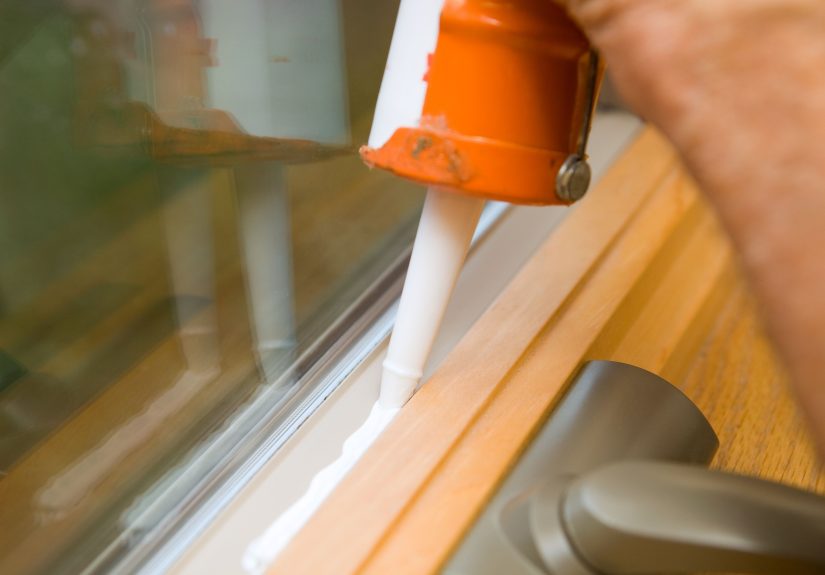
How to caulk interior trim neatly
- Clean the joint: Wipe dust and oils so caulk sticks. Remove loose/old caulk with a scraper.
-
Tape if you want crisp lines: Painter’s tape on both sides of the seam makes you look
like you’ve done this for a living. -
Apply a steady bead: Cut the nozzle small. You can always add more; removing extra is
a hobby nobody wants. - Smooth it: Use a damp finger or tool and wipe often. Pull tape before caulk skins over.
If the gap is big enough to swallow caulk, don’t try to “fill the canyon.” Use backer rod first, then caulk.
Your future self will thank you when the caulk doesn’t crack and fall out like a sad little rubber worm.
Step 5: Seal Behind the Trim (Where the Big Leaks Love to Hide)
If you still feel drafts after caulking interior trim, the leak may be between the window frame and the rough
openingbehind the casing. This is the spot where a lot of real air leakage happens.
The careful (but high-impact) approach
- Remove interior trim carefully: Score paint lines, pry gently, and label pieces if needed.
- Inspect the gap: Look for daylight, old crumbling foam, or empty spaces.
-
Fill gaps appropriately:
For small gaps, caulk can work. For larger gaps, use low-expansion “window & door” spray foam.
Apply in thin passesfoam expands more than your confidence says it will. - Let it cure, then trim excess: Use a utility knife after full cure.
- Reinstall trim: Then caulk the trim-to-wall seam for a finished air seal.
This step alone can transform a room from “cozy-ish” to “why didn’t I do this two winters ago?”
It’s also one of the best cost-to-comfort upgrades you can make without replacing windows.
Step 6: Weatherstrip the Moving Parts (So Your Window Can Still, You Know… Open)
Weatherstripping is the MVP for operable windows. It seals the gaps that appear where parts slide or compress
against each other. The trick is choosing a type that matches the window style and still allows smooth operation.
Double-hung windows
-
V-strip (tension seal): Great for channels where sashes slide. It springs back and maintains
pressure against the sash. - Foam tape: Good for small, consistent gaps but can wear faster on high-use windows.
-
Meeting-rail seals: If air leaks where upper and lower sashes meet, add thin foam or specialized
meeting-rail weatherstrips.
Sliding windows
- Brush seals or felt-lined channels: Useful where panels slide past the frame.
-
Track cleaning first: Dirt and grit prevent full closure, making “sealing” impossible.
Clean tracks before adding anything.
Casement and awning windows
-
These windows compress against a seal when closed, so check the gasket. If it’s flattened or cracked, replacing
the gasket/weatherstrip can make a big difference. - Make sure locks pull the sash tight. A loose latch can mimic a “bad window” when it’s really a “lazy closure.”
Pro move: after installing weatherstripping, close and open the window several times. If it sticks, binds, or peels
off immediately, the material is wrong for that spot or too thick.
Step 7: Exterior Sealing Without Causing a Moisture Mess
Exterior caulking can reduce air leaks and block water intrusion, but it must be done with common sense and respect
for drainage. Windows are designed to manage some wateryour job is to help them shed it, not trap it.
Where exterior caulk is usually helpful
- Small gaps between exterior trim/casing and siding
- Cracks in joints where two different materials meet (once cleaned and dry)
- Areas where old caulk has failed and separated
Where NOT to caulk (seriously)
- Weep holes: These tiny openings let moisture drain. Blocking them can cause water damage.
- Moving parts of the window: Caulk + sliding sash = window permanently “decorative.”
- Over failing old caulk: Remove old caulk first; new caulk won’t bond well to it.
- Anywhere that acts like a drip edge or drainage path: Don’t redirect water into your wall assembly.
If you’re unsure, focus on interior air sealing and weatherstripping first. It’s safer, more forgiving, and still
highly effective for comfort and energy savings.
Step 8: Use “Seasonal Seals” When You Want Instant Results
Some fixes are meant to be temporaryperfect for harsh winters, heat waves, or renters who want savings without
permanent alterations.
Heat-shrink window film
This is the clear plastic kit you tape to the inside frame and shrink tight with a hair dryer. Done right, it
creates a still-air barrier that reduces drafts dramatically. Done wrong, it looks like your window is wearing a
wrinkly raincoat. (Take your time, clean the surface, and use consistent heat.)
Rope caulk / removable caulk
Great for older windows with small cracks that you don’t open in winter. Press it into gaps, peel it off later.
It’s not glamorous, but it’s effective.
Thermal curtains and cellular shades
These don’t “seal” leaks, but they reduce drafts you feel near windows and help with heat transfer. If a room
always feels chilly even after air sealing, adding a good window treatment can make the space noticeably more
comfortable.
Step 9: Verify the Win (And Avoid the “Did This Even Work?” Spiral)
After sealing, repeat your leak tests. Tissue should flutter less. Incense smoke should behave. Your hand should
stop feeling like it’s in a tiny wind tunnel.
A simple savings check you can actually do
-
Short-term: Track thermostat runtime (many smart thermostats show daily heating/cooling run time).
If the house holds temperature longer, runtime usually drops. -
Month-to-month: Compare bills for similar weather periods (utility portals sometimes show this).
For a cleaner comparison, look at heating degree days/cooling degree days in your area and compare “bill per degree day.” - Comfort metric: Are you sitting near the window without turning into a blanket burrito? That counts.
When Sealing Isn’t Enough: Signs You Need Repair or Replacement
Sealing works best when the window is structurally sound. If you have major issues, sealing may be a bandage, not a cure.
- Rotting wood, soft sills, or visible water damage (fix moisture sources first)
- Persistent condensation between panes (failed insulated glass seal)
- Frames so warped the window won’t close properly
- Single-pane windows in extreme climates where comfort is consistently poor
If replacement is on the table, make sure new windows are properly installed and air-sealed around the rough
opening. A high-performance window installed with leaky gaps is like buying running shoes and then walking
barefoot on Legos.
Common Mistakes (So You Don’t Accidentally Create a New Problem)
- Using caulk for huge gaps: Use backer rod or foam first, then caulk for a flexible finish.
- Over-foaming behind trim: High-expansion foam can bow frames. Use low-expansion formulas and apply in layers.
- Caulking weep holes or drainage paths: Water needs a way out.
- Skipping cleaning prep: Sealants don’t bond well to dust, peeling paint, or greasy surfaces.
- Ignoring the lock: A latch that doesn’t pull the sash tight can defeat your weatherstripping.
Experience Corner: What Sealing Windows Is Like in Real Life (About )
The first time I tried sealing windows, I approached it like a heroic montage: buy supplies, slap them on, bask in
warmth. Reality was… more educational.
Lesson one: drafts are sneaky. I was convinced the cold air was “coming through the glass,” because standing near
the window felt like sitting next to an open refrigerator. But once I did the tissue test, the real culprit was
the trim-to-wall seamtiny gaps running around the casing like a secret tunnel system. A simple bead of interior
caulk made the biggest comfort difference of the entire weekend. The room didn’t just feel warmer; it felt calmer,
like the house stopped sighing every time the wind picked up.
Lesson two: weatherstripping is not one-size-fits-all, and your window will absolutely tell you if you got it wrong.
I used thick foam tape on a window I open daily, and it turned the sash into a stubborn drawer that hated me.
After two days of wrestling it, I switched to a slimmer V-strip in the channel. Suddenly the window moved smoothly
and sealed better. That was my “oh, this is engineering” momentcompression matters, friction matters, and the
right material in the right spot feels almost magical.
Lesson three: spray foam is powerful enough to humble anyone. The label said “low-expansion,” which I interpreted
as “go ahead, be generous.” Spoiler: still expands. The fix was easytrim the cured foam, reinstall the casing, and
pretend nothing happenedbut I learned to apply foam in small passes, wait, and only add more if needed. If you’re
sealing behind trim for the first time, treat foam like hot sauce: you can always add more, but you can’t un-add.
Lesson four: don’t chase savings with your eyes onlychase them with a repeatable test. After each change, I retested
with incense and a flashlight. It kept me from “doing stuff” that felt productive but didn’t move the needle.
It also helped me prioritize. Some windows needed a quick weatherstrip refresh. Others needed the bigger behind-trim
air seal. One needed a new latch so it would actually close tightly.
The best part wasn’t even the bill reductionit was how the house felt. Fewer cold spots. Less HVAC cycling.
A living room that stopped feeling like two different climates depending on where you sat. If you’re on the fence,
start with one problem window. Seal, test, and live with it for a week. That first “wow, this is better” moment
tends to motivate the rest of the project all by itself.
Conclusion
Sealing windows is one of the rare home projects where you don’t have to wait months to feel the payoff. Find the leaks,
seal the trim and rough-opening gaps, weatherstrip the moving parts, and use seasonal helpers like window film when
you want a fast boost. Do it thoughtfullyespecially on the exteriorso you keep drainage working the way it’s supposed
to. With a little patience and the right materials, you can stop paying to heat (or cool) the outdoors and start
enjoying a home that feels consistently comfortable.