Table of Contents >> Show >> Hide
- Why These Photos Hit Book Lovers So Hard
- 15 Mildly Infuriating Pics That Make Book Lovers Instantly Unwell
- 1. The Dog-Eared Page Corner
- 2. The Cracked Spine “Because I Like My Books Broken In” Photo
- 3. The Book Left Face-Down on a Table
- 4. The Bath, Pool, or Beach Read Gone Wrong
- 5. The Coffee Ring of Doom
- 6. The Greasy-Fingered Cookbook or Snack-Covered Paperback
- 7. The Highlighted Library Book
- 8. The Tape Repair That Somehow Made Everything Worse
- 9. The Shelf So Overstuffed You Need a Crowbar
- 10. The Leaning Shelf of Slow-Motion Damage
- 11. The Sun-Faded Rainbow Shelf
- 12. The Decorative “Books Turned Backward” Shelf
- 13. The Oversized Hardcover Hanging Off the Edge
- 14. The “Books as Furniture” Photo
- 15. The Mutilated Craft Project
- What These Pics Really Reveal About Reading Culture
- How to Avoid Becoming the Villain in Someone Else’s Bookish Photo
- Frequently Asked Questions About Infuriating Book Pics
- Book Lover Experiences: The Everyday Moments That Hurt a Little Too Much
- Conclusion
For most people, a mildly infuriating photo is just a quick scroll-and-scoff moment. For book lovers, though, it is a full-body reaction. A bent paperback left face-down on a sticky table? Emotional damage. A hardcover jammed so tightly into a shelf that the dust jacket is wrinkling like a raisin? Straight to jail. A library copy decorated with mystery crumbs, mystery stains, and a mysterious commitment to neon highlighter? Absolutely not.
That dramatic reaction is not just book-snob energy, although let’s be honest, some of it absolutely is. Physical books are more than containers for words. They are objects people collect, gift, reread, display, annotate, inherit, and remember. A favorite novel can carry the memory of a season of life. A worn cookbook can hold a family history. A battered childhood classic can feel like an old friend who survived middle school with you and somehow still smells faintly like a school library.
So when a photo shows a book being mistreated, book lovers don’t just see paper and glue. They see carelessness, waste, and in some cases, a tiny act of betrayal against one of humanity’s greatest inventions. Here are the kinds of mildly infuriating pics that make readers gasp, clutch their tote bags, and whisper, “Who did this?”
Why These Photos Hit Book Lovers So Hard
There is a reason these pictures spread like wildfire. They combine two things the internet loves: visual chaos and low-stakes outrage. Add books to that mix, and you get a special kind of pain. Readers know that poor handling can lead to cracked spines, warped covers, loose pages, fading, stains, and mold. Even when the damage is not catastrophic, it still feels wrong in the same way a crooked painting feels wrong or pineapple on a first-edition dust jacket would feel wrong.
Book lovers also tend to split into tribes. Some believe books are sacred objects that should be treated like tiny cathedrals made of paper. Others think books are meant to be lived in, highlighted, dog-eared, and dragged through airports like emotional support bricks. But even the most relaxed readers usually have a line. Coffee puddles, bathtub reading accidents, broken bindings, and upside-down shelving for aesthetic reasons? That is where the peace treaty ends.
15 Mildly Infuriating Pics That Make Book Lovers Instantly Unwell
1. The Dog-Eared Page Corner
This is the classic offense. One folded corner may seem harmless, but to many readers it feels like watching someone use a museum brochure as a napkin. Dog-earing leaves a permanent crease, weakens the paper, and instantly changes the look of the page. A bookmark costs almost nothing. A receipt works. A scrap of paper works. Your dignity works. There are options.
2. The Cracked Spine “Because I Like My Books Broken In” Photo
Some readers open a new paperback so aggressively that the spine looks like it just survived a small earthquake. The mildly infuriating image here is usually a close-up of a once-smooth spine now wearing multiple white stress lines like battle scars it never volunteered for. Yes, books are made to be read. No, they do not need chiropractic intervention on page one.
3. The Book Left Face-Down on a Table
Face-down book photos trigger an immediate response because they put pressure on the binding, especially with hardcovers and tightly bound paperbacks. It is the visual equivalent of someone saying, “I’ll just sit on this violin for a minute.” Readers see it and instantly imagine loosened hinges, warped covers, and pages splaying in protest.
4. The Bath, Pool, or Beach Read Gone Wrong
There is cozy, and then there is reckless. A photo of a swollen paperback with rippled pages and a sand-coated cover is enough to make book lovers stare into the distance for a while. Water causes warping, staining, and bleeding. Sand grinds into paper and bindings like nature’s tiniest revenge. That dreamy vacation snapshot often ends with a book looking as if it survived a shipwreck.
5. The Coffee Ring of Doom
One mug set down too close, one tiny wobble, and now chapter twelve smells like espresso forever. Photos of books with giant coffee halos or mystery beverage stains are uniquely painful because they feel so preventable. A reading nook should be cozy, yes, but there is a difference between “caffeinated literary vibe” and “iced latte enters the plot as a villain.”
6. The Greasy-Fingered Cookbook or Snack-Covered Paperback
A cookbook with a few flour smudges has character. A novel with orange chip fingerprints has evidence. Book lovers can accept signs of life, but there is a line between normal use and turning a paperback into a forensic exhibit. The mildly infuriating photo usually includes wrinkled pages, glossy spots, and the undeniable feeling that someone read with buffalo wings in one hand and zero shame in the other.
7. The Highlighted Library Book
This one is less mildly infuriating and more socially criminal. If it is your personal copy, annotate to your heart’s content. Underline every metaphor. Argue with the narrator in the margins. But if the photo shows a public or school library book slashed with neon marker and ballpoint commentary, readers everywhere suddenly become courtroom prosecutors. Shared books come with a basic social contract: return them readable for the next person.
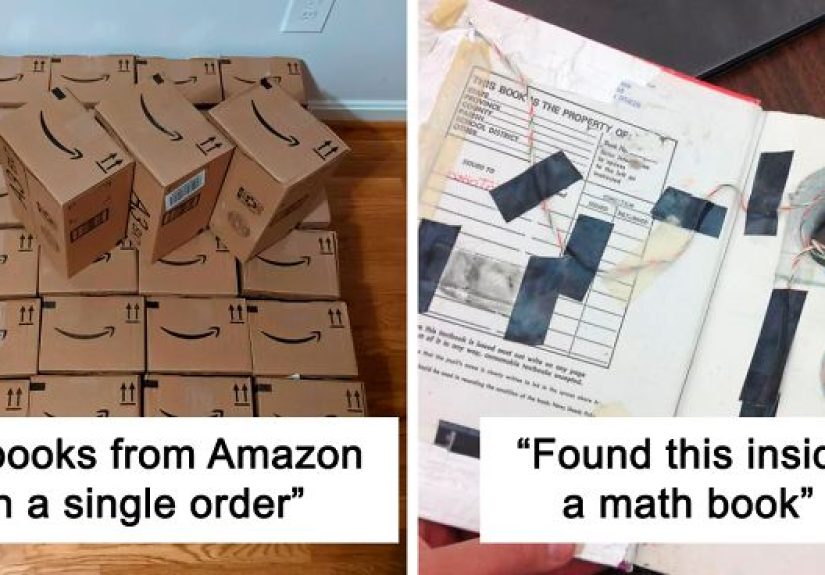
8. The Tape Repair That Somehow Made Everything Worse
Few things look sadder than a ripped page “fixed” with shiny household tape that has yellowed into a crunchy scar. The intention may be good, but the result often looks like a hostage negotiation between paper and adhesive. Book lovers know that bad repairs can age poorly, stain pages, and create new damage. In the world of infuriating book photos, tape is the overconfident amateur mechanic.
9. The Shelf So Overstuffed You Need a Crowbar
There is a fine line between “abundant library” and “paper hostage situation.” Photos of books crammed too tightly onto shelves make readers wince because pulling one out can tear dust jackets, stress hinges, and scrape covers. If a book cannot leave the shelf without taking two neighbors and half its dignity with it, the shelf is too full.
10. The Leaning Shelf of Slow-Motion Damage
A gentle lean may not look dramatic in a photo, but book lovers know it is a long game of structural sadness. Unsupported books slump, warp, and place pressure on the binding over time. The image may seem harmless to non-readers. To a book lover, it looks like a preventable collapse happening one spine at a time.
11. The Sun-Faded Rainbow Shelf
At first glance, the photo may even look pretty. Then you notice one side of every dust jacket is lighter than the other, and suddenly the beauty becomes tragedy. Direct light can fade covers, discolor paper, and leave once-vibrant jackets looking tired and uneven. It is the bookshelf version of forgetting sunscreen on one half of your face.
12. The Decorative “Books Turned Backward” Shelf
Interior design trends have done many brave and confusing things, but turning books spine-in for a neutral color palette remains one of the strangest. To book lovers, a photo of a backward bookshelf says, “I enjoy the look of books but would prefer they remain inconvenient and anonymous.” Books are not beige wallpaper with chapters.
13. The Oversized Hardcover Hanging Off the Edge
Large art books, cookbooks, and collector’s editions need proper support. Yet the internet is full of photos showing giant volumes shoved onto shelves they clearly do not fit. Covers bend, text blocks sag, and the whole book starts to look tired before its time. A too-big book stored badly is the literary version of wearing shoes two sizes too small and pretending it is fine.
14. The “Books as Furniture” Photo
Yes, stacked books can be charming in decor. No, using rare hardcovers as a lamp riser or a nightstand leg is not charming. When a photo shows books being used as structural support for something heavier than a reading mood, book lovers collectively experience a spiritual eye twitch. Books can elevate a room. They do not need to literally hold it up.
15. The Mutilated Craft Project
Not every upcycled book project is evil, but some photos cross into pure chaos: pages folded into decor shapes, covers painted over for “farmhouse style,” or an old volume hollowed out like a spy prop. Some readers see creativity. Others see a crime scene with glitter. The reaction depends on the book, the purpose, and whether anyone asked the poor novel how it felt about becoming a centerpiece.
What These Pics Really Reveal About Reading Culture
These mildly infuriating photos are funny because they expose a deeper truth: people care about books in wildly different ways. One reader values pristine condition. Another values evidence of use. One wants unbroken spines, dust jackets intact, and shelves arranged with engineering precision. Another is thrilled by margin notes, weathered corners, and a paperback that has clearly traveled through real life.
Neither side is automatically wrong. A heavily annotated personal copy of a philosophy book can be beautiful. So can a clean, carefully preserved first edition. The real divide is not between “serious readers” and “casual readers.” It is between mindful use and careless use. Book lovers can usually forgive wear that comes from love. What they cannot stand is damage that comes from laziness, trend-chasing, or treating books like disposable clutter.
That is why these images strike a nerve. They are not just about paper cuts and cracked glue. They raise a tiny, dramatic question: do we still respect the physical object that carries the story? In an age of fast consumption, a well-kept book still feels like a vote for attention, memory, and care.
How to Avoid Becoming the Villain in Someone Else’s Bookish Photo
Use simple habits that save books
- Use a flat paper bookmark instead of folding page corners.
- Open books gently, especially new hardcovers and tight paperbacks.
- Keep food, drinks, and oily hands away from pages.
- Store books upright with support, or flat if they are oversized.
- Leave a little breathing room on shelves instead of jamming books together.
- Keep books out of direct sun, damp rooms, attics, garages, and bathrooms.
- Do not “repair” valuable books with household tape.
- Treat library books like community property, because they are.
Respect the difference between use and abuse
A good book does not need to stay museum-perfect forever. It can travel in a tote bag, sit on a nightstand, pick up honest wear, and still be well loved. The goal is not sterile perfection. The goal is avoiding preventable damage that makes the book harder to read, uglier to keep, or shorter-lived than it should be.
Frequently Asked Questions About Infuriating Book Pics
Why do book lovers hate dog-eared pages so much?
Because folding corners permanently creases the page and feels unnecessary when bookmarks exist. It is a tiny habit with a huge emotional reaction.
Is writing in books always bad?
No. Many readers love annotating their own books. The problem starts when shared, borrowed, collectible, or library books are marked without permission.
Why is leaving a book face-down a problem?
It places stress on the spine and can warp the covers, especially if the book is thick or tightly bound.
Are damaged books still worth keeping?
Absolutely. Sentimental, useful, or beloved books still matter even when worn. Book lovers are not always upset by old books. They are upset by damage that did not need to happen.
Book Lover Experiences: The Everyday Moments That Hurt a Little Too Much
If you have ever lent someone a favorite book and received it back looking like it completed a survival course, you already understand the emotional category known as “mildly infuriating but strangely personal.” It is never just the damage. It is the surprise. You handed over a perfectly decent copy with smooth pages, an intact spine, and maybe even a nice bookmark tucked inside. It came back swollen from humidity, annotated by a stranger’s pen, and carrying at least one crumb from a snack you were not invited to. You smile politely, of course. Then you go home and stare at your shelf like a betrayed Victorian widow.
Book lovers collect these small experiences the way other people collect parking tickets. There is the moment you see someone bend a paperback fully backward with one hand while standing in line for coffee. There is the horror of finding a hardcover displayed under direct sunlight in a shop window, its dust jacket slowly bleaching into a ghost of itself. There is the deeply confusing experience of walking into a stylish home and realizing every single book on the shelf has been turned backward for aesthetic reasons, as though reading is welcome only if it matches the curtains.
Then there are library memories, which deserve their own support group. Nearly every serious reader has opened a borrowed book and found an unexpected surprise: underlined passages, dramatic exclamation points in the margins, a grocery list, a pressed leaf, a receipt from 2017, or a page that looks as though a toddler licked it during a thunderstorm. Public books live adventurous lives, and sometimes that adventure shows. It builds character, yes, but it also builds a powerful desire to hand out paper bookmarks and tiny etiquette pamphlets to strangers.
Used bookstores add another layer to the experience. They are treasure caves, but they can also be emotional obstacle courses. You pull a beautiful old edition from a shelf and discover a cracked hinge. You find a near-perfect classic and then notice someone highlighted half the book in fluorescent yellow, apparently determined to ensure every future reader knows exactly which sentences changed their life. Occasionally, though, the opposite happens. A well-loved used copy can feel deeply human. A note on the title page, a ticket stub tucked in chapter five, or a gentle inscription from decades ago can turn a secondhand book into a time capsule. Book lovers are sentimental like that. We will rage at a coffee stain and then cry over a grandmotherly note from 1989.
The funniest part is that even the most careful readers are not entirely innocent. Many of us have committed at least one low-level book offense. We have balanced a mug too close to a novel. We have opened a stiff paperback a little wider than necessary. We have read in bed and left a book face-down for “just one second,” which somehow became an hour. That is part of why these photos are so effective. They do not only show other people’s mistakes. They remind us of our own tiny crimes against literature.
And maybe that is why book lovers keep sharing, joking about, and reacting to these mildly infuriating pictures. Under the mock outrage is something sincere: people still care about books enough to wince when they see them treated badly. In a disposable culture, that is oddly comforting. The internet may be chaotic, but somewhere in the chaos, a community of readers still believes that pages matter, stories matter, and yes, the dust jacket absolutely matters too.
Conclusion
Mildly infuriating book photos are funny, dramatic, and ridiculously shareable because they reveal how much readers still care about physical books. Whether the offense is a dog-eared page, a broken spine, a sun-faded cover, or a library copy covered in snack residue, the reaction comes from the same place: books deserve better than careless handling. Laugh at the chaos, sure, but also take the hint. A little respect goes a long way, and the next time you snap a shelf photo, try not to accidentally become the villain in someone else’s reading nightmare.