Table of Contents >> Show >> Hide
- First, the Big Idea: Match the Battery to the Device
- Know the Main Rechargeable Battery Types
- Voltage and Device Behavior: Why Some Things “Hate” Rechargeables
- Capacity: mAh Isn’t the Whole Story (But It Still Matters)
- Cycle Life vs Capacity: The Trade-Off Most People Miss
- The Charger Matters as Much as the Batteries
- How Many Batteries Do You Really Need?
- Storage and Care: Make Your Rechargeables Last
- Cost-Per-Cycle: How Rechargeables Actually Save Money
- Recycling and End-of-Life: Don’t Toss Them in the Trash
- Quick Buying Checklist
- Real-World Experience Notes (What People Commonly Run Into)
- Conclusion
Rechargeable batteries are one of those “boring adult” purchases that quietly make your life better. You buy them once,
and suddenly the TV remote, the kid’s toys, the game controller, the flashlight, and that random electronic thingamajig
from a holiday gift exchange stop eating disposable AAs like they’re snacks.
But “rechargeable” isn’t a single product categoryit’s a whole universe. Different chemistries, different voltages,
different chargers, different use cases. Pick the right setup and you’ll save money and frustration. Pick the wrong one
and you’ll be standing in your hallway, mashing a remote button like it owes you money.
First, the Big Idea: Match the Battery to the Device
The “best rechargeable batteries” are the ones that fit how you actually use your stuff. A battery that’s amazing in a
high-drain camera flash can be overkill (and overpriced) for a remote control. Meanwhile, a battery that’s fine for a wall
clock might tap out early in a VR controller.
Quick rule of thumb
- High-drain devices (camera flashes, gaming controllers, some toys): prioritize stable performance and capacity.
- Medium-drain devices (wireless mice, handheld fans, door locks): prioritize low self-discharge and reliability.
- Low-drain / long-sit devices (remotes, clocks): prioritize low self-discharge (or consider non-rechargeables built for long storage).
Know the Main Rechargeable Battery Types
1) NiMH (Nickel-Metal Hydride): The AA/AAA Workhorse
If you’re shopping for rechargeable AA or AAA batteries for everyday household devices, NiMH is usually the “default
smart choice.” These are the classic rechargeable AAs/AAAs that most people mean when they say “rechargeable batteries.”
- Nominal voltage: typically 1.2V per cell.
- Strengths: great for most household electronics, widely compatible, solid performance in moderate to high drain.
- What to look for: “low self-discharge” (LSD) NiMH, sometimes marketed as “pre-charged” or “ready to use.”
The low self-discharge part matters a lot. Older-style NiMH batteries could lose charge sitting in a drawer, which is
basically the opposite of what you want for “emergency flashlight I forgot about.” Modern LSD NiMH batteries hold their
charge much better, making them more practical for real households.
2) 1.5V Rechargeable Lithium AA/AAA: The Compatibility “Hack”
Some rechargeable AA/AAA batteries are lithium-based and engineered to output a steady 1.5V through an internal
regulator. That’s closer to what many devices expect from disposable alkaline AAs (rated 1.5V). These can be a lifesaver for
picky gadgets that misbehave with 1.2V NiMH.
- Nominal output: often regulated to ~1.5V for most of the discharge.
- Strengths: more “acts like an alkaline” in devices that care about voltage.
- Trade-offs: typically need a specific charger (sometimes USB-based), cost more upfront, and capacity comparisons can be confusing because they may be listed in mWh instead of mAh.
If your device throws “low battery” warnings early with NiMHor refuses to work at all1.5V rechargeable lithium can be the fix.
But don’t buy them blindly: some multi-cell devices and smart electronics behave differently with regulated output, and you’ll
want to follow the manufacturer’s guidance if your device is sensitive.
3) Li-ion Cylindrical Cells (18650/21700, etc.): The Flashlight and Gadget Crowd
This is a different lane from AA/AAA household batteries. Many modern flashlights, power banks, camera gear, and specialty
devices use lithium-ion cells like 18650 or 21700. If your device is designed for them, they’re fantastichigh energy density,
strong performancebut they require the right charger and basic safety habits.
Voltage and Device Behavior: Why Some Things “Hate” Rechargeables
Here’s the awkward truth: a lot of devices were designed around the behavior of disposable alkaline batteries. Even though
alkalines are labeled 1.5V, their voltage drops steadily during use. NiMH sits lower (around 1.2V nominal) but can deliver
current well and often stays steadier under load.
Most devices tolerate NiMH just fine, especially anything that draws moderate to heavy power (where alkalines sag under load).
But some devices use simple voltage-based battery indicators (translation: “dumb battery meter”) and will claim the battery is low
even when a NiMH battery has plenty of usable energy left. In those cases, 1.5V regulated rechargeable lithium AAs can behave more
like what the device expects.
Capacity: mAh Isn’t the Whole Story (But It Still Matters)
For NiMH AAs and AAAs, capacity is usually listed in mAh. Higher mAh generally means longer runtime per charge
but not always dramatically, and it often comes with trade-offs.
Typical (real-world) shopping ranges
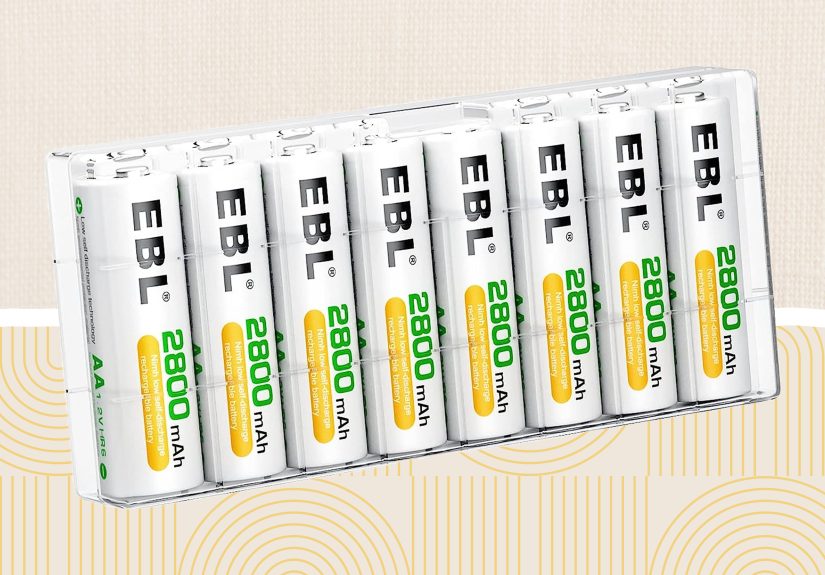
- AA NiMH (everyday LSD): often around 1900–2100 mAh.
- AA NiMH (high-capacity): often around 2400–2600 mAh, usually fewer total cycles.
- AAA NiMH (everyday LSD): commonly in the 750–900+ mAh range depending on model.
For 1.5V rechargeable lithium AA/AAA, you may see ratings in mWh. That’s not marketing trickeryit’s actually more
honest across different voltages. If you want to compare to NiMH mAh, you need to account for voltage. Practically speaking:
choose lithium 1.5V rechargeables when you need compatibility and steady voltage; choose NiMH when you want value and broad
everyday performance.
Cycle Life vs Capacity: The Trade-Off Most People Miss
In general, higher-capacity NiMH cells often have fewer total recharge cycles than standard-capacity LSD cells.
That doesn’t mean high-capacity batteries are “bad”it means they’re specialized.
- Standard LSD NiMH: great “fleet battery” for most of the house; strong longevity.
- High-capacity NiMH: better for high-drain gear where runtime matters more than maximum lifespan.
If you’re buying for a mixed household, a simple strategy works well: keep one reliable “main set” of LSD NiMH for everyday devices,
and a smaller set of high-capacity cells for the power-hungry stuff.
The Charger Matters as Much as the Batteries
The charger is the difference between “these batteries are amazing” and “why are my batteries hot and sad?” A good charger
treats each battery individually, charges safely, and stops when it should.
Look for these charger features
- Independent charging bays: each slot monitors its own battery (not “pairs only”).
- Smart termination: NiMH chargers often use methods like negative delta V detection plus safety timers and temperature logic.
- Multiple charge rates: slower is gentler; faster is convenient for emergencies.
- Status indicators: at-a-glance lights or display that shows charging progress and detects problem cells.
If you’re investing in a household battery system, don’t cheap out on the charger. A good charger helps batteries last longer,
reduces performance weirdness, and keeps things safer.
How Many Batteries Do You Really Need?
Most people underbuy at first, then get trapped in “battery musical chairs.” The simplest way to avoid that is a 5-minute
household battery audit:
- Count the AA and AAA devices you use weekly (controllers, mice, toys, flashlights).
- Add a “rotation buffer” set (so you can swap while charging).
- Decide if you need special sets (high-capacity NiMH or 1.5V lithium rechargeables).
A common sweet spot is a larger pack of everyday LSD NiMH AAs/AAAs for most devices, plus a smaller specialty set for the picky
or power-hungry stuff.
Storage and Care: Make Your Rechargeables Last
Rechargeable batteries are low drama when you treat them with basic respect. Think of them like houseplantsbut easier, and
they don’t die just because you looked at them wrong.
Do this
- Store in a cool, dry place away from heat sources.
- Use cases (plastic battery boxes) so terminals don’t touch metal objects in drawers.
- Keep sets together for devices that use multiple batteries (label them with a marker: Set A, Set B, etc.).
- Top off before big events (storm season, trips, camping).
Avoid this
- Mixing old and new batteries in the same device.
- Mixing different chemistries (NiMH + lithium) together.
- Leaving batteries loose in a junk drawer (the “short-circuit lottery”).
Cost-Per-Cycle: How Rechargeables Actually Save Money
Rechargeables can feel expensive at checkout, but the math is usually kind. Imagine a pack of disposable AAs for frequent-use
devices. Over months, you keep buying replacements. With rechargeables, you pay more upfront but stop paying the “battery tax”
every time a toy decides it needs to sing the same song 900 times.
A simple way to think about it: if a rechargeable AA replaces dozens (or hundreds) of disposable AAs over its life, the cost per
use drops dramatically. The exact break-even depends on what you buy and how you use it, but frequent-use devices are where
rechargeables shine.
Recycling and End-of-Life: Don’t Toss Them in the Trash
When rechargeables finally retire, recycle them properly. Many areas have drop-off programs for rechargeable batteries. This is
especially important for lithium and other rechargeable chemistries. If you’re not sure where to go, look for battery recycling
programs run through retailers or dedicated collection organizations.
Also: if you’re storing dead batteries temporarily before recycling, tape the terminals (especially lithium-based cells) and keep
them in a non-metal container to reduce short-circuit risk.
Quick Buying Checklist
- Step 1: Start with LSD NiMH AA/AAA for most household devices.
- Step 2: If a device is voltage-picky, consider 1.5V rechargeable lithium AA/AAA (with its intended charger).
- Step 3: Buy a smart charger with independent bays and clear status indicators.
- Step 4: Create labeled sets for multi-battery devices.
- Step 5: Store safely, recycle responsibly.
Real-World Experience Notes (What People Commonly Run Into)
In the real world, rechargeable batteries aren’t just a productthey’re a tiny household system. And like any system, the “gotchas”
show up in daily routines, not on the packaging. Here are common experiences people report (and what to do about them) when they
switch from disposables to rechargeables.
1) The “My remote says LOW after two days” problem
This is one of the most common surprises. Many remotes and small gadgets estimate battery life based on voltage alone. Because NiMH
batteries sit at a lower nominal voltage than alkaline, the device’s battery indicator may panic earlyeven if the batteries still
have plenty of usable energy. The remote still works, but it nags you like a smoke alarm with opinions.
What helps: use low self-discharge NiMH for reliability, ignore the dramatic battery icon if performance is fine, or switch that
specific device to 1.5V regulated rechargeable lithium AAs if the warning is constant and annoying. This is a “device personality”
issue more than a battery quality issue.
2) The “Why do my toys burn through rechargeables so fast?” surprise
Some toys are sneaky high-drain devicesmotors, lights, speakers, constant movement. They can drain batteries quickly no matter what
you use. With rechargeables, you notice it more because you’re actively charging and swapping rather than tossing and forgetting.
What helps: keep a dedicated “toy set” of batteries and rotate them. Consider higher-capacity NiMH for the loud, flashy toys that run
for long sessions. Also, make sure your charger is truly smart and charging each cell properlypoor charging habits can make any
battery feel “weak.”
3) The “Battery musical chairs” phase
Early on, many households buy one small pack and one charger and think they’re done. Then reality happens: four AAs are in the
controller, two are in the mouse, two are in the flashlight, and somehow the kid’s toy needs three more right now. You end up
scavenging batteries from Device A to feed Device B, which is not the calm, enlightened rechargeable lifestyle you were promised.
What helps: buy enough batteries to cover your common devices plus a buffer set for charging. Once you have a real rotation, the
system feels effortless. A simple battery case and a label (Set 1, Set 2) turns chaos into a routine.
4) The “One battery is always the problem child” mystery
In multi-battery devices, one weak cell can drag down the whole group. People often experience a device shutting off early because
one battery in the set aged faster, got overworked, or wasn’t fully charged. If you shuffle batteries randomly, you’ll keep chasing
the issue.
What helps: keep sets together, and if your charger offers testing/refresh functions, use them occasionally. When a particular set
starts underperforming, retire the weakest battery and rebuild the set rather than spreading the problem across the whole house.
5) The “Charger regret” moment
A lot of people discover too late that not all chargers are equal. Basic chargers may charge in pairs, run hot, or take forever.
Then the batteries don’t perform as expected, and the blame lands on the batteries when the charger was the real villain.
What helps: choose a charger with independent bays and clear indicators. It’s not about fancy screensit’s about consistent charging,
safer termination, and the ability to handle mixed states of charge. A good charger makes your batteries feel better at everything.
The punchline: rechargeable batteries work best when you treat them like a small “home utility,” not a one-off purchase. Once you’ve
got the right chemistry for your devices, a smart charger, and enough cells to rotate, the whole thing becomes boringin the best
possible way.
Conclusion
The best rechargeable batteries aren’t just “the highest mAh” or “the most expensive brand.” They’re the ones that match your
devices and your habits: low self-discharge NiMH for most household work, high-capacity cells for power-hungry gadgets, and 1.5V
rechargeable lithium options for devices that want alkaline-like voltage behavior. Pair that with a smart charger and a simple
rotation system, and you’ll spend less time buying batteriesand more time using the stuff those batteries power.