Table of Contents >> Show >> Hide
- Cold War Panic: The Eagle Is Born
- Design Philosophy: “Win the Fight,” Then Worry About Everything Else
- Proof It Wasn’t Just Talk: Records, Experiments, and Ridiculous Capability
- Combat Reputation: The “104-to-0” Legend (With Context)
- The Family Tree: From Pure Fighter to Strike Legend
- Why the Eagle Is Still Around: Upgrades, Longevity, and the F-15EX
- So… Why Is the F-15 Such a Badass Plane?
- F-15 Experiences: of Ways to “Get” the Eagle (Without Owning an Airbase)
- Conclusion: The Eagle’s Legacy Is Dominance That Kept Evolving
Some airplanes are famous because they look cool. Some are famous because they changed history. And then there’s the
F-15 Eagle, which is famous because it’s basically a physics lesson with afterburners.
Built in the Cold War era when everyone was jumpy and every new Soviet aircraft caused a collective American “uh-oh,”
the F-15 was designed with one job in mind: win the air.
Decades later, the Eagle is still flying, still being upgraded, and still showing up in conversations whenever someone
asks, “What’s the most dominant air-to-air fighter ever?” The answer is rarely subtle. It’s usually something like:
“The F-15. Obviously.”
Cold War Panic: The Eagle Is Born
The F-15’s origin story starts with a classic Cold War cocktail: surprise, uncertainty, and a strong desire not to be
surprised again. When the Soviet Union revealed the MiG-25 “Foxbat,” it looked (from a distance and with limited intel)
like a terrifying leap forwardblazingly fast, built for high-altitude interception, and “fast enough to ruin your day”
in multiple time zones.
That sense of urgency helped push the U.S. Air Force toward a new dedicated air-superiority fighter program. The result:
a design effort focused on out-climbing, out-accelerating, and out-fighting anything likely to show up on the other side
of the horizon. In late 1969, McDonnell Douglas was selected to build what would become the F-15.
The first F-15A flew in July 1972. Deliveries to training units followed in 1974, and by early 1976 the Eagle was arriving
to a combat squadron. That timeline matters because it shows the mindset of the era: when the Air Force decided it needed
an air dominance machine, it didn’t treat the schedule like a suggestion.
Design Philosophy: “Win the Fight,” Then Worry About Everything Else
If you boil the F-15 down to its essence, you get a simple equation:
thrust + radar + pilot-friendly design = air superiority.
The Eagle was built around the idea that if you can see first, accelerate first, climb first, and turn without bleeding
all your energy, you’re going to have a very good day.
Big Power, Big Confidence
The F-15 uses two afterburning turbofan enginestwin engines for both performance and redundancy. This is one reason Eagle
fans talk about it like a flying bouncer: it doesn’t just show up; it arrives. High thrust-to-weight wasn’t a marketing line.
It was the point. And that power translated into the kind of acceleration and climb that makes other jets feel like they’re
jogging while the Eagle is taking the elevator.
Visibility and Human Factors (a.k.a. “Let the Pilot Cook”)
The Eagle’s cockpit design prioritized pilot visibility and workload. The canopy and layout were meant to keep the pilot’s
awareness highbecause in air combat, the moment you lose the plot is the moment the plot loses you.
Radar That Changed the Rules
The F-15 arrived with a radar built for the modern fight, including the ability to detect targets against ground clutter.
In plain English: it could “look down” and still find what mattered. That capability was a big deal in an era when low-altitude
tactics were a common way to avoid detection.
Proof It Wasn’t Just Talk: Records, Experiments, and Ridiculous Capability
Plenty of aircraft are “impressive” on paper. The F-15 is impressive in ways you can measure with stopwatches, altitude charts,
and “wait, it did what?” headlines.
The Streak Eagle: When an F-15 Decided to Speedrun the Sky
In 1975, a stripped-down F-15 nicknamed “Streak Eagle” broke multiple time-to-climb world records. It was a flex,
but also a demonstration: the airframe and engines had serious performance headroom. If you ever wondered why the Eagle’s reputation
includes the phrase “it climbs like it’s late for something,” this is where that reputation got receipts.
NASA and the F-15 as a Flying Science Lab
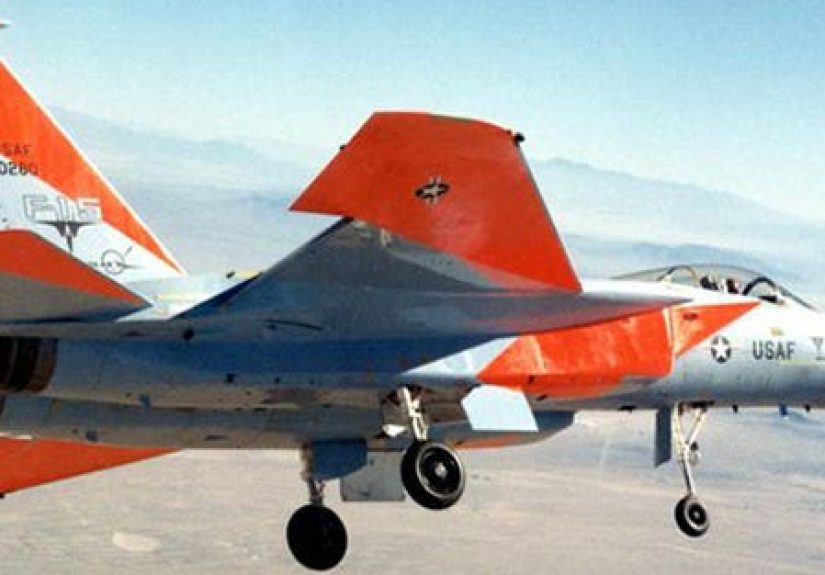
The F-15 wasn’t just a fighter; it became a platform for advanced research. NASA flew modified Eagles in programs exploring
thrust vectoring, short takeoff and landing concepts, and advanced flight controls. That’s the hidden superpower of a strong
airframe: it can serve as both a weapon system and a testbed for the next generation of ideas.
The “Space Ace” Moment: Yes, an F-15 Shot Down a Satellite
If “badass” had a required elective, it would be “occasionally doing something that sounds like science fiction.”
In 1985, an F-15 launched an anti-satellite missile and successfully destroyed a satellite in orbit.
That’s not normal fighter-jet behavior. That’s “the Eagle gets bored and chooses a new altitude bracket” behavior.
Combat Reputation: The “104-to-0” Legend (With Context)
The F-15’s most famous stat is its air-to-air combat record: over 100 aerial victories with zero losses in air-to-air combat.
The number most often cited is 104 victories to 0 in air-to-air engagements. That’s not a vibe. That’s a historical trendline.
Two important notes keep this honest:
-
This “perfect” record refers to air-to-air combat. The Eagle family has flown plenty of dangerous missions where the
primary threats weren’t enemy fighters. -
The overall story is bigger than a single statistic: it’s about a design that combined power, sensors, and training culture into a
consistent advantage.
In the 1991 Gulf War, for example, F-15s were credited with the bulk of U.S. air-to-air shootdowns. The Eagle’s “find, position, engage”
approachhelped by radar, speed, and missile capabilityfit that moment perfectly. The jet wasn’t just fast; it was decisive.
The Family Tree: From Pure Fighter to Strike Legend
The F-15 started as an air-superiority specialist. But great platforms evolve, and the Eagle eventually proved it could do more than one trick.
F-15A/B/C/D: The Air Superiority Core
These models represent the classic Eagle identity: air dominance, fast intercepts, and the ability to control a fight.
Over time, improvements in avionics, radar, and weapons integration kept them relevant long after their 1970s birth.
F-15E Strike Eagle: The “Not a Pound for Air-to-Ground” Era Ends
The F-15E Strike Eagle took the air-superiority foundation and added the hardware and systems needed for all-weather precision strike.
The first flight of the Strike Eagle was in 1986, with deliveries beginning in 1988 and operational capability arriving soon after.
What made the Strike Eagle special wasn’t just that it could carry more and go farther. It was that it could do long-range interdiction
and strike missions while still being rooted in a fighter airframe known for speed and survivability. It’s the aviation version of
“I can do the group project and the final exam.”
Export Variants and Allied Service
Another reason the Eagle became a legend: other highly capable air forces wanted it too. Variants have served with allies including
Japan and Israel, with additional advanced versions built for other partners. The international footprint helped keep production lines,
upgrades, and operational knowledge moving forward for decades.
Why the Eagle Is Still Around: Upgrades, Longevity, and the F-15EX
Fighter aircraft don’t stay relevant for half a century by accident. The F-15 is still here because it has a lot of “growth space”:
room for better radar, better electronic warfare systems, better computing, better displays, and modern weapons integration.
The F-15EX Eagle II: A Modern Eagle With Old-School Muscle
The F-15EX Eagle II is a modernized evolution built to carry advanced sensors, new electronic warfare systems, and a very large
weapons payload. It flew in 2021 and began deliveries the same year, reflecting a broader strategy: pair stealth fighters with platforms that
can carry a lot, see a lot, and integrate into modern networks.
In simple terms, the Eagle’s role in the modern era often looks like this:
show up with a big radar, a big payload, and the speed to be where it’s needed.
It’s not trying to be invisible. It’s trying to be undeniable.
So… Why Is the F-15 Such a Badass Plane?
“Badass” can be a lazy word. The F-15 earns it the hard waywith design choices that translated into results.
1) It Was Built for Air Superiority, Not Committee Compromise
The Eagle’s early identity was focused: dominate the air. That clarity shaped everything from performance priorities to cockpit ergonomics.
2) It Has the Power to Control the Geometry of a Fight
Speed and climb aren’t just bragging points. They let a pilot choose when to engage, when to disengage, and where to place the fight.
3) It Pairs Sensors With Performance
A great radar without speed is like having perfect directions but no car. The F-15 had both: the ability to detect and the ability to act.
4) Its Track Record Is Real, Not Just Nostalgia
The air-to-air combat record speaks for itself, and the Eagle’s long service life reflects continued usefulness, not just sentimental value.
5) It’s a Platform That Refuses to Age Quietly
NASA test programs, export upgrades, the Strike Eagle, and the F-15EX all share a theme: the design can absorb modern tech without losing what
made it great in the first place.
F-15 Experiences: of Ways to “Get” the Eagle (Without Owning an Airbase)
You don’t have to be a fighter pilot to appreciate the F-15. In fact, part of the Eagle’s charm is how it shows up in real life in ways that
make people stop mid-sentence and go, “Waitthat is an F-15?” Here are a few experiences that make the history feel less like a paragraph
and more like a punchy, jet-fueled reality check.
First: museums. If you ever find yourself at a major U.S. aviation museum, you might see an Eagle up closeand that’s when the design philosophy
becomes physical. You notice how purposeful everything looks: the intakes that seem to inhale entire weather systems, the stance that feels like
it’s ready to sprint, the shape that’s less “art project” and more “solution.” At the National Museum of the U.S. Air Force, for example, the
record-setting “Streak Eagle” story puts the jet’s performance in human terms. It’s not just “fast.” It’s “fast enough that people made it a
world-record event.”
Second: airshows and flyovers. Hearing an F-15 isn’t subtle. It’s the kind of sound that makes you look up even if you weren’t planning on it.
When the afterburners light (or when the jet simply powers through a climb), you can feel why the Eagle became a legend. The experience isn’t
about violent imageryit’s about raw engineering. You’re watching controlled thrust and aerodynamics turn into motion that looks almost unfair,
like the jet is skipping the “loading…” screen between “takeoff” and “altitude.”
Third: stories from pilots and maintainers. Articles and interviewsespecially those tied to historic aircraftadd something specs can’t.
When you read about real engagements, real training, and real decision-making under pressure, you start to see how much the Eagle’s reputation is
shared credit: the jet’s performance, the sensors, the training pipeline, and the people who kept it ready. The F-15 didn’t become iconic because
it was lucky; it became iconic because its design gave skilled crews consistent advantages they could trust.
Fourth: flight simulation and model-building (yes, really). A good sim won’t perfectly recreate reality, but it can teach you why “energy” matters,
why altitude is leverage, and why a powerful radar changes how you think about a fight. And building a detailed modelespecially with modern
variantsforces you to notice the evolution: the subtle differences in avionics bumps, pylons, pods, and configuration choices that reflect the
Eagle’s long life. It’s history you can literally hold in your hands, minus the need for a hangar.
Finally, there’s the simplest experience: learning the timeline and then spotting the Eagle in the wildphotos, museum aircraft, or news about
modern upgrades. Once you know the F-15’s story, it stops being “a jet” and becomes a through-line from the Cold War to today. And that’s the
real “badass” factor: the Eagle isn’t just remembered. It’s still relevant.
Conclusion: The Eagle’s Legacy Is Dominance That Kept Evolving
The F-15 was born from urgency, built with clarity, and proven through performance. It set records, served as a research platform, evolved into a
strike legend, and kept its place in the modern force through upgrades and new variants. Most aircraft get one great era. The Eagle has managed to
have severalwithout ever losing the core trait that made it famous: it was designed to win the sky, and it kept doing exactly that.